
Mobile charging robots for electric vehicles: A groundbreaking solution for Chinese cities.
Automated charging robots with capacities up to 200 kWh are becoming the optimal solution, helping to overcome infrastructure barriers in old neighborhoods and highway rest stops.
A compact, self-propelled charging device, dubbed a "mobile power bank," is becoming a lifesaver for electric vehicle owners in the old neighborhoods of Nanning, China. This solution allows for on-demand fast charging without requiring costly investments in power grid infrastructure.
On-site charging service via mobile app.
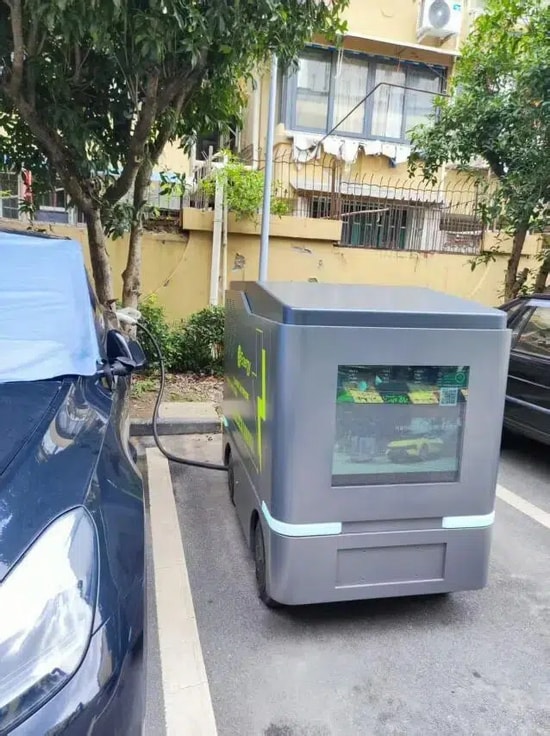
In the Linliqiao Jiayuan community, where more than 400 electric vehicles are in circulation, residents can now summon a smart charging robot with just a few taps on a mobile app. This device, approximately 1.5 meters tall and equipped with a 100 kWh battery, can autonomously move to a parked vehicle to begin a fast charging process in a few minutes.
According to the operating company, an electric vehicle with a 10% battery level can be fully charged in about 40 minutes to an hour. "Parking at home and charging on the spot saves a significant amount of time and effort compared to having to travel to public charging stations," shared Ms. Liu, a local resident.
Superior infrastructure and cost advantages
The biggest advantage of the mobile charging robot solution is that it doesn't require grid upgrades or occupying fixed parking space. This is especially significant for older residential areas – where limited physical space is the biggest barrier to installing traditional charging stations.
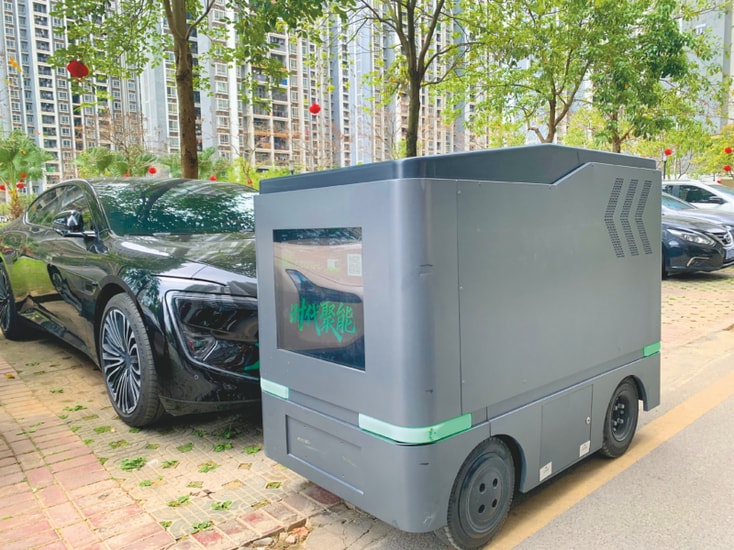
A flagship product in this field is the "Energy Tank" developed by Eraergy. This is a smart charging device that combines energy storage cells, an autonomous driving chassis, and a flexible control system.
| Device model | Battery capacity | Maximum charging capacity |
|---|---|---|
| Mini Energy Tank | 30 kWh | 120 kW |
| Energy Tank Standard | 100 kWh | 120 kW |
| Energy Tank Pro | 200 kWh | 120 kW |
Expand the model to include hotels and logistics.
Mobile charging is not limited to residential areas; it is being promoted in hotels, highway service areas, and cargo yards. In hotels, this service allows investors to provide fast charging facilities for guests without spending millions of dollars upgrading their electrical systems.
In the logistics sector, partners like SF Express have adopted mobile chargers to take advantage of loading and unloading times or waiting periods to recharge their vehicles. This eliminates queuing time at public charging stations, optimizing transportation efficiency.
The tech race among the giants.
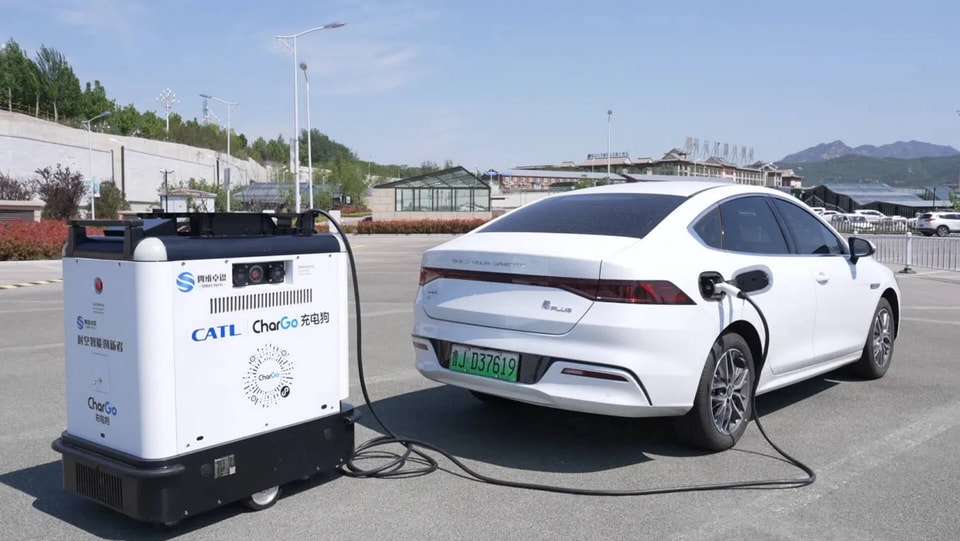
The mobile charging robot market in China also includes CATL, a leading global battery manufacturer. CATL's subsidiary launched the CharGo product, which was widely deployed in highway service areas during the Lunar New Year holiday to alleviate charging pressure during peak holiday periods.
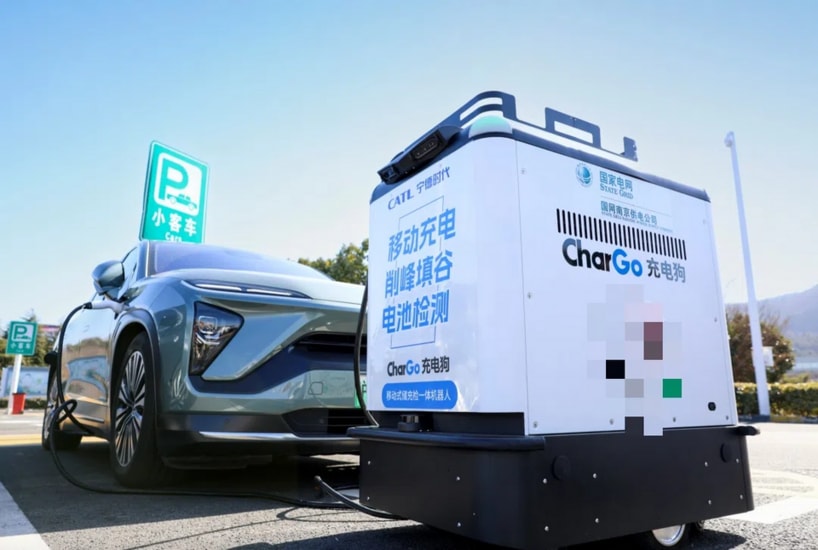
Currently, these systems operate with limited remote control or autonomy. However, manufacturers are aiming for L4 level automation in enclosed industrial environments or areas with controlled access gates. With low operating costs and high flexibility, mobile charging robots are expected to become a crucial component in the global electric vehicle ecosystem.


