
Risks of buying counterfeit goods online: Who is responsible?
Online shopping is becoming increasingly popular, but along with the convenience comes a proliferation of counterfeit and substandard goods that are difficult to control.
While the market is a mix of genuine and counterfeit products, buyers, even aware of the risks, find it difficult to protect themselves because the mechanisms of responsibility between e-commerce platforms, sellers, and regulatory agencies are not yet clearly defined.

The "virtual market" is booming.
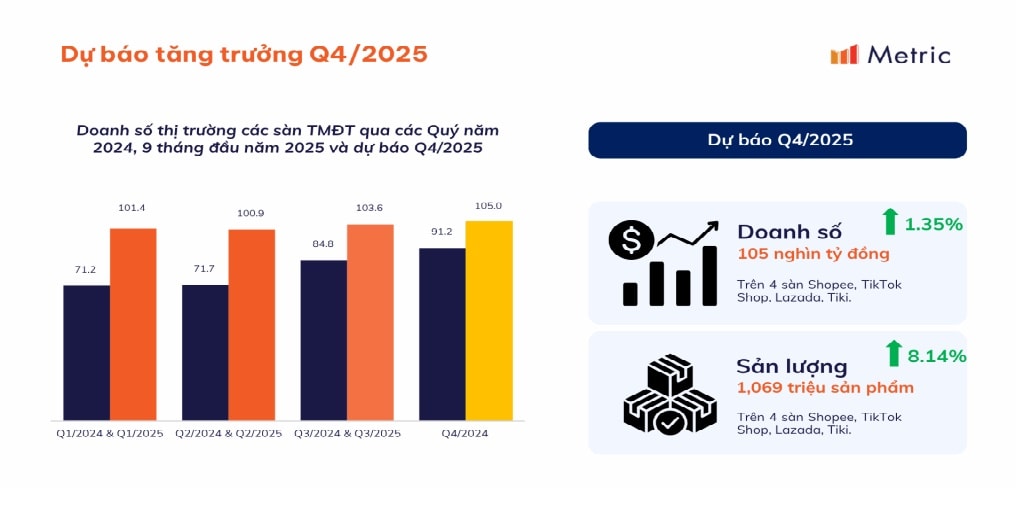
The latest statistics from the intelligent data aggregation and mining platform Metric.vn show that the e-commerce market in Q3/2025 continued to set records, with total sales across four platforms – Shopee, Lazada, Tiki, and TikTok Shop – reaching 103.6 trillion VND – a 22.25% increase compared to the same period last year and a 2.6% increase compared to the previous quarter.
Entering the fourth quarter, Metric forecasts that total market sales will reach VND 105 trillion, equivalent to a 15% increase compared to last year, with an expected production volume of over 1.069 million products, an increase of 8.14%. This growth is driven by major year-end shopping events such as 11.11, 12.12, Christmas, and New Year's Day. Leading sectors are predicted to include fashion, beauty, household goods, and general merchandise/food.
However, the explosive growth of e-commerce has also led to fierce competition among platforms regarding shipping fees, seller support, product verification, etc. It is in this context that counterfeit goods, substandard products, and goods of unknown origin easily exploit loopholes to infiltrate the market, while the current legal framework still leaves gaps regarding the responsibilities of each party involved.
Currently, most online stores on e-commerce platforms only require a few basic registration steps, providing personal and business information and some initial verification documents. However, in reality, this simplification of the review process creates loopholes for many to exploit. Numerous stores use fake addresses, fake warehouses, fictitious information, or register using disposable SIM cards and anonymous accounts, making tracing violations extremely difficult.
Ms. Le Thi Mai, a customer in Truong Vinh ward, Nghe An province, shared: “I once ordered a life jacket online, and the seller assured me it was genuine, imported from Japan. However, when I received the item, I discovered it was just a counterfeit, a knock-off of the genuine product, with completely different quality, while the price was the same as the real thing. I immediately contacted the shop via phone and message on their website, but I was blocked. Reporting it to the e-commerce platform also didn't result in a satisfactory resolution; I only received expressions of sympathy and apologies.”
Furthermore, the review system, which is considered a "guide" to ensuring user trust, is now being widely manipulated. From fake reviews and hired reviews to "reputation star boosting" packages and even AI-generated images, the comment section has become a chaotic battlefield where consumers find it difficult to distinguish between genuine and fake reviews. Many shops even use services to "boost positive reviews" to boost search trends without investing in quality.
Furthermore, the current rate of product review by e-commerce platforms cannot keep up with the market's growth. A large platform can contain tens of millions of products, making manual scanning impossible. The algorithms for filtering violations are also easily bypassed through sophisticated loopholes: changing product names, using abbreviations, and employing vague phrases like "company goods," "officially imported," etc. As a result, thousands of counterfeit orders can slip through before being detected.
Malicious actors often exploit loopholes in the incomplete e-commerce laws, employing sophisticated tactics such as using their intelligence.
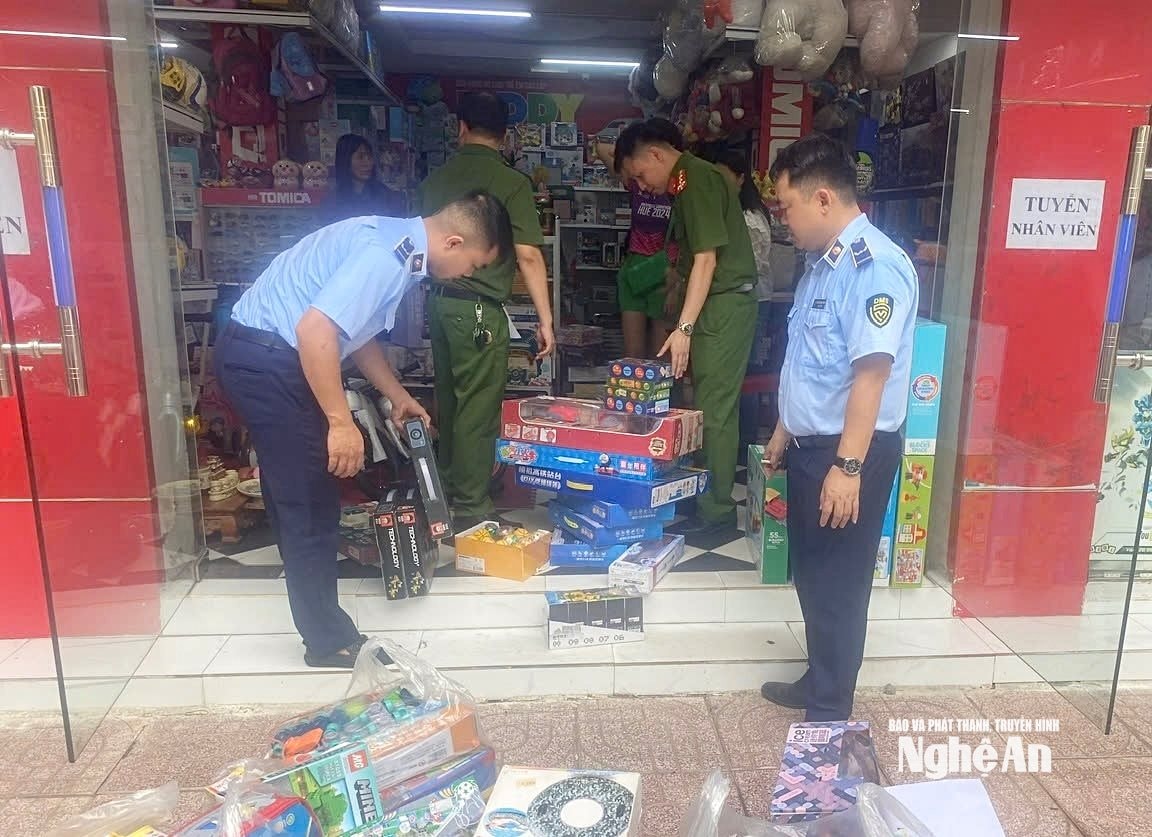
Anonymous use of images, impersonation of experts and celebrities to promote and advertise falsely is common. Many online businesses conduct live streaming sales, use fake QR codes, and advertise goods in one location while hiding them elsewhere to conceal their activities or provide false or misleading information to evade inspection and control by authorities. In some cases, business locations are attached to residential properties, making inspection and control very difficult.Mr. Nguyen Xuan Don, Deputy Head of the Market Management Department of Nghe An Province
The most vulnerable group in the "digital ecosystem"
Information gaps about sellers, misleading reviews, and limitations in the vetting process are making e-commerce a fertile ground for the proliferation of counterfeit and substandard goods.
Expressing her opinion on this, Ms. Pham Thi Lan from Vinh Phu ward said: “My products always have complete inspection certificates, but it's very difficult to compete. Many other stores sell counterfeit and low-quality goods at even half the price, and they even hire fake reviews to always rank at the top of search results. In such an environment, sellers like us really face many difficulties.”
In reality, e-commerce platforms are currently the biggest beneficiaries thanks to multi-tiered fees ranging from sales and advertising to shipping and warehousing. However, when disputes arise, their responsibility is often disproportionate. Buyers often have to gather technical evidence themselves, follow complicated refund procedures, and in many cases, their claims are still rejected with the reason "unverified".
In contrast to legitimate buyers and sellers, those who violate the rules have a much easier time getting away with it. Within minutes, a store can have its account deleted, its shopping cart removed, its name changed, or a new store opened. And even though the account violates the platform's regulations, the consequences for them are not usually very serious. This makes sellers the safest group in the digital ecosystem, while consumers have no one to complain to.
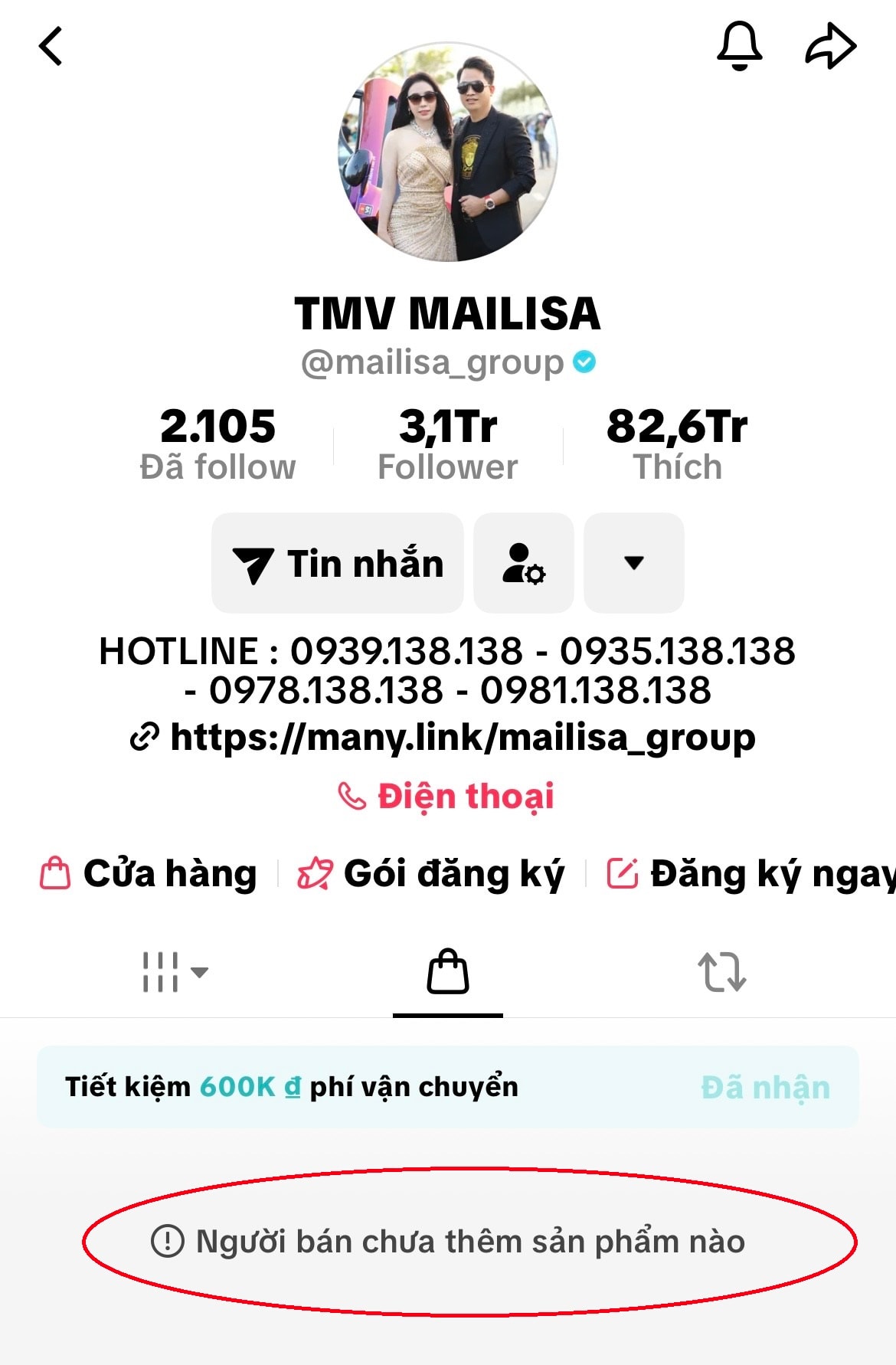
A prime example is the Mailisa Beauty Salon case: after violations were discovered and legal action was taken, many related vendors were removed or hidden from the platform. However, for products already sold, buyers have yet to receive a satisfactory explanation regarding the handling of the situation, compensation, or accountability – leaving a significant gap in consumer rights protection.
It's worth noting that the risks to buyers aren't just discussed in stories of "buying cheap goods and then being disappointed," but also occur even when they spend generously on products that are supposedly of high quality.
Mr. Nguyen Van Quang, from Yen Thanh commune, Nghe An province, said: “Personally, I find that expensive goods are just as risky as cheap ones. Many times I had high expectations when buying online because I was busy, but the goods I received were completely different. Those experiences have gradually eroded my trust – and I understand that even when spending a large amount of money, buyers are still very likely to face risks if they don't know how to protect themselves.”
Further analyzing consumer psychology when encountering counterfeit or substandard goods, Mr. Nguyen Van Thang – Chairman of the Nghe An Consumer Rights Protection Association – noted that many people still hesitate to report such issues. Firstly, they fear confrontation, arguments, or direct contact with the seller. Secondly, they worry about their personal reputation being affected, especially when having to provide information, evidence, or work with relevant authorities.

Who is responsible?
Clearly, the issue of consumer safety on e-commerce platforms cannot be solved solely through media campaigns; it requires a new regulatory system with more specific accountability for each entity.
First and foremost, e-commerce platforms need to proactively review and thoroughly vet online stores, ensure transparency in product information, and promptly cooperate with authorities when detecting signs of violations. They must also prevent the continuation of the situation where "high fees are charged but lax control is maintained."
Beyond the role of the platforms, the next responsibility falls on the sellers themselves – those who directly bring products to the digital environment. They need to ensure the origin, quality, and accuracy of product information. Simultaneously, sellers need to proactively be transparent, implement clear return and warranty policies, and cooperate with the e-commerce platform when handling complaints. Cases of deliberate violations should also be dealt with severely to maintain a healthy and trustworthy business environment.
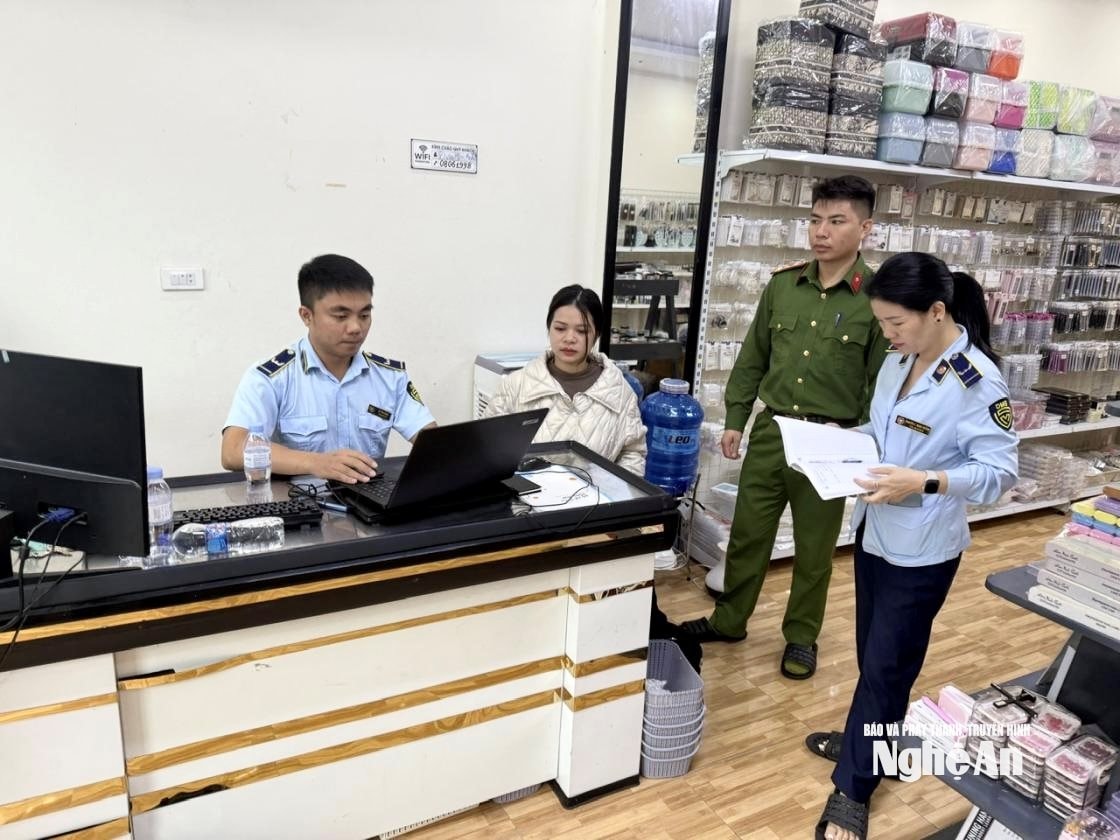
Emphasizing this point further, Mr. Nguyen Xuan Don – representative of the Market Management Department of Nghe An province – said that the primary responsibility lies with the management agencies and e-commerce platforms. He also stressed the need to continue reviewing, amending, and improving the system of legal documents related to e-commerce, applying traceability technology, significantly increasing penalties to ensure sufficient deterrence, and tightening advertising management to prevent the dissemination of false information. These are key factors in controlling counterfeit goods in an increasingly complex online environment.
E-commerce has brought many conveniences and will certainly continue to be an inevitable trend in modern life. Counterfeit goods and misinformation may still exist, but the important thing is not just regulations or penalties, but the awareness of each individual – from sellers and e-commerce platforms to consumers. When everyone acts responsibly, transparently, and vigilantly, trust and safety in shopping will be firmly established, creating a foundation for sustainable development in the future.


