
Vietnam's forests face the risk of 'no more animal sounds, fewer bird songs'.
The destruction of forests to the point of silence, devoid of animal and bird sounds, is a reality that is happening quite frequently in Vietnam.
International conservationists refer to the concept of "silent forests," meaning forests that have been hunted and destroyed to the point of silence, devoid of animal sounds and with few bird calls. This phenomenon appears to have occurred in many forests in Vietnam, making bushmeat scarcer and more expensive than before. Hunters have depleted forests in one area and then moved on to another to meet market demand. Silent forests – this is the not-too-distant future of Vietnam's forests if there is no immediate and decisive action from management agencies, local authorities, and consumers.
Despite the regulatory agenciesDespite numerous regulations prohibiting the trade and consumption of wild animals, diners can still easily find restaurants specializing in wild game meat in almost any locality across the country.
Vietnam is still considered a hotspot and a "transit hub" for wildlife, serving both domestic needs and smuggling to China, South Korea, Japan, and other markets.
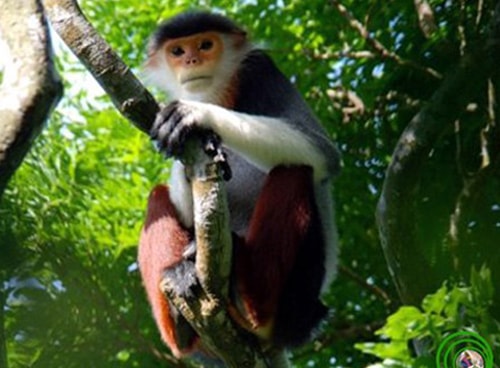 |
Vietnamese langur species are facing extinction. Photo: Vncreatures. |
Research by three authorsMilica Sandalj, Anna Treydte and Stefan ZieglerA study conducted in 2015 with the support of WWF-Vietnam showed that an estimated 3,500 to 4,000 tons of bushmeat pass through the Vietnamese market each year. Half of this is consumed domestically, with 80% being sold as "busmeat specialties".
According to this study, 85% of the 329 people surveyed in Hue had eaten bushmeat at least once in their lives; 68% had consumed bushmeat within the 12 months prior to the survey. Of those who did not eat bushmeat, 55% cited "lack of opportunity," 15% cited "too expensive," and 14% cited "dislike"; only 7% did not eat bushmeat because of "unknown origin."
The survey results also indicated that people with higher incomes and educational levels tend to eat bushmeat more frequently, partly due to their financial means, partly to demonstrate their social status, and partly due to their belief in the health benefits and effectiveness of bushmeat.
The majority of bushmeat consumed in Vietnam comes from native animals hunted, shot, or trapped in forests, including those within nature reserves and national parks, where hunting and trapping of wild animals are prohibited and more strictly controlled than elsewhere. Another portion is smuggled in from neighboring countries. Farm-raised bushmeat is also available on the market. However, consumers are generally less interested in meat that lacks this "wild" origin.
To meet such a huge demand for bushmeat, hunters have to hunt to the point of depletion. Some "hubs" for purchasing bushmeat and specialty bushmeat restaurants that were thriving a few years ago have now had to close or source bushmeat from other places due to the depletion of local bushmeat stocks.
This leads to the risk of extinction for several species, including endangered ones such as the gaur and the langur. Furthermore, a severe decline in the number of individuals within one or more species can lead to an imbalance in the natural environment. Some harmful species may thrive due to the lack of natural predators. Others, especially carnivorous animals, face the risk of starvation due to a lack of food.
Animal meat inspection procedures in Vietnam
Not only Vietnam, but many other developing countries in Africa and South Asia also consume bushmeat. Even countries with developed economies, education, and healthcare systems like the US, Canada, Europe, and Japan consume a significant amount of bushmeat. However, there are significant differences in hunting and consuming bushmeat between Europe and Vietnam, including the purpose of hunting, the species permitted to be hunted, and, more importantly, the strict quarantine procedures to minimize the risk of disease transmission to humans and the community.
Wild game meat in Vietnam is often collected by traders from various sources. Chemicals are used to prevent spoilage, and it's frozen before being transported to consumption areas. It's no longer considered a delicacy but rather an uninspected, exotic food item. Consumers are certain to be exposed to various toxic chemicals that have seeped into each piece of meat, which is marinated with various spices to mask its true smell.
More dangerously, although still debated in the scientific community, we cannot ignore the evidence showing a link between eating bushmeat, especially raw or undercooked offal, and the risk of contracting previously unknown diseases, some of which are highly contagious and could lead to regional or even global pandemics. Ebola, SARS, and H5N1 are examples.
Therefore, the indiscriminate use of bushmeat not only affects the health of those who directly consume it but also poses a serious risk to public health.
Based on the above situation, Vietnam needs to increaseStrengthening law enforcement to restrict and eventually control the hunting, transportation, trading, and consumption of meat and products from wild animals, especially endangered and rare species, is a requirement that has been repeatedly emphasized.
Let's not contribute to turning Vietnam's forests into 'silent forests,' or allow them to become places for life to regenerate.If you are someone who habitually consumes wild animals, and if you're not yet ready to think about the benefits to nature, then at least think about your own health and the health of those around you.
Tran Le Tra/VNE
World Wildlife Fund (WWF)


