
Books – a “gold mine” for the cultural industry.
In recent years, the term "cultural industry" has appeared increasingly frequently in policy forums, development strategies, and professional discussions. However, frankly speaking, despite its potential, the current state of cultural industry development is not yet commensurate with its potential. And within this picture, there is a very close and obvious "gold mine" that has not been properly exploited: books.
The fundamental knowledge of the cultural industry.
Books have long been viewed as a cultural product that preserves knowledge. However, if we only stop at that understanding, we inadvertently narrow its role. In fact, in developed cultural industries, books are considered the starting point; from a single book, an entire ecosystem of products can be formed, such as films, television series, video games, comics, educational products, and even iconic cultural goods. It is this derivative process that creates the greatest economic value.
In Vietnam, the understanding of the fundamental role of books is gradually being established. Ms. Khuc Thi Hoa Phuong, Director and Editor-in-Chief of the Vietnam Women's Publishing House, calls books the fundamental knowledge, the root of the cultural industry. This is not a general statement, but an important point of reference for reviewing the entire operation of the publishing industry today. If books are considered the root of knowledge, then all other creative activities must rely on them, inherit from them, and develop from them.

However, the problem lies in the fact that we have the "roots," but not the "branches"; we have the "raw materials," but have not yet formed a "value chain." Writer Ha Thuy Nguyen, deeply concerned about the development of the cultural industry, pointed out a thought-provoking reality: very few Vietnamese literary works are adapted into other forms, and very little content from books spreads to other formats, while in other countries, books can develop into a multi-layered, multi-platform creative ecosystem. This gap is a gap in organizational methods and development thinking.
Sharing the same viewpoint, Dr. Nguyen Manh Hung - Chairman of the Board of Directors of ThaiHaBooks - shared a typical example: "From a special edition of The Tale of Kieu, if it only stops at printing, it is still just publishing in the traditional sense. But when the same content is developed into many different versions using various materials, from brocade, lacquer, mother-of-pearl inlay, and continues to be considered as inspiration for films, animations... then it has entered a completely different logic - the logic of industry."
It's worth noting that this approach is not far-fetched, nor does it require anything drastic, and according to Mr. Hung, there are plenty of models to learn from, as countries in the region such as South Korea, China, and Thailand have already been ahead of Vietnam not too far in terms of time. The important thing is whether we are ready to change our perspective.
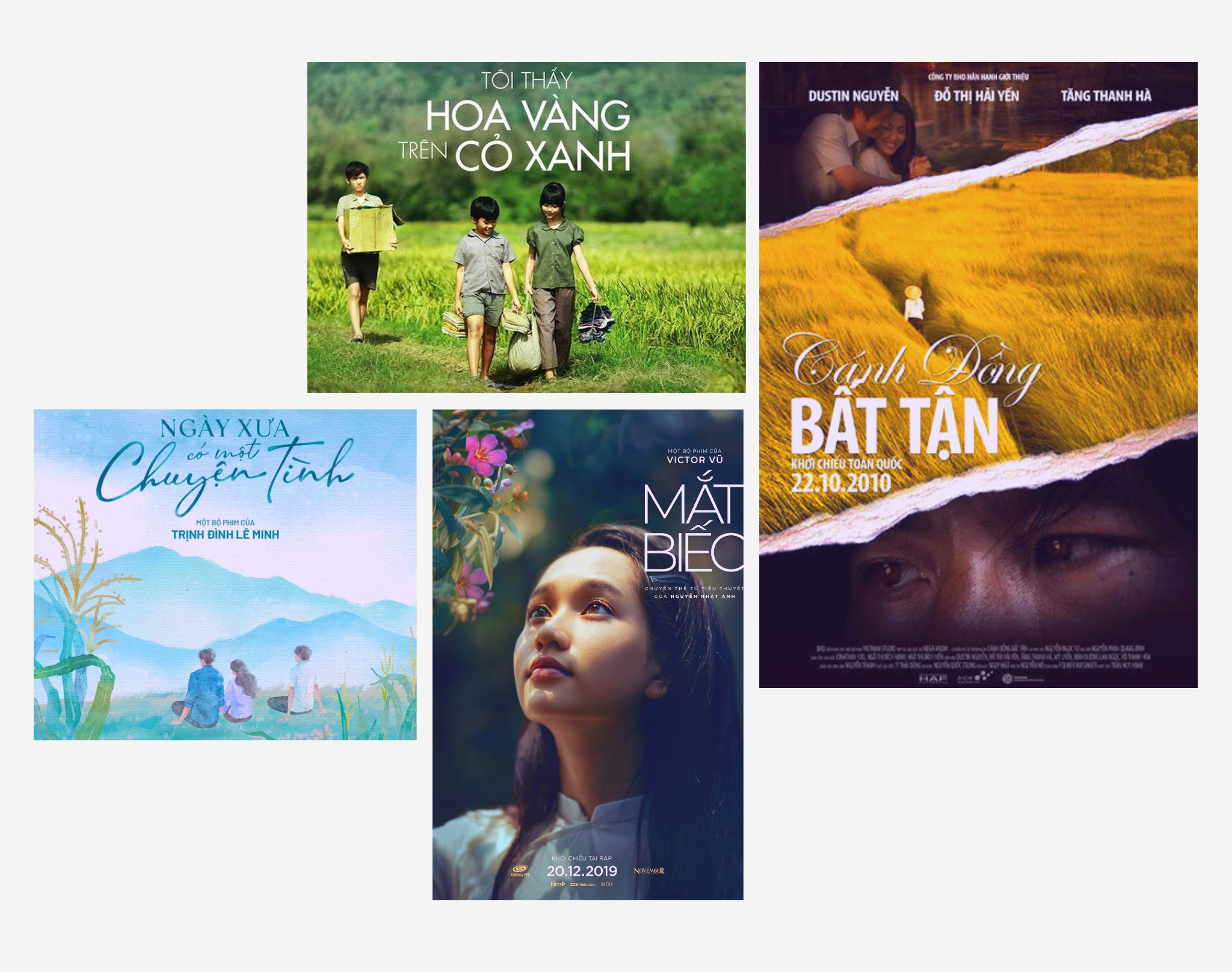
From another perspective, film producer Cao Phuong Diem provided a very realistic glimpse into the world of cinema. When working on the project about the historical figure Hoang Thi The – the daughter of the "Tiger of Yen The" Hoang Hoa Tham – her team had to search for materials in overseas archives because, although domestic sources existed, they were scattered, unsystematic, and difficult to access. This highlights a deeper issue: the need for an effective system for archiving, classifying, and connecting "original knowledge" to create a solid foundation for innovation.
Associate Professor Dr. Nguyen Toan Thang - former Director of the Institute of Culture and Development, Ho Chi Minh National Political Academy - raised the issue at a deeper level of culture by emphasizing the role of language. According to him, language is a special creation of humankind, and books are where that creation is realized. People not only read books to receive information, but also to think, to remember, to dialogue with the past, and to form their own knowledge system. From this perspective, the development of the cultural industry from books is also a story of intellectual capacity and national identity.
Major "bottlenecks"
From potential to reality, there are always obstacles that are not easy to overcome. One of the most notable obstacles is market bias.Ms. Khuc Thi Hoa Phuong - Director and Editor-in-Chief of Vietnam Women's Publishing HouseShe shared a personal story: when she introduced a Vietnamese fantasy novel to her daughter, the reaction was indifference, simply because of a deeply ingrained belief that "Vietnamese people don't write good fantasy."
This prejudice didn't arise naturally. It's a consequence of our failure to create products that can make a strong and consistent impact within a particular genre. Without such foundations, the market easily turns its back, continuing the vicious cycle of no product because there's no market, and no market because there's a lack of product.
.png)
Furthermore, the creative ecosystem remains fragmented. As Ms. Khuc Thi Hoa Phuong analyzed, creativity cannot exist in isolation; it needs a foundation comprising a system of terminology, archetypes, and interdisciplinary knowledge. Meanwhile, while Vietnam's cultural heritage is rich, it is scattered, not standardized, and not digitized in the modern sense to become a common data source for creative industries.
Another crucial challenge is the market problem. Ultimately, the cultural industry operates according to the law of supply and demand. Associate Professor Dr. Nguyen Toan Thang emphasizes that every product must "understand" the needs of each target group; otherwise, it will be difficult to survive. In reality, there are many cases where books highly regarded for their academic value fail to sell, while more accessible products thrive. This places publishing houses in a dilemma: how to maintain content quality while ensuring sales.
Along with that comes the issue of capital and investment. Many works have been licensed for adaptation but cannot be implemented due to a lack of funding. The cultural industry requires long-term financial resources, while the book industry, with its low profit margins, struggles to accumulate the capital needed for large-scale projects.
.png)
In this context, Resolution No. 80-NQ/TW on the development of Vietnamese culture is expected to create a significant impetus. The inclusion of the cultural industry in the national development strategy shows a clear shift in policy thinking. However, as many experts have emphasized, policy is only a necessary condition; the sufficient condition still lies in the specific actions of each sector, each enterprise, and each creative individual.
For books to truly become a "gold mine," fundamental shifts are essential. First, there needs to be a change in mindset, viewing books as the starting point of a value chain. Next, we need to build a knowledge infrastructure, reorganizing cultural resources in a systematic, interconnected, and exploitable way. Simultaneously, we need to promote connections between industries – publishing, film, technology, education – to form a truly innovative ecosystem.
Indispensable to this is investing in Vietnamese authors and content with a distinct Vietnamese identity, as Dr. Nguyen Manh Hung pointed out, the "key" lies in Vietnamese culture and the Vietnamese people themselves. Finally, there is the rebuilding of consumer culture. When Vietnamese people are willing to read Vietnamese books, watch Vietnamese films, and use Vietnamese cultural products, only then will the market truly become a support system for creativity.
Books, ultimately, are the source of creative dreams. A book can open up a world, but for that world to live, spread, and create value, it needs an ecosystem, a market, and belief.


