
Samsung aims to bring Exynos chips to all Galaxy devices in the future.
Samsung is pursuing a long-term strategy to achieve self-sufficiency in processor supply, reduce dependence on Qualcomm, and optimize performance across the entire Galaxy ecosystem.
Samsung is taking strategic steps to make its Exynos chips the centerpiece of the Galaxy device ecosystem. This goal not only helps the company reduce its dependence on its partner Qualcomm but also enhances the potential for deep optimization between hardware and software across its smartphones and tablets.
Long-term strategy and roadmap for achieving microprocessor self-reliance.
At a press event in San Jose, California, Moon Sung-hoon, Vice President of Hardware at MX (Mobile eXperience), stated that developing a strategy for application processors (APs) is a complex process requiring medium- and long-term planning. This process includes defining product requirements, establishing specifications, and conducting rigorous evaluations before commercialization.
Mr. Moon revealed that Samsung MX is working closely with internal partners, specifically the System LSI division, to realize the goal of equipping the entire Galaxy line with Exynos processors. This will allow the company to be more proactive in improving the user experience through continuous hardware innovations.
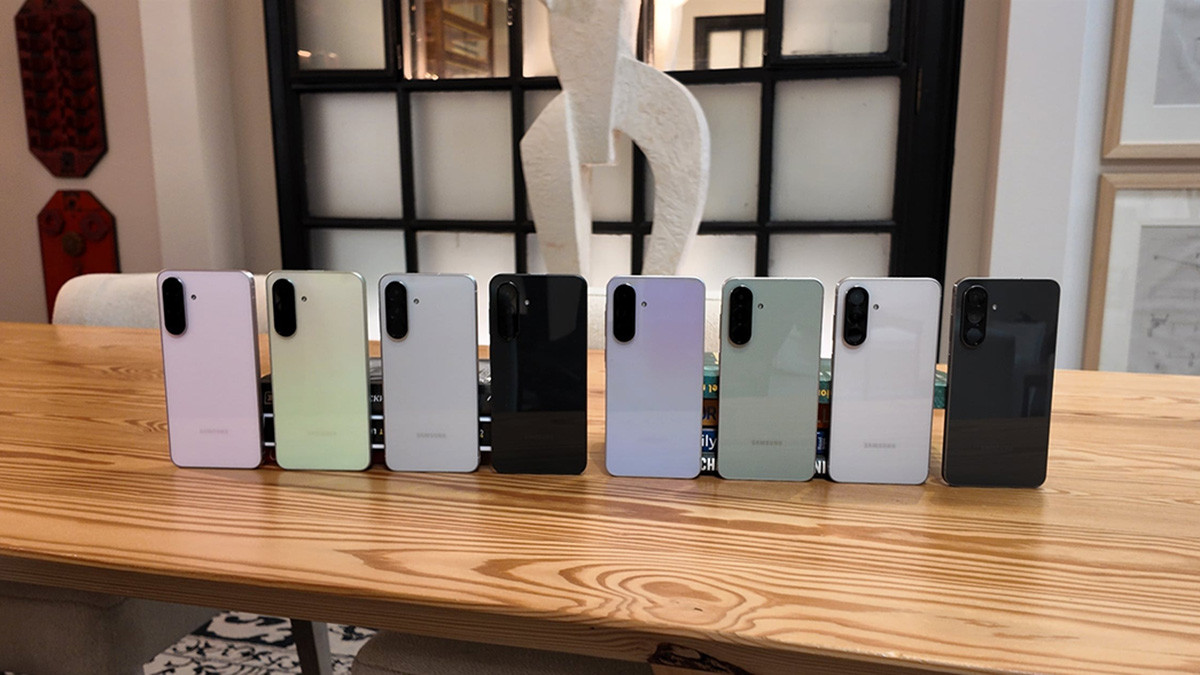
Technological breakthroughs in 2nm and 3nm processes.
Notably, Samsung representatives emphasized that the new Exynos chip series has achieved promising results in many technical aspects. In particular, it is considered the world's first application processor developed on a 2nm process, promising significant improvements in power consumption and processing performance compared to previous generations.
In recent deployments, the Galaxy S26 and Galaxy S26+ have been equipped with the Exynos 2600 chip. Meanwhile, the highest-end variant, the Galaxy S26 Ultra, continues to use a Snapdragon chip from Qualcomm. However, this shift shows that Samsung is gradually expanding the range of its own chips to higher-end segments.
Expanding influence in international markets.
A key turning point in Samsung's strategy was the introduction of Exynos chips to the US market – a market previously prioritizing Snapdragon. Specifically, the Galaxy Z Flip7 was equipped with the Exynos 2500, a chip designed by System LSI and manufactured on Samsung Foundry's 3nm process.

Self-manufacturing chips allows Samsung to better control production costs amidst fluctuating semiconductor component prices. Simultaneously, the company can customize artificial intelligence (AI) and graphics features to best suit the One UI interface, creating a distinctive difference for the Galaxy product line compared to competitors in the market.
Typical specifications of the new device line
| Parameter | Detail |
|---|---|
| Main processor | Exynos 2500 / Exynos 2600 |
| Production process | 3nm / 2nm |
| Application device | Galaxy S26 Series, Galaxy Z Flip7 |
| Focus of improvement | Energy efficiency, AI integration |


