
Samsung to unveil impressive triple-folding smartphone at CES 2026
At the Consumer Electronics Show (CES) 2026, held from January 6th to 9th in the US, Samsung launched the Galaxy Z TriFold – an ambitious triple-folding smartphone that opens up a completely new direction for the mobile phone market.
For decades, science fiction films have depicted a future where computers and phones can fold, unfold, and transform their shape to suit various needs. Samsung seems to be turning that vision into reality with the Galaxy Z TriFold, a smartphone that folds at two hinges, resembling a small book, but when unfolded has a large screen the size of an iPad.
Samsung introduced this device to the media at CES 2026 in Las Vegas, USA, before its official launch in the US. Prior to that, the Galaxy Z TriFold was sold in limited quantities in South Korea. It's a product that has generated much curiosity, offering both a sense of innovation and raising questions about its practicality.
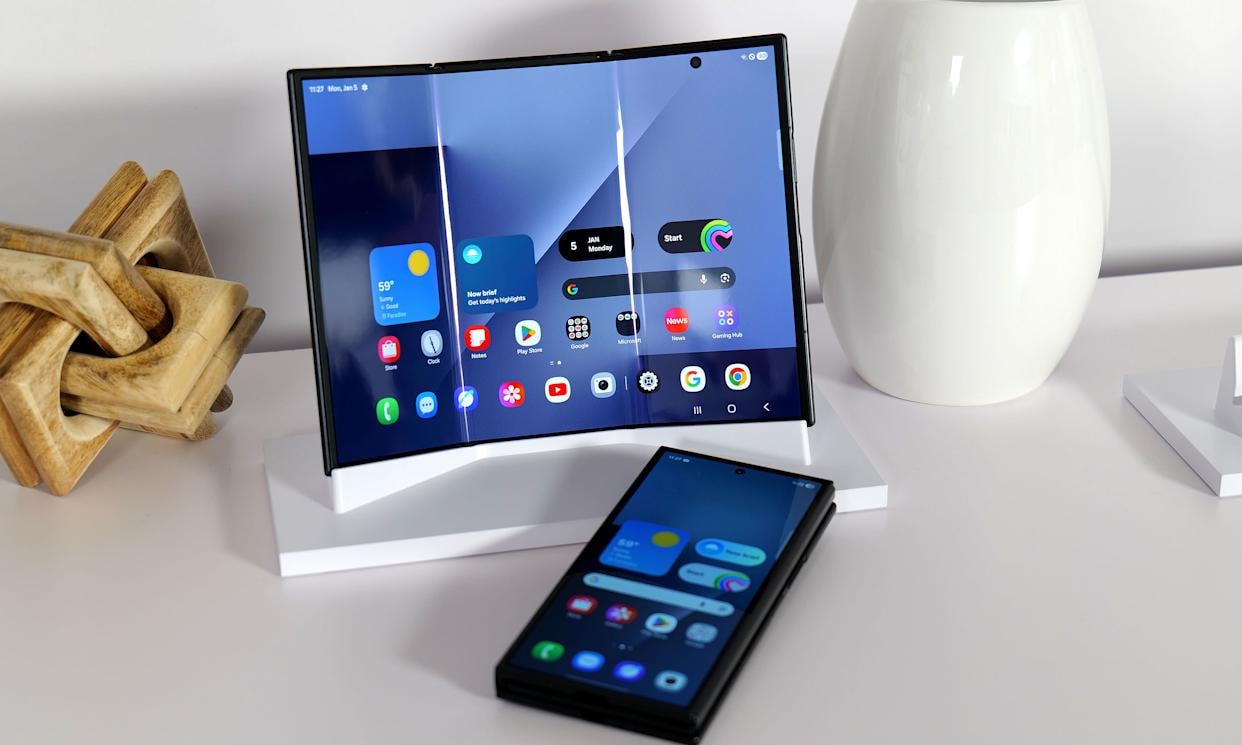
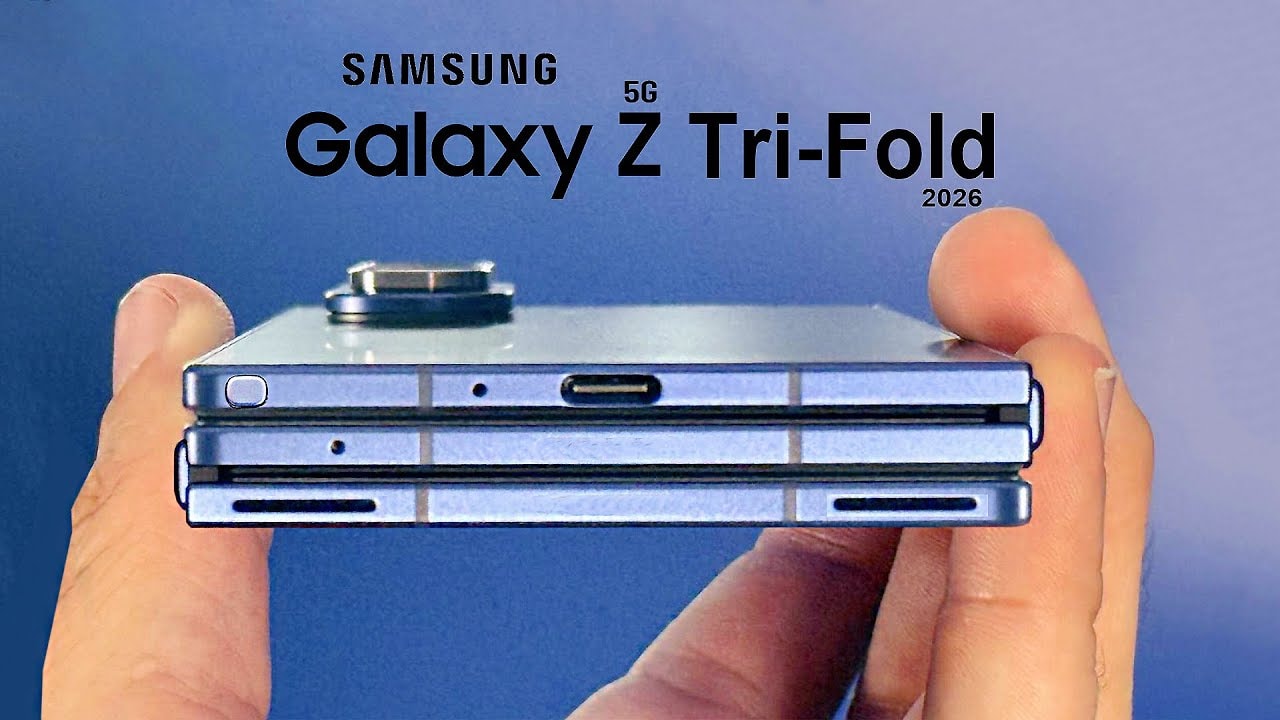
When fully unfolded, the Galaxy Z TriFold impresses with its incredibly thin design, offering an experience similar to a premium tablet. However, when folded for use as a regular phone, the device becomes thick and heavy, almost like holding two smartphones stacked on top of each other.
Samsung hasn't announced the official price yet, but with the Galaxy Z Fold 7 – a smaller foldable phone – starting at around $2,000, the Galaxy Z TriFold is likely to be even more expensive. This makes the product difficult for the average consumer to access, perhaps only suitable for tech-savvy "pioneers."
However, according to analysts, the number of units sold may not be Samsung's primary goal.
"Pilot project" for the future of smartphones
According to Liz Lee, Vice President of market research firm Counterpoint Research, the Galaxy Z TriFold can be seen as a "strategic pilot project," helping Samsung gauge market reaction to a completely new design.
As the world's largest smartphone manufacturer, Samsung has a unique advantage: every experiment it undertakes has the potential to have a significant impact. Previously, Samsung pioneered the book-style foldable phone, which was quickly followed by numerous other Android manufacturers. Therefore, even a product with modest sales like the TriFold could shape trends for years to come.
The core objective of the Galaxy Z TriFold is to combine the portability of a smartphone with the workspace of a tablet. The device boasts a 10-inch screen, significantly larger than the 8-inch screen of the Galaxy Z Fold 7.
Samsung positions the Galaxy Z TriFold for users who work extensively on mobile devices, need multitasking capabilities, and require a large display area while on the go.
In addition to the familiar split-screen mode, TriFold also supports a windowed interface, allowing multiple applications to run simultaneously, drag and drop, and resize just like on a desktop computer. When combined with a Bluetooth keyboard and mouse, the device can even function as a mini laptop.
Samsung has also deeply integrated Google's Gemini AI assistant, allowing users to ask questions related to multiple open apps simultaneously, reducing the need for tapping and swiping.
Compared to the first generations of foldable phones, the Galaxy Z TriFold shows that Samsung has learned a lot from experience. The camera on the device is of comparable quality to the Galaxy S25 Ultra, allowing users to avoid sacrificing photography capabilities for a larger screen – a weakness that existed in earlier foldable models.
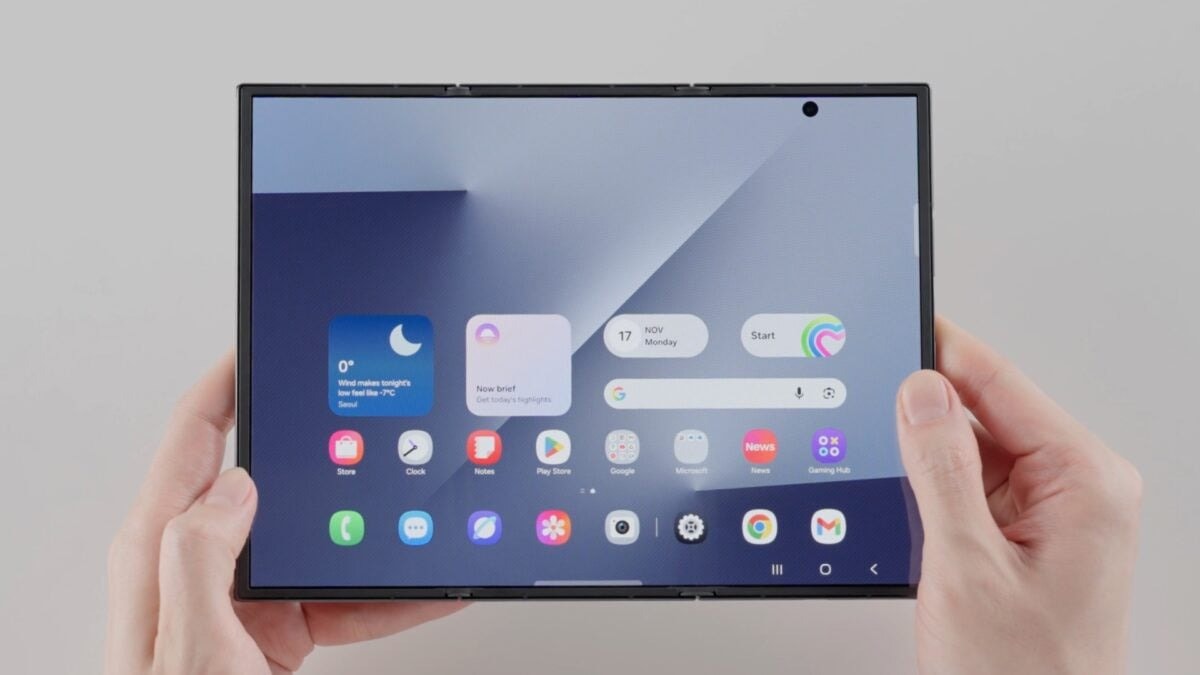
The two creases running along the screen are still visible, but based on initial experience, they aren't too bothersome. However, the big question remains: do users really need such a large screen?
Aside from the ability to open multiple apps simultaneously and view content on a larger screen, the TriFold feature, while already capable of these capabilities, doesn't offer many entirely new use cases compared to traditional foldable smartphones.
Foldable phone market: Huge potential but not yet booming.
Nearly seven years after their introduction, foldable phones still only account for a small fraction of the global smartphone market. High price, bulkiness, and durability are major obstacles.
According to the US market research firm Consumer Intelligence Research Partners, the majority of American consumers only buy new phones when their old devices are no longer usable. This makes foldable phones, which are expensive, even more difficult for the general public to access.
However, this trend is almost irreversible. Most major Android manufacturers already have foldable phones, and Apple is also expected to release its first model in the near future.
The Galaxy Z TriFold is part of Samsung's long-term strategy of experimenting with different smartphone form factors to find the most suitable one.
Drew Blackard, Senior Vice President of Mobile Product Management at Samsung Electronics America, once shared that the most interesting thing isn't predicting the future, but bringing the product to market and seeing who will be attracted to it.
The Galaxy Z TriFold may not be a phone for the masses, but it's clear evidence of Samsung's innovative ambitions and proves that traditional rectangular smartphones are far from the end of the road for innovation.


