
China's pork production is projected to reach 59.38 million tons in 2025, with imports decreasing by 8.5%.
China's total meat production is projected to surpass 100 million tons for the first time in 2025, while demand for imported pork continues to decline sharply.
China's pork production in 2025 recorded a 4.1% year-on-year growth, reaching 59.38 million tons. This increase in domestic supply contributed to the country's total meat production exceeding 100 million tons for the first time, while further easing import pressure from international markets.
Meat production across the entire industry has surpassed 100 million tons.
According to 2025 statistics, China's total meat production, including pork, beef, lamb, and poultry, is projected to reach 100.72 million tons, a 4.2% increase compared to 2024. This marks a significant milestone, as the country's livestock industry has for the first time recorded a production level exceeding 100 million tons.
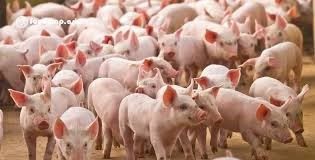
Specifically, the production structure of the main types of meat is distributed as follows:
| Type of meat | Production (million tons) | Changes compared to 2024 |
|---|---|---|
| Pork | 59.38 | +4.1% |
| Poultry | 28.37 | +6.7% |
| Beef | 8.01 | +2.8% |
| Lamb | 4.96 | -4.2% |
Notably, the number of pigs slaughtered during the year reached 719.73 million, an increase of 2.4%. By the end of 2025, the total pig population in inventory remained at 429.67 million, a slight increase of 0.5% compared to the previous year.
The trend of declining imports of foreign pork.
Alongside the growth in domestic production, China's imports of pork products continued their downward trend. In 2025, the country imported 970,000 tons of pork and 1,190,000 tons of offal, a decrease of 8.5% and 3.3% respectively compared to 2024.
A deeper analysis of market trends reveals a significant decrease in import volume compared to the previous period. Compared to five years ago, pork imports have fallen by nearly 78% from their peak in 2020. Meanwhile, offal imports have also recorded a 12% decrease over the same period.
Although the rate of import decline in 2025 has been somewhat more moderate than in the previous two years, experts believe that abundant domestic supply is significantly changing the global pork trade map, as the world's largest consumer nation gradually becomes more self-sufficient in its supply.


