(Baonghean.vn) - On a chilly autumn morning, Nam Can is shrouded in cold mist. From all directions, people of various ethnic groups in Ky Son district and their neighbors from Laos gather at the market to socialize and exchange goods. Besides hundreds of types of goods from the people of Ky Son, visitors to the market can also enjoy many products from the land of a million elephants.
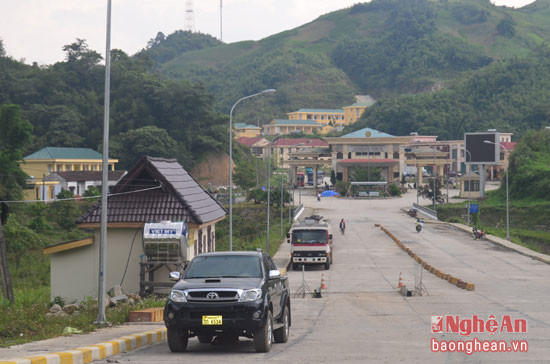 |
| Beyond the Nam Can border gate lies the border market, situated on the border between Nam Can commune (Vietnam) and Noong Het (Laos). The border market is held on the 10th, 20th, and 30th of each month. |
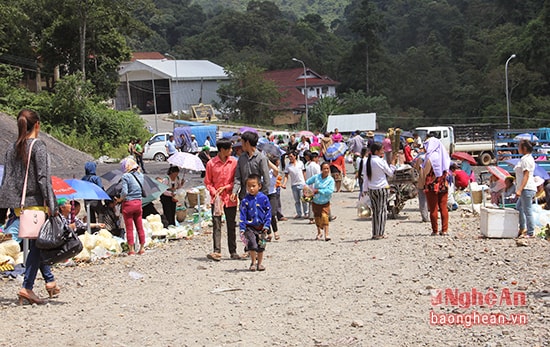 |
| From dawn, thousands of people and vehicles streamed towards the market, bringing with them local produce, making the border area even more bustling. |
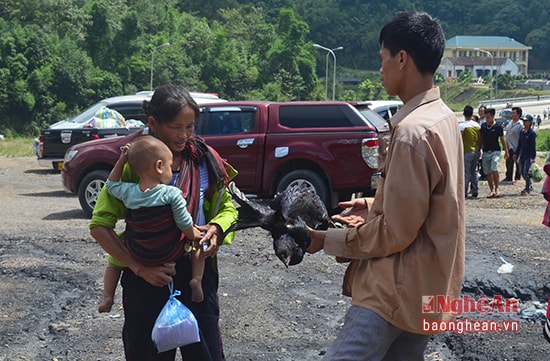 |
| Items brought to sell by ethnic minority people in Ky Son district include black chickens... |
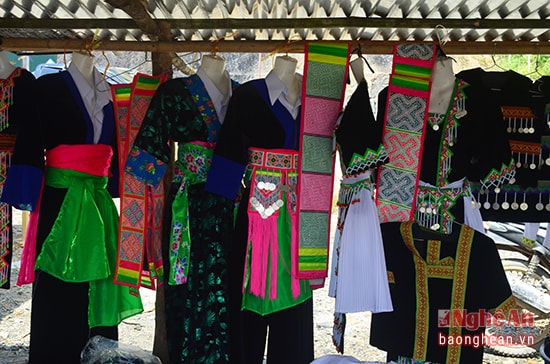 |
| ... Brocade clothing |
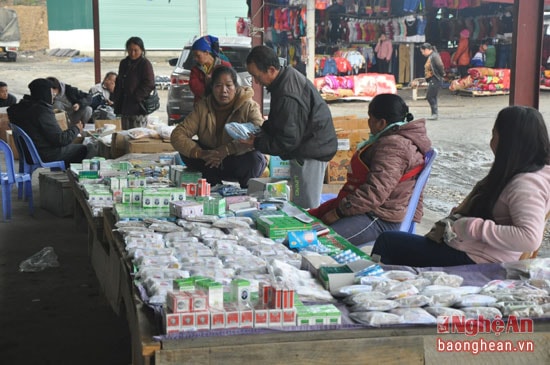 |
| At the market, the most common items are from Laos. |
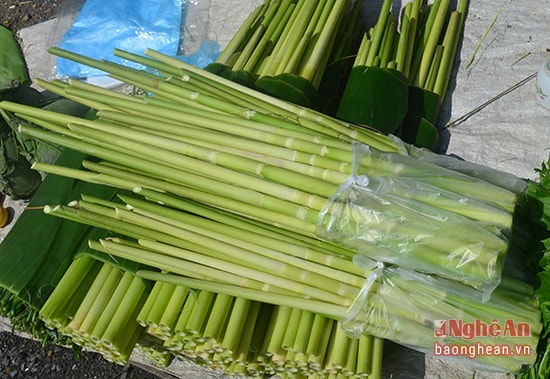 |
| From vegetables and fruits like bamboo shoots... |
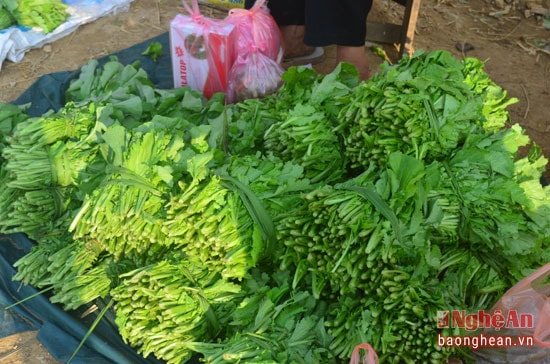 |
| Cabbage |
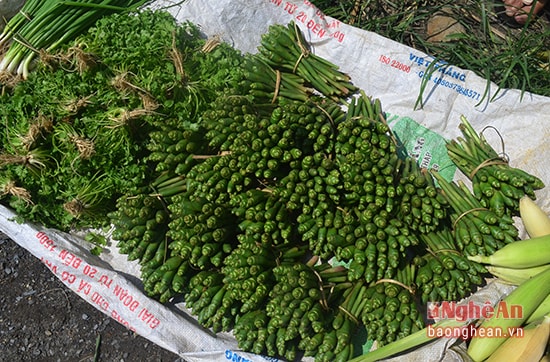 |
| Ginger flowers have also become a popular vegetable sold at border markets. |
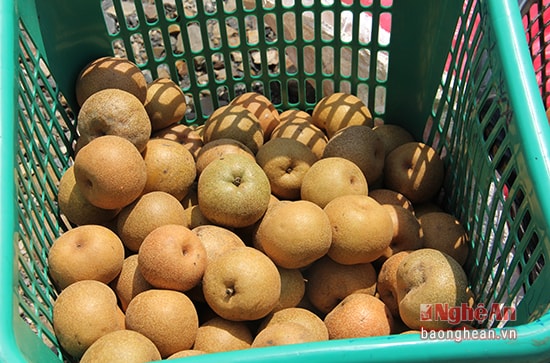 |
| Next up are Lao pears. |
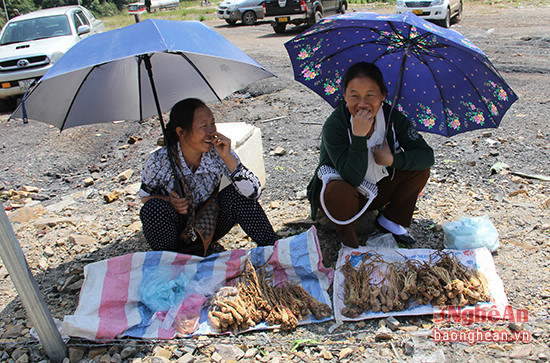 |
| Wild ginseng |
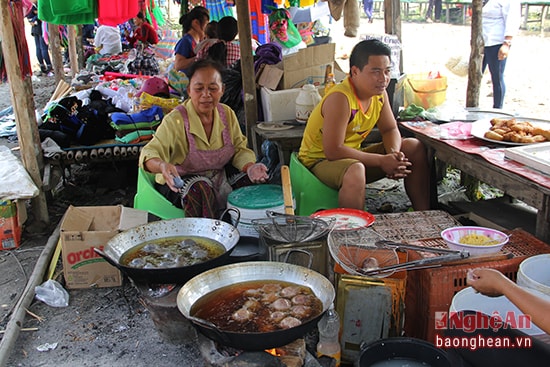 |
| When visiting the border market, tourists shouldn't miss the local Laotian pastries made right there. Among them is the purple sticky rice cake with bean filling, a signature Laotian delicacy. |
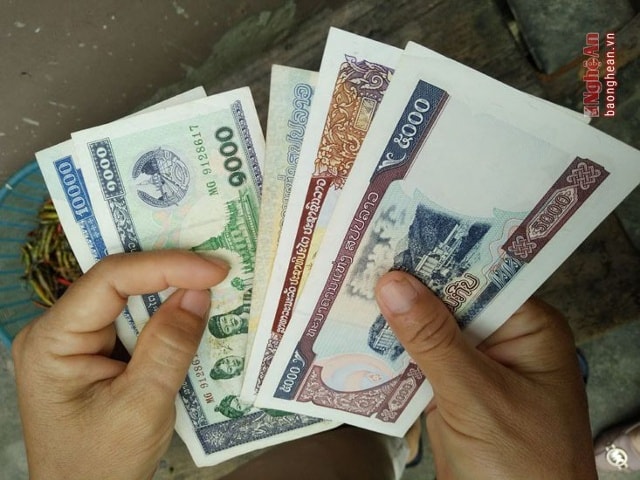 |
| At the market, tourists can buy goods using both Lao Kip and Vietnamese Dong. |
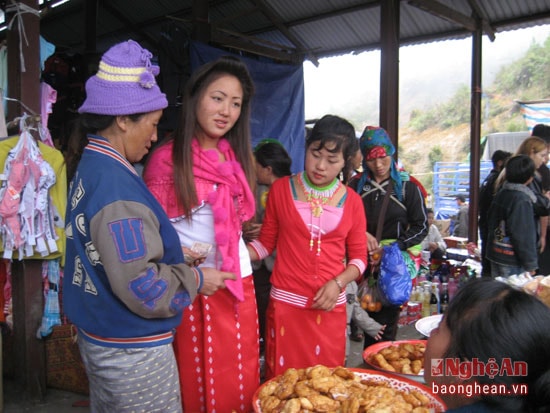 |
| Moreover, visiting border markets is not just about buying and selling; for many, it's considered a festival. |
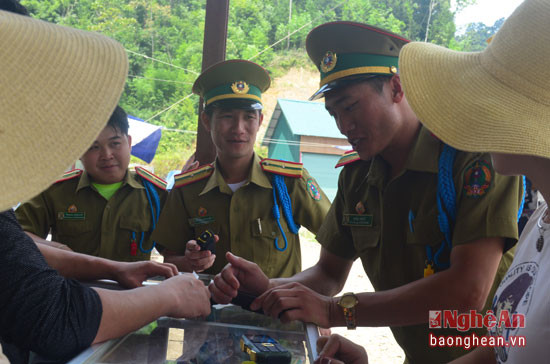 |
| Because it provides an opportunity for people from both localities and countries to meet, exchange ideas, and further strengthen the friendly relations between the two nations. In that sense, border markets remain something many people look forward to. |
Lan Thai - Vuong Van



