
School reorganization: More than just reducing bureaucracy.
The restructuring and reorganization of the school network in Nghe An province has resulted in larger school sizes and streamlined management structures, while the demands on management staff are increasingly high. Behind the reduction in the number of schools lies a larger challenge: reforming governance, efficiently utilizing resources, and ensuring the quality of teaching and learning.
From "reducing the number of schools" to changing governance methods.
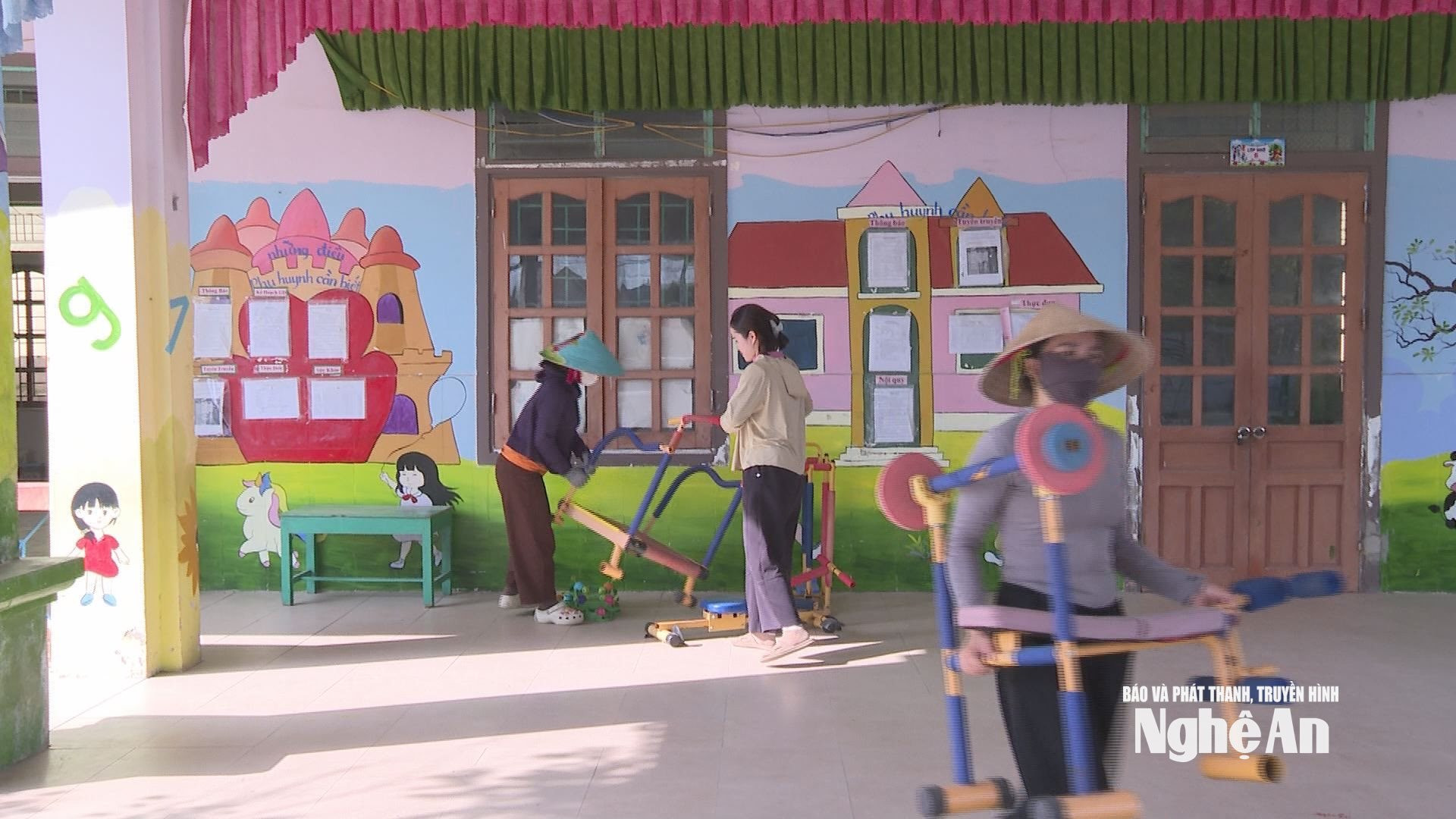
These days, at Nghi Long Kindergarten, preparations for the new school year are underway alongside a review of facilities, staff, and plans for reorganizing the school network. For schools, reorganization is not simply a change in name or number of branches, but also requires changes in operational methods.
Ms. Tran Thi Thu Hien, Principal of Nghi Long Kindergarten, observed: "The biggest change after the reorganization lies in the management structure. The head of the school must have an overall perspective and delegate authority to the vice principals according to their specific tasks."
This is also a requirement being set for localities when implementing plans to reorganize the school network. Trung Lap commune currently has 12 schools across three levels. According to the plan, the locality will reduce the number of schools by six. Reducing the number of schools by half is expected not only to streamline the organizational structure but also to create conditions for the locality to reorganize educational management in a more efficient manner.
According to the commune's leadership representative: Along with reducing the number of administrative units, the selection and placement of management staff will be reviewed according to the criteria and standards of the Education sector. Emphasis will be placed on personnel with competence, the ability to unite the team, and the capacity to meet the requirements of the new model.
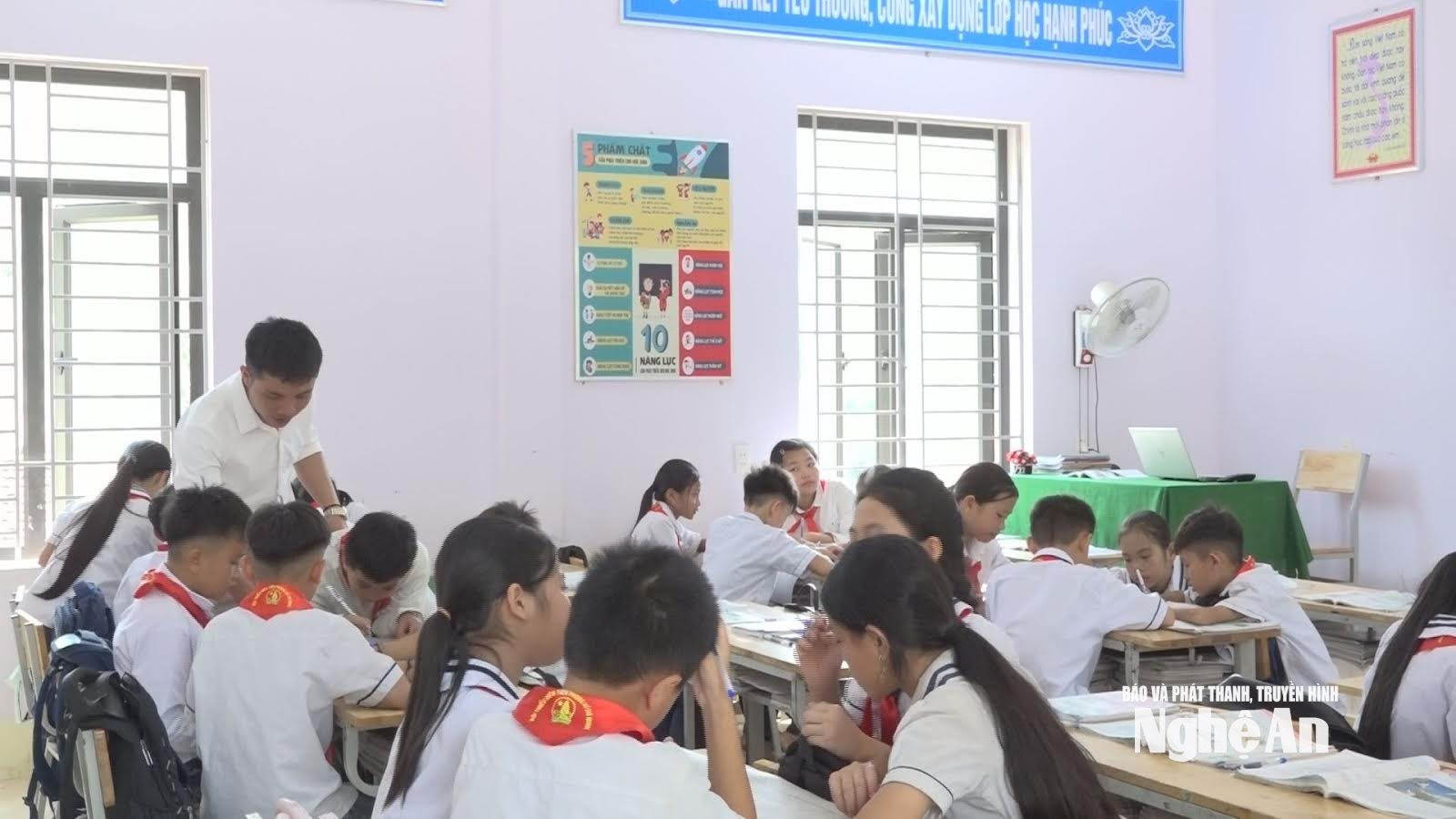
In the mountainous commune of Nga My, the area is vast and the terrain is complex, with some school locations more than 20 km from the main school, and the nearest one being 7-8 km away. Therefore, after the reorganization, there will certainly be many scattered school locations.
Human resources problem
Currently, localities in Nghe An province have completed their restructuring plans and submitted them to the Department of Education and Training. Accordingly, the entire province is expected to reduce the number of public educational institutions by approximately 47%, and about 1,100 management staff from more than 600 schools will experience changes in their positions.
Larger school sizes can facilitate the concentration of investment resources, coordination of staff, acceleration of digital transformation, and administrative reform. However, without appropriate governance, geographical distances, differences in infrastructure, and human resources between school locations can also become challenges to educational quality. Therefore, the most important requirement after reorganization is to ensure students receive stable and uninterrupted education; teachers are appropriately assigned; facilities are utilized effectively; and the management system truly fulfills its capabilities.
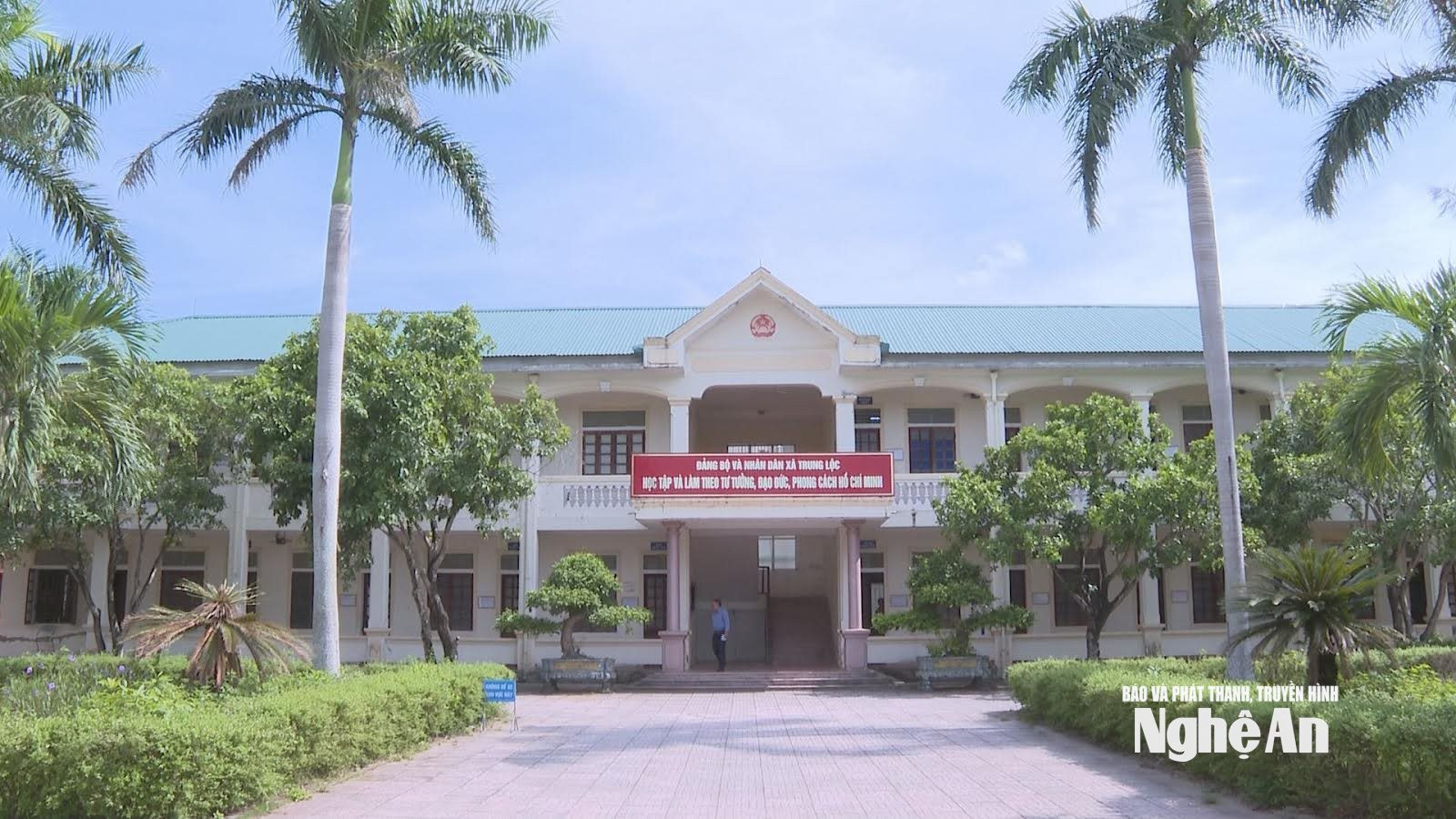
Currently, the restructuring plan has been implemented by localities in accordance with the directives of the Department of Education and Training and in line with the practical realities of each locality. For example, in Trung Loc commune, calculations show that after the restructuring, the number of management staff will be significantly reduced. From 12 principals to 6; 18 vice-principals will also need to be reviewed and reassigned. Those still of working age will be considered and encouraged to take on suitable positions such as subject group leaders or teachers.
In addition, the problem of teacher shortage remains. Local authorities must conduct a comprehensive review to develop a plan to ensure a balance between schools after the reorganization.
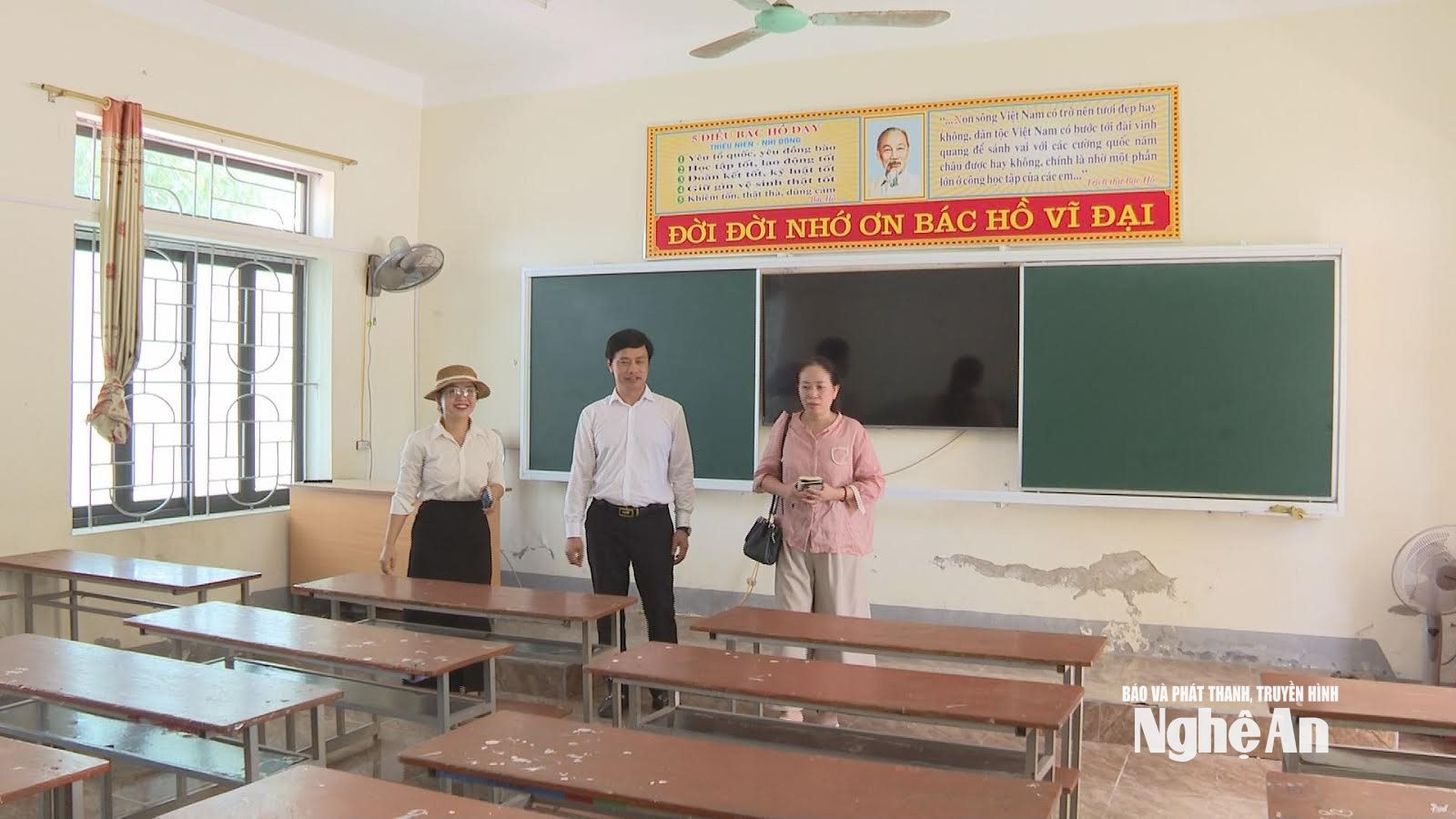
In Nghi Loc commune, the plan involves reducing the number of schools from 15 to 8, a 47% decrease. Nghi Van Secondary School will have over 700 students in the upcoming 2026-2027 school year. Currently, the school still lacks 3 teachers to organize two-session teaching per day. Therefore, the school hopes that the reorganization will create more room for teacher allocation, gradually overcoming the localized teacher shortage.
Teacher Tran Thai Phuc - Principal of Nghi Van Secondary School, said: “The biggest change here is in administration. Administration now requires a broader and more comprehensive role. It is noteworthy that the reorganization does not change the class size or the teaching staff. Students will still study at the existing school locations, ensuring that teaching and learning activities are not disrupted.”
Putting the right people in the right place ensures the system runs smoothly.
At the online meeting of the Provincial People's Committee to hear and give opinions on the plan for rearranging public preschools, primary and secondary schools, continuing education and vocational education institutions, Vice Chairman of the Provincial People's Committee Thai Van Thanh emphasized: During the implementation process, it is necessary to clearly define the responsibilities of each agency, unit, and locality; guide the implementation of personnel work in accordance with regulations, ensure legal strictness, and minimize the occurrence of complaints and lawsuits during the rearrangement process.
Chairman of the Provincial People's Committee Vo Trong Hai also affirmed: The implementation process must ensure objectivity, democracy, openness, and transparency. The selection of management officials must be based on clear criteria regarding qualities, professional competence, management capacity, prestige, and the ability to unite the collective; absolutely no favoritism, bias, or corruption should occur. Local Party committees and authorities must discuss thoroughly and take responsibility for their decisions. In case of corruption, the head of the Party committee or government must bear primary responsibility.
In reality, while reducing the number of administrative layers is the most visible part of the restructuring process, personnel placement is the decisive factor in the effectiveness of the new model. However, personnel reorganization is not easy, as the changes in job positions involve the sentiments of the entire team. Mr. Dau Khac Than, Vice Chairman of the People's Committee of Trung Loc commune, said: The locality reviews management staff first according to the criteria of the Department of Education and Training, then selects personnel based on specific conditions. Those assigned must have outstanding management capabilities, the ability to unite the team, and after the reorganization, must be able to perform effectively and meet the requirements of the task..
Mr. Kha Van Thong, Principal of Nga My Ethnic Boarding Primary School, said: "The management team and teachers have prepared themselves to implement the general policy. Management after the reorganization must be much more comprehensive now that the school has many different campuses and branches."
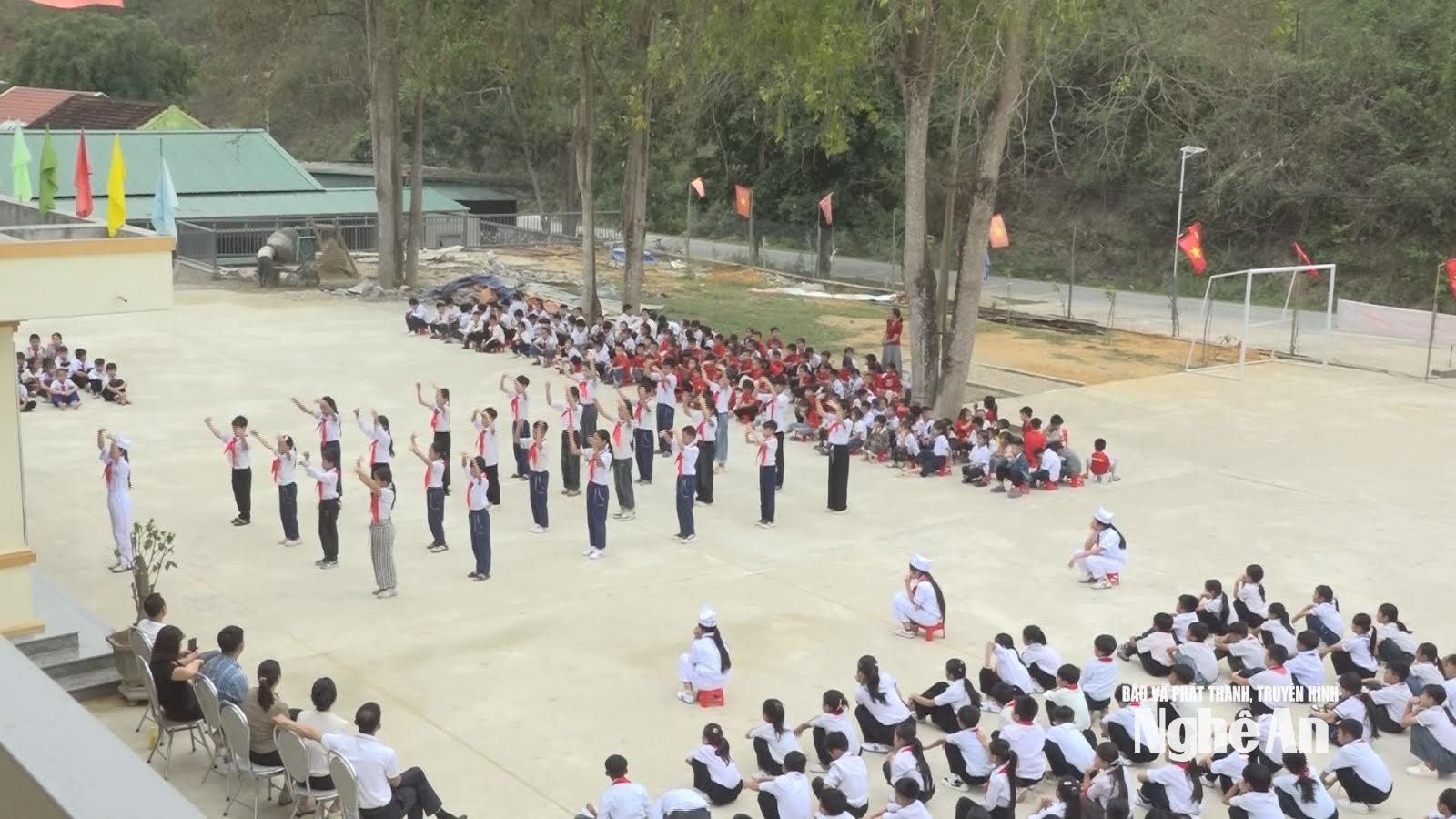
As a province with a large geographical area, many schools are located in difficult mountainous regions with fragmented terrain, and school sizes are still small and scattered. Furthermore, the teaching staff and facilities are unevenly distributed, making Nghe An province urgently need to reorganize its school network towards a more streamlined and efficient system.
The important thing is that after the restructuring, teaching and learning must be maintained stably, the quality of education must be improved, and students' right to education must be guaranteed. To achieve this, the key remains placing the right people in the right positions, selecting a team of administrators with sufficient competence and qualities, so that the new system is not only more streamlined but also operates more effectively.


