
Scout Terra/Traveler EREV: The choice of 80% of bookings.
According to the CEO, over 80% of the 130,000 Scout Terra and Traveler orders chose EREVs. A pure NMC 120 kWh EV has an estimated range of 563 km; an EREV with ~50% battery charge provides 241 km of electric range, for a total of 800 km.
Over 80% of the 130,000 Scout Terra and Traveler orders opted for the Extended Range Vehicle (EREV) configuration. This is equivalent to over 100,000 customers who still want a gasoline engine as a backup for range, even though CEO Scott Keogh insists the brand's long-term future lies in pure electric vehicles (EVs). With charging infrastructure still a concern for truck owners in the US, EREVs are becoming a practical solution.
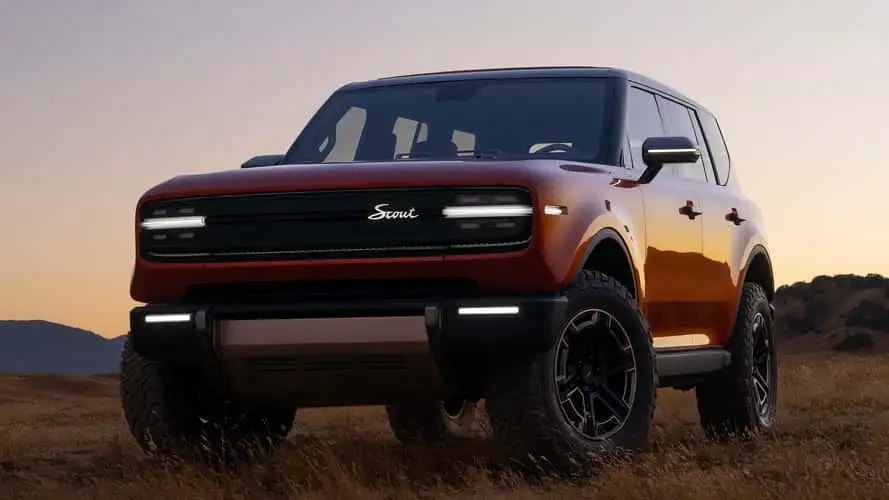
Market sentiment: 80% favor EREV
Speaking to Bloomberg, CEO Scott Keogh said that the majority of customers ordering the Terra (pickup truck) and Traveler (SUV) chose the EREV: “The market has responded. Over 80% of orders are for range extenders.” When asked if they would prioritize launching the EREV first, he said the company would “respond to market demand,” but stressed that there was no official announcement yet as both pure EVs and EREVs are under development and could potentially go into production.
This trend is not surprising, given that Stellantis has discontinued the all-electric Ram 1500 to focus on an extended-range version. The core reason: customers still want gasoline as a safety net for extended range.
Drivetrain architecture: EREV series, no mechanical connection to the wheels.
In the Scout EREV configuration, the naturally aspirated four-cylinder gasoline engine is located behind the rear axle, acting as a generator to charge the high-voltage battery pack and power the electric motor. According to the manufacturer, this engine has no physical connection to the wheels. The vehicle platform remains the same between the two configurations; both the pure EV and EREV support DC fast charging.
120 kWh NMC battery vs. half the capacity of LFP.
The Terra and Traveler's pure EVs are expected to use nickel-manganese-cobalt (NMC) batteries of around 120 kWh, for an estimated range of 350 miles (563 km). EREVs use smaller lithium-iron-phosphate (LFP) batteries, only half the size of the NMC pack. While LFPs have lower energy density, they are cheaper to manufacture.
Range: 563 km EV; 241 km pure electric EREV; total 800 km
The EREV is expected to travel approximately 150 miles (241 km) in pure electric mode. When the battery is depleted and charging stations are unavailable, the gasoline engine will operate as a generator to extend the total range to up to 800 km. A pure electric EV that relies entirely on grid charging has an estimated range of 350 miles (563 km) with a 120 kWh NMC battery pack.
Why are EREVs a good choice for truck users in the U.S.?
For truck users, concerns about charging infrastructure and downtime are major barriers. EREVs address this by offering a "safety net" of gasoline power when needed, without altering the driving experience of the electric powertrain. This is why EREVs are becoming the overwhelming choice during this transition period.
Product strategy: Meeting present needs, looking toward the future of EVs.
Scott Keogh bluntly dismissed the possibility of launching a Scout model powered solely by an internal combustion engine. He emphasized that the trend toward electrification is irreversible: “The technology is there, the innovation is there. We are in the early stages. The technology is getting better; costs will only go down.” Accordingly, EREVs are a step to meet immediate needs, while pure EVs are the long-term goal.
Production and investment roadmap in Blythewood, South Carolina
Terra and Traveler are expected to begin production in late 2027 at the new factory in Blythewood, South Carolina. Following an initial investment of $2 billion, the company says it will add another $300 million.
Quick comparison table of Terra/Traveler pure EV and EREV configurations.
| Category | Pure EV | EREV |
|---|---|---|
| Battery chemistry | NMC | LFP |
| Battery capacity | Approximately 120 kWh | Approximately half the size of an NMC package. |
| Pure electrical range | Estimated distance: 350 miles (563 km) | Approximately 150 miles (241 km) |
| Total scope of operations | Charging dependent | Up to 800 km |
| Gasoline engine | Do not have | Four naturally aspirated cylinders, located behind the rear axle; they only serve as generators, with no mechanical connection to the wheels. |
| DC fast charging | Have | Have |
Conclude
Order data shows that EREVs are the practical choice for Terra/Traveler customers today, thanks to their "range-limit-free" operation without sacrificing the electric driving experience. However, the message from Scout leadership is clear: pure EVs are the long-term direction, as technology and costs continue to improve. With a production timeline by the end of 2027 and billions of dollars in infrastructure investment, Scout is betting on a two-pronged strategy to meet immediate demand while preparing for future electrification.


