
When the lotus season begins in Kim Lien, farmers gain an important additional source of income.
In mid-May, many lotus ponds in Kim Lien commune were in full bloom. From early morning, people were busy harvesting the flowers in the ponds to deliver to customers. Besides providing a stable source of income, these lotus ponds also contribute to the renovation of abandoned lakes and create an attraction for experiential tourism in the area.
Busy heading down to the lagoon from dawn.
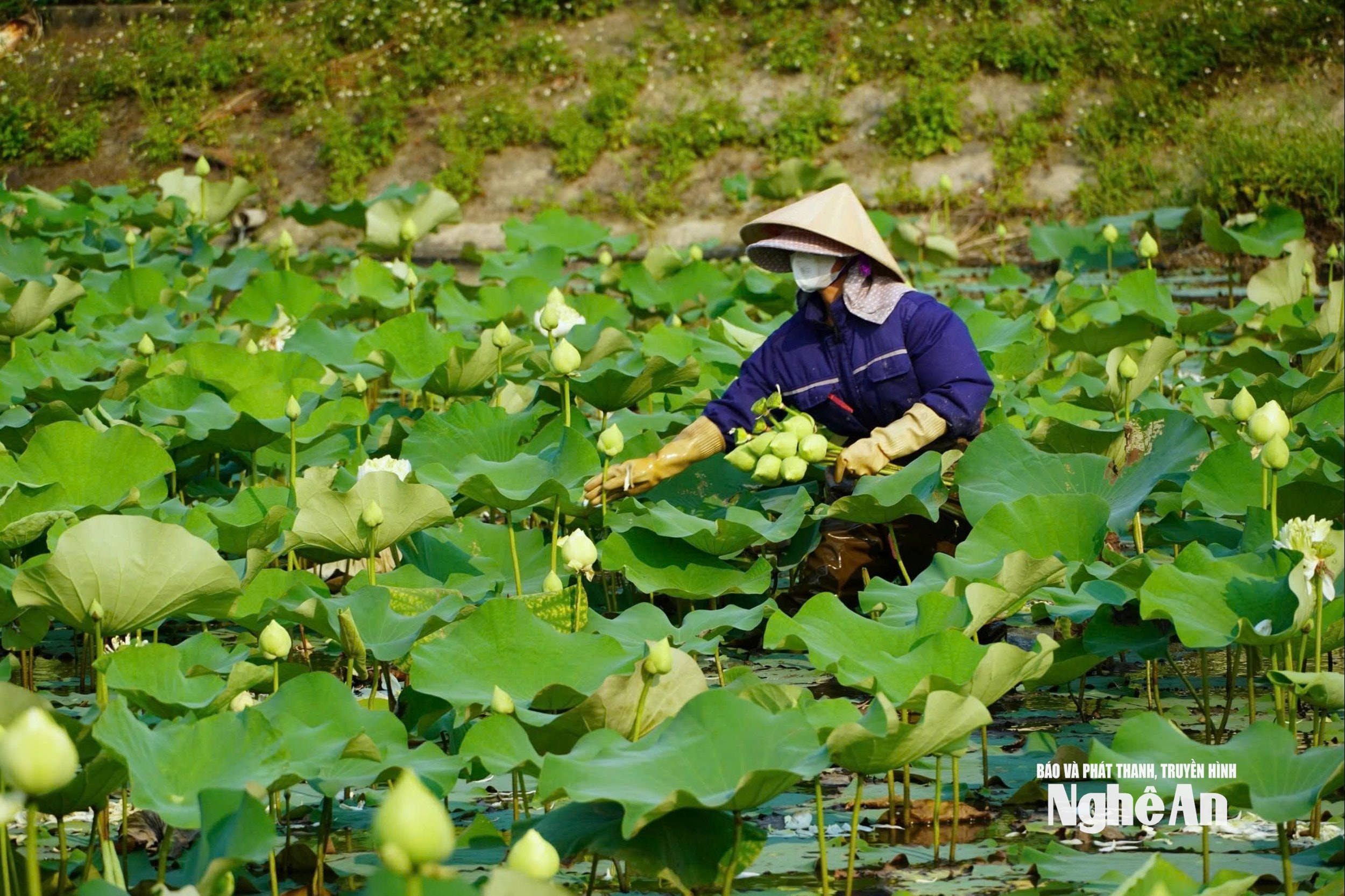
At 4:30 a.m., while the water was still covered with a thin layer of mist, many households had already begun harvesting lotus flowers from the pond. In the knee-deep water, the lotus growers quickly selected each flower that met the standards, gently cut them, and bundled them into dozen bunches to bring ashore.
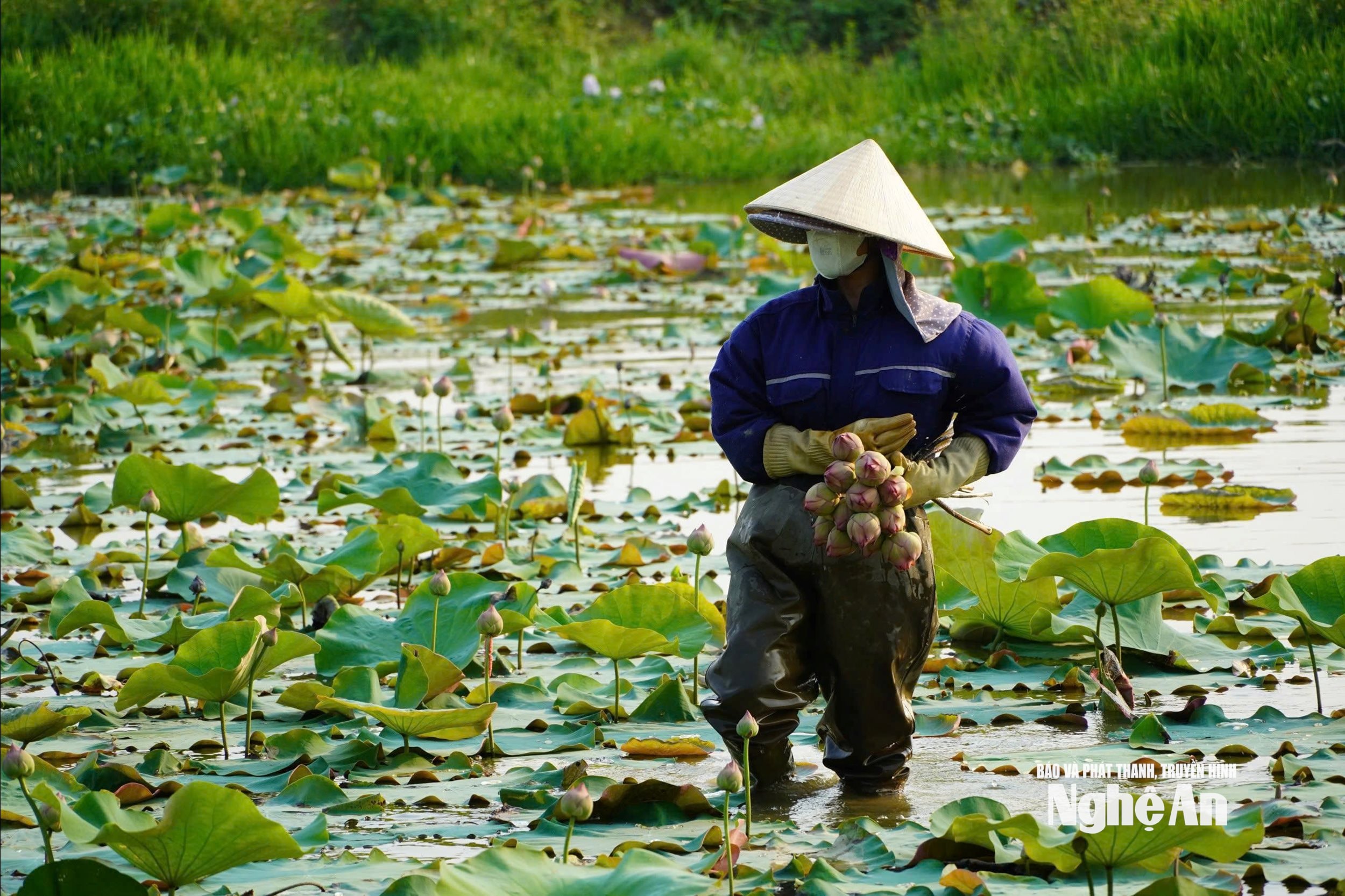
This year, the early arrival of hot weather has caused the lotus flowers to bloom about a month faster than usual. As early as mid-April, many lotus ponds in Kim Lien have begun their early harvest season.
Ms. Tran Thi The, a local lotus farmer, said that at peak times, her family harvests 300-400 lotus flowers per day to supply flower vendors, the Kim Lien National Special Historical Site, and individual customers in the province.
"Some days we have to go down to the pond before dawn to deliver orders on time. Lotus flowers need to be picked early when the petals are still closed to maintain their freshness and beautiful shape. If cut late, the flowers will bloom too quickly in the sun, making them difficult to transport," Ms. The shared.
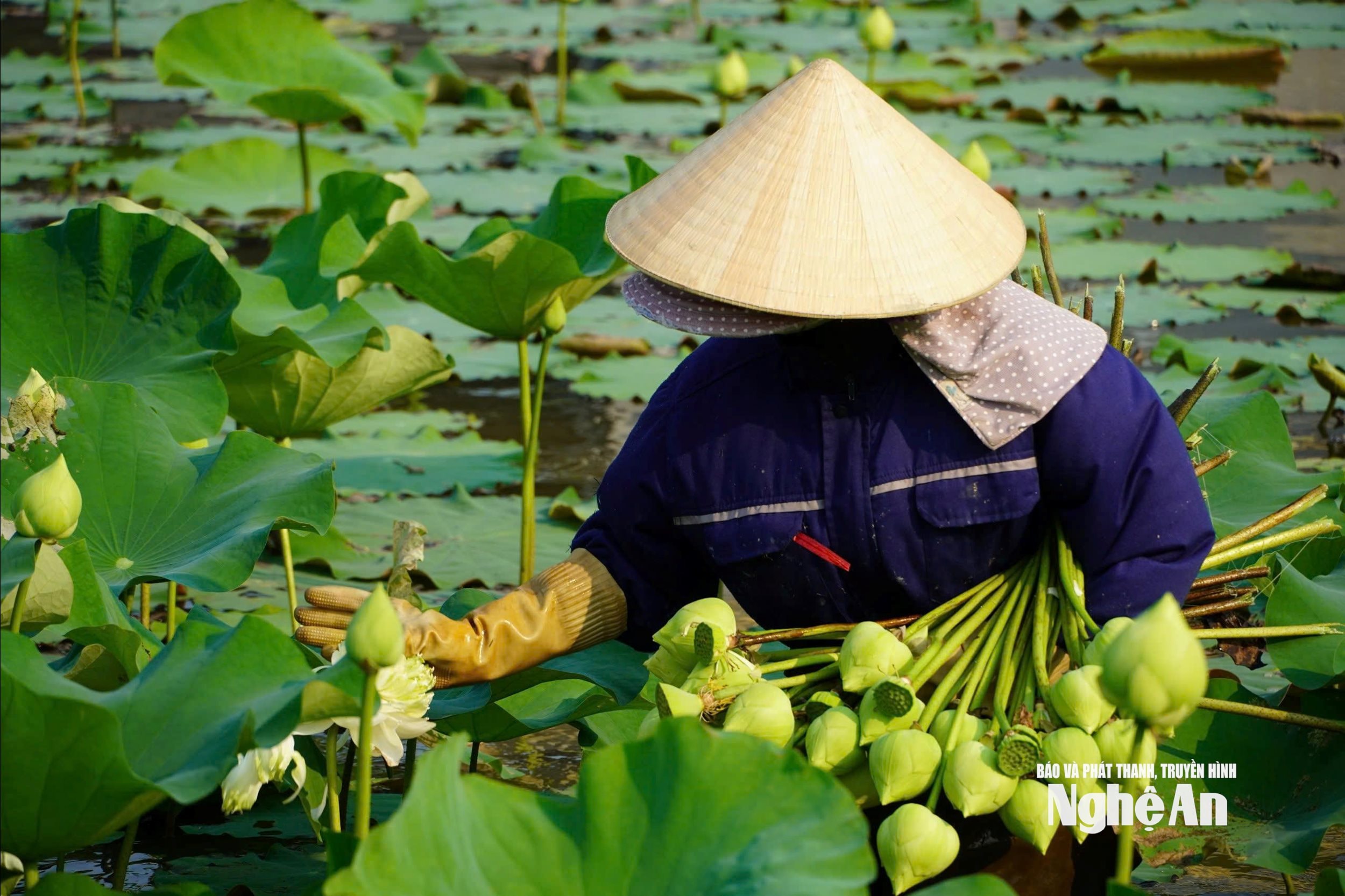
According to locals, harvesting lotus flowers requires meticulous attention to detail at every stage. The flowers that meet the standards must be uniform in size, with closed petals, straight stems, and free from pests or damage. After cutting, the flowers are bundled immediately at the edge of the pond and quickly transported to markets to maintain their freshness.
Currently, wholesale lotus prices range from 3,000 to 5,000 VND per flower, while retail prices at markets are around 8,000 to 10,000 VND depending on the variety. During the peak lotus blooming season, income from the flowers helps many households earn tens of millions of VND per month. Not only are Kim Lien lotuses sold within the province, but they are also transported to many neighboring localities.
Despite providing a relatively stable income, lotus farming is still associated with many hardships. People have to immerse themselves in water for many hours to care for and harvest the lotus. On intensely hot days, the work becomes even more arduous as the deep mud and water surface absorb heat intensely.
.jpg)
Ms. Nguyen Thanh Hoan, another lotus grower in Kim Lien, said that the lotus season usually lasts from April to August. This is also the busiest time of year for the locals, as they care for, harvest, and supply the flowers to the market.
After many years of development, the lotus ponds have expanded with many different varieties such as Quan Am lotus, white lotus, and Lycoris lotus... Some households continue to bid for more ponds to expand their production scale.
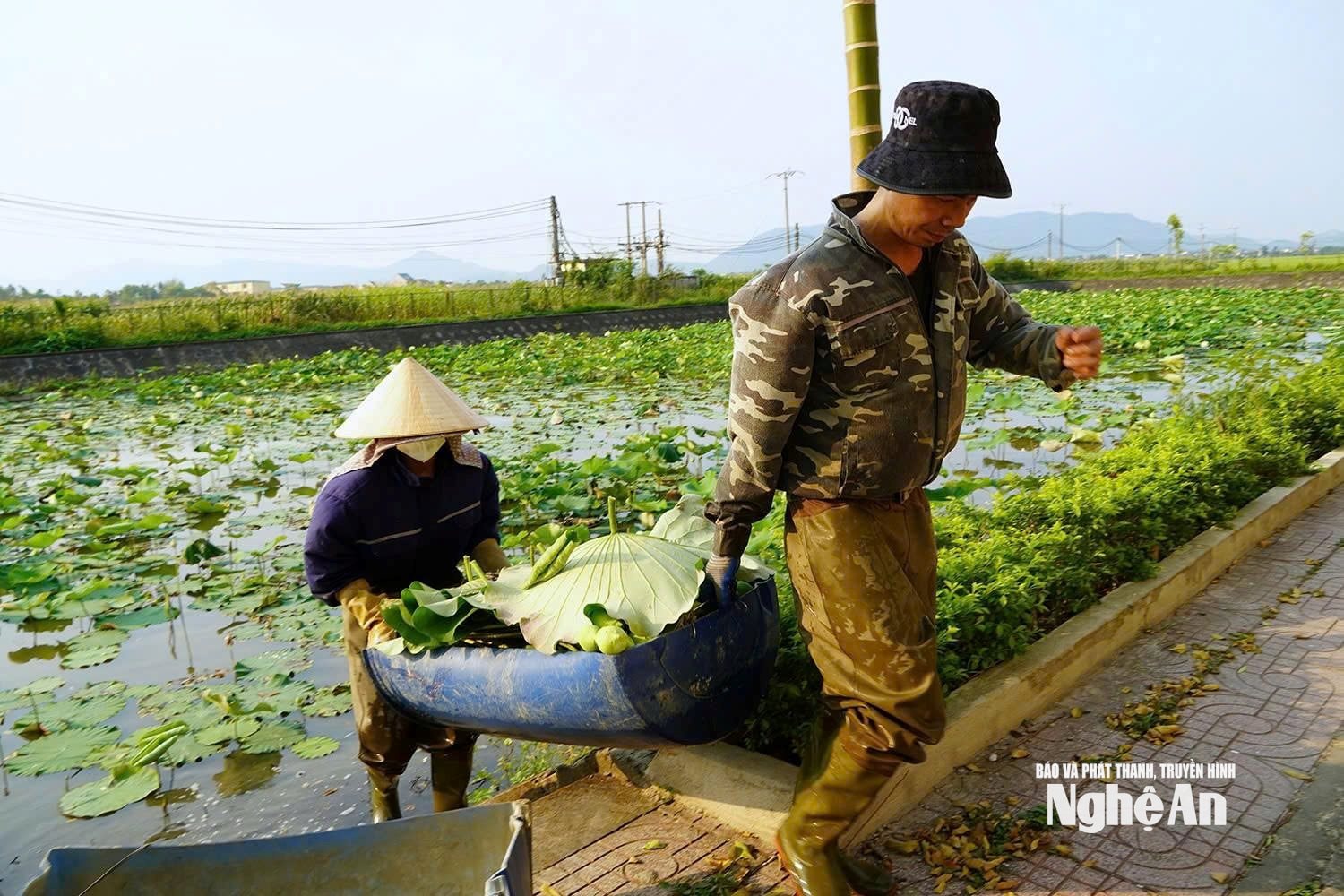
To date, many lotus ponds in Kim Lien commune have become large-scale cultivation areas, covering the landscape in vibrant green every summer. Besides providing fresh flowers, locals also utilize lotus leaves for processing and selling to traders for making lotus leaf tea, contributing to the increased economic value of the lotus plant.
From a desolate swamp to a popular tourist destination.
Every summer, when the lotus ponds in Kim Lien enter their peak blooming season, it attracts a large number of locals and tourists who come to visit and take photos. Amidst the peaceful countryside, the pink hues of the lotus flowers spread across the water's surface, blending with their gentle fragrance, creating a scene that perfectly captures the essence of Nghe An's rural landscape.
Many tourists passing by stopped to capture moments by the lotus pond, which was at its most beautiful. To cater to the increasing demand for visits, the local authorities have invested in additional small pathways, wooden bridges, and landscaped areas, creating focal points amidst the lush green landscape of Kim Lien countryside.
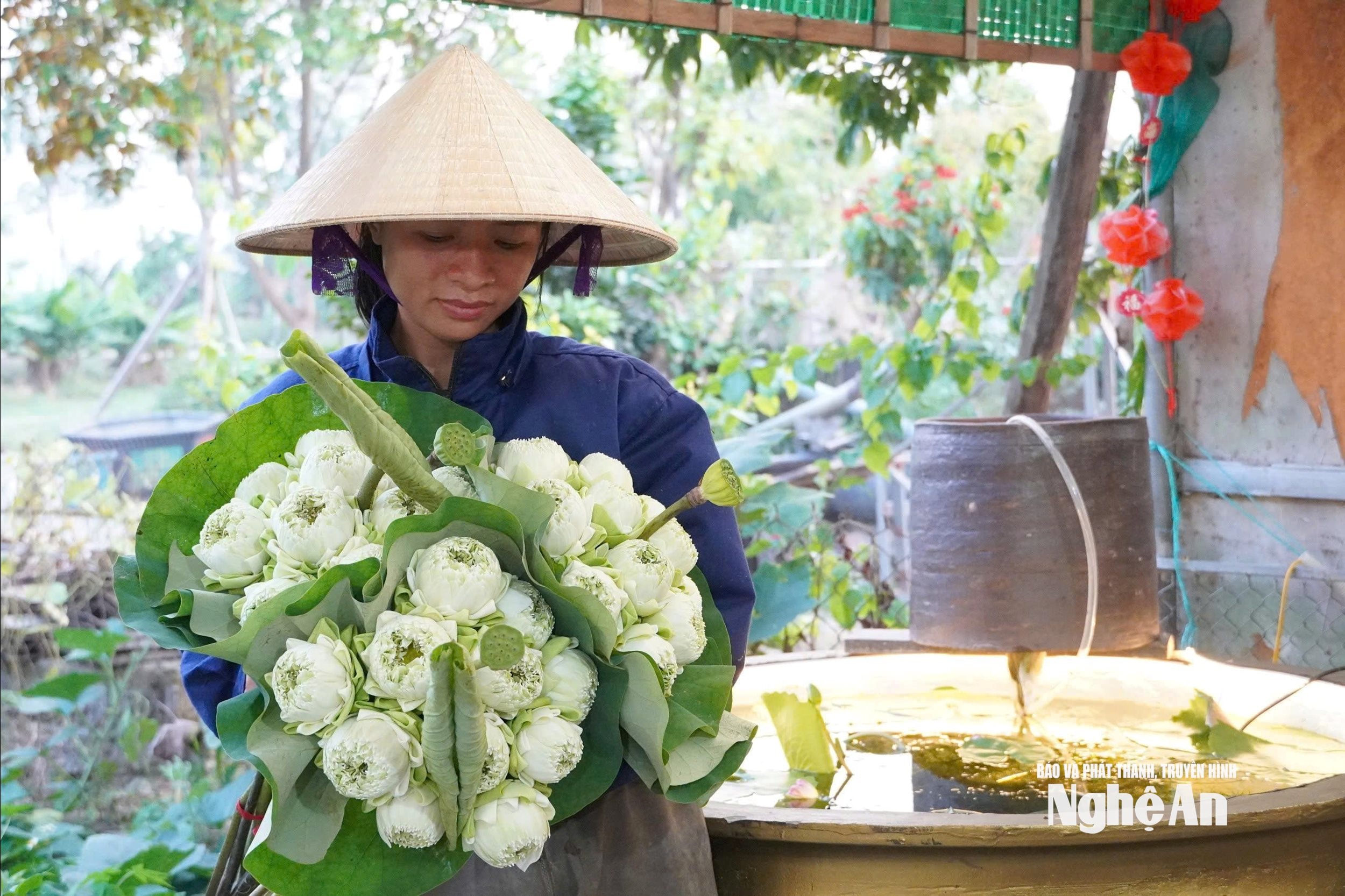
While taking photos with friends by the lotus pond, Ms. Nguyen Thi Huong, a tourist from Ha Tinh, shared: “We passed by and saw the beautiful lotus blossoms, so we stopped to visit and take pictures. The space here is very spacious, peaceful, and has a strong rural feel, creating a relaxing and pleasant atmosphere.”
According to local residents, many of the areas where lotus is now grown were formerly abandoned ponds or low-lying, uncultivable rice paddies. After being renovated to grow lotus, the environmental landscape has changed dramatically; the water is cleaner, and the space is greener, more refreshing, and more vibrant.
Besides its economic benefits, the lotus plant also contributes to the ecological landscape, opening up opportunities for experiential tourism development in the locality. These vast lotus ponds are now not only agricultural production areas but also attractive destinations every summer.
According to Ms. Nguyen Thi Van, a specialist at the Economic Department of Kim Lien commune, in recent years, the locality has expanded the area for lotus cultivation to over 50 hectares, mainly utilizing previously abandoned deep ponds and low-lying fields. In the future, the locality plans to restore a lotus river approximately 1 km long, connecting Lang Sen (the paternal hometown) to Hoang Tru (maternal hometown) of President Ho Chi Minh, contributing to the development of ecotourism linked to historical and cultural values.
In mid-May, when the lotus flowers reach their most beautiful season, many lotus ponds in Kim Lien become bustling with people harvesting the flowers from dawn. For the people here, the lotus flowers are not only a source of livelihood but also the result of land improvement, preservation, and enhancement of the simple beauty of the Nghe An countryside.


