
New livelihoods pave the way for development in the highlands of Nghe An.
Through support from the National Target Program for Sustainable Poverty Reduction, many mountainous communes in Nghe An province have now implemented new livelihood models alongside traditional ones. Besides aiming to help poor households increase their income, these models also encourage residents to work diligently and break free from a mindset of dependence and reliance.
Increase stable income sources.
Leading us on a tour of his family's farm, Mr. Vi Van Dien from Xop Khau village, Yen Hoa commune, happily shared that this year, the frequent storms and floods have caused significant damage to the village's trees and crops. Fortunately, however, his family's goats, chickens, and pigs, as well as those of other villagers, remain healthy and provide a steady income.
Then, Mr. Dien proudly showed off his Taiwanese mango orchard with over 100 trees, planted nearly a year ago. The trees were already taller than a person's height, thriving alongside his family's cassava field and goat pens. The goat breeding stock was also provided by the government through the National Target Program.
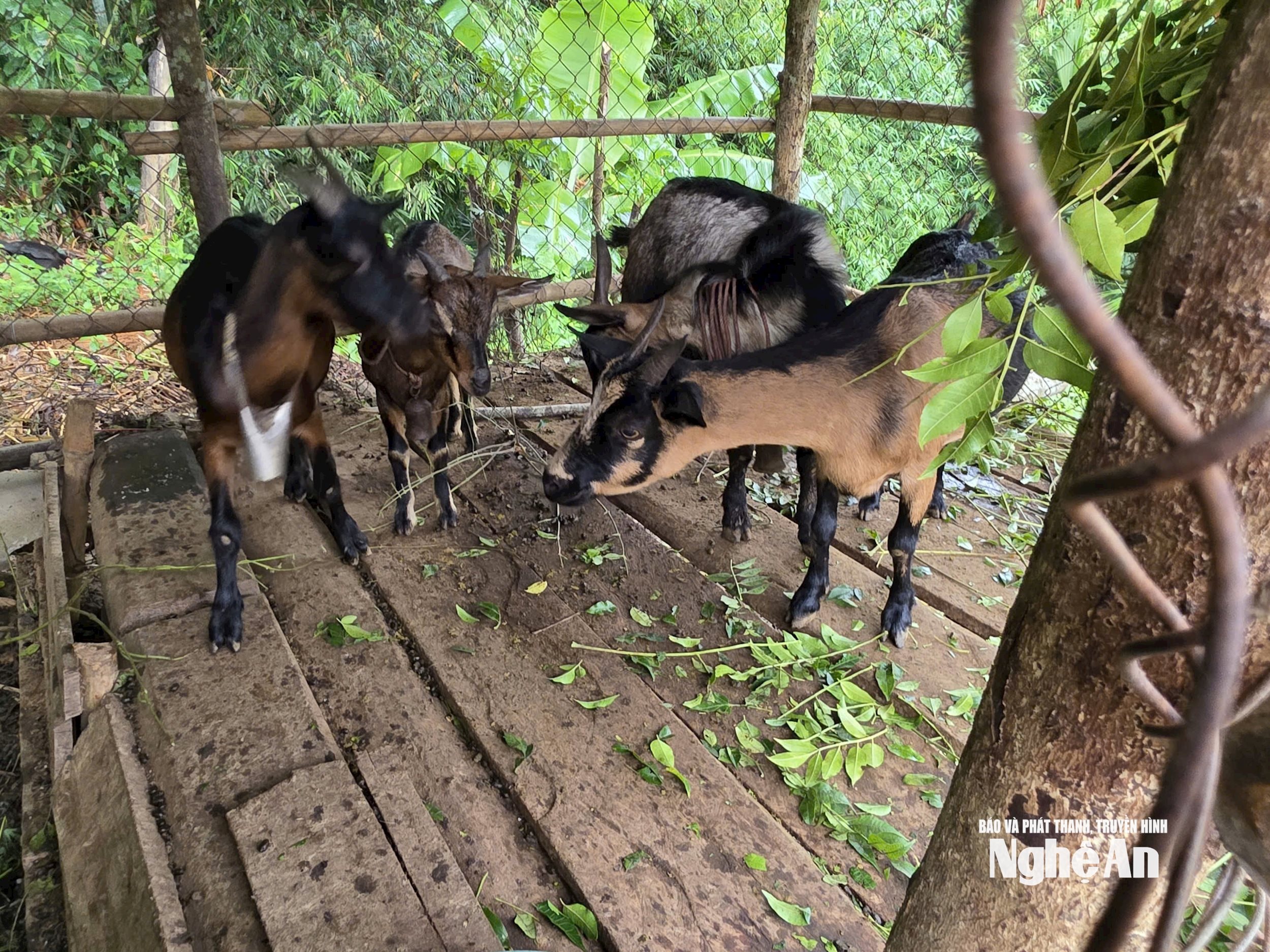
Thanks to this support, along with utilizing forest leaves and agricultural products for feeding, the goat herd grew quickly and reproduced well, bringing Mr. Dien a fairly stable income. Each year, the herd of 2 goats multiplied to 5, then 6, and now has more than 10. "When needed, I sell a few, wait for the goats to reproduce again, and then raise them. Each goat sells for 2-3 million dong," Mr. Dien confided.
In Xop Khau village, as well as other villages in Yen Hoa, people not only benefit from economic models from this source, but also receive support from the National Target Program for Sustainable Poverty Reduction, which provides both plant seeds and livestock. Ms. Luong Thi Oi's household, not far from Mr. Dien's house, received 30 chicks in 2024. After more than a year of care, the flock has multiplied to nearly 100 chickens, providing both eggs and meat. "The project chickens have delicious meat, quality eggs, adapt well, and are less prone to disease. Thanks to the flock, my family has additional income and is less burdened," Ms. Oi shared.
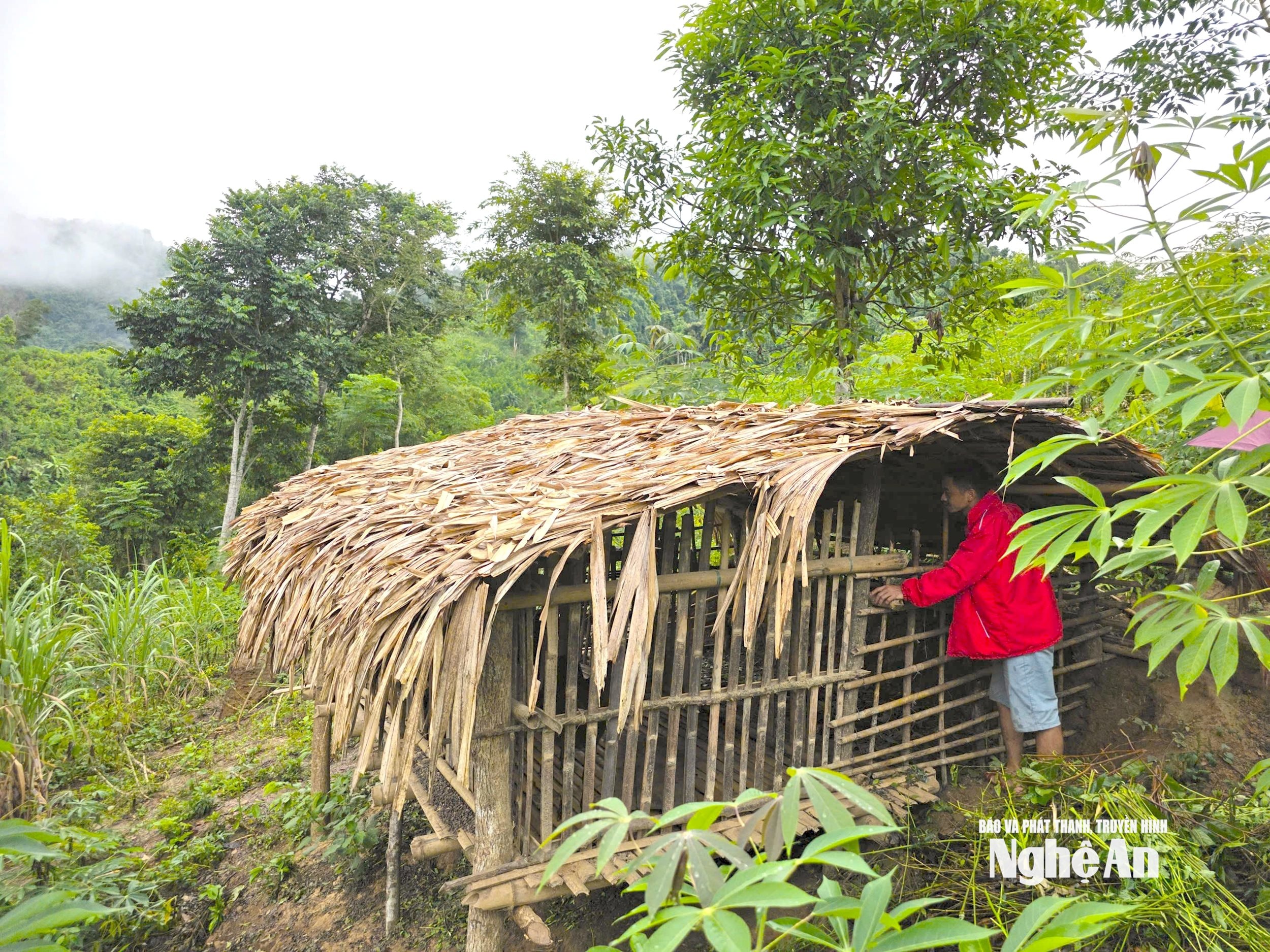
“The livelihood models introduced to the people of Yen Hoa not only help them increase their income but also open up new hope for a path out of poverty when the people and the State work together and make good use of support resources. Along with that, people are gradually becoming more diligent in production, abandoning the mindset of waiting and relying on others,” affirmed Ms. Tran Thi Sen, Vice Chairman of the People's Committee of Yen Hoa commune.
Maximizing the effectiveness of support resources.
Not only in Yen Hoa, but also in the mountainous communes of the province, public investment from national target programs is now having a positive impact, gradually helping poor households gain more sustainable income and escape poverty. For example, in Muong Tip commune, thanks to support from projects under the National Target Program, many economic models have been handed directly to poor households, helping people have more jobs and income, such as goat farming in Xop Tip village; growing ginger, raising local chickens, and fattening cattle in Huoi Khe village; and growing wet rice in Pung village...
Mr. Vi Van Son, Chairman of the People's Committee of Muong Tip commune, said that thanks to policies related to poor households, near-poor households, and newly-escaped-from-poverty households from the National Target Program for Sustainable Poverty Reduction and the Program for Socio-Economic Development of Ethnic Minority Areas in Mountainous Regions, the number of poor households has decreased year by year. Policies supporting production development and improving livelihoods through providing seedlings, livestock, bank loans, vocational training, technology transfer, housing repair assistance, and health insurance cards have helped reduce the poverty rate in Muong Tip by 20.28% compared to 2021.
.jpg)
The implemented models have created jobs, sustainable livelihoods, and income for the poor, contributing to economic growth and sustainable poverty reduction; while also supporting the enhancement of agricultural, forestry, fishery, and salt production capacity; promoting the development of production linkages along the value chain, and applying high technology to innovate production methods and techniques, increasing income for poor people.
However, during the implementation process, localities have also recognized that the projects still face many difficulties, such as: localities have not been able to mobilize the participation of businesses and cooperatives in building and implementing projects along the value chain; they have not been able to establish community groups that meet the conditions for implementing projects through community support methods. On the other hand, those belonging to poor and near-poor households are mainly people who are unable to work, the elderly, the lonely, those without support, people with disabilities, and those living in remote areas, leading to many difficulties in selecting participants and the content of support for the projects.
.jpg)
Faced with these difficulties, the locality has reported to the relevant departments and agencies; the Provincial People's Council is also conducting oversight on the implementation of national target programs, assessing the current situation, and compiling reports to submit to competent authorities for resolution, gradually maximizing the use of state support to help people escape poverty.
According to the Department of Agriculture and Environment, throughout the province, specifically Project 2 (Diversifying Livelihoods, Developing Poverty Reduction Models) under the National Target Program for Sustainable Poverty Reduction in 2024, 176 models have been implemented to date, including 18 crop cultivation models, 144 livestock farming models, and 14 forestry models, with 11,278 households participating, comprising 7,014 poor households, 3,686 near-poor households, and 517 newly escaped-from-poverty households. The total capital is over 305 billion VND, with 66.17% disbursed. Sub-project 1 (Support for agricultural production development) under Project 3 has so far implemented 89 projects, including 11 crop production projects, 66 livestock projects, 3 forestry projects, and 3 fisheries projects, with 3,438 households participating, comprising 1,961 poor households, 1,306 near-poor households, 110 newly escaped poverty households, and 61 households with people with disabilities.


