New livelihoods from medicinal plants in the highlands of Huoi Tu.
Tien Dong•August 29, 2026 14:37
From a land once marked by the hardships of opium cultivation, Huoi Tu commune is now gradually transforming itself with economic models suited to its natural conditions. Beneath the green forest canopy, plants like sorghum, purple cardamom, and giang leaves, along with hills of Shan Tuyet tea, are becoming a source of livelihood, opening up a path to sustainable economic development for the highland people.
"Green gold" under the forest canopy
One day at the end of August, we arrived in Huoi Tu commune – a highland area located in the vast western forests of Nghe An province. Established in 1963, Huoi Tu commune was once known as the "opium capital." Those years are now long gone. On the mountain slopes, instead of opium poppy fields, there is the green of forests, Shan Tuyet tea plantations, and various medicinal plants.
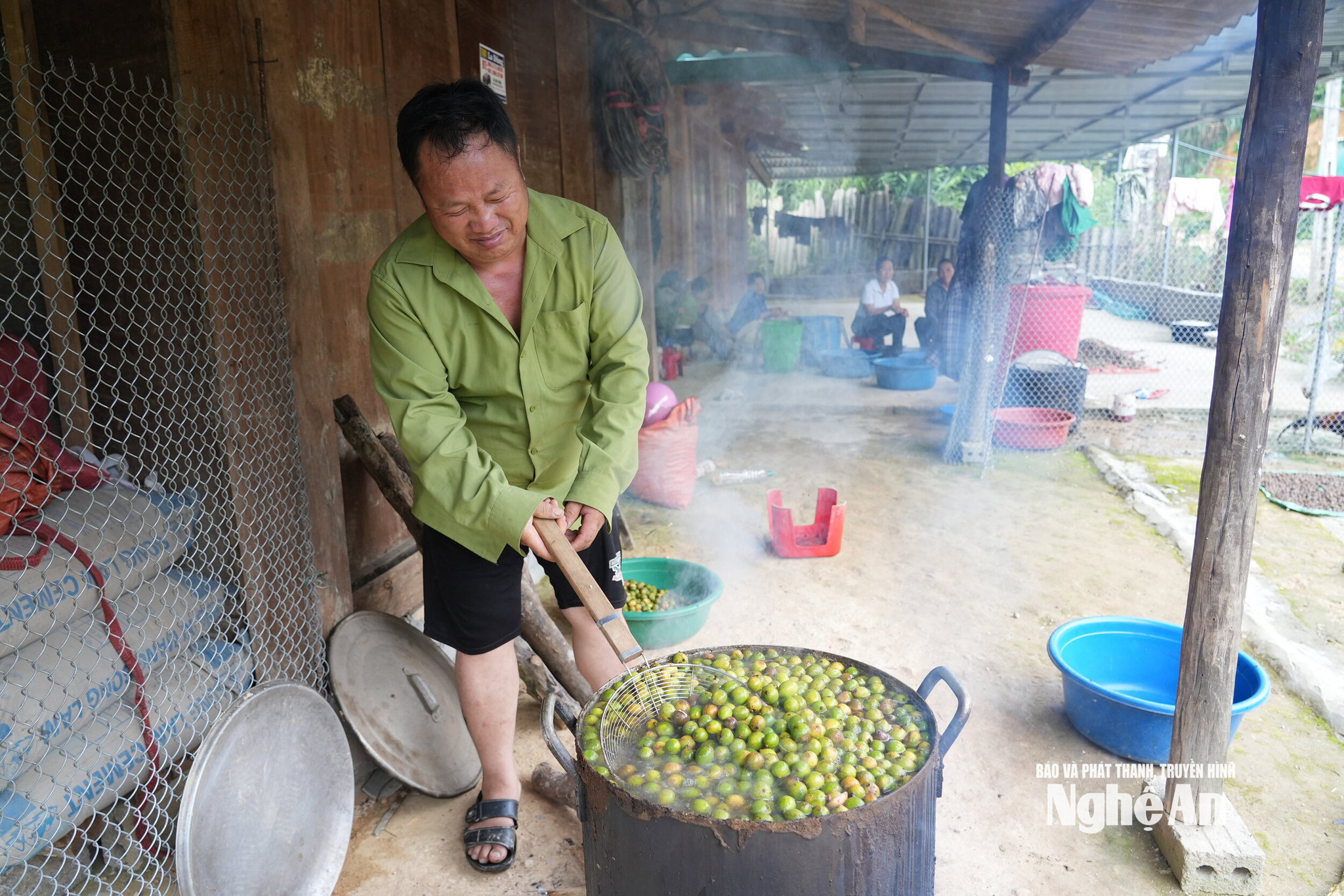
After harvesting, the Job's tears are boiled before being peeled. Photo: Tien Dong
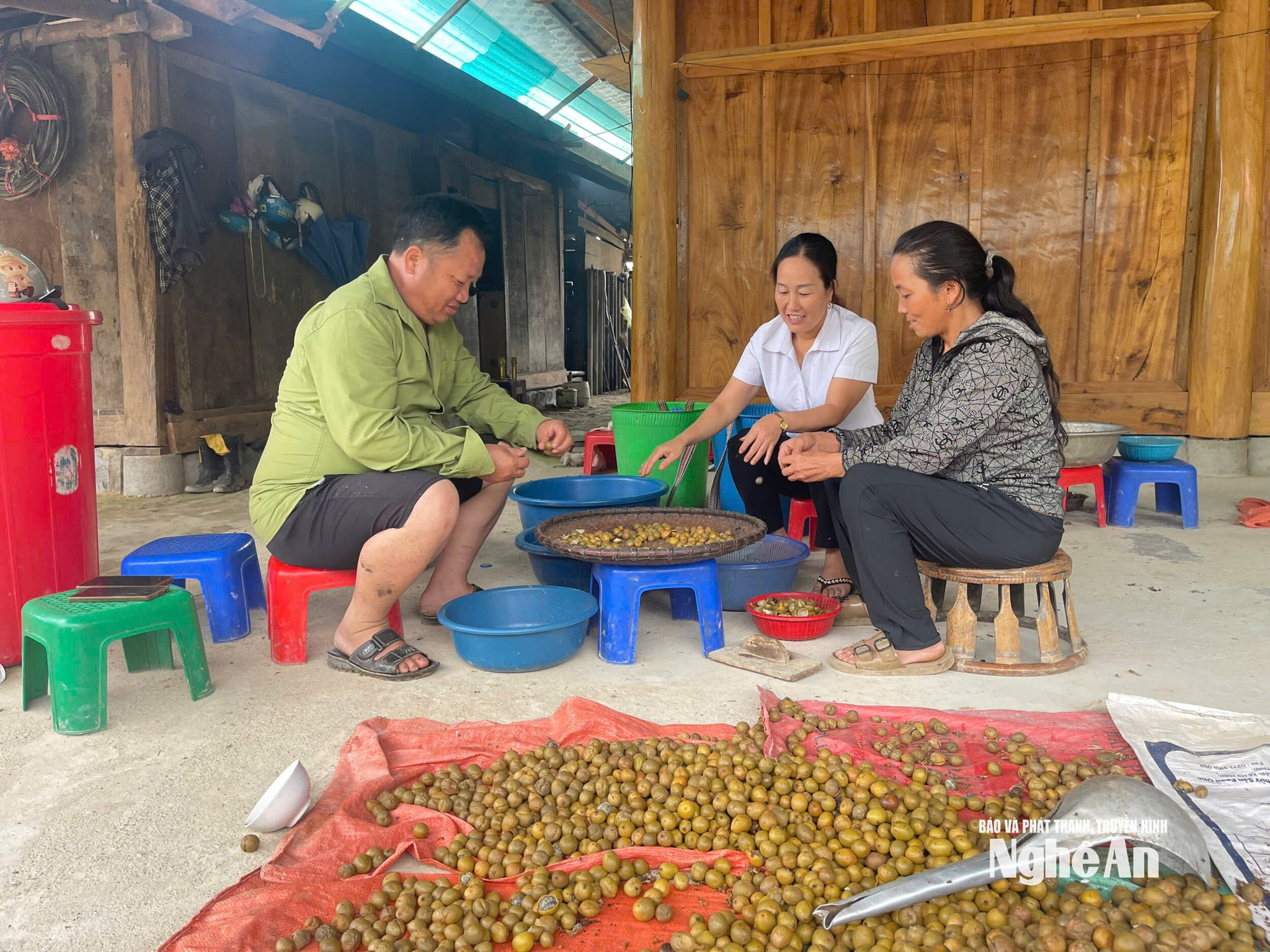
The family of Ms. Lau Y Chia and Mr. Xong Pa Hua in Trung Tam village is one of the households with a stable income from medicinal plants. Every year, during the bo bo season, from July to August, the couple carries baskets to the fields and hills to harvest the seeds. The fresh bo bo is boiled, peeled, and then dried. The fragrant aroma of the dried bo bo spreads throughout the village on the wind.
Ms. Chia said that her family has four children, all of whom are now grown up and working in companies in the lowlands. Back home, only she and her husband remain involved in farming, with sorghum being one of their main sources of income.
This year's bo bo season, her family collected about 16 sacks of fresh bolls, each weighing approximately 50 kg. After processing, 50 kg of fresh bolls yield about 20 kg of dried seeds. With the current selling price of around 55,000 VND/kg, each bo bo season provides the family with a significant additional income from this forest product.
People peel the shells off boiled barley. Photo: Tien Dong
Originally growing naturally under the forest canopy, over the past 10 years, recognizing the economic value of this plant, the people of Huoi Tu commune have proactively cultivated and intercropped it with other plants to both utilize the area under the forest canopy and generate additional income.
According to Ms. Lau Y No, Chairwoman of the Women's Association of Huoi Tu commune, in the past, sorghum mainly grew wild under the forest canopy. When its economic value became known, people proactively cultivated and intercropped it, gradually forming a raw material area. This year, the price of dried sorghum is around 55,000 VND/kg. Traders bring their vehicles directly to the villages to purchase the product, making it easier for people to sell their produce.
"
In the past, sorghum grew wild in the forest, and people would carry baskets to gather it when the season came. Now, many people also cultivate it under the forest canopy, in their fields, and around their houses...
Ms. Lau Y Chia - Trung Tam Village, Huoi Tu Commune
“Bo bo not only brings in income but also encourages people to preserve the forest, which is suitable for the conditions of the local people. More importantly, bo bo can grow under the forest canopy, not requiring the clearing of forest trees to make land for production. When medicinal plants provide income, people have more motivation to protect the forests that surround their lives,” Ms. No shared.
Currently, Huoi Tu commune has about 30 hectares of sorghum under the forest canopy, with an estimated yield of nearly 100 tons of fresh fruit per year, which, after processing, yields about 20-25 tons of dried fruit. With prices ranging from 50,000 to 55,000 VND/kg of dried fruit, income from sorghum cultivation has contributed to improving the lives of many households.
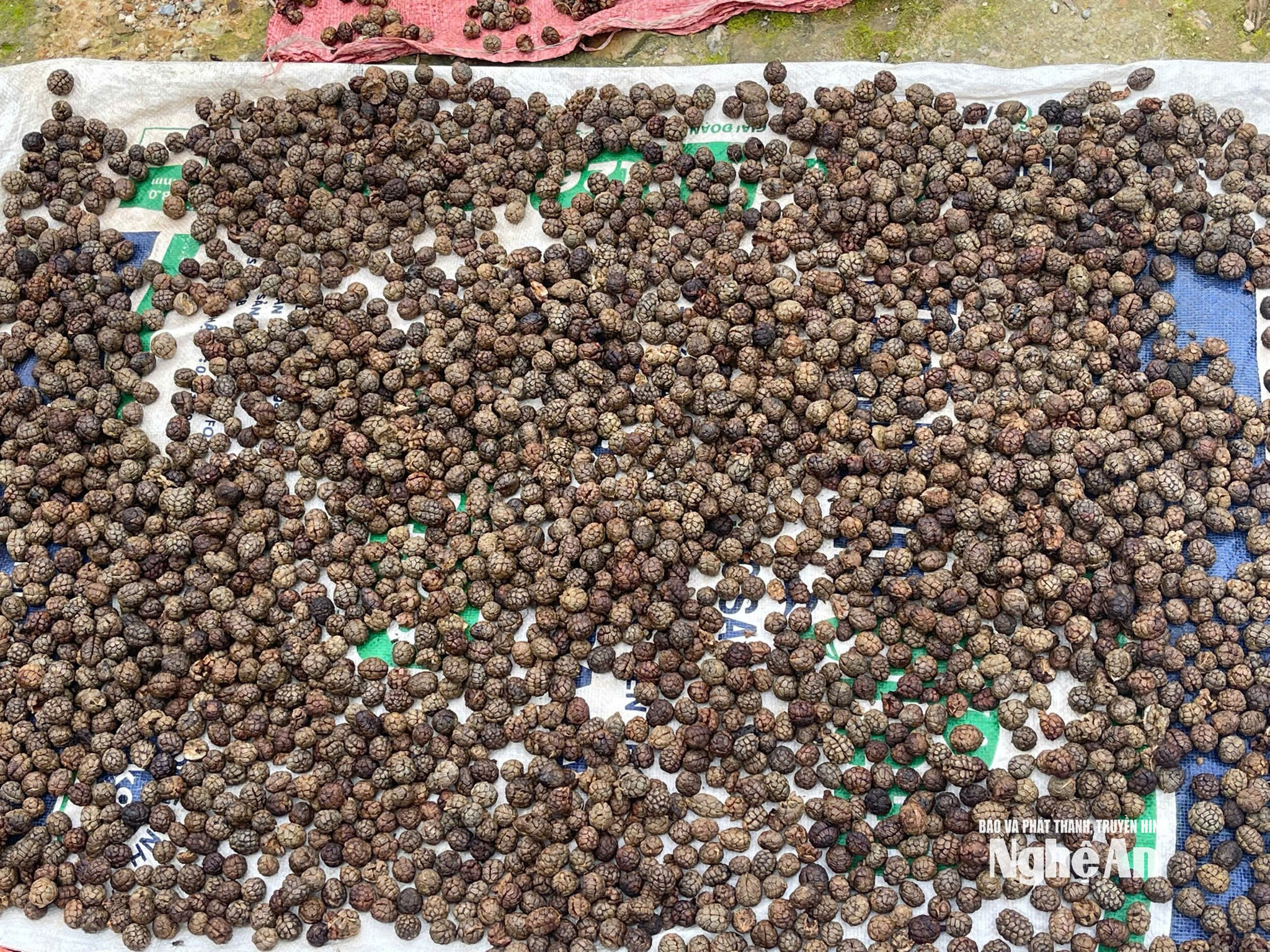
After being shelled, the millet grains are dried before being sold. Photo: Tien Dong
Besides sorghum, the purple cardamom plant is also being brought back and planted by people in Huoi Tu commune under the forest canopy and around their homes. The family of Mr. Ho Pa Chu in Huoi Khe village is one of the pioneering households in planting this plant.
According to Mr. Chu, purple cardamom is relatively easy to grow, suitable for the climate and soil conditions, and especially thrives under the forest canopy. Previously, people had to go into the forest to find and harvest the fruit, but now they can proactively bring the plants home to grow around their houses, making care easier and creating a long-term source of income. After about 3 years, the plants begin to bear fruit and can be harvested again in subsequent years.
The current purchase price ranges from 60,000 to 80,000 VND/kg for fresh fruit; after drying, the price can reach 400,000 to 500,000 VND/kg. Each harvest season, many households can earn tens of millions of VND from this medicinal fruit. For example, Mr. Chu's family earns a stable income of 65-70 million VND annually from this medicinal plant.
Many vacant plots of land or areas under the forest in Huoi Tu commune have been used by local people to grow medicinal herbs. Photo: Tien Dong
In fact, in Huoi Tu commune, the local authorities have supported 77 households in planting over 100,000 purple cardamom plants. This is considered a promising direction to gradually expand the area of medicinal plants, forming a commodity production zone suitable to the local natural conditions.
Along with Job's tears and purple cardamom, the people of Huoi Tu commune also cultivate and care for the Giang leaf plant under the forest canopy. Giang leaves not only bring a naturally sour and refreshing flavor, enhancing the taste of dishes, but also aid digestion, cool the body, and boost health.
Thanks to these benefits, the leaves of the Giang plant are highly valued in the Chinese and Taiwanese markets, leading to increasing demand. Locals harvest the leaves and sell them to traders at an average price of about 15,000 VND/kg. Some households earn 50-60 million VND per year from this plant.
From forest conservation to economic development
Significantly, the economic value derived from products found beneath the forest canopy is driving a change in people's thinking and practices. Forests are now seen not only as a source of timber but also as a space for developing non-timber forest products, including medicinal plants.
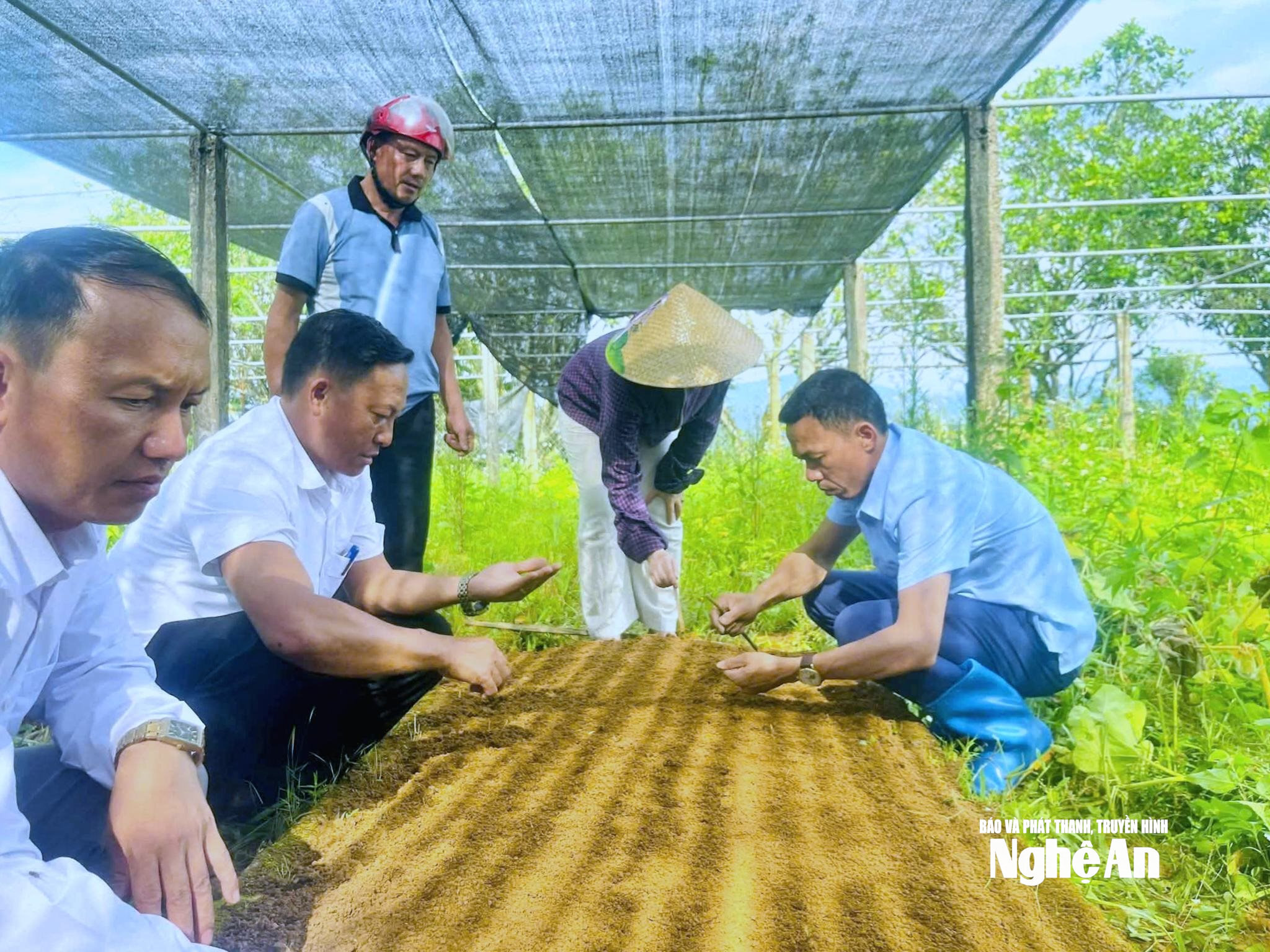
Cultivating medicinal plant seedlings in Huoi Tu commune. Photo: CSCC
Mr. Dềnh Bá Lồng, Chairman of the People's Committee of Huồi Tụ commune, said that Huồi Tụ commune is located nearly 300 km from the center of Nghe An province. It currently has 1,041 households with 5,186 inhabitants, comprising four ethnic groups: Thai, Khơ Mú, Mông, and Kinh. The commune still has a high poverty rate of 54.7%, and near-poverty rate of 24.6%. Therefore, creating stable livelihoods suitable to the people's conditions is a crucial task in the local development process.
"As a high-altitude mountainous commune, we have determined that socio-economic development must be linked to the local characteristics. In addition to raising buffalo and cattle and growing Shan Tuyet tea, the commune is focusing on developing models for planting and harvesting natural medicinal herbs under the forest canopy, gradually increasing the economic value on the same area of land," Mr. Long shared.
In fact, currently, after Muong Xen and Nam Can communes, Huoi Tu commune is one of the most bustling business and trading centers in the western mountainous region of Nghe An province. The entire commune has over 100 business households, concentrated in the commune center and at the intersections leading to Bac Ly - Muong Long and Muong Long - My Ly. National Highway 16 and inter-commune roads connecting with Na Loi and Keng Du communes have facilitated trade, transportation of goods, and the consumption of local agricultural products and medicinal herbs.
The center of Huoi Tu commune, viewed from above. Photo: Tien Dong
Mr. Lồng also stated that Huồi Tụ commune has determined that developing medicinal plants should not only focus on expanding the cultivated area but also on selecting suitable crops, establishing raw material zones, providing technical guidance, and emphasizing preliminary processing, manufacturing, and finding stable markets. Along with this, the locality will strengthen linkages between people, cooperatives, and businesses, gradually building brands, improving quality to increase product value, and creating sustainable livelihoods for the people.
This orientation is also consistent with the Nghe An province's medicinal plant development plan until 2025, with a vision to 2030, and the policy on economic development of the western region as determined by the Politburo in Resolution No. 39-NQ/TW dated July 18, 2023.
In particular, Nghe An province is oriented towards rapid and sustainable development of the western region based on maximizing its potential and advantages, especially forest economy and economy under the forest canopy; focusing on developing non-timber forest product production, especially medicinal plants.
From the lush green forests of Huoi Tu commune, this direction is gradually being concretized through simple yet practical production models. People both care for the forest and harvest produce from under the canopy; plants like bo bo, purple cardamom, giang leaves, and Shan Tuyet tea have become sources of income, contributing to changing the lives of people in this high mountainous region.
Your comment has been submitted and will be displayed after being reviewed by the editorial team. The editorial board reserves the right to edit comments to comply with the newspaper's content guidelines.

.jpg)
.jpg)


