
Promptly resolve difficulties for the Commune Public Service Center.
Nghe An province has established 130 commune-level Public Service Centers to serve as hubs for providing public services. However, the operation of these centers is facing difficulties, ranging from legal obstacles and personnel crises to outdated infrastructure.
"I have the money, but I can't spend it."
For the past three months, Mr. Le Duc Dang, a specialist at the Public Service Center of Huu Khuong commune, has not received a single penny in salary. Mr. Dang, originally a television technician, was transferred from the former Culture and Information Center of Tuong Duong district to this center immediately after the new model was established. Mr. Lo Van Tuan, an agricultural specialist, is in a similar situation.
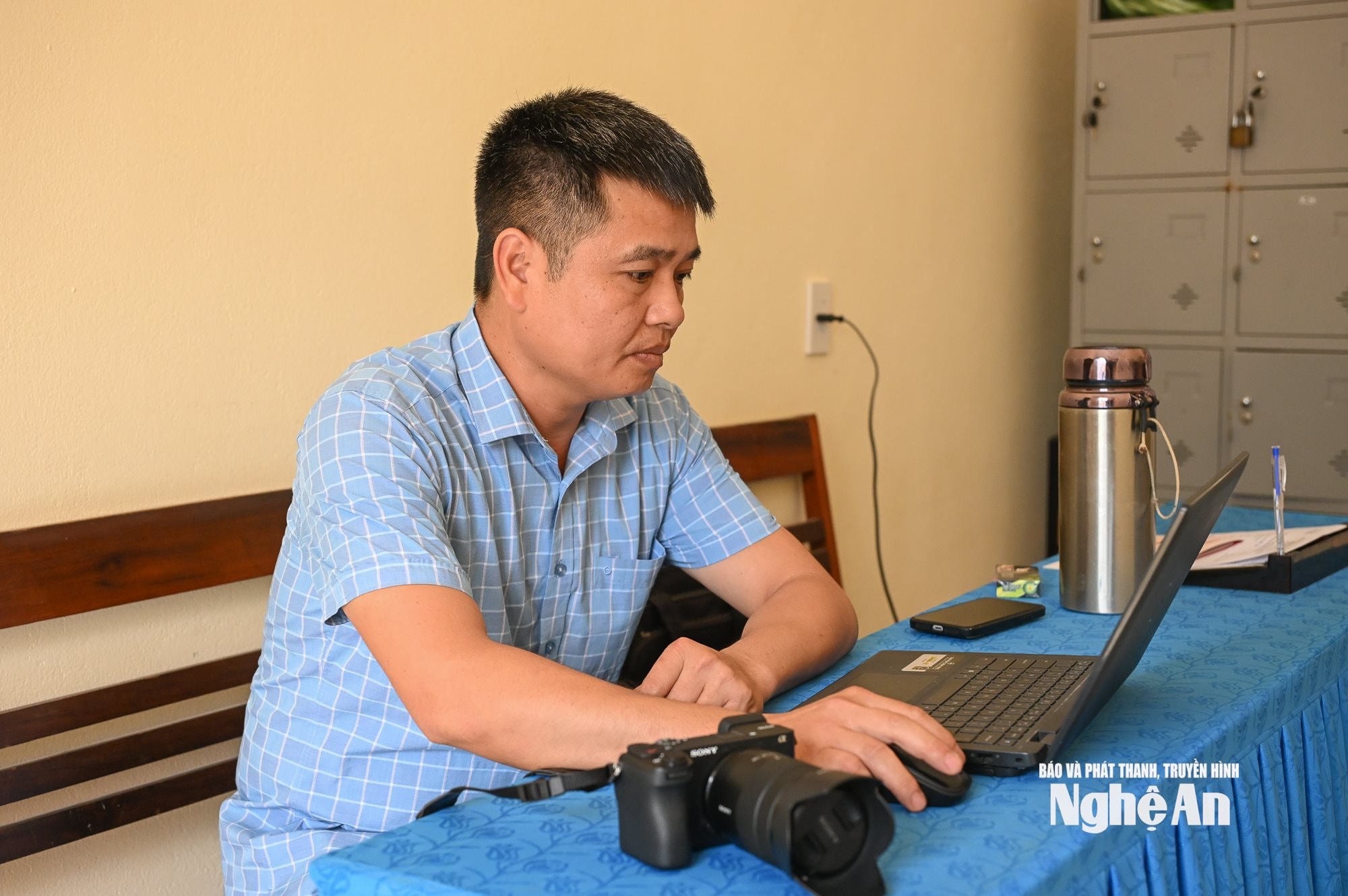
The paradox is that, although the provincial budget has fully allocated the funds, they remain idle in the account because there is no legitimate "disbursement order." The center has been established, but the leadership structure is incomplete, and there is no director named as the account holder, so it cannot open a bank account or obtain a seal for transactions.
“For almost four months, my brothers and I worked using our own money,” Dang shared with a forced smile. For a village like Huu Khuong, almost completely isolated within the reservoir, working without pay is a real test of patience. Each time he visits home in Con Cuong commune, Dang has to spend more than half a day traveling, crossing the reservoir by boat and then taking two bus rides. Each round trip costs about 400,000 dong. “If I miss the shared ferry and have to hire a private boat, the price can go up to 1 million dong,” Le Duc Dang calculated. In total, he spends 1.6 million dong from his own pocket each month just on transportation, a huge burden for someone who is owed back pay.

According to Mr. La Van Thai, Chairman of the People's Committee of Huu Khuong commune, the Commune Public Service Center was established in December 2025, but to date, it only has two staff members. The commune is severely understaffed to the point that it is impossible to appoint a Director for the Center. According to the staffing plan, Huu Khuong commune needs 32 people, but in reality, it currently only has 14 officials, including leaders. Of these, the position of Head of the Culture Department is currently held concurrently by the Vice Chairman of the People's Committee and there is no staff member. Other leadership positions are also similarly held concurrently.
The Community Public Service Center was expected to inherit resources, facilities, and management functions from the former district level to better serve the people. However, due to a lack of legal framework and limited personnel, the center has not yet been able to operate effectively. In fact, staff are forced to work in a "multitasking" capacity. Le Duc Dang, despite not having studied journalism or communication, now has to take on multiple roles: taking photos, writing articles, managing the Fanpage, and operating the commune's broadcasting system.
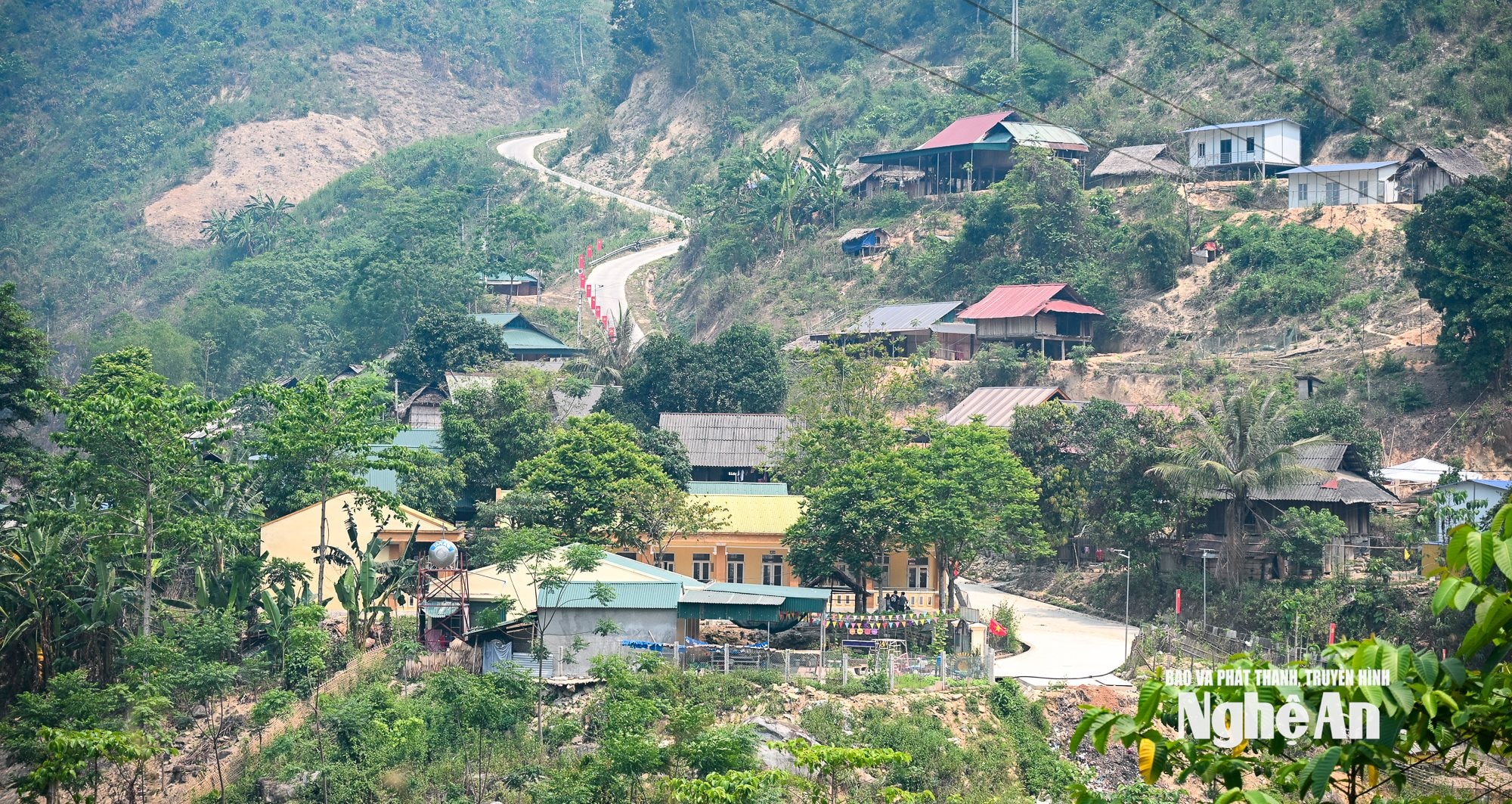
Even more concerning is the case of Mr. Lo Van Tuan. Despite graduating in agriculture and forestry, his daily task is carrying a bag to vaccinate cattle and buffaloes. Mr. Tuan confided: "I graduated in agriculture and forestry, but now I'm vaccinating cows and pigs. Whenever a disease outbreak occurs, I have to rush to the epicenter." Using personnel outside their area of expertise is an extremely high risk, because even a small mistake in vaccine dosage can affect the livelihoods of hundreds of households. But in the highlands, when "distant water cannot quench a nearby fire," communes are forced to activate the "use whoever is available" mechanism.
Operating in "tight spaces"
In Nghia Loc commune, the situation is not much better. The commune's Public Service Center currently has only 3 staff members. Ms. Tran Thi Thanh Ha, who previously worked at the agricultural service station of the Provincial Agricultural Extension Center, has now been assigned here. In addition to managing the agricultural sector, Ms. Ha also has to assist at the commune's Public Administrative Service Center.
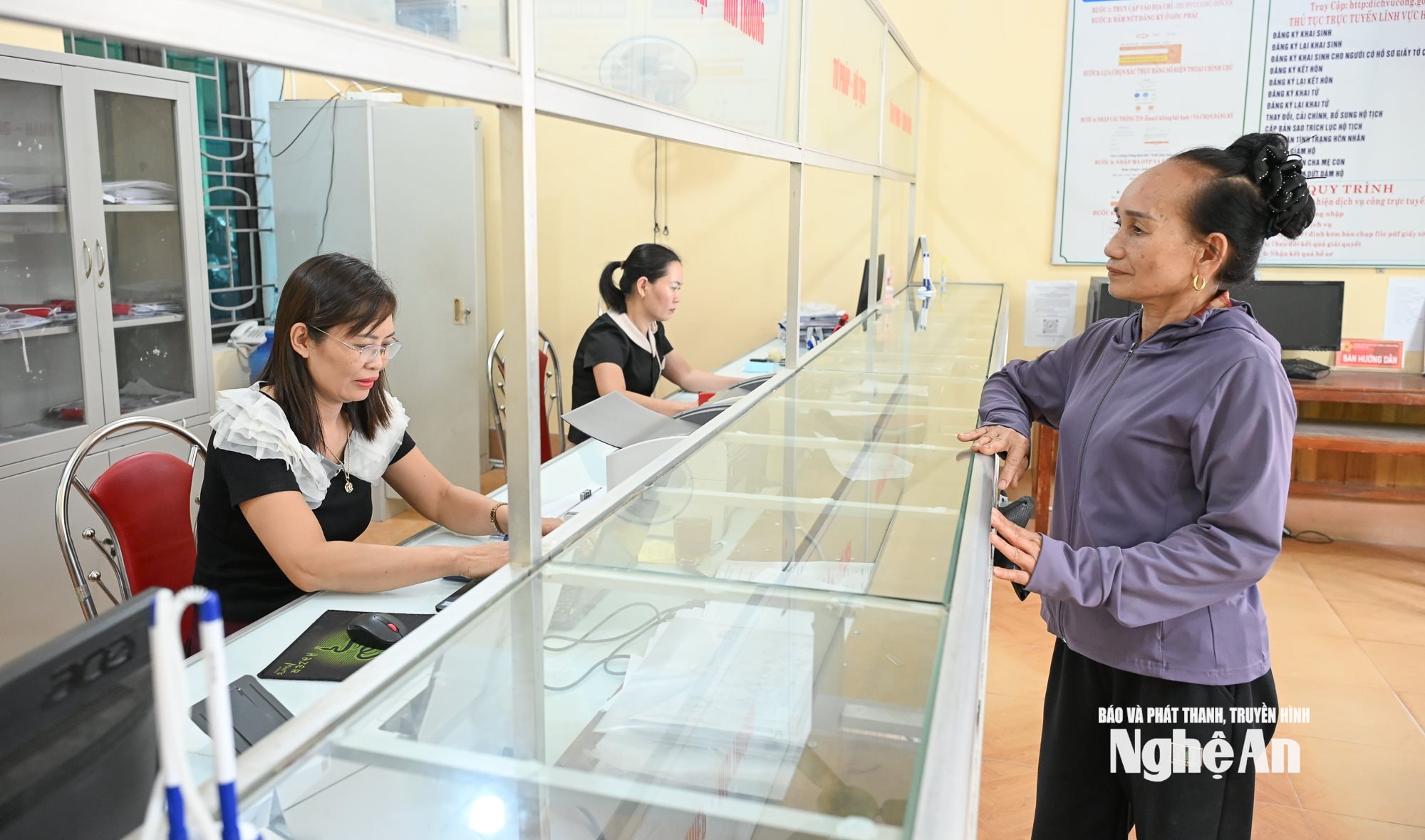
The biggest challenge that Ms. Ha and her colleagues are facing is the lack of a proper working environment. The center's staff hardly have private offices and have to share space with other departments of the commune's People's Committee. Equipment and machinery for work are also severely lacking due to the commune's limited financial resources.
"Due to a shortage of personnel, it's almost impossible to perform advisory functions, implement programs and projects, or even propose and implement projects serving production," Ms. Ha frankly shared.
To solve the salary problem, the Chairman of the People's Committee of Nghia Loc commune had to assign the commune's accountant to also serve as the center's accountant, and at the same time, the Vice Chairman of the People's Committee of the commune, Phan Sy Thanh, also held the position of Director of the Center.
"Although the specialists have performed very well in advising on and handling animal diseases such as swine fever, avian influenza, or the rat infestation that destroyed crops this past spring, they have not been able to fully utilize the potential of this public service center model because they have to take on too many responsibilities for other specialized departments," said Comrade Phan Sy Thanh.
Regarding long-term solutions, the Vice Chairman of the People's Committee of Nghia Loc commune suggested that there needs to be a mechanism allowing communes to directly recruit or prioritize the recruitment of local people. These individuals understand the customs, traditions, and language of the ethnic minority communities, helping to fill staffing gaps more effectively. In addition, the State needs a clear financial mechanism to provide the People's Committee of the commune with funds to invest in purchasing equipment and facilities, ensuring the center operates effectively.


