Living in hardship beside the moat of Vinh Citadel.
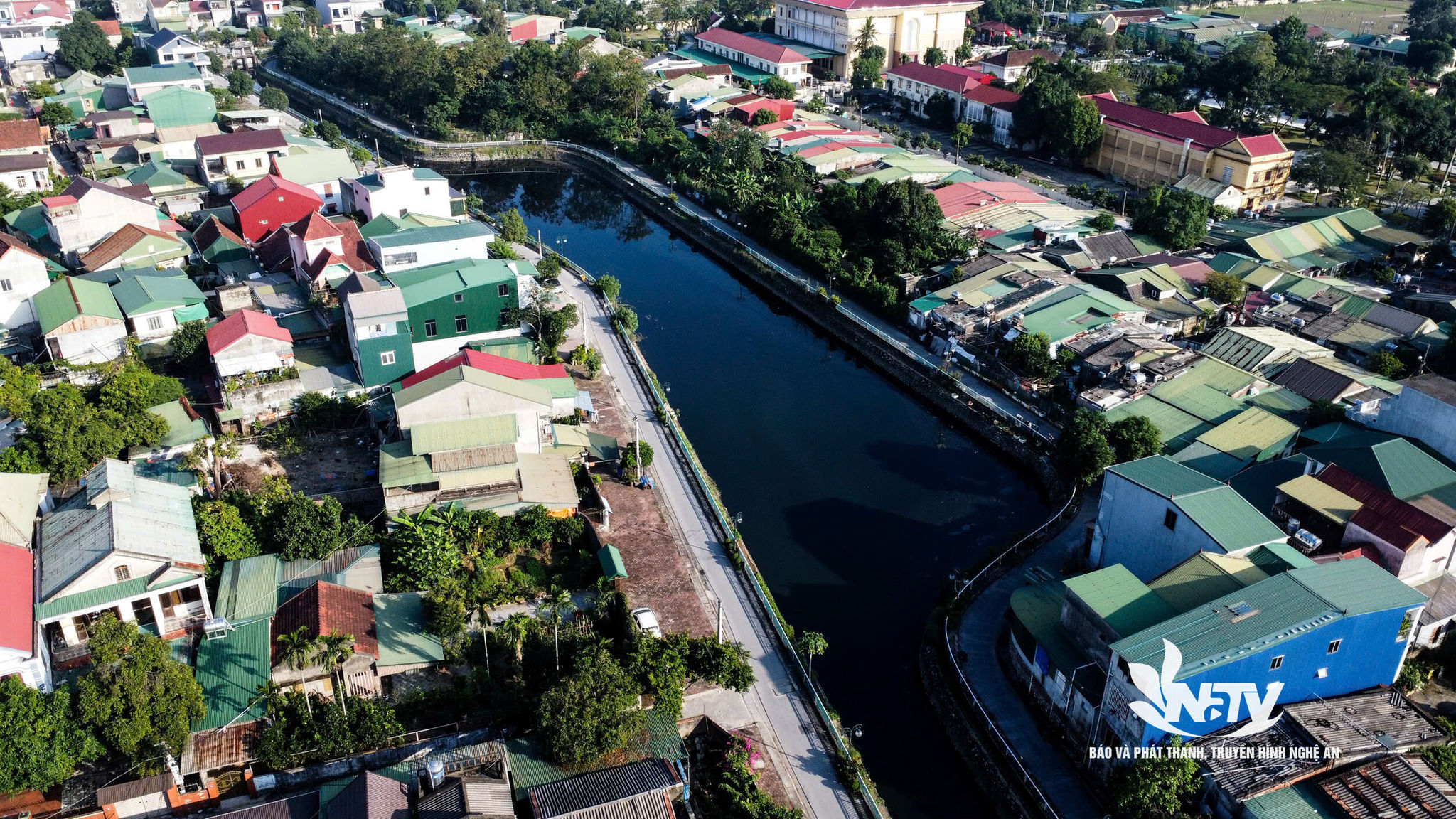
During the transitional period at the end of the year, the water surrounding the Vinh Ancient Citadel National Monument turns a dark black color and emits a strong, foul odor, causing pollution for hundreds of households whose houses are located on both sides of the moat, seriously affecting their daily lives.
Close the doors to escape the smells amidst the heritage space.
Morning in the small village next to the Left GateVinh Ancient CitadelThese days, the elderly are conspicuously absent. The water in the moat is thick and black, emitting a strong, foul odor that forces many to abandon their morning strolls along the moat's edge.
"It smells terrible. Many nights the strong stench wafts in, causing headaches and dizziness..." - Mrs. Nguyen Thi Nguyet, a long-time resident of Vinh Ancient Citadel, sighed as she spoke of the air her family has to breathe every day.
Visiting residential areas both inside and outside the ancient moat, one can see that the discomfort is not just limited to unpleasant feelings but has disrupted the daily lives of the people. In 2019, when the moat was upgraded, many households renovated or rebuilt their houses with facades facing the moat, noticing the convenient transportation infrastructure and truly beautiful scenery. However, pollution forced them to manually seal off the "facades" of their homes. Along the roads bordering the moat, it is not difficult to find spacious houses with their walls completely covered with corrugated iron; the main doors and windows are kept tightly closed year-round to prevent the foul smell.
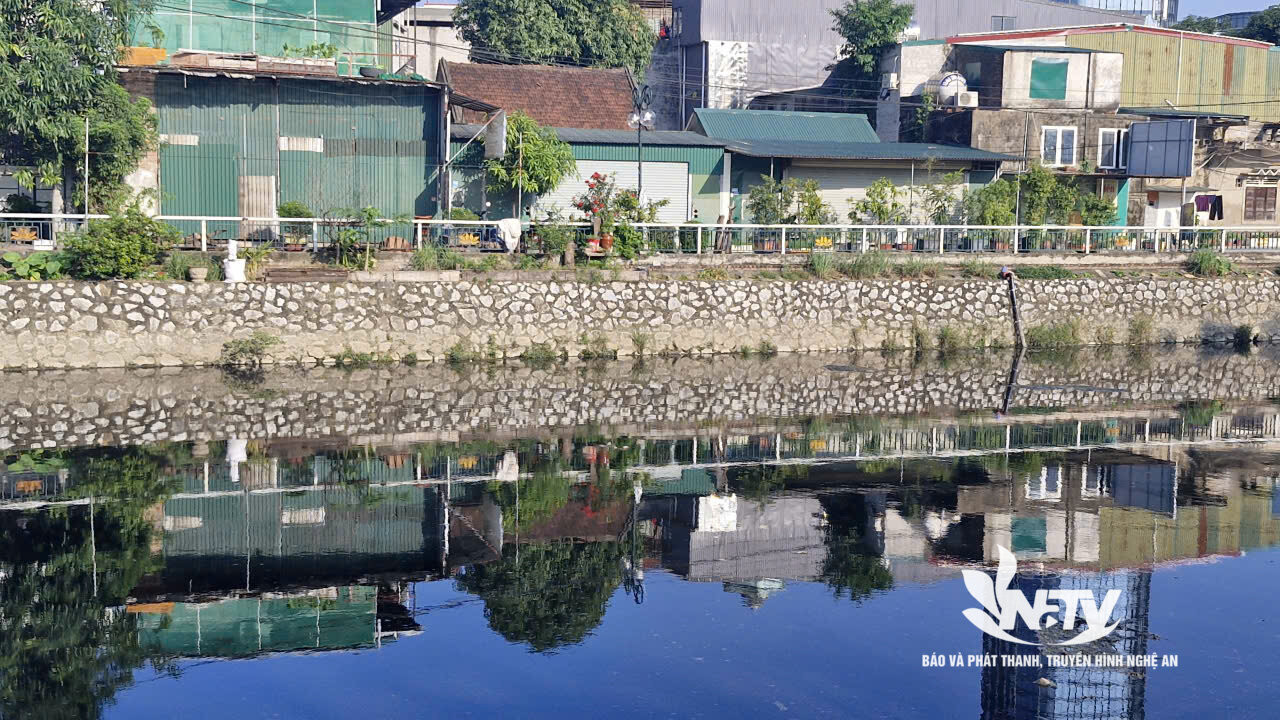
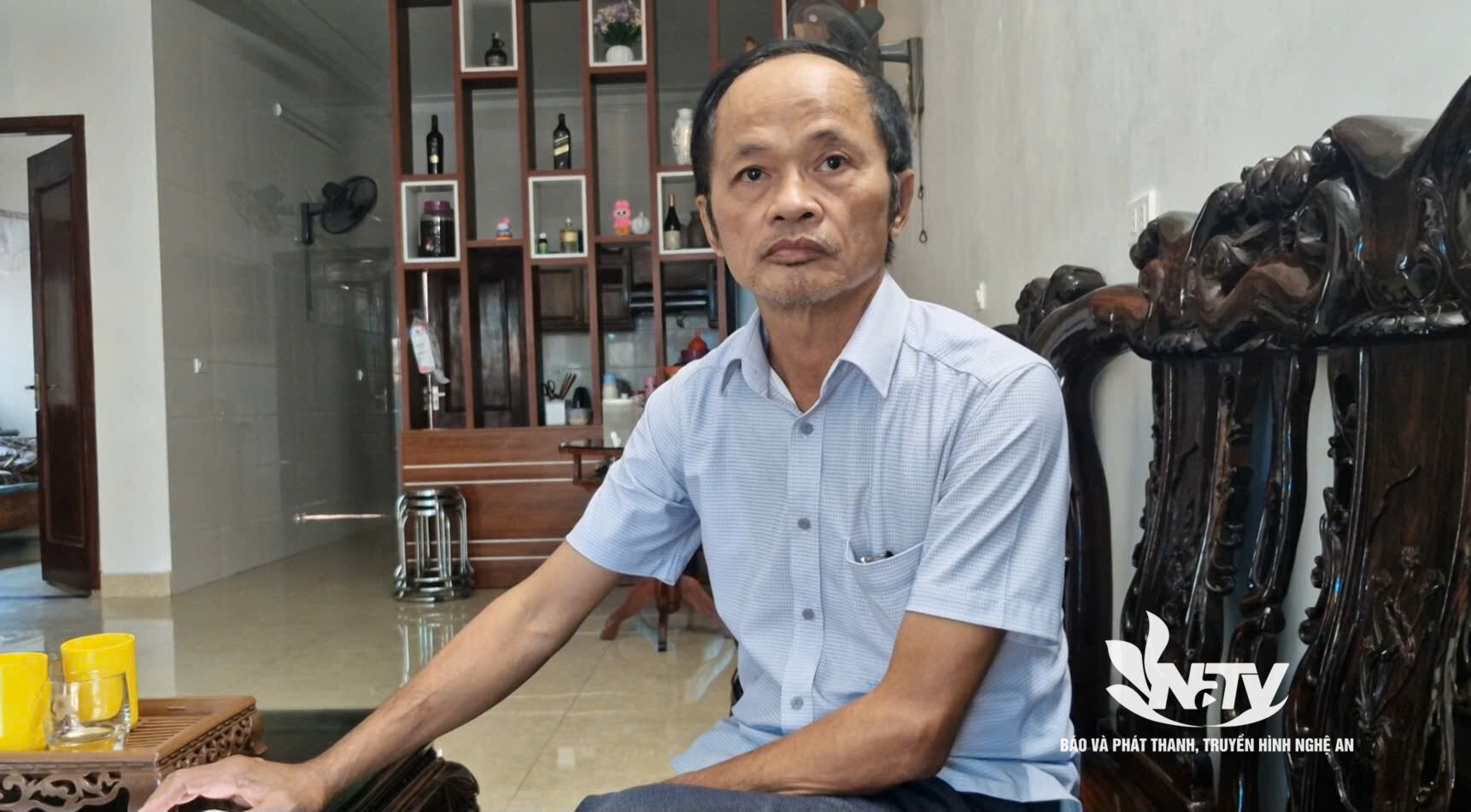
As someone who lives directly next to the ancient moat, Mr. Nguyen Ba Tho, Secretary of the Party Branch of Block 1, Cua Nam Ward, Thanh Vinh Commune, understands better than anyone the suffering of the local people. Recently, his family has had to keep all the doors facing the moat tightly closed to avoid the polluted smell. Mr. Tho shared that this is a long-standing, simmering grievance that residents have repeatedly raised in neighborhood meetings as well as in meetings with constituents by People's Council representatives at all levels.
Even when the Party Committee of the ward organized a consultation on the draft political report of the Thanh Vinh Ward Party Committee for the 2026-2030 term, among the five biggest shortcomings in the area, the complete resolution of environmental pollution in the moat was always placed at the top priority. "Wastewater overflowing into the moat from outside is the source of pollution. It's necessary to raise awareness so that relevant agencies pay attention and thoroughly address the issue; only then will the people in the ancient citadel have a clean living environment," Mr. Tho expressed.
Sharing the same concern, Ms. Mai Thi Hien, Head of Block 1, Cua Nam Ward, said that the pollution has existed for quite some time and has become more serious in recent days. The block's leadership committee has repeatedly compiled people's opinions and submitted petitions to the Ward People's Committee through the channels of the Fatherland Front and the People's Council representatives.
According to Ms. Hien, the Party branch and the block's leadership committee, along with the youth union, had previously experimented with planting aquatic plants such as lotus and water lilies. However, these plants could not tolerate the polluted water and only survived for a short time before dying completely. After the block merger, the block's leadership committee mobilized the people to maintain the "Green Sunday" movement, cleaning up and removing floating waste from the water surface. However, these efforts could not solve the pollution problem.
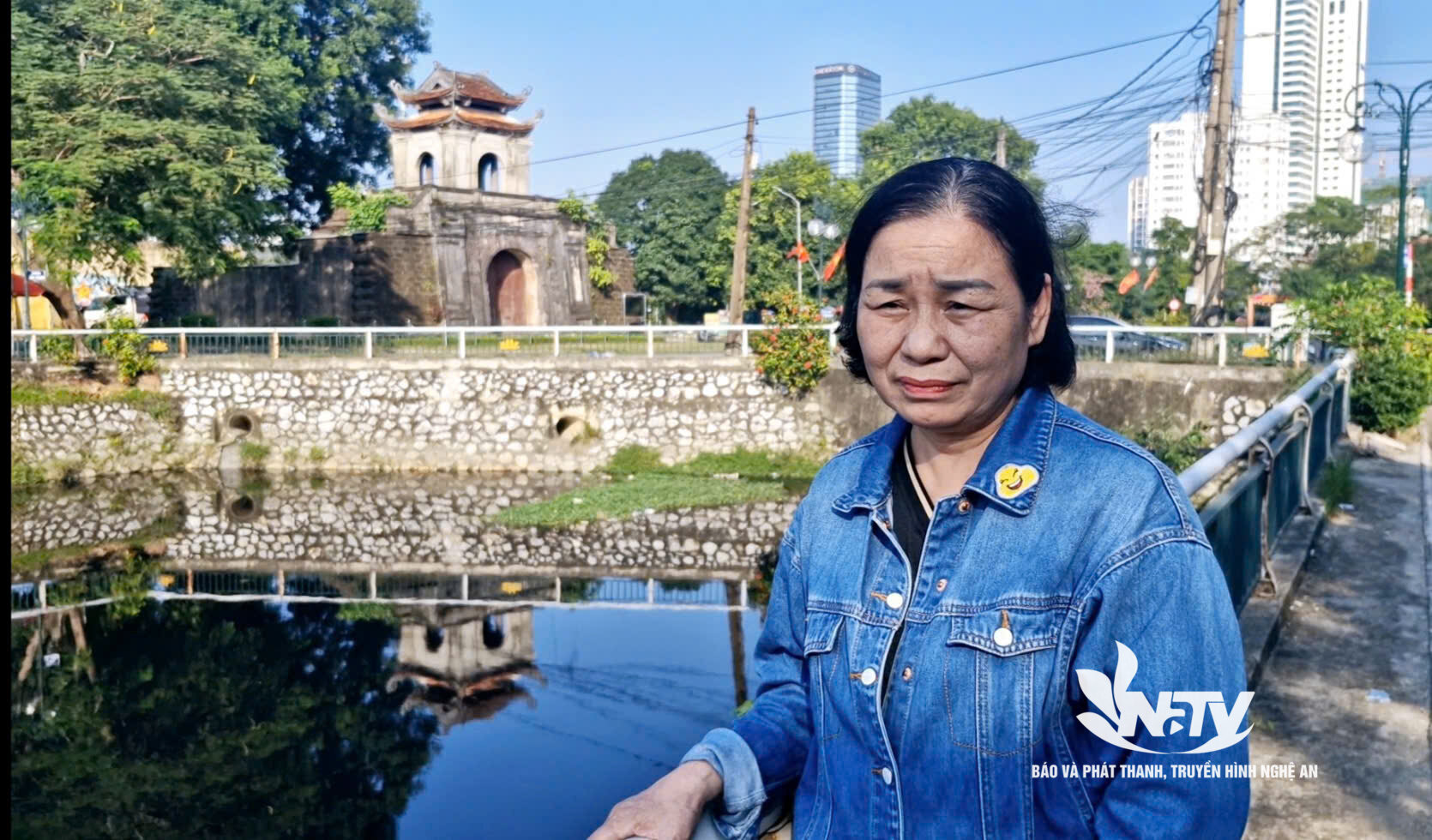
“Upon investigation, we found a large source of wastewater from the northern residential area flowing into the moat. Especially during heavy rains, a torrent of black water gushes out from the drain, lasting for two to three days. This proves that there has been an opening allowing wastewater from outside to flood in, turning the moat into a reservoir of dirty water…” - Ms. Mai Thi Hien, Head of Block 1, Cua Nam, commented on the cause of pollution in the ancient moat.
Infrastructure bottleneck
During a field survey on November 23, 2026, reporters observed that at the junction between the drainage ditch running along Nguyen Thi Dinh Street and the ancient moat, even though the sluice gates were closed, water was still surging and rushing into the moat in waves, bubbling vigorously on the surface like boiling water. A considerable amount of water was accumulating, creating waves on the moat's surface.
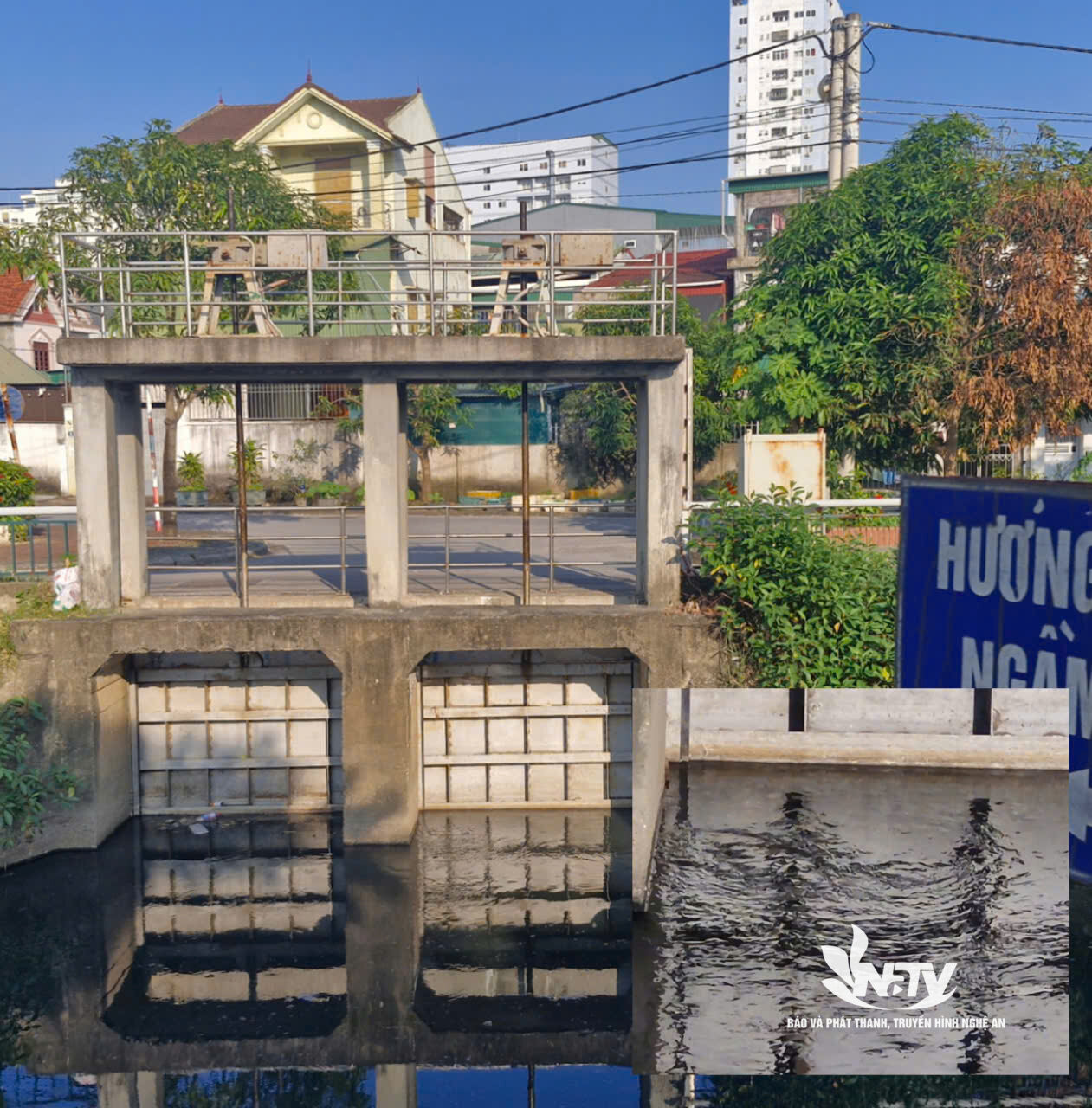
It has been learned that the drainage ditch running along Nguyen Thi Dinh Street and directly into the moat is ditch number 1. This ditch originates from the Vinh train station area, passes through residential areas in Quan Bau and Le Loi districts, follows Hoang Nghia Luong Street, crosses Nguyen Thai Hoc Street, and then follows Nguyen Thi Dinh Street to the moat.
An environmental official from the former Vinh city stated that a sluice gate system was installed at the intersection of Canal No. 1 and the moat. The operating principle was that the sluice gates should only be opened during heavy rain to drain surface water and prevent flooding; under normal weather conditions, they had to be kept completely closed to prevent wastewater from the canal from overflowing and contaminating the moat. However, in reality, water from Canal No. 1 continued to seep into the moat day and night, regardless of the weather.
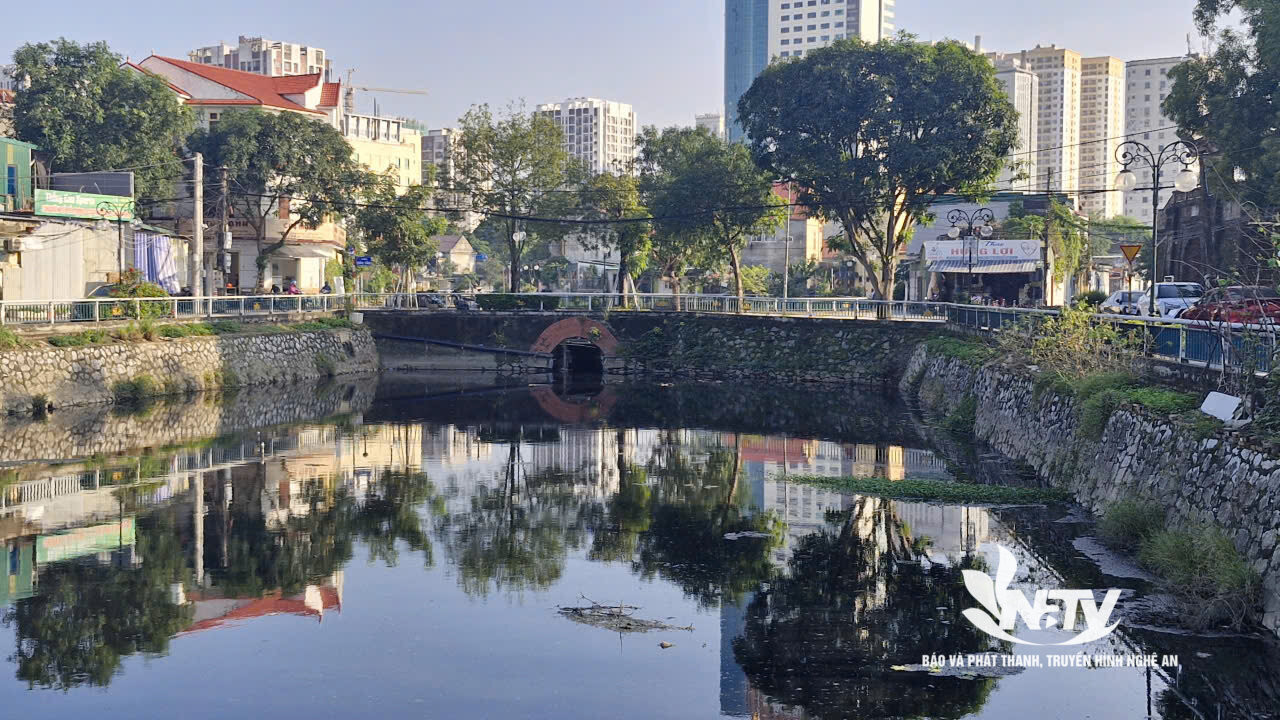
Due to the unique characteristics of the moat as a closed canal system, with no natural water flow, when it receives additional wastewater accumulated from Canal No. 1, the stagnant water creates conditions for anaerobic decomposition, generating foul odors, especially during transitional seasons.
Further explaining why wastewater still infiltrates the moat even in normal weather, this person stated that the cause lies in the wastewater transfer pumping station system. For many years, some of the machinery has been malfunctioning or not operating reliably, preventing domestic wastewater from being promptly channeled to reservoirs for treatment, thus causing it to accumulate and overflow into the moat.
“Wastewater treatment is a complex chain of interconnected pumping stations. If just one link fails, the entire system before and after it is immediately affected. Previously, the design and operation plans did not account for contingency plans in case of technical failures. Therefore, whenever a pump breaks down, the wastewater has no other outlet than to overflow into the moat…” – the environmental officer explained.
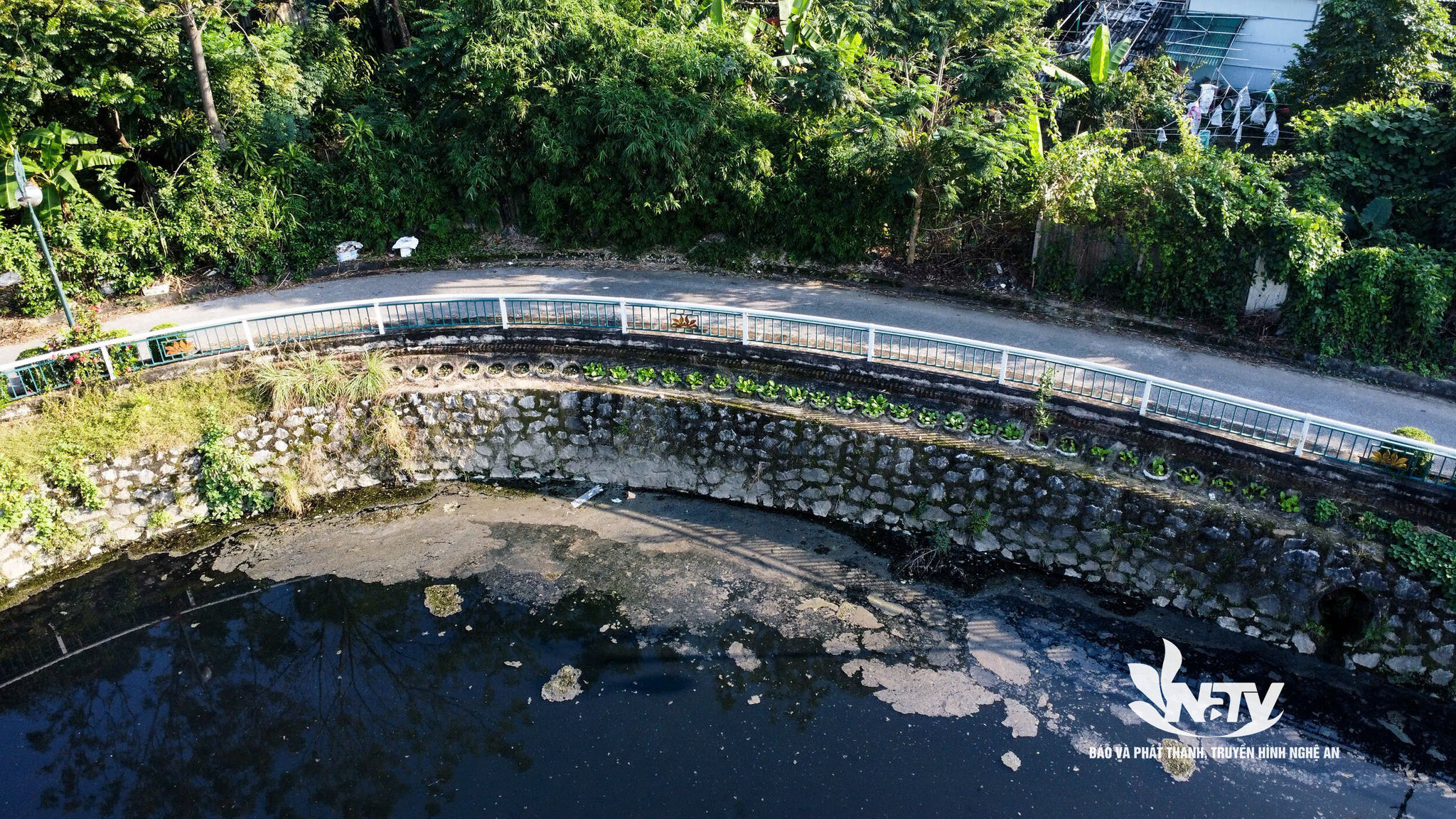
According to him, repairs to the drainage and wastewater treatment infrastructure have been carried out in recent years, but only at a temporary level due to limited resources. Meanwhile, the wastewater, mixed with a lot of sludge and debris, causes equipment and machinery to deteriorate and break down quickly. The budget allocated for dredging sludge from the moat in the past was also too meager, insufficient to thoroughly deal with the accumulated sludge...
Awaiting decisive action.
On the part of the Thanh Vinh ward authorities, although they understand the suffering of the people living on both sides of the ancient moat, they cannot resolve the issue due to the problem of decentralized management.
Regarding this situation, Mr. Nguyen Sy Dieu, Chairman of the People's Committee of Thanh Vinh Ward, confirmed that the local authorities have fully grasped the feedback from voters and residents of Block 1, Cua Nam. About a month ago, the People's Committee of the ward also sent a report to the Department of Construction, requesting a field survey to develop a solution as soon as possible.

According to the assessment of the Chairman of the People's Committee of Thanh Vinh Ward, Nguyen Sy Dieu, the immediate urgent solution to minimize the foul odor is to dredge the accumulated sludge at the bottom of the moat. However, the ancient moat is currently under the direct management of the Department of Construction. "If it were within our authority, the ward would try to find funding to organize the dredging of the sludge. But because we don't have the authority, the locality can only report and make recommendations to the Department of Construction..." - Mr. Nguyen Sy Dieu, Chairman of the People's Committee of Thanh Vinh Ward, shared.
The overlapping and conflicting management responsibilities for infrastructure and environmental sanitation in the central urban area are not just a problem specific to the ancient citadel, but have become a common issue for Vinh city, receiving special attention from the Provincial People's Committee.

At a meeting on the afternoon of November 5, 2026, regarding urban order management, landscape improvement, and environmental sanitation in six wards of Vinh city, the Chairman of the Provincial People's Committee, Vo Trong Hai, pointed out existing shortcomings and inadequacies in the current coordination of infrastructure and environmental management. He also requested that relevant units tighten administrative discipline according to the principle of "clear responsibilities, clear tasks, clear accountability," and accelerate the progress of urban improvement projects linked to sustainable environmental protection in the 2026-2030 period.
With directives from the head of the Provincial People's Committee, will there be solutions to dredge sludge, prevent wastewater discharge points into the moat, upgrade the drainage system, and treat wastewater...? This is what many people living on both sides of the ancient moat are hoping for, so that they can have a clean living space, and so that the Vinh Ancient Citadel National Heritage area can have a clean and beautiful environment.