
Sony LYTIA L910: A breakthrough in LOFIC technology that pushes smartphone cameras beyond their limits.
Sony has launched the LYTIA L910 sensor with its groundbreaking LOFIC architecture, enabling a dynamic range of 100 dB in a single exposure, optimizing night photography and 4K HDR video recording.
Sony has officially introduced the LYTIA L910, its latest camera sensor for the high-end smartphone segment. This is the first product in the LYTIA line to feature LOFIC architecture, a technology that promises to thoroughly address the challenges of dynamic range and noise in complex lighting environments.
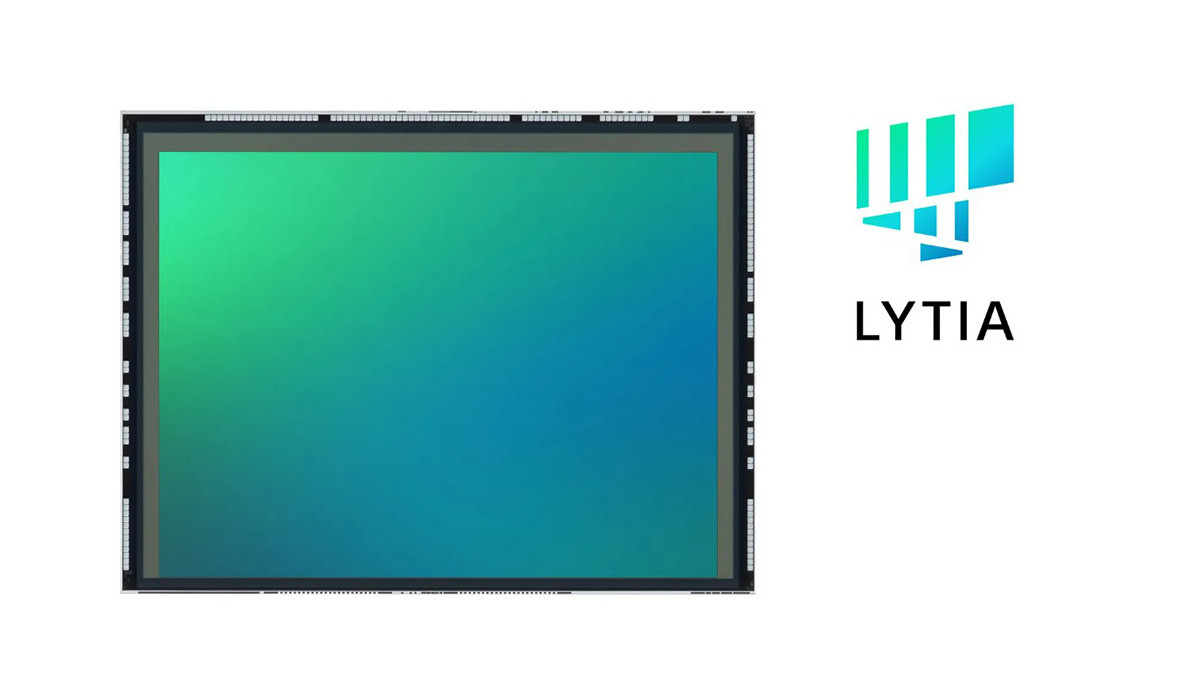
LOFIC architecture: Achieves a contrast range of 100 dB with a single shot.
The most important technological highlight of the Sony LYTIA L910 is its LOFIC (Lateral Overflow Integration Capacitor) structure. This technology allows the sensor to achieve a dynamic range of up to 100 dB from a single exposure.
Unlike traditional HDR methods that often require stitching together multiple images with different exposure levels, the LYTIA L910 collects all the necessary data in a single shot. This completely eliminates motion blur or flickering when photographing fast-moving objects or in environments with strong artificial light sources.
To optimize image quality, Sony combines LOFIC with HDR Triple Conversion Gain technology. This system reads data at three different amplification levels, helping to preserve detail in both the deepest dark areas and the brightest bright areas, minimizing overexposure and creating smoother tonal transitions.
30% reduction in noise thanks to ultra-high amplification circuitry.
In addition to its dynamic range, the LYTIA L910's night photography capabilities are significantly enhanced thanks to its Ultra High Conversion Gain (UHP) circuit. This technology improves the efficiency of converting electrical charge into voltage, thereby reducing random noise by approximately 30% compared to its predecessor, the LYTIA 828.
This improvement is particularly valuable when users are taking photos in urban nighttime environments, where there are many types of LED lights, advertising signs, and complex reflected light sources. The resulting images will be clearer, less grainy, and retain high detail in dark areas.
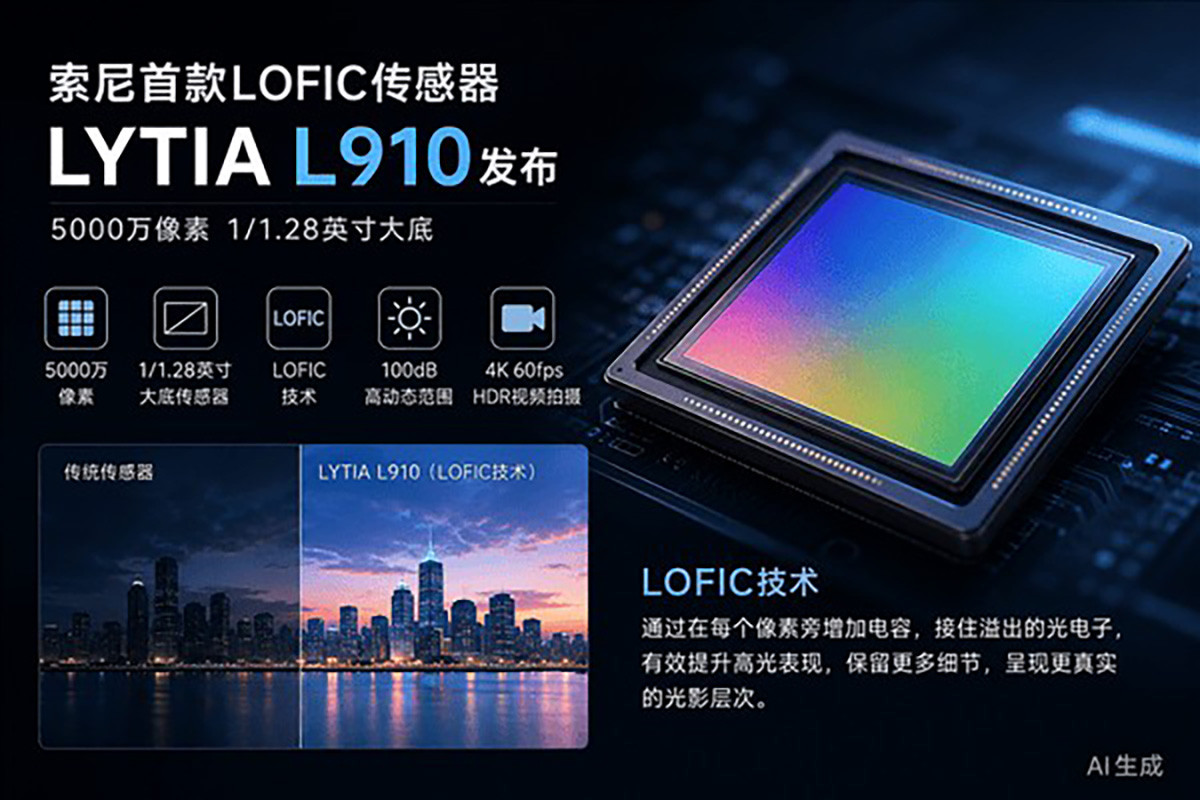
Technical specifications and professional video recording capabilities.
The LYTIA L910 is a 1/1.28-inch stacked CMOS sensor with a 50-megapixel resolution. The pixel size is 1.22μm, ensuring optimal light gathering capabilities. In terms of video, the new circuit design significantly reduces power consumption, allowing the device to shoot 4K HDR video at 60 frames per second continuously while maintaining high dynamic range performance.
| Parameter | Technical details |
|---|---|
| Sensor type | Stacked CMOS |
| Physical dimensions | 1/1.28 inch |
| Resolution | 50 Megapixel |
| Pixel size | 1.22μm |
| HDR Video | 4K @ 60fps |
| Maximum shutter speed | 50MP@30fps / 12.5MP@120fps |
Sony is expected to begin mass production of the LYTIA L910 sensor in the summer of 2026. New generation flagship phones like the vivo X500 and OPPO Find X10 are predicted to be among the first to integrate this new "weapon," promising an exciting smartphone camera race in the near future.


