
Dengue fever - 9 misconceptions that lead to devastating consequences.
(Baonghean.vn) - Reducing fever means the illness is over.tIntravenous fluids thin the blood.uAspirin tablets for dengue fever....these are misconceptions in dengue fever treatment that can easily lead to unforeseen consequences.
1.Each person only gets dengue fever once.
Whether old, young, or young, anyone can contract dengue fever. Currently, there are four circulating types of dengue virus, so patients who have had it before can still get it again, and the subsequent infection may even be more severe than the previous one.
Specifically, the dengue virus has four different serotypes: DEN-1, DEN-2, DEN-3, and DEN-4. If a person has been infected with a particular serotype, they will only develop lifelong immunity to that serotype and not to the others. Therefore, a person may contract dengue fever up to four times in their lifetime.
 |
2.Lowering the fever means the illness is over.
Typically, during the first three days, patients will experience high fever, headache, body aches, and eye pain. However, this period is not the most dangerous and complications do not usually occur. Patients can still be treated at home.
 |
| After being bitten by an infected mosquito, the incubation period for the disease is approximately 4-5 days. |
From the fourth day (counting from the onset of fever) onwards is the most dangerous period of the illness. The patient will no longer have a high fever like in the previous three days, and many patients think the illness is less dangerous and they are about to recover, but it is precisely during this stage that serious complications can occur.
The first complication is increased vascular permeability and blood concentration. Patients will not feel this, but it will only be evident through laboratory test results. Excessive leakage can lead to warning signs of shock such as lethargy, liver pain, nausea, and vomiting. In young children, symptoms may include lethargy or restlessness, decreased urination, and refusal to feed. These cases require immediate hospitalization for fluid replacement to avoid life-threatening situations.
Second complication: Hemorrhage due to thrombocytopenia. Patients may experience nosebleeds, bleeding gums, subcutaneous bleeding, etc. These patients need to go to medical facilities for tests to assess the degree of thrombocytopenia so that doctors can consider platelet transfusion if necessary.
Note: Only in cases of shock or organ failure will primary healthcare facilities provide initial resuscitation and transfer the patient to central-level hospitals by ambulance.
3. Blood thinning during intravenous infusion.
Some people with dengue fever are afraid to receive intravenous fluids because they fear their blood will become too thin. However, this fear is completely unfounded.
 |
| Fluid replacement is an essential measure in the treatment of dengue fever patients. |
According to MSc. Dr. Nguyen Tien Lam, Head of the Virology - Parasitology Department at the Central Hospital for Tropical Diseases: Patients with dengue fever may experience dehydration due to high fever, reduced intake due to poor eating habits, or fluid loss into the interstitial tissue. Fluid replacement in dengue fever patients aims to replenish the water lost due to these reasons. Therefore, fluid replacement is a necessary measure in the treatment of dengue fever patients.
4.Contact with someone who has dengue fever will spread the disease.
Dengue fever is not transmitted through the respiratory tract, bodily fluids, or contact with infected individuals. It is only transmitted through the bite of Aedes mosquitoes that have bitten an infected person and then transmit the virus to a healthy person through their bite.
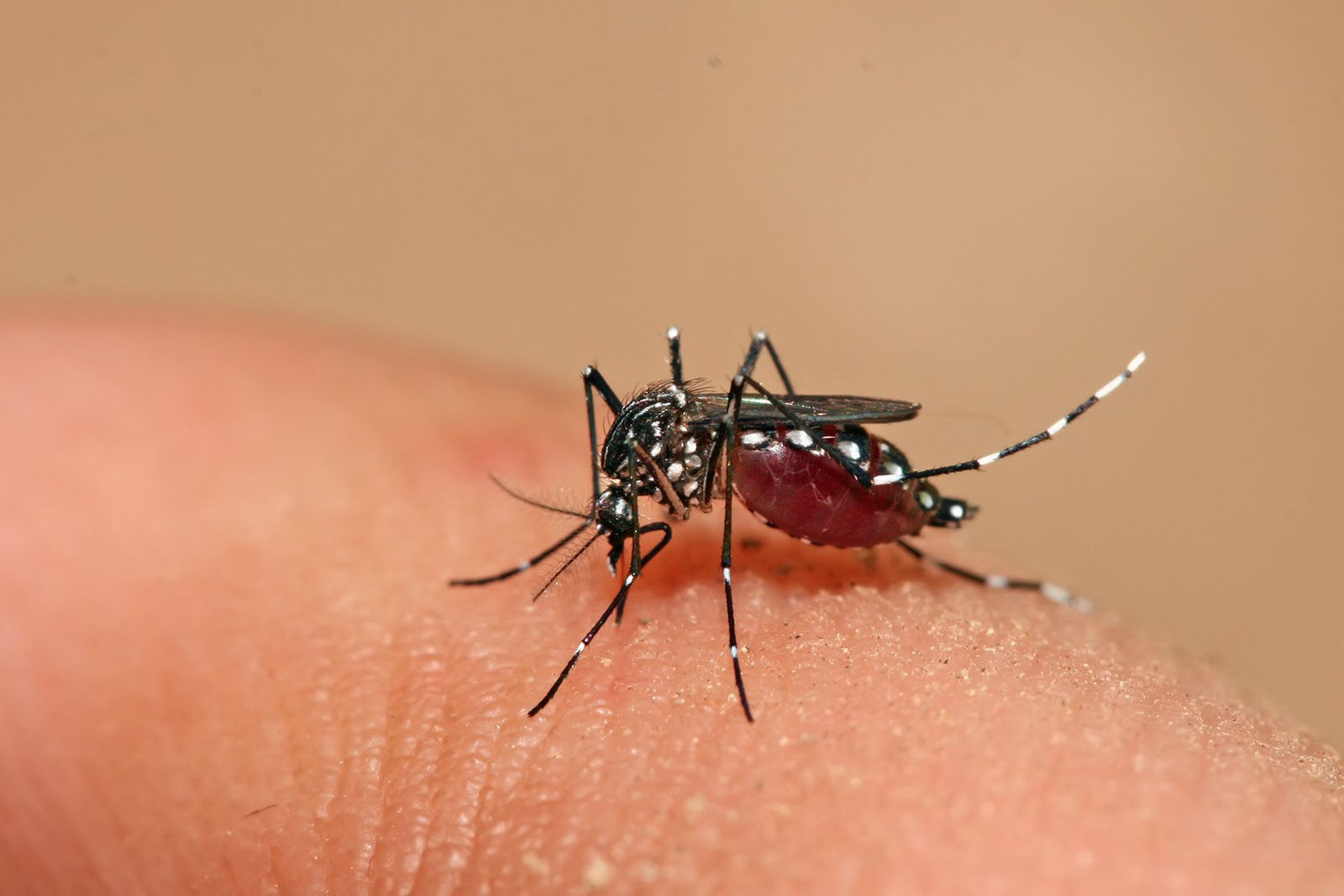 |
| Dengue fever is not transmitted through the respiratory tract, bodily fluids, or contact with infected individuals. It is only transmitted through the bite of Aedes mosquitoes that have bitten an infected person and then transmit the virus to a healthy person through their bite. |
5.Take aspirin and ibuprofen when you have dengue fever.
When the first symptoms of dengue fever appear, such as body aches, muscle and joint pain, headache, fever, etc., most people tend to think it's the flu or a viral fever and self-medicate with painkillers, including aspirin and ibuprofen. These two drugs can worsen bleeding, potentially causing severe stomach bleeding and endangering the patient's life.
 |
| Never take Aspirin if you suspect you have dengue fever. |
Dengue fever causes blood clotting disorders, making the body prone to bleeding. Mild cases may result in subcutaneous bleeding with red spots or bruises. Severe cases can cause bleeding gums, nosebleeds, vomiting blood, or black stools.
Meanwhile, aspirin and ibuprofen both work by inhibiting platelet aggregation and preventing blood clotting. Aspirin also has side effects such as peptic ulcers and can cause stomach bleeding and vomiting blood. Therefore, absolutely do not take these two medications if you suspect you have dengue fever.
6. Eating rice can increase the risk of intestinal perforation.
 |
| When suffering from dengue fever, it is necessary to ensure sufficient energy intake with a balanced diet and to guarantee food safety and hygiene. |
Another unfounded fear among dengue fever patients is that eating rice will cause intestinal perforation, so they only dare to eat porridge. Dr. Lam, MD, MSc, states that this information is completely wrong. Severe dengue fever can cause gastrointestinal bleeding but does not cause intestinal perforation. The diet during dengue fever does not require dietary restrictions; it needs to ensure sufficient energy with a balanced nutritional composition and food safety and hygiene.
7. Brushing teeth makes dengue fever worse.
 |
| People with dengue fever should brush their teeth gently, avoiding excessive scrubbing to reduce the risk of bleeding gums. |
Doctors also say that when suffering from dengue fever, patients do not need to completely refrain from brushing their teeth. Brushing teeth and bleeding gums will not worsen dengue fever.
Bleeding gums in dengue fever patients can occur spontaneously or be exacerbated by triggers such as brushing. Therefore, even with a high platelet count, patients with dengue fever can still brush their teeth gently, avoiding excessive scrubbing, to reduce the risk of bleeding gums.
8.Mosquitoes that transmit diseases only appear in stagnant water or puddles.
People often mistakenly believe that only sewers, unsanitary places, and stagnant ponds are breeding grounds for Aedes mosquitoes. But that's not true; Aedes mosquitoes also inhabit stagnant water sources right in our own homes, such as: fish tanks, flower vases, rock gardens, water left on altars, and rainwater collected in broken pieces in alleyways or on rooftops...
Therefore, it is important to change the water regularly, clean household items, and avoid leaving stagnant water, as this will create an environment for mosquito larvae to develop and breed into Aedes mosquitoes.
 |
9. Spraying mosquito repellent once will keep mosquitoes away from your house for months afterward.
Many people think that if a family has sprayed mosquito repellent, mosquitoes will never reappear for months. This is a misconception. Mosquito spraying is done in a very small volume with a very small amount of chemicals in the form of a mist, and it only kills disease-carrying mosquitoes at that time.
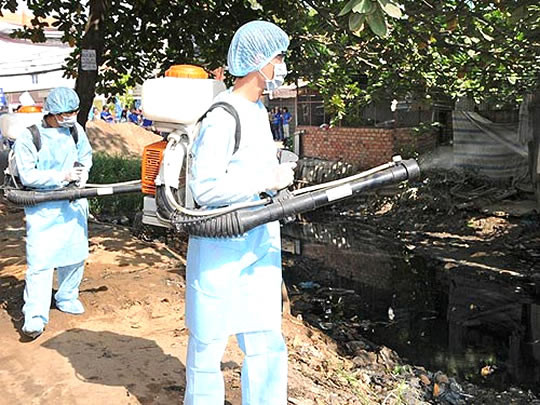 |
| If mosquito control measures are to be implemented, comprehensive and simultaneous spraying across the entire residential area is necessary for thorough effectiveness. |
Just a few hours after spraying, the chemicals will disperse into the air and dissipate, allowing other mosquito swarms to continue flying into homes, attacking and transmitting diseases to people. Therefore, if mosquito control spraying is necessary to eradicate an outbreak, it needs to be comprehensive and simultaneous across the entire residential area to be truly effective.
Ways to prevent dengue fever - Currently, there is no vaccine to prevent the disease. The main preventive measures are controlling the insect vectors that transmit the disease, such as avoiding mosquito bites, eliminating mosquito larvae (tadpoles), and killing adult mosquitoes, following the principle: No larvae, no mosquitoes, no dengue fever. - Avoid contact with mosquitoes by using mosquito nets while sleeping, wearing long-sleeved pajamas, and especially avoiding dark places. - Mosquitoes can be repelled by quickly burning them or spraying them with insecticide to control outbreaks. Comprehensive and simultaneous spraying is necessary throughout the entire residential area. Additionally, you can try using mosquito repellent cream. - You should clean up places where mosquitoes like to perch and rest, such as hanging clothes, dark areas, etc. - When camping, engaging in outdoor activities, or during mosquito season, it's essential to carry mosquito repellent sprays, especially for children and those with severe allergies. According to the World Health Organization (WHO) and the U.S. Environmental Protection Agency (EPA), Diethyltoluamide (DEET) at concentrations of 10%–30% is effective in repelling mosquitoes for an extended period (5–8 hours) and is safe for health. |
Hoa Le
(Synthetic)
| RELATED NEWS |
|---|


