
Starlink V2 brings 5G speeds from space to smartphones without requiring new hardware.
SpaceX's V2 generation of satellites promises to provide 150 Mbps internet connectivity directly to mobile phones, ushering in an era of geographically unrestricted telecommunications by 2027.
Starlink V2 is SpaceX's latest generation of satellites, designed to transform space into a massive mobile base station system. This technology allows users to experience broadband internet services such as online video, web browsing, and voice calls at speeds comparable to terrestrial 5G networks, and is fully compatible with existing smartphones without requiring hardware modifications.
The evolution from Direct to Cell to mobile satellite connectivity.
This technological advancement focuses on the Starlink Mobile service, formerly known as Direct to Cell. Currently available in 32 countries across six continents, the service initially aimed primarily at supporting basic messaging and data transmission in areas with no signal. With the introduction of the V2 satellite, SpaceX hopes to bridge the gap between satellite networks and traditional telecommunications networks.
The biggest difference with Starlink V2 lies in its transmission performance. Compared to the V1 generation, the new satellites boast 100 times higher data density. SpaceX claims the V2 system's throughput is 20 times higher than before, with expected transmission speeds reaching 150 Mbps once the network is fully operational. This allows users to perform demanding tasks previously only possible on ground-based base stations.
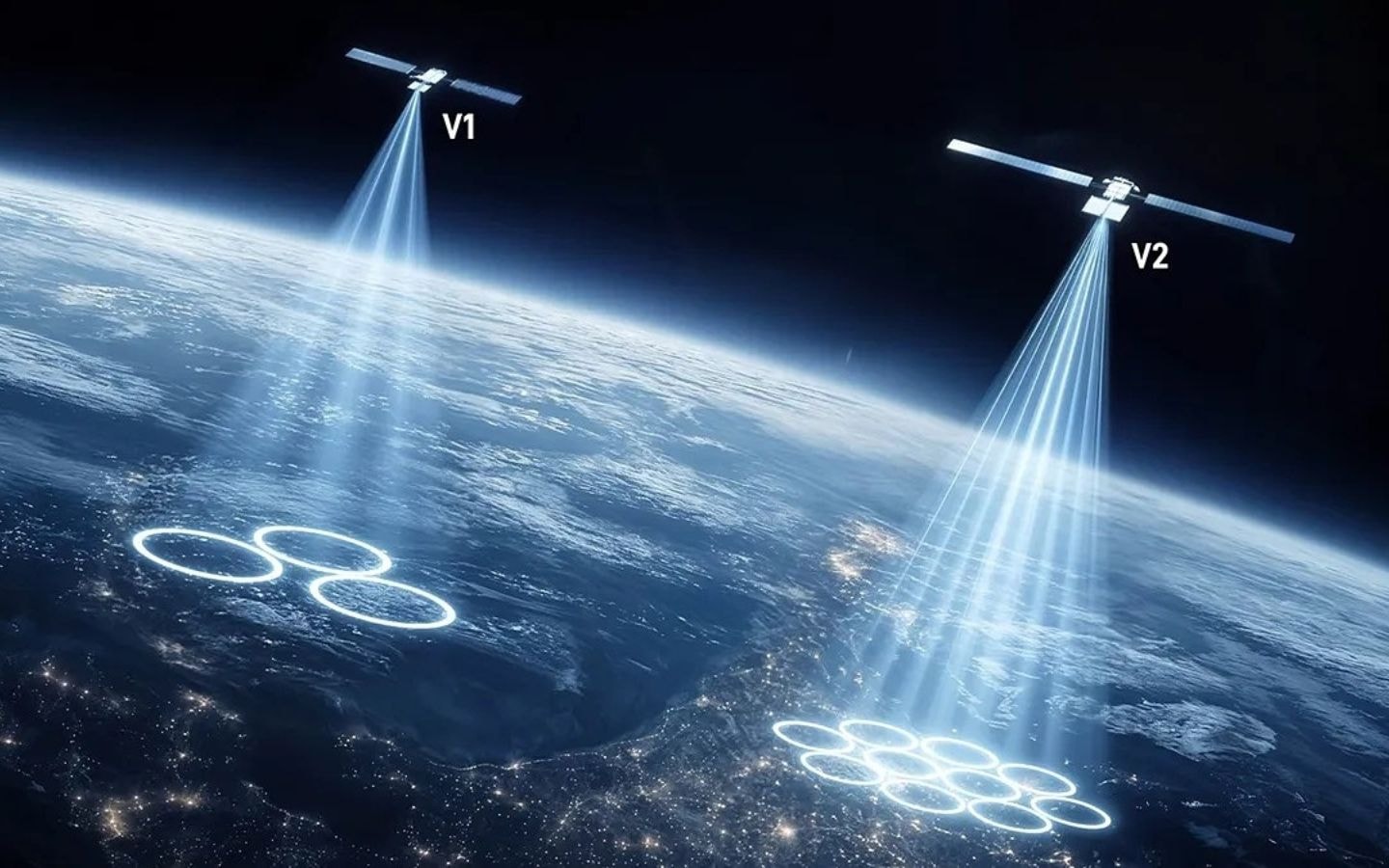
Seamless connectivity and transportation infrastructure
To optimize the user experience, SpaceX is working closely with major carriers like T-Mobile. The goal is to create a seamless transition as users move between ground-based base station coverage and satellite signals. This ensures uninterrupted calls and stable internet quality even in the most remote areas or regions affected by natural disasters.
However, the deployment of Starlink V2 is facing logistical challenges. Due to the significantly larger size and weight of the V2 satellites compared to previous versions, launch progress is heavily dependent on the transport capacity of the Starship rocket. During the transition period, SpaceX is prioritizing the launch of V2 Mini versions to fill coverage areas and maintain the service's growth momentum.
Roadmap for completing the space telecommunications network.
SpaceX anticipates needing to launch approximately 15,000 more satellites to realize its ambition of achieving high-speed global coverage. According to technical analysis reports, the full deployment of this upgraded service package is expected as early as 2027. Until then, the current system will remain a vital communication solution in emergency situations where traditional telecommunications infrastructure is inaccessible.
The fact that it doesn't require hardware changes to the phone is a huge competitive advantage, making it easy for Starlink Mobile to reach billions of users worldwide. This is not just a race for internet speed, but also a strategy to redefine how humanity connects, where every blind spot on the telecommunications map will gradually be eliminated by a network from space.


