
Starlink and America's new operational advantage in space.
From a civilian internet project, Starlink has become a strategic infrastructure for the US: a constellation of over 7,000 LEO satellites, latency of 20–40 ms, validated in Ukraine, and integrated via Starshield.
Starlink is transitioning from a commercial satellite internet service to a strategic infrastructure in modern U.S. warfare. Its dense LEO satellite constellation architecture, low latency, self-healing capabilities, and rapid software response to electronic warfare have been proven in Ukraine. The Pentagon is progressively integrating this system through Starshield and direct procurement contracts.
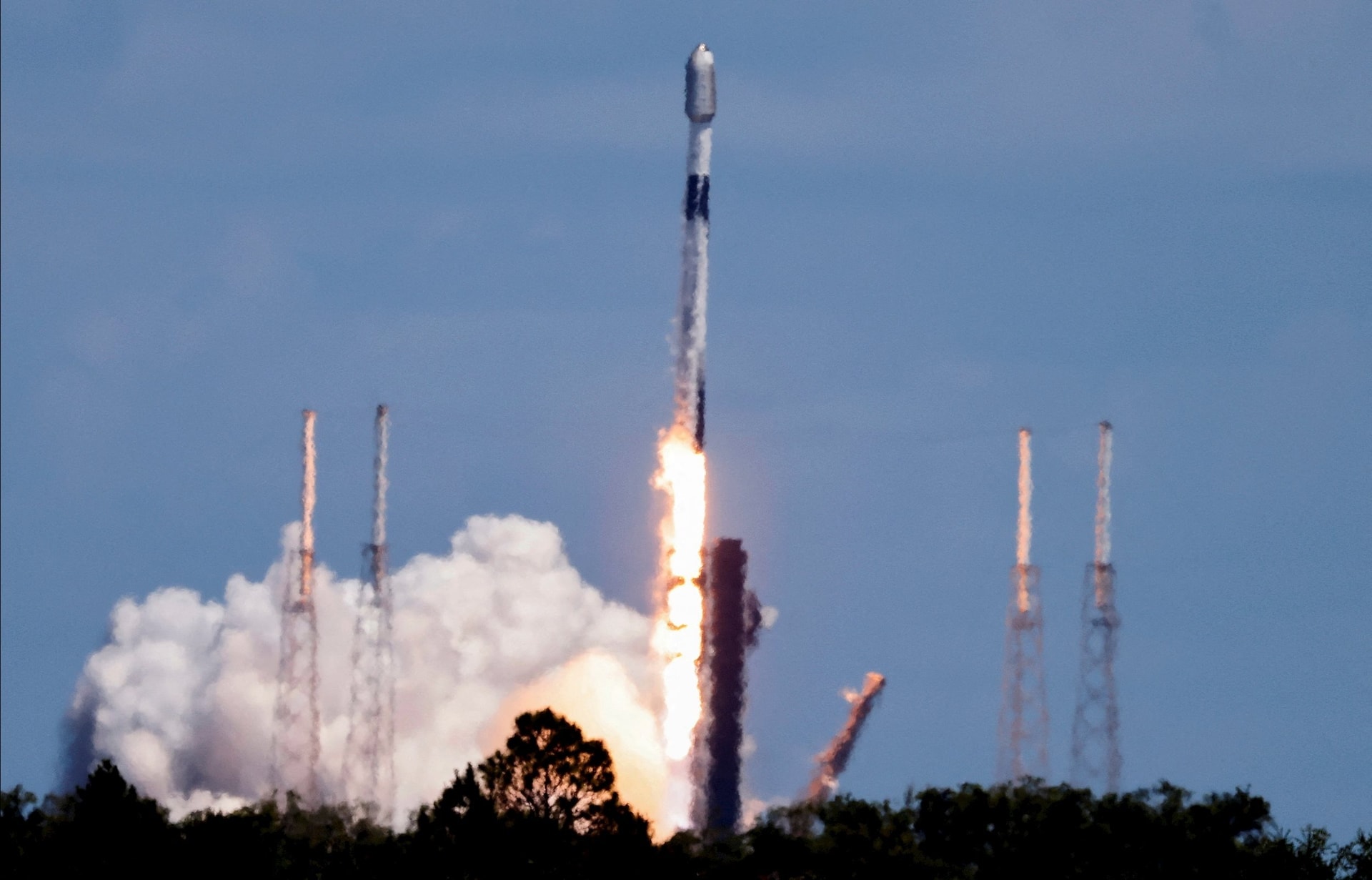
LEO architecture in the form of a constellation and its strategic advantages.
While traditional US military satellites are primarily placed in geostationary orbit (GEO) at an altitude of approximately 36,000 km, making them large and valuable, Starlink deploys thousands of small satellites in low Earth orbit (LEO) at around 550 km. The decisive difference lies in scale and dispersion: over 7,000 satellites are currently operational, with plans to reach 42,000, forming a dense and self-healing network.
With this approach, the cost and effectiveness of attacking individual satellites become disproportionate. Even if a large number of satellites are disabled, the network can reroute itself to maintain communication. General John Hyten, former Vice Chairman of the Joint Chiefs of Staff, once described high-value GEO satellites as “big, juicy targets,” reflecting the risks of a centralized architecture compared to Starlink’s distributed model.
| Criteria | Traditional military GEO satellites | LEO Starlink satellite constellation |
|---|---|---|
| Orbital altitude | ~36,000 km (GEO) | ~550 km (LEO) |
| Scale | Fewer satellites, larger size | Thousands of small satellites; >7,000 are operational; projected to reach 42,000. |
| Latency | Over 600 ms | 20–40 ms |
| Survival rate | High value, easily disabled. | Distributed, auto-routing, fast recovery |
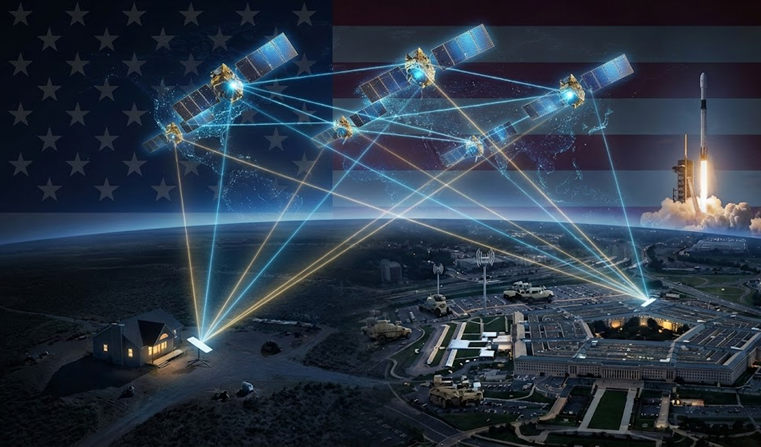
Lessons from Ukraine: low latency, integrated fire control sensors.
In Ukraine, since February 2022, after electronic warfare and cyberattacks disrupted the command and control (C2) system, Starlink terminals have restored communication for frontline forces. With a latency of 20–40 milliseconds (compared to over 600 milliseconds for traditional satellites), Ukrainian forces control UAVs to accurately drop missiles and operate the Arta GIS artillery coordination software, shortening the time from detection to firing to just a few minutes.
The integration of sensors and firepower based on near-real-time connectivity creates a "network-centric warfare" capability, where the advantage comes from the speed of information transmission and the availability of the network rather than from pure firepower alone.

Electronic warfare and software update pace
When Russia deployed jamming to cut off connections, SpaceX's response occurred at the software level. According to the description, just hours after detecting the jamming, SpaceX pushed an update to its entire satellite constellation to neutralize the attack. Dave Tremper, the Pentagon's Director of Electronic Warfare, assessed this response speed as superior to traditional procedures that could take weeks.
Reducing dependency risk: Starshield and defense contracts
Success in Ukraine exposed the risks of reliance on private assets. The 2022 incident, when the service failed to activate near Crimea, leading to the cancellation of a Ukrainian operation, demonstrated the need for state control. The US did not “nationalize” Starlink, but integrated it.
In late 2022, SpaceX introduced Starshield as a separate product line, serving government standards with three pillars: Earth surveillance, secure communications, and military cargo delivery. In June 2023, the Pentagon signed a contract to supply Starlink terminals to Ukraine, shifting control of the operational scope to the military. By 2025, projected budgets of billions of dollars for military satellite networks will reinforce this integration trend.
Infrastructure implications: laser links and resilience
Thanks to laser links between satellites, Starlink creates an “Internet in space” layer capable of transmitting large amounts of data while reducing reliance on ground stations, which are vulnerable targets. This increases the resilience of information infrastructure in the context of large-scale conflicts or disasters, and helps the U.S. maintain command and control continuity.
Technical and operational conclusions
- Distributed LEO architecture enhances network survivability against attacks on space assets.
- Low latency (20–40 ms) provides an advantage in integrating sensor-firepower and UAV control.
- Rapid software adaptability is a key factor in electronic warfare.
- Starshield and its contractual mechanism help transform Starlink from a private service into a controlled capability within the defense framework.
With these characteristics, Starlink is becoming a crucial component in the modern US military architecture, while reshaping the technical requirements for military communications infrastructure in space.


