
Stryker, a free agent from the US, threatens Poland's Rosomak.
Poland needs 2,000 APCs, but only has about half of that. Nearly 1,000 Strykers, according to the EDA, could fill the shortfall, but maintenance costs and the Patria issue complicate the decision.
Poland faces a difficult choice: accept nearly 1,000 Stryker armored personnel carriers “free” from the United States under the EDA program to quickly fill a force gap, or continue prioritizing orders for domestically produced Rosomak vehicles. The estimated need is 2,000 APCs for mechanized divisions, while currently only about half that is available. The problem is not just about quantity, but also includes lifecycle costs, combat readiness, and industrial capacity.
Overview
According to Defense Express, the US proposal for Stryker vehicles offers the opportunity to rapidly increase the number of vehicles, but it also entails a heavy burden of repair and maintenance borne by Poland. These are all "surplus" vehicles from US brigades under the EDA framework, so a decline in technical condition after a few years of operation is anticipated. On the other hand, continuing orders from Rosomak helps maintain the domestic defense industry, but the capacity for expanding production faces obstacles.
Stryker's personnel requirements and strategies
Poland needs to quickly finalize the deployment of APCs for its mechanized divisions. Nearly 1,000 Stryker tanks could meet a large portion of the immediate need. However, although they are "free" to acquire, the costs of repair, upgrades, logistics, and maintenance throughout their lifespan will be borne by Poland. The press lacks specific figures on these expenses, making the budget difficult to predict.
Industrial capacity and licensing dependence
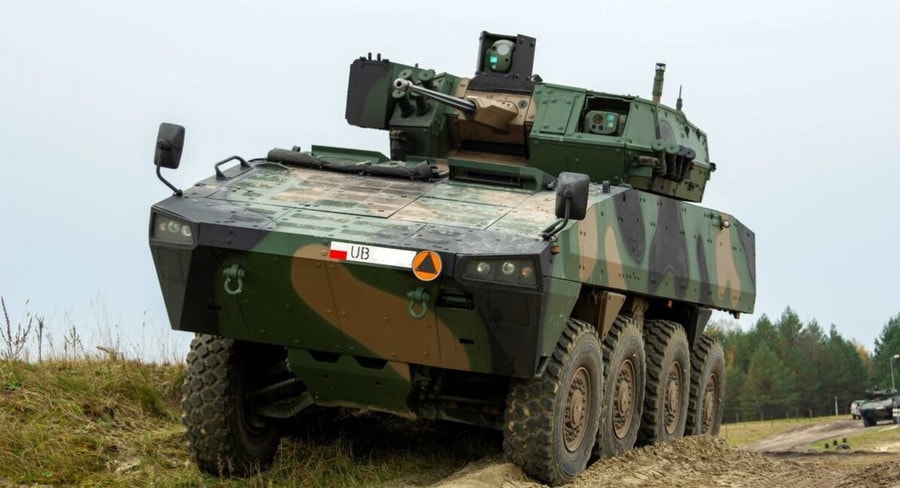
Rosomak of Poland is based on the Patria AMV design from Finland. Despite previous claims of 100% domestic production, the supply chain and licensing remain dependent on Patria. Currently, production expansion is limited due to negotiation difficulties with Finland. Furthermore, while funding from the EU's SAFE program is possible for additional orders, the capacity to accelerate production is not immediately guaranteed.
Lifecycle costs and combat readiness
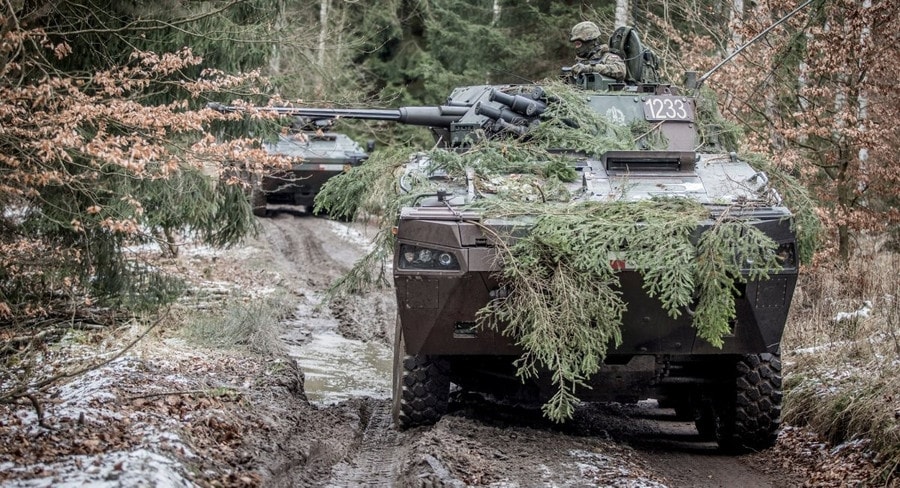
According to the EDA, Stryker is a "surplus" asset that can quickly meet staffing needs, but the risk of technical readiness after a few years of operation is clearly stated. Acquisition requires a long-term maintenance and repair plan, along with a corresponding budget estimate. Meanwhile, ordering from Rosomak supports domestic industry, but dependence on licensing and components from Finland remains a bottleneck.
Deployment scenarios and risks
One proposed solution is for Poland to accept older APCs from the United States to fill the immediate shortage, while simultaneously ordering replacement vehicles. Once the new vehicles are delivered, the older ones could be put into storage or transferred to Ukraine. However, due to the aforementioned production issues, the feasibility of this option is uncertain. Warsaw is also said to have received an offer for an upgraded Patria AMV version, but no final solution has been reached yet. The alternative development plan for a replacement, developed independently by Poland, is still in the paperwork stage, while the current priority is the Ratel heavy infantry fighting vehicle.
Main data table
| Category | Data by source |
|---|---|
| Poland's APC needs | 2,000 |
| APC currently available | about half of the demand |
| Stryker is recommended under the EDA. | nearly 1,000 |
| Rosomak has been producing this for (approximately 15 years). | over 1,000 |
Military-industrial assessment (non-speculative)
- Operational priority: Stryker helps rapidly increase the number of APCs, providing immediate effectiveness for mechanized divisions in the context of constant security threats.
- Logistical risks: Uncertain maintenance and repair costs, and the risk of technical degradation after a few years, need to be quantified before making a decision.
- Industrial capacity: Rosomak orders maintain the domestic supply chain, but dependence on Patria and limitations on production expansion are obstacles.
- Finance and time: Potential EU support (SAFE) could ease budgetary pressure on Rosomak, but it wouldn't immediately solve the scheduling problem.
Overall, each option has clear advantages and disadvantages. Poland's decision, according to sources, remains complex and is simultaneously constrained by short-term operational requirements and long-term sustainable defense industry goals.


