
Russian Su-34 maintains firepower; Z-10ME uses CM-502KG; ShipOS
Rostec delivers more Su-34s with enhancements for beyond-air defense attack; Z-10ME integrates CM-502KG missiles with a range of 25 km; US Navy implements ShipOS, worth up to $448 million, to shorten shipbuilding cycles.
Rostec announced the delivery of another batch of Su-34s to the Russian military with several improvements aimed at increasing accuracy in attacks beyond air defense range; images on Chinese social media show a Z-10ME helicopter carrying CM-502KG guided missiles; the US Navy selected Palantir to deploy the ShipOS operating system (a contract worth up to $448 million) to accelerate the production of submarines and surface vessels.
The Su-34 continues to be upgraded, strengthening its long-range attack capabilities.
According to Rostec (10.12), the new batch of Su-34s incorporates improvements drawn from combat experience, focusing on enhancing the effectiveness of precision strikes outside air defense range. The delivery maintains production at the Novosibirsk plant and compensates for losses in combat, thereby supporting Moscow in maintaining glide bomb firepower to pressure Ukraine and posing a challenge to NATO's defense plans in the Arctic and North Atlantic.
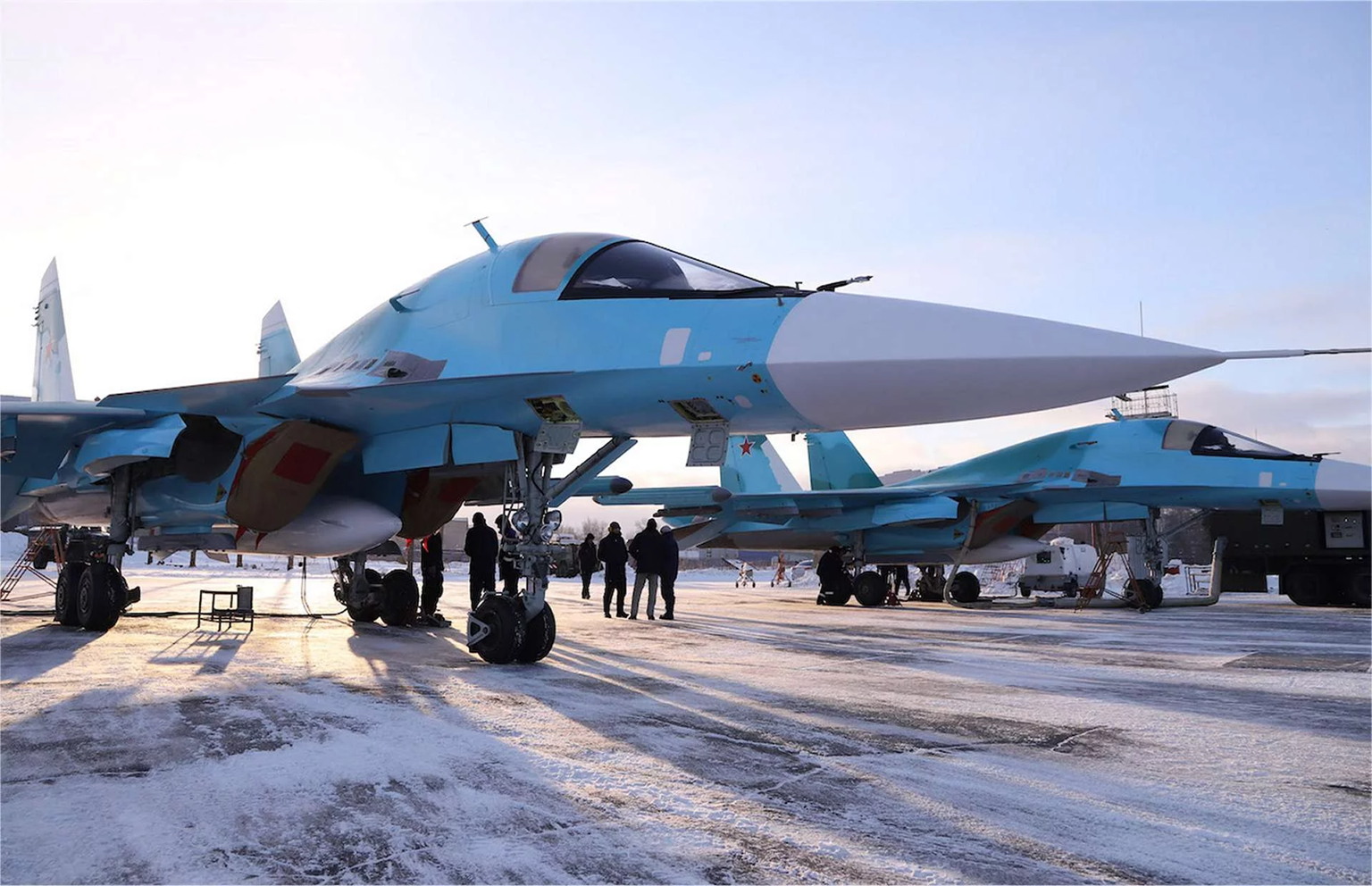
Key specifications and systems
- Platform: Developed on the Su-27 airframe; 2 AL-31FM1 engines.
- Maximum speed: approximately Mach 1.8 (2,220 km/h).
- Flight range: over 4,000 km; combat radius nearly 1,700 km when carrying auxiliary fuel tanks.
- Weapon payload: 8 – 8.5 tons on 12 pylons.
- Cockpit: armored, K-36 ejection seats; arranged in parallel.
- Radar: Leninets Sh141/V004 for terrain tracking and low-altitude combat.
- Electronic warfare: Khibiny.
- Weapons: Kh-59, Kh-31, Kh-35, KAB-500/1500 bombs and FAB bombs.
| Category | Value/Equipment |
|---|---|
| Maximum speed | Mach 1.8 (2,220 km/h) |
| range | > 4,000 km |
| Combat radius | Nearly 1,700 km (with the auxiliary fuel tank) |
| Weapon load | 8 – 8.5 tons, 12 hangers |
| Radar | Leninets Sh141/V004 |
| EW | Hibiny |
Gliding bombs and tactical impact
Since 2023, the Su-34 has been the primary platform for carrying the UMPK/UMPB kit for FAB bombs, extending their range to approximately 60-90 km. Numerous reports indicate that a large number of glide bombs are dropped monthly in combat zones, creating continuous fire pressure and forcing the enemy to disperse their low-altitude air defenses.
Regarding force organization, the source states that the Russian military has lost at least 41 aircraft frames according to Western media; it also mentions that Russia maintains approximately 150-180 Su-57s, a detail not further explained in the article. Su-34s continue to be present in various operational areas, including the large-scale Zapad 2025 exercises in the Arctic region. Algeria is reportedly close to securing a contract for Su-34ME (14 aircraft) to replace its Su-24s.
The Z-10ME integrates the CM-502KG, extending its attack range.
Images circulating on Chinese social media (December 8) show a Z-10ME attack helicopter carrying missiles believed to be CM-502KG, identifiable by their paint scheme, size, and distinctive arrangement. This integration allows the Z-10ME to shift from a close-range anti-tank role to a precision strike capability from longer distances.
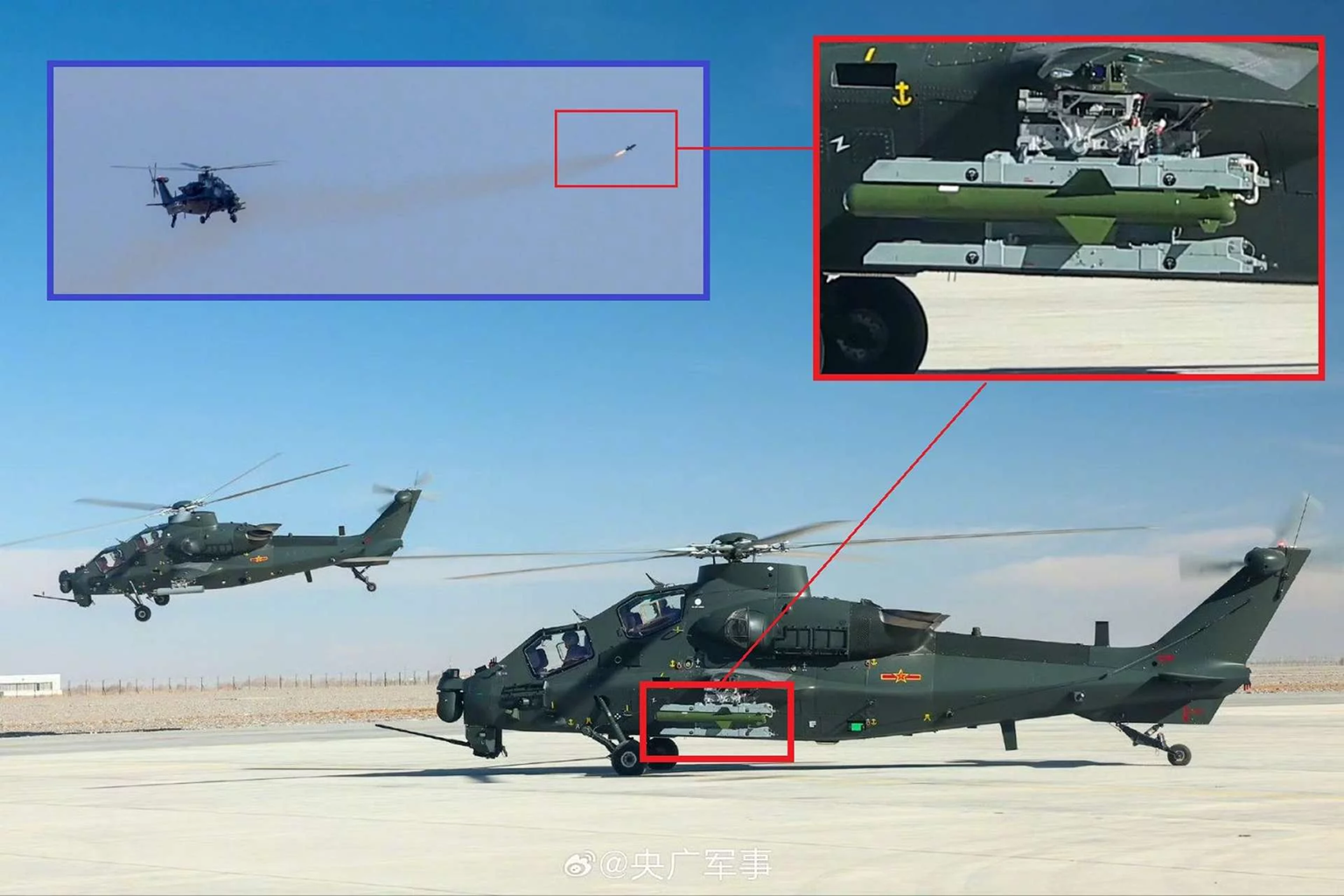
CM-502KG: Main Technical Specifications
- Weighing approximately 40 kg and measuring 1.49 m in length, it can support multiple fruits suspended from a sturdy point.
- Guidance systems: inertial + satellite, datalink; optional TV transducer, uncooled thermal imaging, semi-active laser.
- Maximum range approximately 25 km; CEP 1 – 3 m.
- Diverse warheads: fragmentation, light armor-piercing; targets include motor vehicles, small fortifications, radar stations, and small vessels.
| Weapons on the Z-10ME | Shooting range | Note |
|---|---|---|
| KD-9/10 | Approximately 8 km | Close-range anti-tank weapons |
| CM-502KG | Approximately 25 km | Precision strike beyond direct line of sight. |
Tactical implications
- Combat operations beyond the range of low-altitude air defenses, combined with terrain concealment.
- Attack command centers, artillery, and logistics lines with target allocation support from UAVs or C2 networks.
- Increase the competitiveness of "aircraft bundled with weapons" packages in the export market.
The US is using ShipOS to shorten shipbuilding cycles.
The U.S. Navy has selected Palantir Technologies to implement ShipOS across its entire shipbuilding process, with a total contract value of up to $448 million. The goal is to shorten the construction time for submarines and surface vessels, and stabilize combat readiness in the context of China's increasing shipbuilding pace.
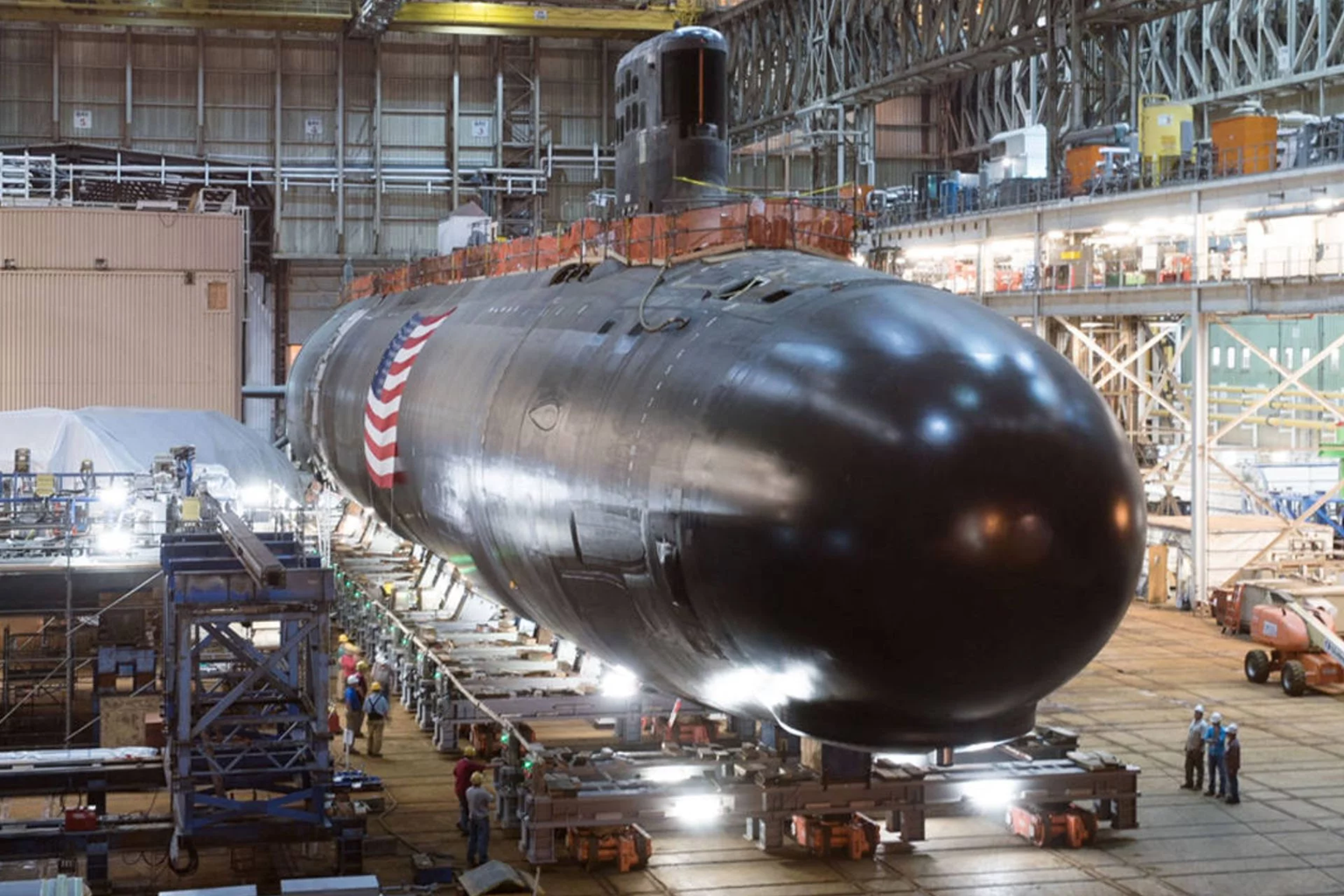
Operation and initial effectiveness
ShipOS is described as a “digital backbone” that integrates data from planning tools, legacy logistics databases, and real-time production data. By seeing inventory, capacity, and bottlenecks, progress in critical modules (such as the AN/BQQ-10 sonar unit or the AN/BVS-1 skylight) is more tightly controlled.
- At Electric Boat: scheduling work has been reduced from approximately 160 hours of manual operation to under 10 minutes.
- At the Portsmouth plant: approval of material shipments has been reduced from several weeks to around one hour.
These improvements reduce the "domino effect" where a slow module can bring the entire line to a standstill, and are expected to spread to surface shipyards facing similar challenges.
Conclude
These three simultaneous developments indicate that the current focus is on accelerating the deployment of precision firepower (Su-34 with glide bombs), extending the range of helicopter-based weapons (Z-10ME with CM-502KG), and shortening the defense industry cycle (ShipOS). The technical details and timelines mentioned above are based on information and data from the source.


