
The Su-57 and Russia's efforts to revive arms exports.
Russia claims to have reversed its arms export decline thanks to contracts for Su-35, Su-34, and Su-57 fighter jets, but still faces pressure from CAATSA, South Korea, China, and doubts about sustainability.
Russia claims to have reversed a difficult year of declining arms exports, largely thanks to new fighter jet contracts, with the fifth-generation Su-57 fighter jet seen as the biggest hope. However, long-term prospects remain questionable amid intense competition, sanctions, and political pressure.
Overview of efforts to revive arms exports
On December 17, Russian Defense Minister Andrey Belousov stated that efforts to halt the decline in arms exports amid the conflict have yielded positive results. According to him, Russia has shifted to a new system of promoting its weapons to allies and partners.
Specifically, Russia organizes live demonstrations of combat capabilities exclusively for international delegations, while also linking them to the military modernization programs of host countries. More than 20 countries have participated in this interconnected system over the past year, thereby positively impacting military-technical cooperation.
According to the Russian Defense Minister, for the first time in many years, the country has reversed its export decline and significantly increased its portfolio of new contracts.
Pressure from new competitors and the CAATSA barrier.
In the 2010s, Russia maintained its position as the world's second-largest arms exporter and had repeatedly surpassed the United States during the Cold War. However, in recent years, this position has weakened significantly due to a combination of unfavorable factors.
In early November, Oleg Yevtushenko, CEO of the state-owned Rostec corporation, acknowledged concerns about the decline in Moscow's arms export position. However, he affirmed the strategic goal of maintaining its position as the world's second-largest arms exporter by 2030 and with a vision extending to 2036.
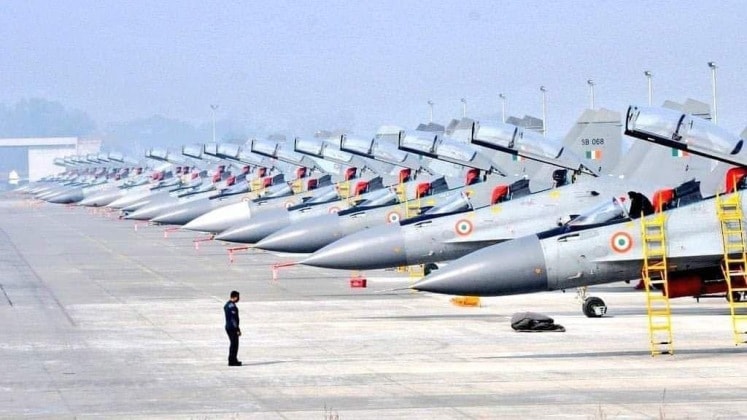
Russia is currently facing intense competition from France and especially South Korea. South Korea has made significant strides in supplying weapons to both NATO members and developing countries, while also penetrating markets previously considered "regular customers" of Russia, such as India.
Another major obstacle is political pressure from the West. Since 2017, after the US passed the Countering America's Adversaries Through Sanctions Act (CAATSA), Washington has the legal basis to impose economic sanctions on any country that purchases weapons on a large scale from Russia. As a result, Indonesia and Egypt had to cancel their plans to purchase Su-35 fighter jets, while many other potential customers hesitated even during the negotiation phase.
Competing with China in technology.
In markets less directly affected by Western pressure, Russia faces competition from China. Chinese defense products are increasingly demonstrating technological superiority over Russian products while maintaining competitive pricing, causing Russia's market share in Central Asia and Africa to decline rapidly.
Although countries that buy weapons from China also face pressure from the West, the lack of a similar "secondary sanctions" law to CAATSA targeting Beijing makes Chinese weapons a more politically safe option for many countries.
The case of Serbia is cited as an example: instead of buying the Russian S-300 or S-400 air defense systems, Serbia chose the Chinese HQ-22 to mitigate opposition from its European neighbors.
The role of the Su-35, Su-34, and Su-57 contracts.
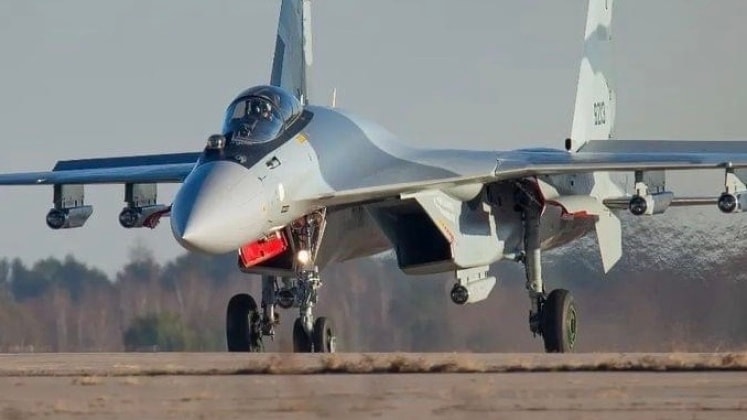
The surge in Russian arms exports in 2025 will mainly come from high-end fighter jets, especially the Su-35 and the fifth-generation Su-57. According to leaked information, Russia is currently delivering 48 Su-35s to Iran, 14 Su-34s and 2 Su-57s to Algeria, and 6 Su-35s to Ethiopia. This is considered a significant breakthrough for these key aircraft models.
| Nation | Aircraft type | Quantity |
|---|---|---|
| Iran | Su-35 | 48 |
| Algeria | Su-34 | 14 |
| Algeria | Su-57 | 2 |
| Ethiopia | Su-35 | 6 |
These high-value fighter jet contracts are seen as a cornerstone for Russia to consolidate its position in the market, with the Su-57 described as the greatest hope for the future of its defense export industry.
Prospects and doubts
Despite some positive signs, observers remain skeptical about Russia's ability to maintain its long-term momentum. Moscow is believed to be struggling to develop entirely new weapons programs, causing the technological advantage accumulated from the post-Soviet era to gradually erode.
The future of Russia's defense exports is now closely tied to the possibility of securing a contract to supply Su-57s to India, a project seen as potentially generating substantial foreign exchange revenue. In addition, the warming relationship with Iran is viewed as an opportunity to replace aging Cold War-era weapons.
Another possibility that has been considered is that Russia is supplying fighter jets to North Korea to offset the cost of purchasing weapons from Pyongyang, given that the East Asian nation possesses a large fleet of aircraft that needs modernization.
Technical perspective - market strategy
Russia's high expectations for the Su-35, Su-34, and especially the Su-57 indicate that the cornerstone of its export recovery now lies in the combat aviation sector. Contracts with Iran, Algeria, and Ethiopia reflect a trend towards focusing on high-value platforms while simultaneously increasing its military-technical presence with various partners.
However, in the context of increasingly fierce competition from South Korea and China, along with the risk of sanctions under CAATSA, Russia's ability to maintain this recovery momentum remains an open question. The key will lie in whether it can transform current and future fighter jet contracts, especially for the Su-57, into a long-term cooperation agreement.


