
Iran's powerful short-range air defense network: A direct threat to F-35 fighter jets.
Iran maintains a dense network of low-altitude air defenses with Misagh MANPADS, Verba missiles, and Majid systems, posing a significant challenge to the US and Israeli air forces.
Despite sophisticated air defense suppression campaigns from the US, Iran has built an extremely effective asymmetrical low-altitude air defense network. Recent reports of US fifth-generation F-35 Lightning II and F/A-18F Super Hornet fighter jets allegedly being hit by low-altitude missiles demonstrate the danger posed by the man-portable air defense systems (MANPADS) and mobile air defense systems that Tehran possesses.
MANPADS - The Masked Assassin in the Role of a Soldier
Iran currently possesses one of the largest stockpiles of MANPADS in the Middle East. The advantage of this weapon lies in its rapid deployment, high mobility, and extreme difficulty in detection due to its compact size, often carried by single combat crews. This tactic is particularly dangerous when enemy aircraft have to lower their altitude to avoid radar or attack ground targets.
The Iranian military currently widely operates the Misagh-1 and Misagh-2 missile systems. These are versions developed based on the Soviet/Russian Strela-2M (SA-7) and Igla-1 (SA-16) platforms. While the Misagh-1 has a range of approximately 4km, the Misagh-2 version has an upgraded infrared seeker system, allowing for an extended combat range of 5km. With a warhead of about 2kg, the Misagh-2 missiles are considered a formidable countermeasure against helicopters and unmanned aerial vehicles (UAVs).
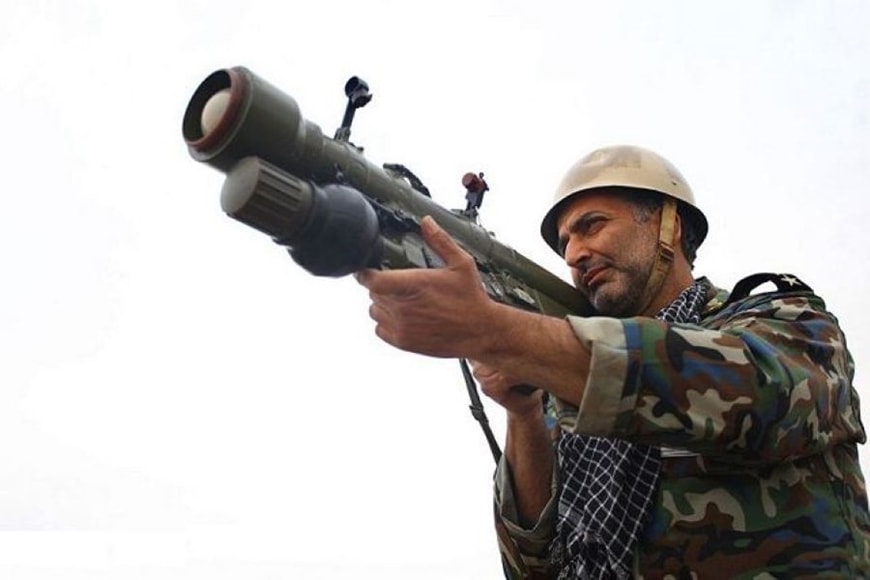
In addition, Iran possesses the Qaem-1 and Qaem-2 missile systems with improved infrared search capabilities, increasing their resistance to jamming and extending their range to 8 km. Notably, through secret agreements with Russia, Tehran is believed to have gained access to the Verba system – the most advanced MANPADS currently available. Verba uses a multispectral seeker (optical, infrared, ultraviolet), rendering conventional jamming systems almost ineffective.
Mobile fire lines and fire-and-run tactics
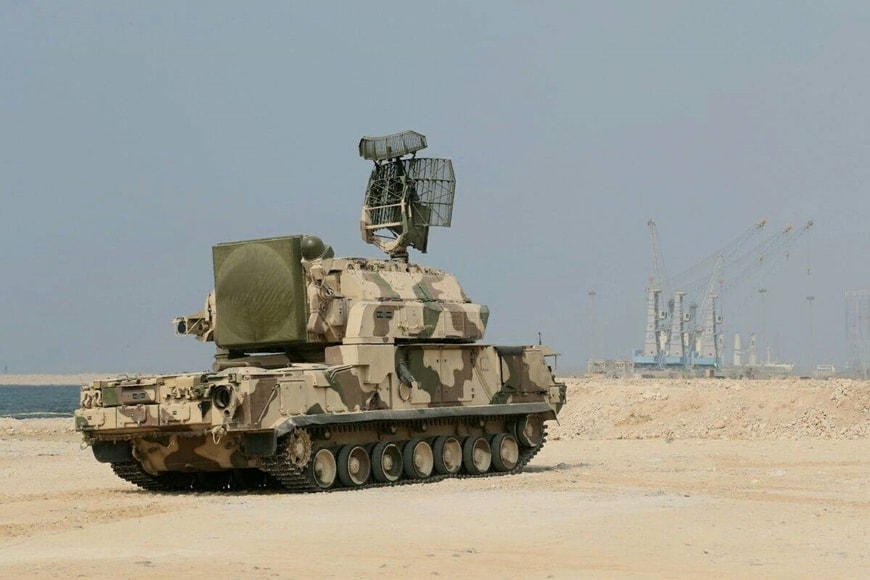
Alongside shoulder-fired missiles, Iran deploys mobile short-range air defense systems employing an "ambush" tactic. Most notably, this includes the Russian-supplied Tor-M1 system. With the ability to track 48 targets and simultaneously intercept 4 targets within a 12km range, the Tor-M1 provides robust protection against cruise missiles and glide bombs.
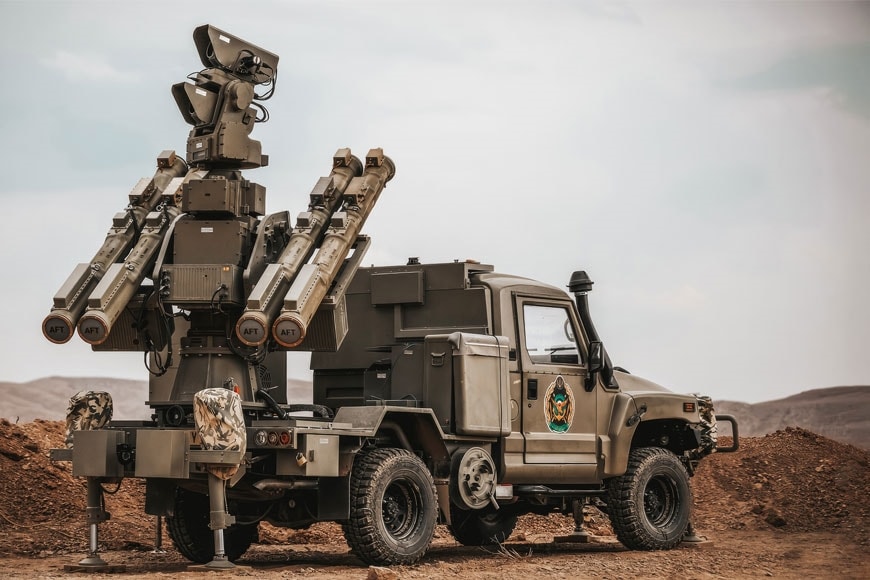
Another key component in this firepower network is the Majid (AD-08) system. What sets Majid apart is its radar-stealth mode, entirely targeting using electro-optical and thermal imaging systems. This prevents early warning systems on enemy fighter jets from detecting that they are being targeted. Military experts believe that this passive tracking mechanism may be the reason why F-35 stealth fighters are hit without being able to react in time.
In addition to modern systems, Iran still maintains self-propelled artillery such as the ZSU-23-4 Shilka and the M-163 Vulcan. Although outdated, when combined with a dense network of MANPADS, they form a multi-layered "low-altitude shield," posing a significant risk to enemy air forces attempting to penetrate its airspace at low altitudes.
Technical specifications of the main systems
| System | Type of weapon | Range (km) | Key features |
|---|---|---|---|
| Misagh-2 | PANEPADS | 5 | Upgraded infrared sensor |
| Verba | PANEPADS | 6.5 | Absolute interference-free multispectral detector |
| Tor-M1 | Mobile missiles | 12 | Multi-target interception, anti-cruise missile defense |
| Majid (AD-08) | Mobile missiles | 8 | Stealth warfare, using thermal imaging sensors. |
It is clear that Iran's air defense strategy relies not only on massive, long-range, high-altitude systems but also strongly focuses on the mobility and stealth capabilities of its low-altitude fire network. This is an effective asymmetrical approach to counter the technological superiority of major air powers.


