
Surface Pro 2026 and Snapdragon X2 Elite: When Microsoft chooses the weakest chip version.
Microsoft has just updated the Surface Pro 2026 line with the latest Snapdragon X2 Elite chip. However, using the lowest clock speed variant means that real-world performance isn't significantly different from its predecessor.
Microsoft has officially refreshed its Surface Pro 2026 hybrid tablet line with the introduction of the latest Qualcomm Snapdragon X2 chip. However, despite the hype about the new generation of ARM processors, technical analysis reveals that this year's Surface Pro OLED version is only equipped with the lowest-end variant in the Elite line, sparking debate about the real value of this upgrade.
Microsoft's controversial hardware strategy
In this launch, Microsoft continues its strategy of clearly differentiating its customer base. Individual users now only have the option of devices running ARM chips (Snapdragon X2), while business customers are given more flexibility with the choice between Qualcomm or Intel Panther Lake chips (with 5G options). Microsoft's attempt to promote the ARM platform by limiting the choices of individual users is considered by experts to be a somewhat forced move.
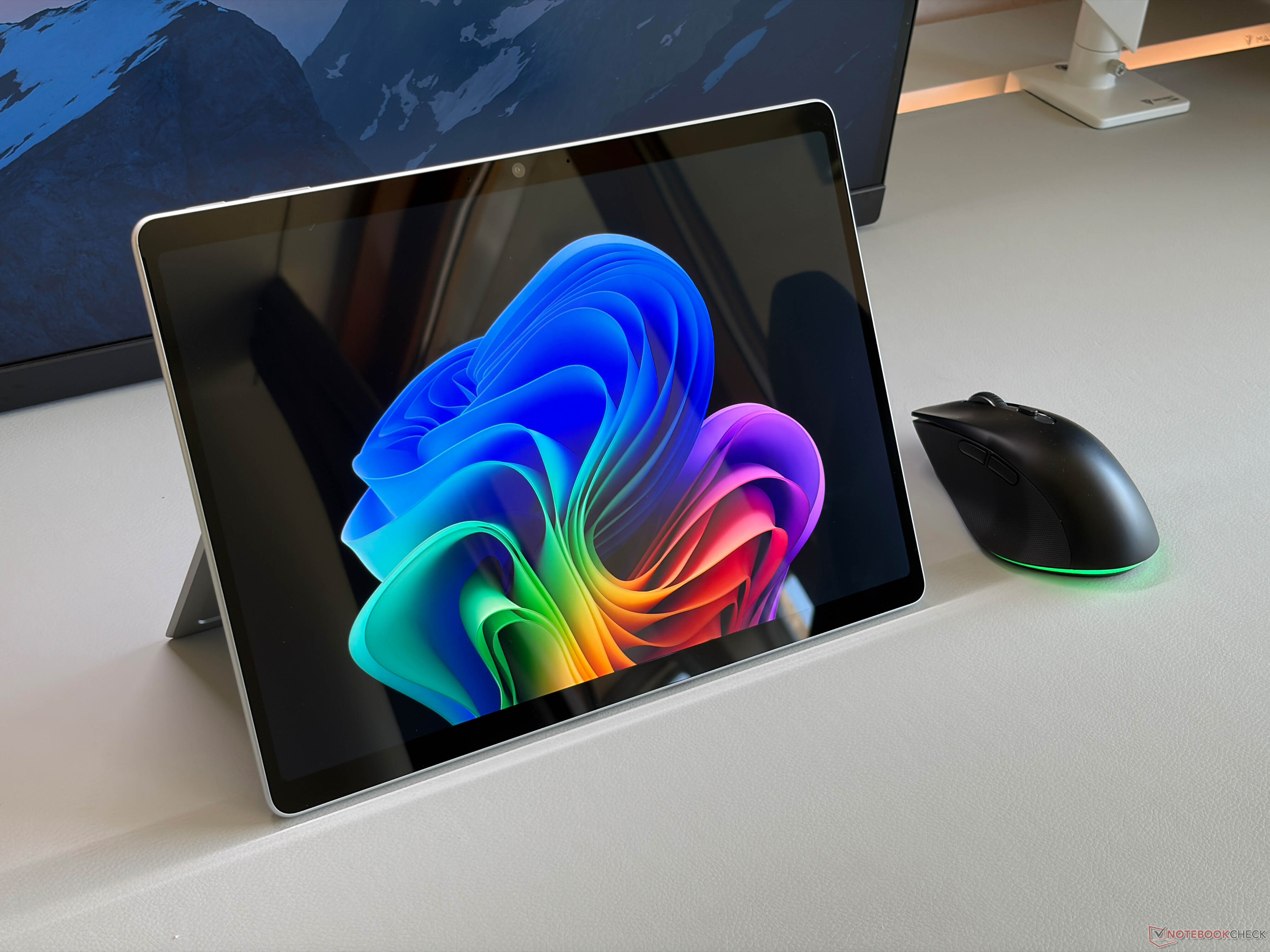
Performance analysis: Snapdragon X2 Elite or just a minor upgrade?
At the heart of the Surface Pro OLED 2026 is the Snapdragon X2 Elite (X2E-78-100) chip. This is the lowest-performance version in the X2 Elite family, featuring a 12-core CPU architecture, including 6 high-performance cores clocked at 4.0 GHz and 6 power-efficient cores at 3.4 GHz.
In practice, testing shows that the overall CPU performance of the X2E-78-100 is only slightly better than the X1E-80-100 version on the older Surface Pro generation. This is disappointing for users expecting a significant leap in processing power with the new technology.
Comparison table of basic technical specifications
| Parameter | Snapdragon X2 Elite (X2E-78-100) | Snapdragon X1 Elite (Previous Generation) |
|---|---|---|
| CPU core count | 12 multipliers (6P + 6E) | 12 people |
| Maximum clock speed | 4.0 GHz | Equivalent |
| GPU | Adreno X2-85 (1.35 GHz) | Adreno X1-85 |
| Display technology | OLED | IPS / OLED options |
Adreno X2-85 Graphics: The Limits of Clock Speed
The graphics performance on the Surface Pro 2026 is a contradictory story. Despite using the new Adreno X2-85 GPU, Microsoft has limited the clock speed to 1.35 GHz, significantly lower than the 1.7 GHz on other higher-end versions.
As a result, while this GPU is still significantly more powerful than the older Adreno X1-85, it's not much better than the Snapdragon X2 Plus series (which uses the Adreno X2-45 GPU but runs at 1.7 GHz). This trade-off leaves the device's graphics processing capabilities only comparable to versions running Intel Panther Lake chips with integrated quad-core Xe iGPU graphics.
Advice for users
Overall, the Surface Pro 2026 is a minor performance upgrade but comes with a higher price tag. Since the differences between the new and old generations aren't significant, users should consider purchasing older Surface Pro models while they're still available to get the best performance-to-price ratio.
Although it remains an excellent convertible device with a high-quality OLED screen, Microsoft's overly "safe" choice of chip configuration has inadvertently diminished the appeal of this iconic product line in 2026.


