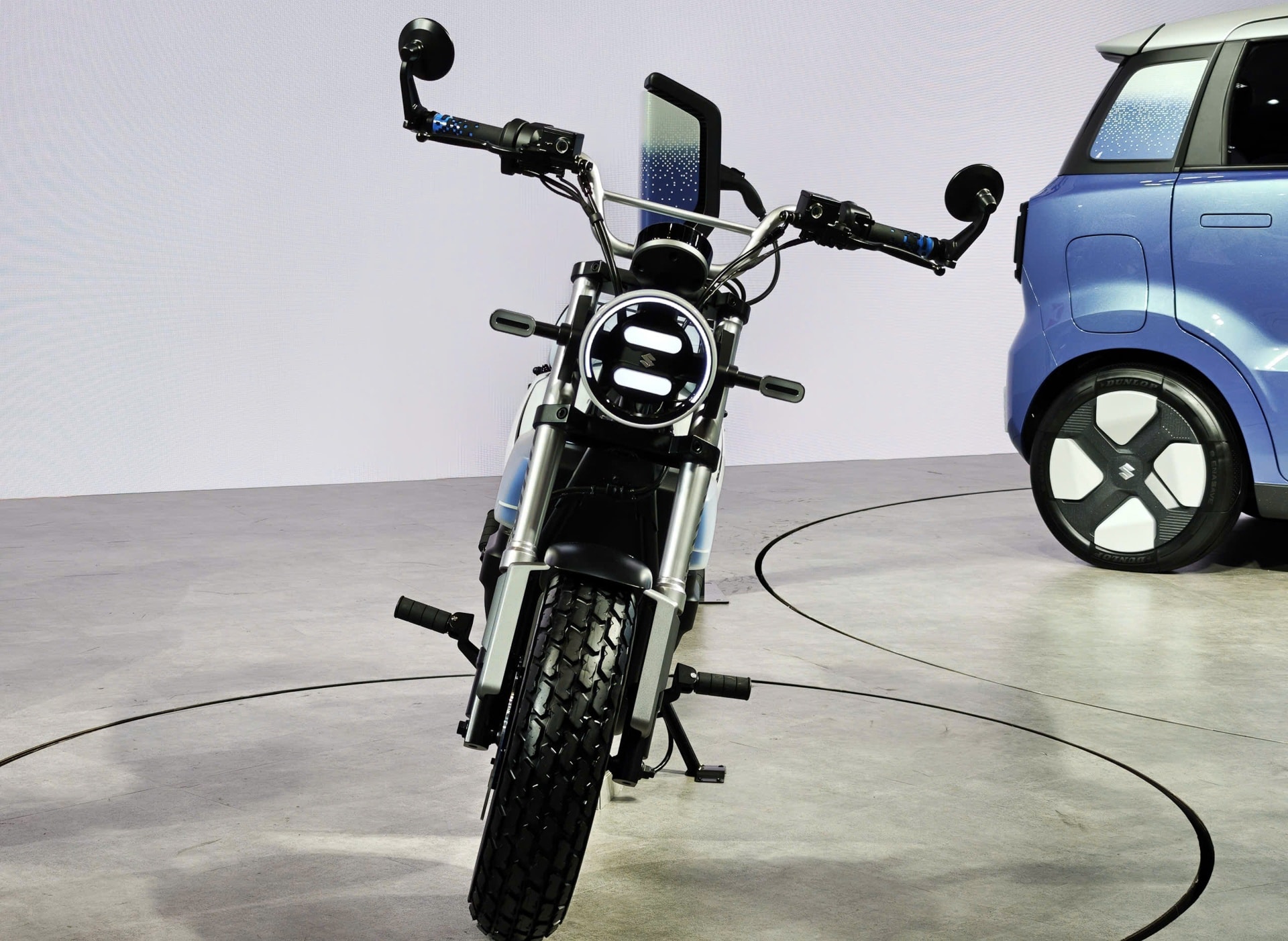
Suzuki e-VanVan 2025: A quick review of the retro-styled electric van.
Ra mắt tại Japan Mobility Show 2025, Suzuki e-VanVan mang phong cách VanVan cổ điển với đèn tròn LED hai tầng, lốp to bản, phanh đĩa trước sau và kích thước 1.810 x 825 x 1.050 mm. Hiệu năng tương đương xe 125 cc; pin, motor chưa công bố.
Suzuki e-VanVan xuất hiện tại Japan Mobility Show 2025 với định vị là mẫu xe máy điện lấy cảm hứng từ VanVan thập niên 1970. Thiết kế giữ chất hoài cổ, kết hợp chi tiết hiện đại như đèn LED hai tầng và phanh đĩa ở cả hai bánh. Suzuki chưa công bố thông số motor điện và dung lượng pin, nhưng xác nhận hiệu năng ở mức tương đương xe xăng 125 cc. Kích thước tổng thể dài x rộng x cao đạt 1.810 x 825 x 1.050 mm, phù hợp sử dụng đô thị.
Tinh thần VanVan trên nền tảng điện
Điểm nhấn nhận diện của e-VanVan là cụm đèn pha tròn, dùng bóng LED hai tầng với logo thương hiệu đặt bên trong. Thân xe phối màu trắng cùng các họa tiết điện tử, gợi tả rõ định hướng chuyển dịch sang năng lượng sạch nhưng vẫn bảo tồn DNA cổ điển của dòng VanVan.
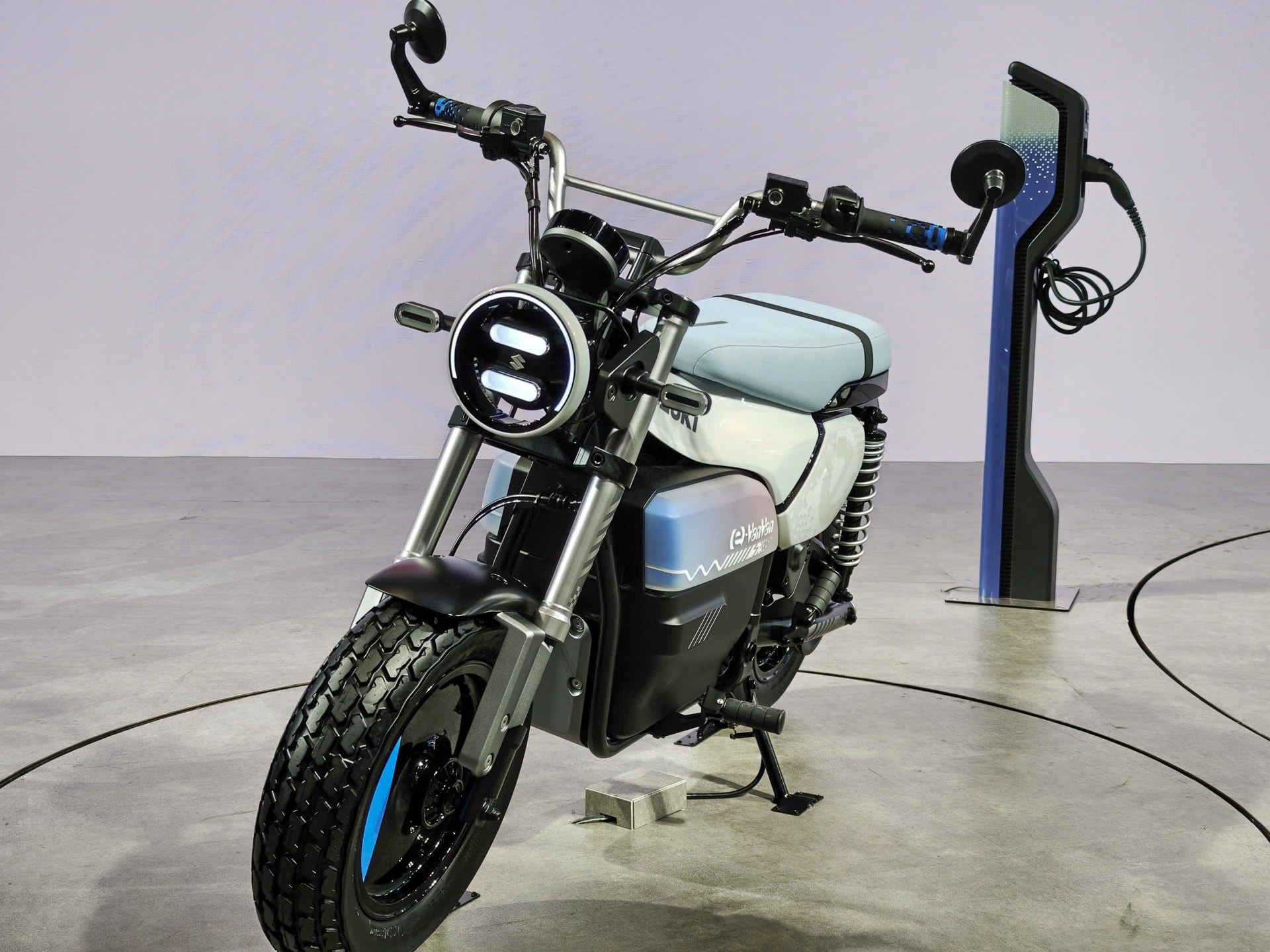
Compact size, purposeful attention to detail.
Measuring 1,810 x 825 x 1,050 mm, the e-VanVan is highly maneuverable in tight spaces. Rearview mirrors are mounted at either end of the handlebars, emphasizing the minimalist spirit of a lifestyle vehicle. Against an overall white paint scheme, a few electronic graphic details are subtly incorporated to create the distinctive identity of a next-generation electric vehicle.
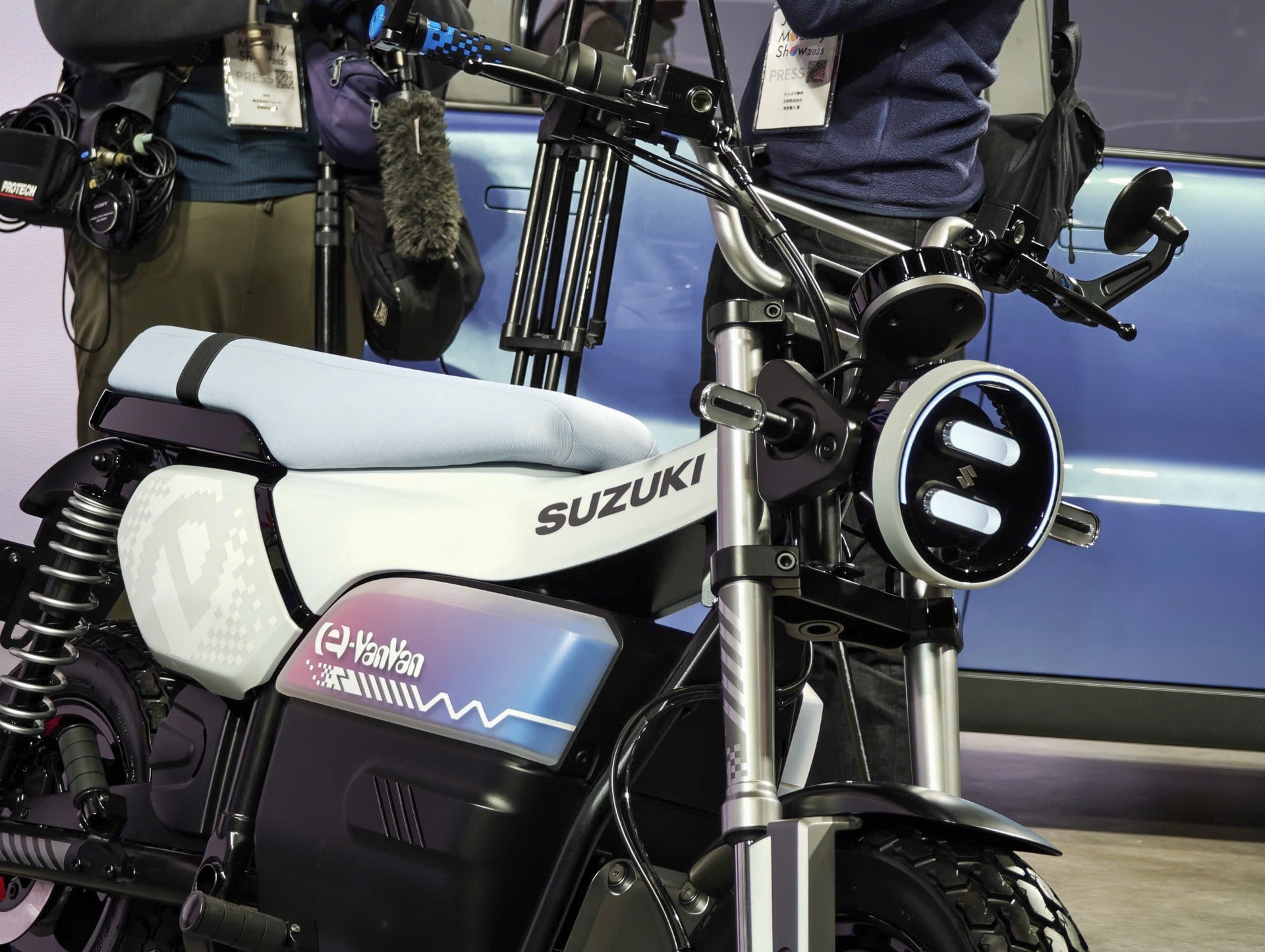
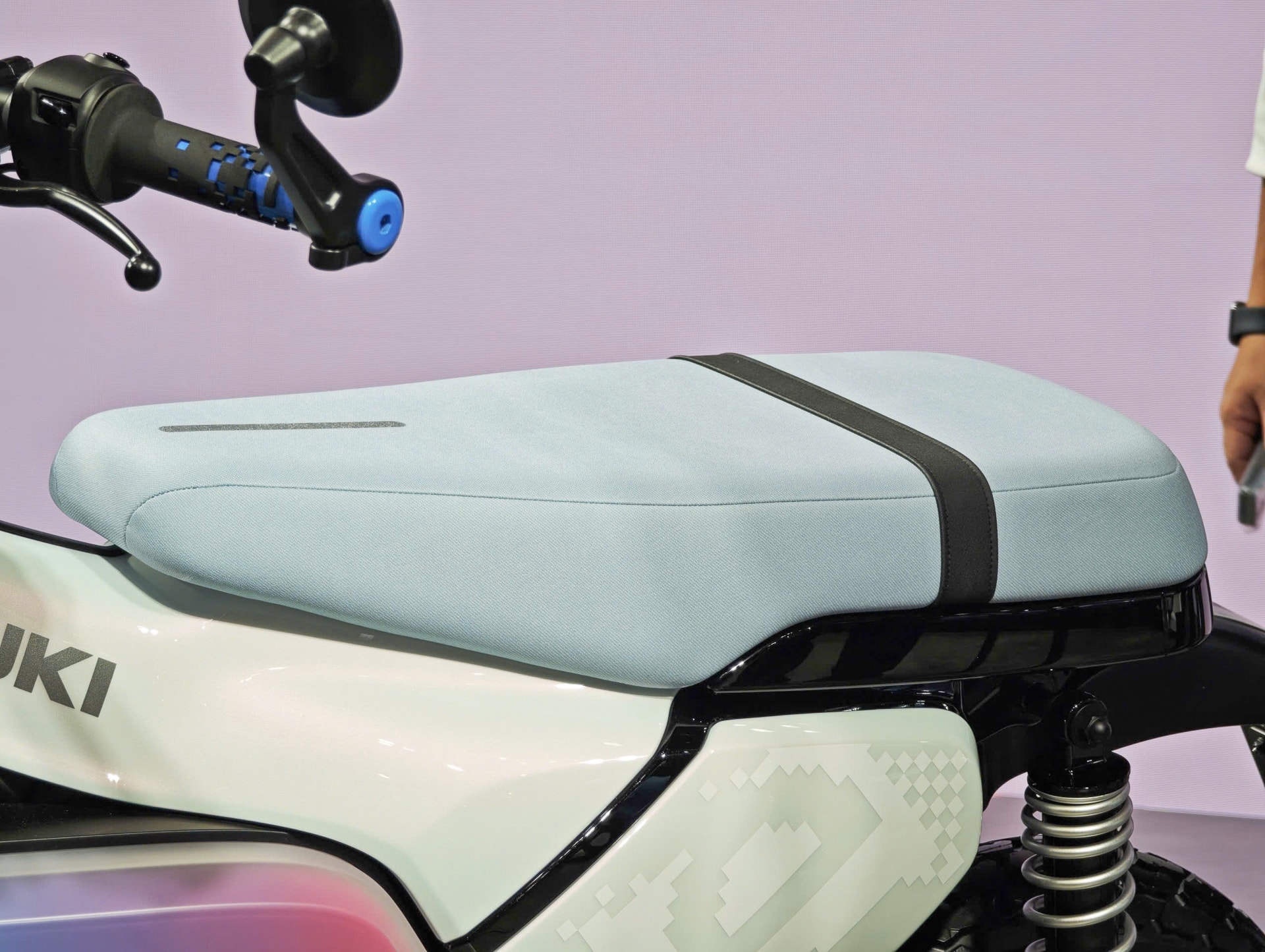
Pastel blue double saddle, designed for a two-person experience.
The e-VanVan uses a pastel blue dual seat, creating a visual highlight while prioritizing comfort for two people. The flat, thick seat design allows the rider easy access to the seat height and flexible adjustment of seating position depending on the situation.
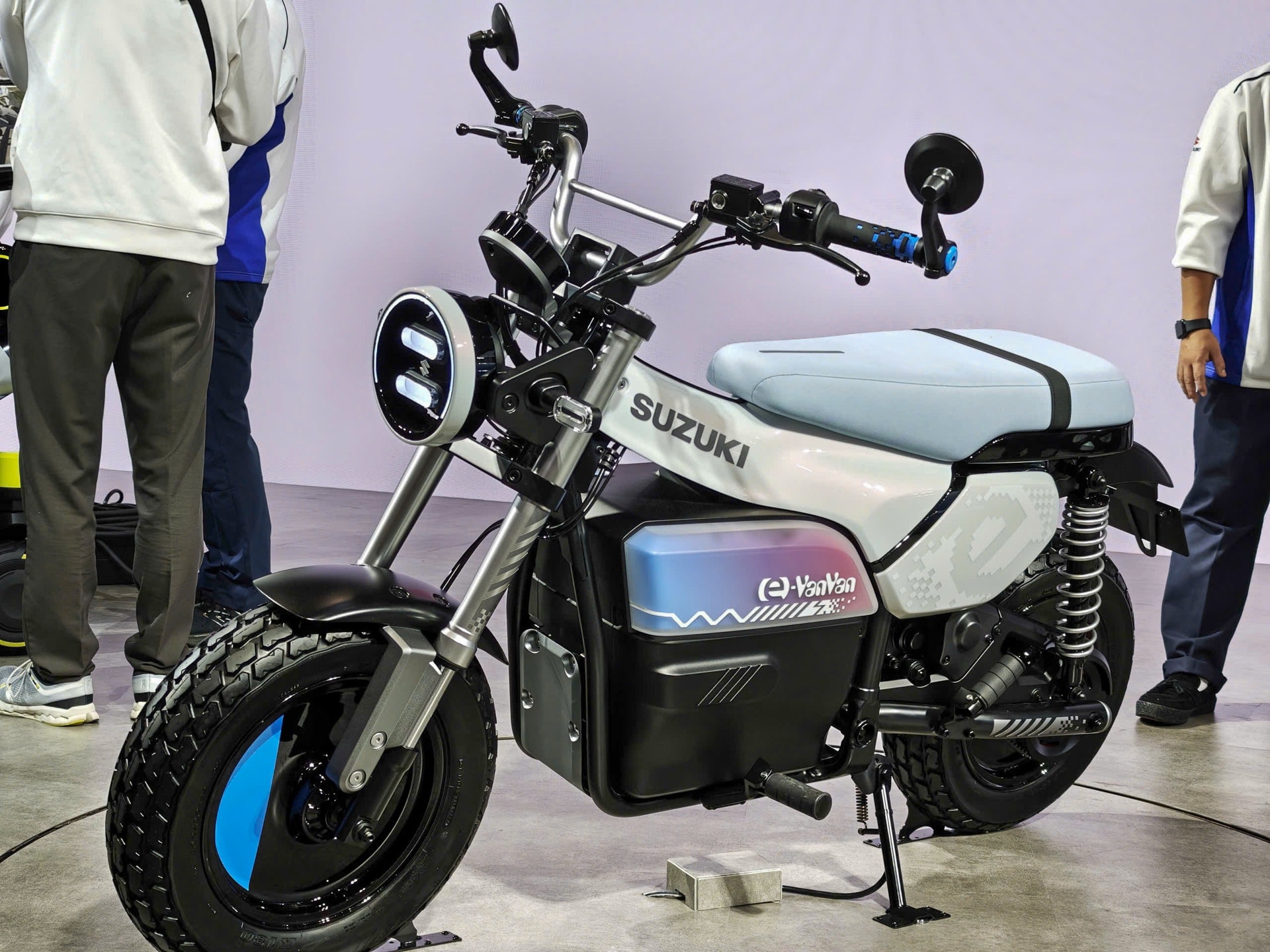
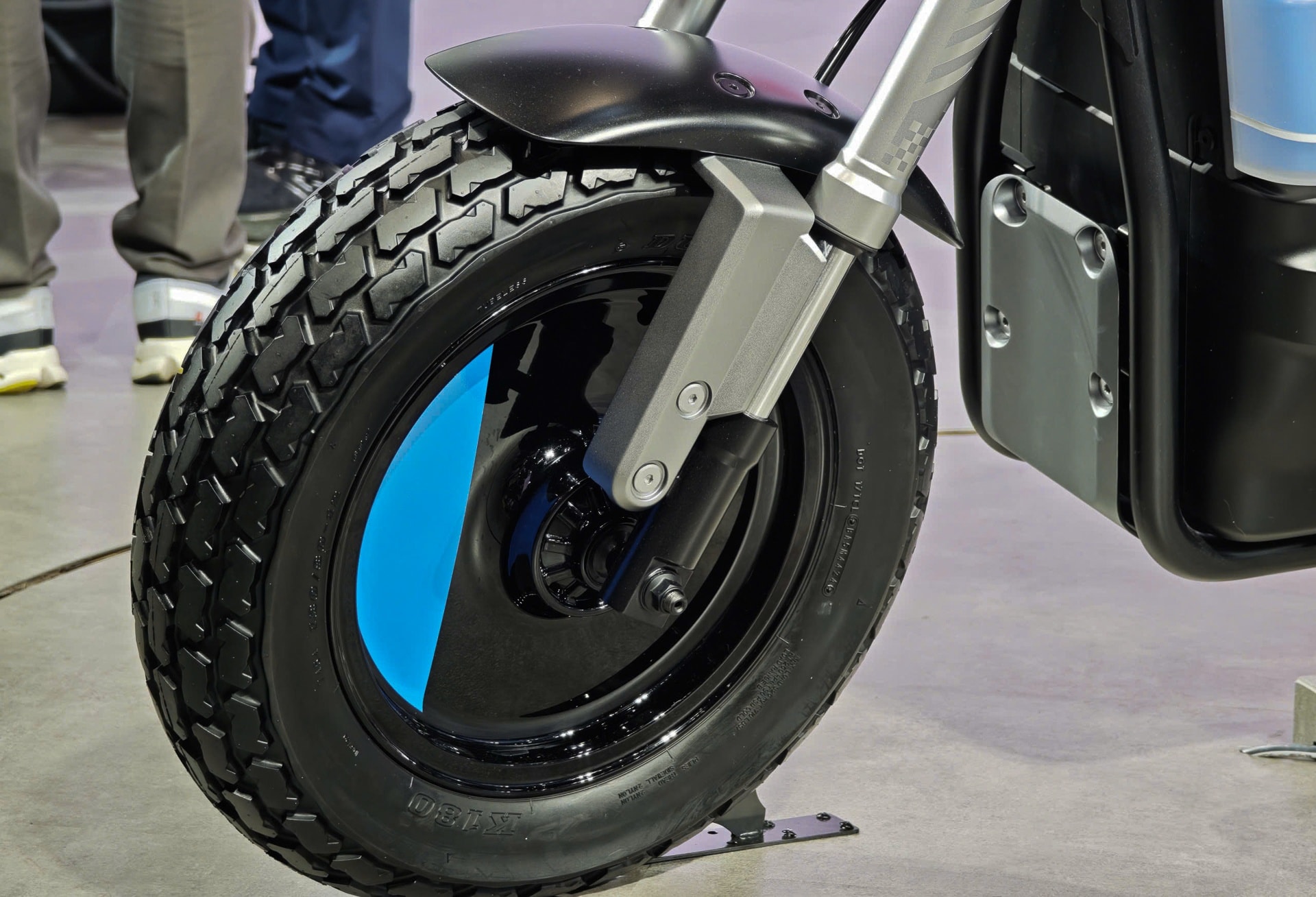
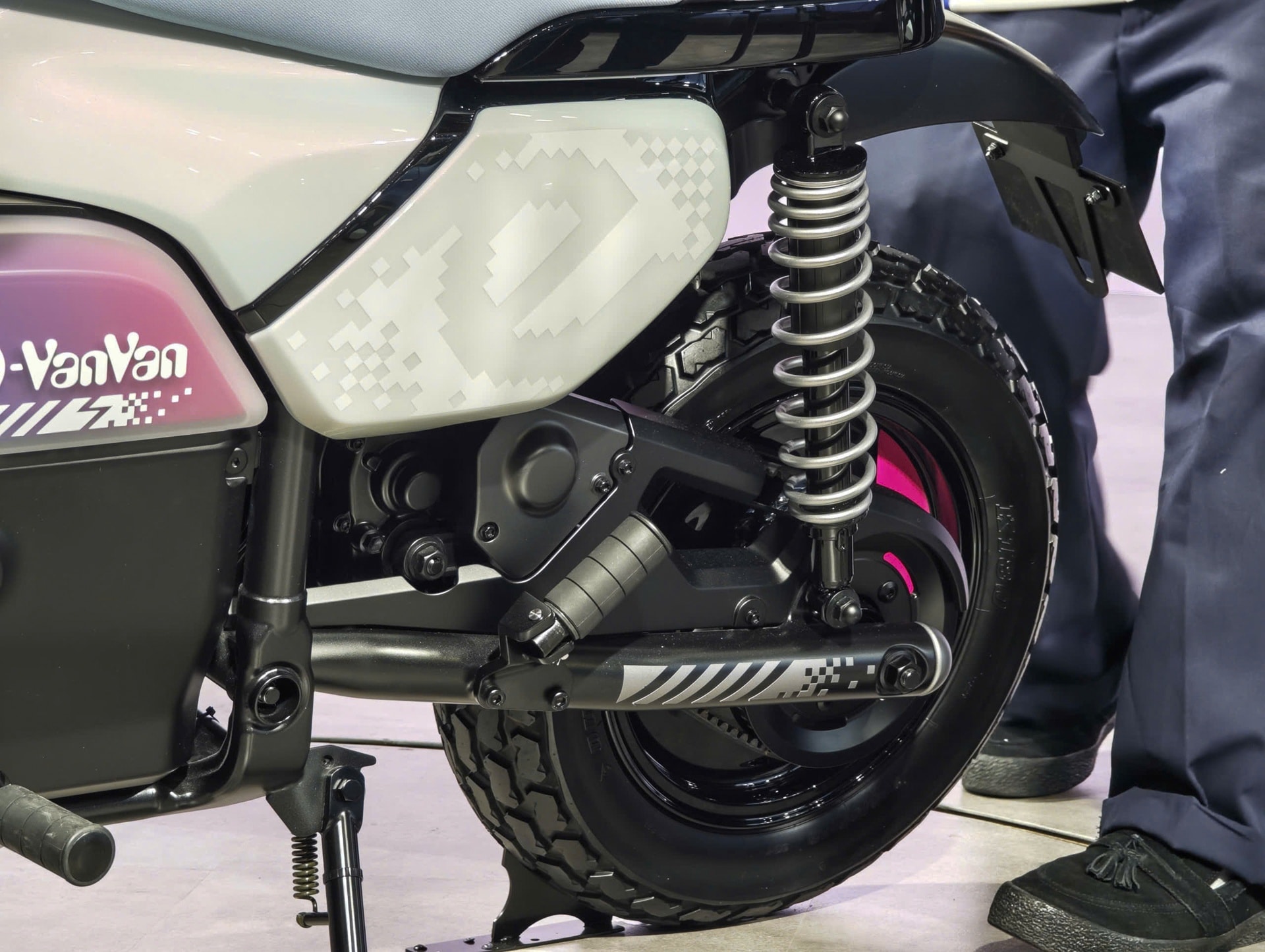
Simple chassis, wide tires, and disc brakes on both wheels.
The suspension configuration follows a classic style: telescopic forks at the front and coil springs at the rear. Both front and rear wheels are equipped with disc brakes. The wide tires are part of VanVan's heritage, giving it a sturdy appearance and suitability for common urban road surfaces.
Electric drivetrain: performance equivalent to a 125cc engine.
Suzuki has not yet released details about the electric motor or battery pack capacity. The current official information confirms that the overall performance is equivalent to a 125cc gasoline motorcycle. With this size, the e-VanVan is aimed at daily urban commuting needs; specifications such as driving range per charge or charging time will need to be announced by the manufacturer.
Commercialization prospects and market presence in Vietnam
Suzuki has stated that the e-VanVan is likely to be commercialized soon. Given Suzuki Vietnam's focus on electrification, this model could be introduced to domestic customers in the future, depending on the company's product plan.
Official specifications have been released.
| Category | Information |
|---|---|
| Launch | Japan Mobility Show 2025 |
| Dimensions (L x W x H) | 1,810 x 825 x 1,050 mm |
| Lighting design | Round headlights, dual-tier LED, with logo inside. |
| Tires | Wide tires |
| Brake | Front and rear discs |
| Front suspension | Telescopic fork |
| Rear shock absorber | Spring |
| Rearview mirror | Attached at both ends of the handlebars. |
| Yen | Pastel blue double seat |
| Battery | Not yet announced |
| Electric motor | Not yet announced |
| Performance | Equivalent to a 125cc gasoline motorcycle. |
Conclude
The Suzuki e-VanVan is a clean approach: reimagining the VanVan heritage on an electric platform, while retaining core identifying values such as round headlights, wide tires, and a minimalist body. Once battery and motor specifications are released, a more complete product picture will emerge, allowing for a more realistic assessment of range and ownership costs.