
The true effects of a spice more expensive than pure gold.
To use saffron effectively for medicinal purposes, sufficient quantities are needed, and it must be used regularly.
Saffron is an ancient cultivated plant native to West Asia and the Mediterranean, now widely grown in Iran, Greece, India, Spain, and Türkiye.
The stigmas of the saffron flower are meticulously harvested to create saffron, the world's rarest and most expensive spice, often called the "king of spices." In Vietnam, the highest quality saffron can cost nearly 700 million VND per kilogram.
A favorite spice of the aristocracy.
The use of saffron dates back to the dawn of human history. In northwestern Iran, archaeologists have found caves with 50,000-year-old images containing the crimson pigments of saffron stigmas.
On the Greek island of Thera, in the Aegean Sea, 3,500-year-old murals depict a Minoan goddess overseeing the production and application of a medicine made from saffron flowers.
|
| Saffron pistils have long been used by the nobility for beauty and medicinal purposes. |
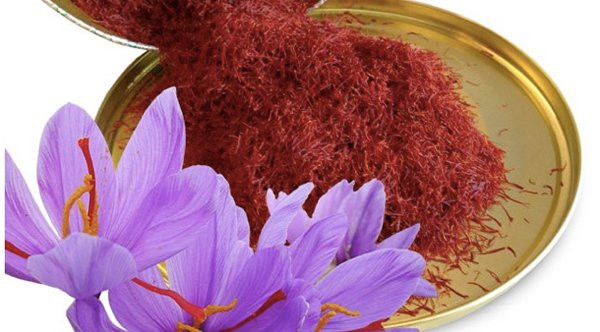
Since ancient times, Arabs have used saffron to decorate their eyelids and paint their fingernails; heroes also used it to dye their clothes, symbolizing glory and honor.
In China, the medicinal properties of saffron were mentioned in a book as early as 2600 BC. The Egyptians used it for medicinal purposes, perfumes, dyes, and cooking. Ancient Persians believed that saffron stigmas cured depression and often added them to hot tea.
In the 8th century, Muslims brought this spice to Spain, and it has been used in high-end cuisine ever since. During the Renaissance, saffron stigmas were actually as valuable as gold.
King Henry VIII of England once threatened to kill anyone who mixed saffron stigmas with cheaper spices.
Why are saffron stigmas so expensive?
Historically, only the upper class could afford saffron, and even today, this spice remains extremely expensive due to its rarity.
The golden stigmas of the saffron flower are harvested manually by hand in the autumn. To obtain 1 kg of stigmas, approximately 170,000 flowers (68 kg) and over 40 hours of work are required.
|
| To obtain 1 kg of saffron, 68 kg of flowers are needed. |
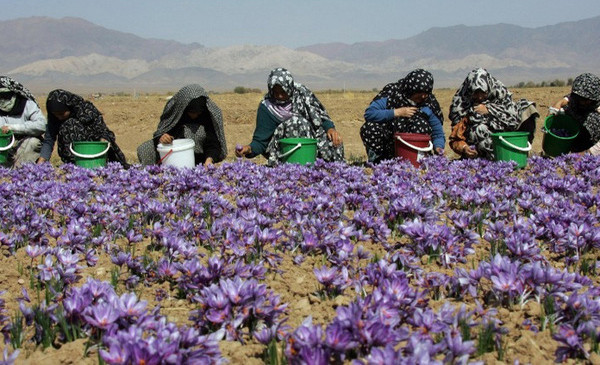
Because saffron is a triploid plant (3n=24), the purple flower part of the saffron plant cannot produce seeds and therefore cannot reproduce sexually. Each saffron plant has only 4 flowers, and each flower has 3 stigmas.
To propagate the plant, human assistance is needed, involving asexual reproduction using underground pseudobulbs, and the plant must contend with problems such as pests and nematodes that cause diseases in the tubers.
Value in cuisine and medicine
In cuisine, saffron imparts a distinctive flavor and color to high-end dishes in France, India, Italy, Sweden, Spain, and other countries. The aroma of saffron stigmas is reminiscent of honey with a characteristic metallic and grassy or hay-like scent, slightly sweet, giving food a vibrant orange-yellow color.
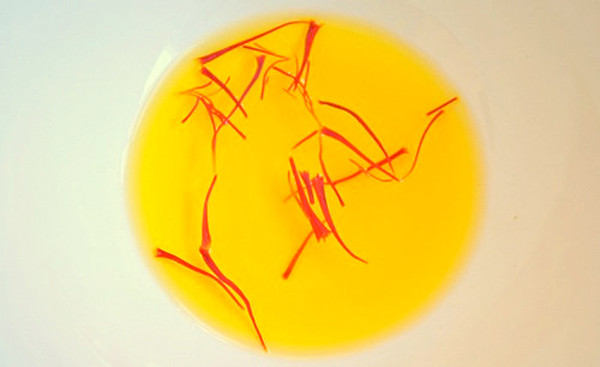
Just a few strands of saffron stigmas are enough to create a dish that is perfect in aroma, flavor, and color.
|
| Just soak the saffron stigmas for a few minutes, and they will give off a vibrant yellow color. |
Saffron pistils contain many flavonoids, vitamins, and apocarotenoids, so both traditional and modern medicine use them for their sedative, expectorant, aphrodisiac effects, and to treat ailments such as diarrhea, heart damage, hypoglycemia, high cholesterol, immune system enhancement, smallpox, colds, kidney stones, alcoholism, cramps, insomnia, diabetes, asthma, and depression. They may even slow the progression of Alzheimer's disease and cancer.
Modern medicine also recognizes saffron as a powerful antioxidant that can reduce pain and inflammation.
Its anti-aging properties were used by ancient beauties, including Cleopatra, for beauty purposes.
Saffron essential oil, with over 150 volatile aromatic compounds, the main components being safranal (aroma), picrocrocin (bitter taste), and crocin (color), along with other carotenoids and terpenes, possesses antibacterial, antifungal, and antioxidant properties, making it one of the most effective essential oils for food preservation.
All parts of the saffron plant, such as the stigmas, leaves, bulbs, and petals, contain antioxidant compounds (phenols, flavonoids, and carotenoids), but the highest concentration is found in the stigmas.
Good, but it needs to be done in sufficient quantity and regularly.
Although saffron stigmas have many uses in cooking and medicine, their high price warrants consideration before rushing to buy them. If you're buying them to enhance dishes and increase health benefits through food, you don't need to use too much of this spice.
If purchased for medicinal purposes, it would be too expensive because achieving therapeutic effects requires a sufficiently large quantity and frequent use.
|
| Saffron is often counterfeited, making it difficult to distinguish between the real (right) and fake (left) saffron. |
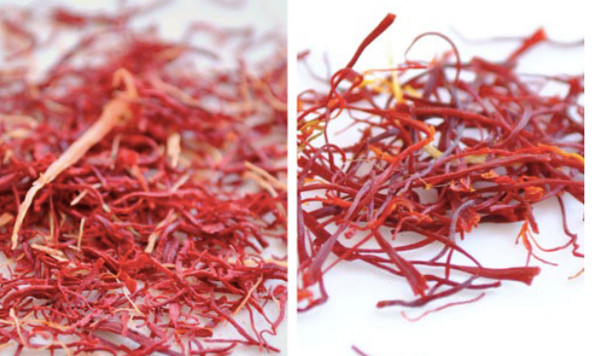
Not to mention, the saffron market is complex due to the high economic returns, leading to a lot of counterfeit products. Buying low-quality products can have negative effects on health.
In fact, the adulteration of saffron has a long history and continues to this day. The first instances of fake saffron were discovered in medieval Europe. Common methods included mixing it with impurities such as beetroot, pomegranate fibers, red-dyed silk threads, or the odorless, tasteless yellow stigmas of the saffron flower.
In particular, powdered saffron is easily faked with fillers such as turmeric powder and chili powder.
Therefore, when spending a large amount of money on saffron, it is necessary to carefully check the origin, source, testing certificates, and guarantee seals.
Currently, there are many studies worldwide on species identification, which helps to detect the authenticity of saffron stigmas.


