
Institutional restructuring to "pave the way" for double-digit growth.
The goal of double-digit growth is not just about capital and macroeconomic policies, but first and foremost about the "rules of the game" in the economy.
Content + Design:Phuong ChiApril 30, 2026
*****
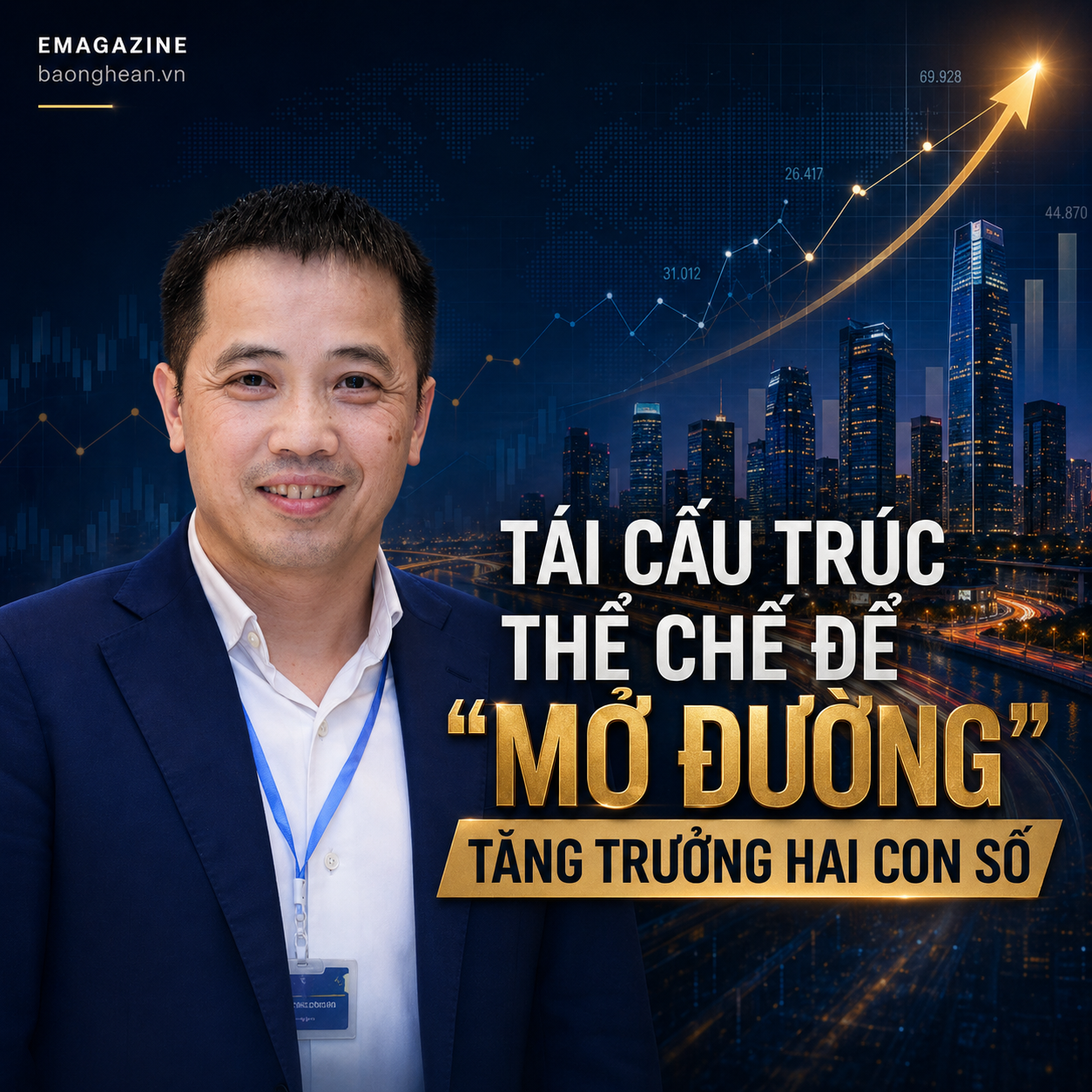
Objectivegrowth2 numbersIt's not just a story about capital and macroeconomic policies, but first and foremost, it's a story about the "rules of the game" in the economy. According to Mr. Dau Anh Tuan, Deputy Secretary General and Head of the Legal Department of the Vietnam Chamber of Commerce and Industry (VCCI), the biggest bottleneck currently lies in the legal system.some pointsOverlapping processes and a lack of foresight discourage businesses from thinking long-term. To achieve breakthroughs, reforms cannot stop at cutting procedures; they must move towards restructuring institutions, creating a stable and transparent foundation for investment and development.

PV:The goal of double-digit growth is often viewed from a macroeconomic management perspective. However, at a deeper level, many experts believe that this is essentially an institutional challenge. So, in your opinion, what are the most fundamental "institutional bottlenecks" currently limiting Vietnam's growth rate?
Mr. Dau Anh Tuan:When talking about double-digit growth, people often immediately think of monetary policy, fiscal policy, public investment, and attracting FDI. Those things are important, but they're like fuel in a machine. If the machine has a problem, no amount of fuel will make it run any faster. Institutions are that machine.
The most fundamental bottleneck I've observed, from working with numerous businesses, lies in the fact that our business legal system has become overly complex, overlapping, and unpredictable. Vietnamese businesses today don't lack ideas, capital, or markets. What they lack may be the legal security necessary to dare to invest heavily and think long-term.
Let me give you a very practical example. A business wanting to implement a production project must simultaneously comply with the Investment Law, the Land Law, the Construction Law, the Environmental Protection Law, the Fire Prevention and Fighting Law, and a series of other sub-laws. Each law individually may be reasonable, but at the intersections of these laws, procedural loops arise that businesses don't know where to begin. To obtain a construction permit, they need land use rights; to be allocated land, they need investment approval, and investment approval documents require detailed land information. To prepare an environmental impact assessment report, they need a basic design, but a basic design is only meaningful once the site plan has been determined. Thus, the procedures are mutually dependent, and the business runs in circles.
But the bottleneck isn't just in the written text. It lies deeper in how we organize the state management apparatus vertically, with each ministry and sector taking the lead in drafting laws for its own field, lacking a sufficiently strong inter-sectoral coordination mechanism. As a result, each law may be good on its own, but when combined, they create a labyrinth that businesses must navigate themselves. And when they can't find their way, they have two choices: either stop investing or take a roundabout route with unofficial costs. Both options are detrimental to the economy.
If Vietnam truly wants to achieve sustainable double-digit growth, it must remove the bottlenecks that are preventing existing capital from flowing into production and business. This is an institutional challenge to change the way things have been operating for many years.
.png)
PV:The reality is that many businesses not only incur tangible compliance costs, but also bear "hidden costs" from overlapping laws and their enforcement. Do you think the core issue lies in the quality of the regulations themselves, or in how their enforcement is organized? And how can we address this situation at its root?
Mr. Dau Anh Tuan:The honest answer is: Both, and they are intertwined in a way that is very difficult to separate.
Regarding the quality of regulations, I must say that Vietnam's current business legal system is vast but not refined. We have too many documents, too many layers, from laws down to decrees, circulars, and then guiding documents. Many regulations use vague and ambiguous language, such as "according to the provisions of the law" without specifying which regulation, or "in necessary cases" but no one knows what constitutes "necessary." This ambiguity is not harmless. It creates room for arbitrary application, and that is the source of hidden costs that businesses have to bear.
But simply looking at the quality of the written regulations isn't enough. Implementation is where businesses feel the risks most acutely. The same law can be interpreted differently by the tax authority in Province A and Province B. Businesses with factories in three or four different provinces have to deal with three or four different interpretations of the same regulation. The hidden costs lie here: not in taxes or fees, but in time, effort, anxiety, and even unnamed expenses incurred to "make things go smoothly" when regulations are unclear.
There's a paradox that few people notice. The more vague the regulations on paper, the greater the actual power of those enforcing them. And when enforcement power isn't controlled by clear, transparent criteria, the risk of arbitrary action is very high. Businesses don't fear strict laws; they fear unclear laws. Strict laws provide a framework for compliance, while unclear laws can lead to wrongful compliance, and non-compliance can be right, depending on how the inspector interprets them.
To address the root cause, I believe three things need to be done simultaneously:
Firstly, improve the quality of legal texts by requiring each regulation to meet clear and specific standards, so that readers know what to do without needing a lawyer's explanation.
Secondly, we need to establish a unified mechanism for interpreting laws. Currently, when businesses encounter difficulties, they have to contact each agency individually, and each agency provides a different response via official letters. While these letters are not legal regulations, they effectively have a "hard" effect on businesses. There needs to be a single authorized point of contact for official interpretation, and these interpretations must be made public so that everyone can apply them.
Third, compliance costs must be quantified. Every new regulation must answer the question: How much time and money will businesses lose to comply, and are the benefits to the government worth those costs? When compliance costs are weighed transparently, unreasonable regulations will naturally become apparent.

PV:One of the conditions for achieving high and sustainable growth is the ability of businesses to forecast and develop long-term plans. However, reality shows that many policies are adjusted in a short period, lacking a clear transition roadmap, such as Decree No. 46 on food safety, which makes it difficult for businesses to adapt and increases legal risks. According to you, should the stability of the law be viewed as a "public asset" of the economy? And if so, are we "investing" enough in this asset?
Mr. Dau Anh Tuan:I really like this way of framing the issue. The stability of the law is a "public asset," and I believe it is one of the most undervalued public assets in Vietnam today.
Think of it this way. When a business decides to invest in a factory, the project's lifecycle is typically 10-15 years. They calculate everything based on the current legal framework: tax incentives, land use conditions, environmental standards, labor costs, etc. The entire financial equation, from cash flow to the break-even point, is built on the assumption that the "rules of the game" won't change suddenly. But then, less than a year or two later, a new decree is issued, and before the guiding circulars can be promulgated, the law is amended. The entire business equation is turned upside down.
The case of Decree No. 46 on food safety that you raised above is a typical example. But it is not the only case. In many fields, from real estate and renewable energy to e-commerce, businesses have reported to us that policy changes are too rapid, too abrupt, and lack adequate transition time. Some businesses invested hundreds of billions of dong in solar power based on the FIT (Feed-in Tariff) mechanism, then the mechanism changed, projects were left unfinished, capital was tied up, and banks demanded repayment. That damage is not just to the businesses themselves, but to the entire economy.
The impact of policy instability is twofold.
The first tier is direct costs: Businesses must constantly update regulations, adjust processes, retrain staff, and hire additional lawyers and consultants just to understand if they are violating any rules. For small and medium-sized enterprises, this cost is a significant burden.
The second level is far more dangerous: opportunity cost. Businesses delay investment, hesitate to expand, and are reluctant to innovate due to uncertainty about the legal environment. Money sits in bank accounts instead of flowing into the economy. Foreign investors compare Vietnam with Thailand, Indonesia, and Malaysia, and they choose the place with more stable "rules of the game." This is a loss that we don't see on the balance sheet, but it's very real.
Are we "investing" enough in this asset? I think not. And the way we "invest" also needs to change. Specifically, I propose three things.
Firstly, a minimum transition period of 12-24 months should be stipulated for policy changes that directly affect business, except in emergency situations.
Secondly, for large, long-term investment projects, a stabilization clause should be applied, committing not to retroactively apply adverse changes in taxes and incentives for a specified period. This is an international practice that many countries in the region have adopted.
Thirdly, in terms of system design, it is necessary to clearly distinguish between two layers: the stable layer, comprising fundamental principles such as property rights, freedom of business, and freedom of contract, which must be kept highly stable; and the flexible layer, comprising technical regulations and specific business conditions, which can be adjusted according to practice but must have a clear roadmap. Everything cannot be allowed to "fluctuate" simultaneously.
Legal stability does not mean that the law remains static, but rather that it changes in an orderly, predictable manner and respects the commitments made. This is the foundation for businesses to dare to think big and invest big, and it is also the foundation for sustainable economic growth.

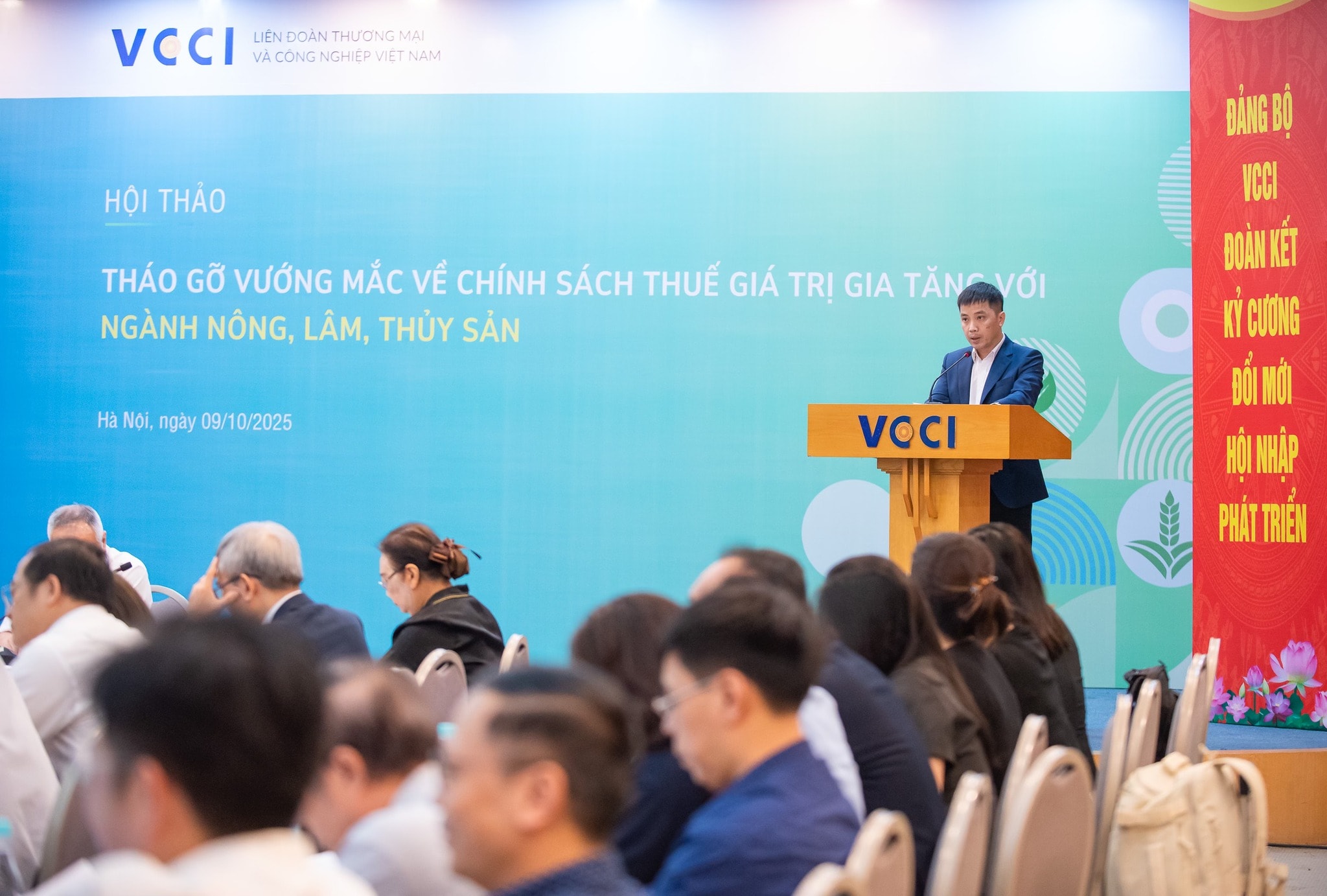
PV:For many years, reform was generally understood as cutting down on procedures and business conditions, but it seems the next phase requires a deeper approach: restructuring the legal system. In your opinion, what is the difference between "technical reform" and "structural reform"? within the economic system, and where does Vietnam stand in this process?
Mr. Dau Anh Tuan:Technical reform aims to make the current system run more smoothly: streamlining procedures, shortening licensing times, and digitizing processes. Vietnam has done quite a lot in recent years and achieved noteworthy results. However, to optimize it, the entire legal system needs to be redesigned from the ground up.
The good news is that Vietnam is no longer just on the threshold but has truly entered the structural reform phase. The Politburo's Conclusion No. 09, issued in March 2026, on perfecting the structure of the legal system, is a landmark document, setting out directions never before seen at such a high political level.


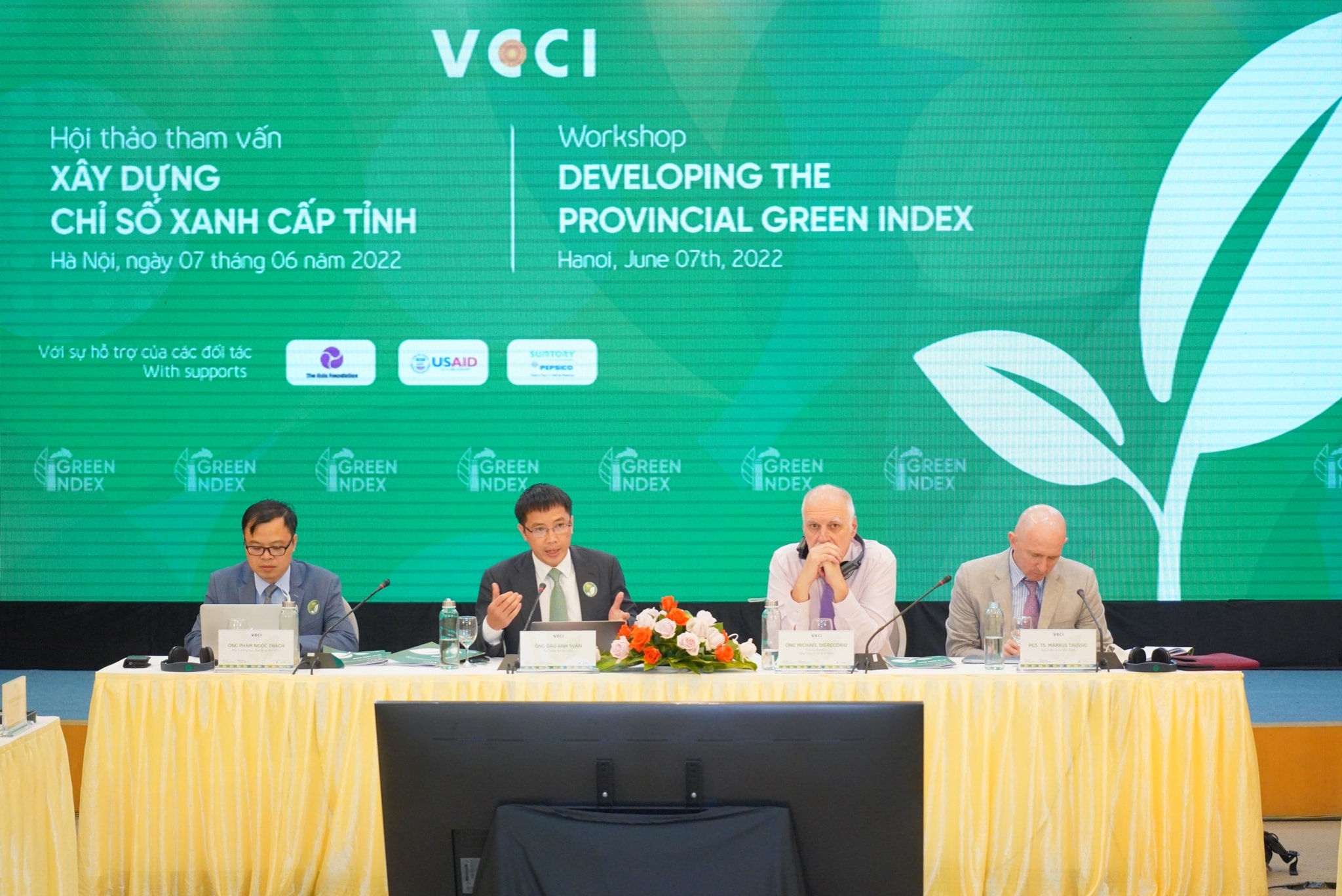
I would like to highlight three breakthrough points in Conclusion 09 that are of particular interest to the business community.
Firstly, there needs to be a clear distinction between public and private legal norms. This is a crucial philosophy. Public law, which governs the relationship between the State and citizens and businesses, must be designed to be rigorous, specific, and transparent, granting sufficient power to State agencies while controlling the risk of abuse of power. Private law, on the other hand, which governs the relationship between civil and business entities, should only establish a framework of principles, allowing parties to reach agreements on their own, provided they do not violate prohibitions. In other words, the State should tightly control its own power and broaden the space for innovation among citizens and businesses. If this principle is strictly implemented, it will unleash enormous business potential.
Secondly, the aim is to simplify the system of regulations by having each authorized entity issue only one type of document, minimizing the issuance of multiple layers of detailed guidance documents. This is the fundamental way to address the "jungle" of circulars and decrees that businesses have long had to navigate. When the system is streamlined and more transparent, compliance costs will be significantly reduced.
Thirdly, the goal is very specific: to bring Vietnam's investment environment into the top 3 ASEAN countries by 2028. This is no longer a general slogan but a time-bound, measurable commitment. Along with that, Conclusion No. 09 also emphasizes focusing on controlled testing mechanisms (sandboxes) for new economic sectors, shifting the role of legislation from "following" to "leading the way." This is the constructive legislative mindset that the business community has long awaited.
I view this period with well-founded optimism. With the entire political system identifying the institutional reform as a "breakthrough of breakthroughs," and the Politburo issuing a separate conclusion on the legal structure with very specific and progressive directions, this is truly the opportune moment for Vietnam to shift from technical reform to structural reform. The crucial thing now is the speed and quality of implementation, transforming those correct directions into practical realities that businesses can feel in their daily operations.
PV:Given the current institutional reform movements, what kind of mindset and capabilities should businesses prepare themselves with to both adapt and seize the opportunities arising from this new growth phase?
GrandfatherDau Anh Tuan:I want to tell the business community that institutional reform is not solely the responsibility of the state. Businesses are both beneficiaries and partners, and they also need to prepare themselves.
First, let's consider the mindset. The coming period will be a period of transformation, and all transformations come with uncertainty. Old regulations will be abolished, new regulations will be enacted, management methods will change, and the government apparatus will be restructured. Businesses that only operate according to old habits and rely on old relationships will face difficulties. Businesses that have the ability to adapt, understand the law and policies, and know how to participate in the policy-making process will seize opportunities.
.png)
Specifically, I believe businesses need to prepare in three areas.
The first aspect is legal capacity. This may sound obvious, but in reality, many Vietnamese businesses, especially small and medium-sized enterprises (SMEs), have not invested adequately in their legal departments, in monitoring and updating policies. In a rapidly changing legal environment, the ability to understand the law and proactively comply is no longer an "cost" but an "investment" with a very high return on investment. A business that understands new regulations will be able to take advantage of incentives, avoid risks, and make decisions faster than its competitors.
The second aspect is governance capacity. Institutional reforms will gradually shift from pre-approval to post-approval, from "seeking permission first" to "self-responsibility." This means businesses will have more freedom, but also greater accountability. Businesses with good governance systems, transparency, and strict internal controls will adapt well to the new environment. Businesses that are accustomed to "taking risks and figuring things out later" will face greater risks when post-approval mechanisms are strengthened.
The third aspect, and I consider the most important, is the capacity for participation. For a long time, many businesses have had the mentality of "let the government do it, we'll just focus on our business." But in the coming period, as institutional reforms deepen, the voice of businesses in the policy-making process will become extremely important. No one understands the impact of a regulation better than those who live with it daily. The Vietnam Chamber of Commerce and Industry (VCCI) has proposed that businesses should be involved from the policy-making stage, as co-designers rather than just subjects whose opinions are sought. But to participate effectively, businesses must have the capacity for critical analysis, and must know how to present issues using data and analysis, not just emotions.
I am optimistic because I see a new generation of entrepreneurs in Vietnam who are not only skilled in business but also knowledgeable about policies, laws, and modern management. They don't wait for the government to change before adapting; instead, they actively participate in the change process. They join industry associations, contribute opinions to draft laws, and offer constructive and responsible policy critiques. This is the model that the Vietnamese business community should strive for.
And I want to emphasize one more point. The period of profound institutional reform is also the period when the playing field is leveled. When the laws are clearer, when enforcement is more consistent, and when the "favor-seeking" mechanism is reduced, the competitive advantage will belong to businesses with real capabilities, not those with good connections.
In short, the mindset needed is proactive rather than passive, involved rather than detached, and investing in capabilities rather than relying on connections. Institutional reform opens up great opportunities, but opportunities belong only to those who are ready.
PV:Thank you, Mr. Dau Anh Tuan, for your frank exchange!


