
Why do passengers always board airplanes from the left side and not the right?
Boarding through the left-hand door is a global aviation standard aimed at separating passenger flow from the logistics area and ensuring optimal visibility for pilots.
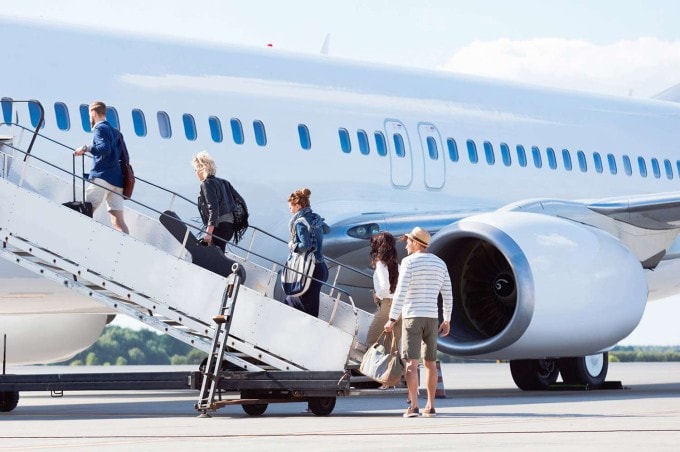
If you're a frequent air traveler, you'll notice an unchanging rule: all commercial flights board passengers from the left side of the aircraft. This isn't a coincidence, but a combination of a long-standing maritime heritage and the rigorous calculations for operational efficiency and safety in modern aviation.
A legacy from maritime traditions.
Michael Oakley, editor-in-chief of The Aviation Historian, explains that many aviation terms and rules originate from the maritime field. Concepts such as "rudder," "cockpit," "cabin," and "knots" are all borrowed from how ships operate.
In maritime history, the right side of a ship was called the "starboard" (derived from "steerboard"). Because most people are right-handed, the rudder or oars were usually placed on this side. To avoid damaging the rudder during docking, ships always anchored and loaded/unloaded cargo and passengers from the left side – known as the "port side". When aviation emerged in the early 20th century, especially with seaplanes, this practice of boarding and disembarking from the left side was maintained and continues to this day.
Optimizing operational processes and safety.
Beyond historical considerations, the unified left-side passenger boarding system offers extremely important practical benefits. Most notably, it completely separates passengers from ground operations. While the left-side door is for passengers, the right side of the aircraft is typically the area where ground staff concentrate on tasks such as refueling, baggage handling, food delivery, and cleaning.
This separation of passengers helps keep them away from heavy equipment and hazardous technical procedures, thereby minimizing the risk of accidents and ensuring a faster and smoother flight preparation process. If passengers were moving on both sides, overlapping operations could cause unnecessary delays.
Pilot vision and global standardization
Another technical reason lies in the pilot's seating position. The main pilot always sits in the left-hand seat in the cockpit. When approaching the terminal gate with the left side facing the jet bridge, the pilot has the best view to adjust the distance, making the landing more accurate and safer, especially at airports lacking automated guidance systems.
Ultimately, using a single side for passenger entry helps standardize the entire global aviation infrastructure. From the design of the gates and passenger boarding bridges to the airport's support equipment, everything is synchronized to the left side. This uniformity allows an aircraft to operate in any country in the world without encountering technical obstacles or complex procedural changes.
A few notes for passengers.
- Always follow the instructions of ground staff and flight attendants.
- Avoid stopping abruptly at the aircraft door so as not to disrupt the flow of people behind you.
- Observe the signs and stay areas to ensure safety when walking on the runway to the boarding stairs.


