
Lada-class submarines and their role as launch platforms for Zircon missiles.
The Russian Lada-class diesel-electric submarine, incorporating sonar stealth technology, the VNEU AIP propulsion system, and vertical launch tubes for Zircon missiles, is considered the cornerstone of a non-nuclear submarine fleet.
The Lada-class diesel-electric submarine (Project 677, export version Amur-1650) was developed as a successor to the Kilo-class "ocean black hole" submarines, focusing on improving sonar stealth capabilities, extending diving time, and integrating a multi-purpose vertical launch system capable of carrying Zircon hypersonic missiles. This combination is described by Russian sources as an "extended arm" at sea for long-range attack weapons.
Overview of the Lada-class submarine program
The Lada-class submarine is a product of the Rubin Central Marine Design Bureau, the same unit that designed the Kilo-class submarines. Therefore, many technologies tested on the Kilo have been inherited and further developed on the Lada.
Speaking with Rossiyskaya Gazeta, Igor Vilnit, Director of the Rubin Central Marine Design Bureau, emphasized that the Lada-class submarines are superior to their predecessors in terms of low noise operation and the ability to "conceal" underwater signatures. According to him, the "stealth" capabilities of this class of submarines are many times better than previous generations, thanks to their design and modern sound-reduction systems.
Noise reduction and acoustic stealth technology
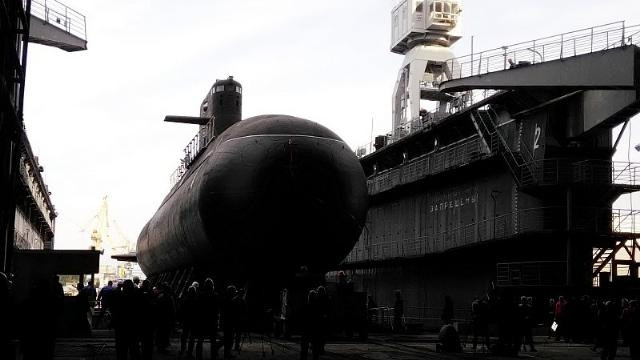
Developed from the Kilo-class submarine design, the Lada-class submarine utilizes a single hull design, compact size, and a main propulsion system consisting of a multi-mode permanent magnet motor. The main components are mounted on a Type VI vibration isolator to reduce vibration transmission to the hull.
Lada applies the new generation Molniya anti-sonic coating to its hull. This is coupled with the widespread use of modern sound-reduction systems and optimized hull design to minimize acoustic signature.
Another advantage of diesel-electric submarines in general, and the Lada class in particular, is their ability to operate in shallow coastal waters, where there is significant acoustic interference due to seabed topography and ocean currents. In this environment, detecting a Lada-class submarine is considered very difficult, and may even be impossible in many situations.
Igor Vilnit stated that during the trial operation of the first Lada-class submarine, its low noise level made detecting it via sonar complicated. If the Project 877 Kilo-class submarines are called "ocean black holes," then he describes the Lada class as "invisible."
Comparing some characteristics with Kilo-class submarines.
| Characteristic | Lada-class submarine (Project 677) | Kilo-class submarine (Project 877) |
|---|---|---|
| Noise level | Low noise level, rated as superior many times over. | Higher up, is the previous generation. |
| Acoustic stealth capabilities | "The invisible man," hides signals better. | "Ocean black holes" |
| Continuous diving time | Significantly increased, potentially lasting about 2 weeks with VNEU and lithium-ion batteries. | Significantly shorter (according to manufacturer's comparative information) |
| Sonar system | New sonar detects targets at significantly greater distances. | Detection capability at shorter distances |
VNEU AIP propulsion system and diving time
The Lada-class submarines are equipped with a Russian-developed air-independent propulsion (AIP) technology called VNEU. This system differs from AIP alternatives that use hydrogen fuel cells, instead utilizing a special refined diesel fuel to operate in an anaerobic underwater environment.
By combining VNEU with lithium-ion battery packs, Lada-class submarines can remain submerged for approximately two weeks before needing to surface to recharge the battery system using their diesel engines. According to the manufacturer's specifications, the continuous submersion time of the Lada class is significantly increased compared to Kilo-class submarines.
Longer diving times make detecting and tracking Lada-class submarines more difficult. In submarine warfare, the ability to detect and attack first is crucial, so extending the time spent operating stealthily underwater significantly increases operational effectiveness.
Sonar systems and early detection capabilities
According to Igor Vilnit, new sonar technology has made significant progress and boasts higher sensitivity. However, when searching for low-noise targets such as Lada-class submarines, these systems still face significant sonar interference, requiring time-consuming signal filtering processes and heavily reliant on the operator's experience.
The Lada-class submarines are equipped with a modern sonar system and a diverse array of acoustic signal patterns for various types of submarines and warships, accumulated by the Russian Navy over decades. In real-world testing, the submarines have demonstrated the ability to detect submarine and surface vessel targets, including those with very low noise levels at deep sea levels.
According to the description, Lada can detect targets at significantly greater distances, even before the opponent realizes they are being tracked, giving a major advantage during the approach and attack preparation phases.
The Lada submarine serves as a launch platform for Zircon missiles.
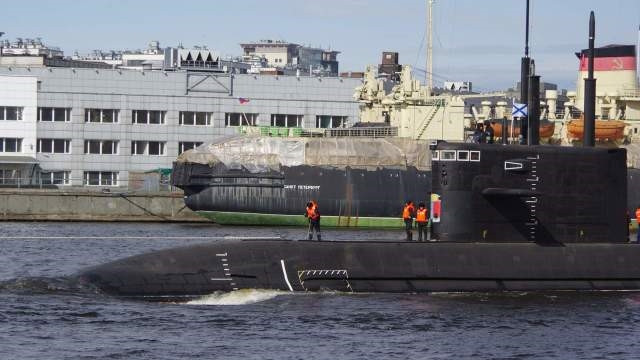
According to the military magazine Topwar, in addition to conventional torpedo tubes, Lada-class submarines are equipped with a multi-purpose vertical launch system with 10 tubes, capable of carrying various types of cruise missiles such as Kalibr, Onyx, and the Zircon hypersonic weapon.
This combination is comparable to the configuration of the Mig-31K heavy fighter jet carrying the Kinzhal hypersonic missile. If the Mig-31K provides potential energy and extends the range of the Kinzhal from the air, then the Lada-class submarine acts as an underwater "stealth" launch platform for the Zircon missile, enabling surprise attacks from deep within the sea.
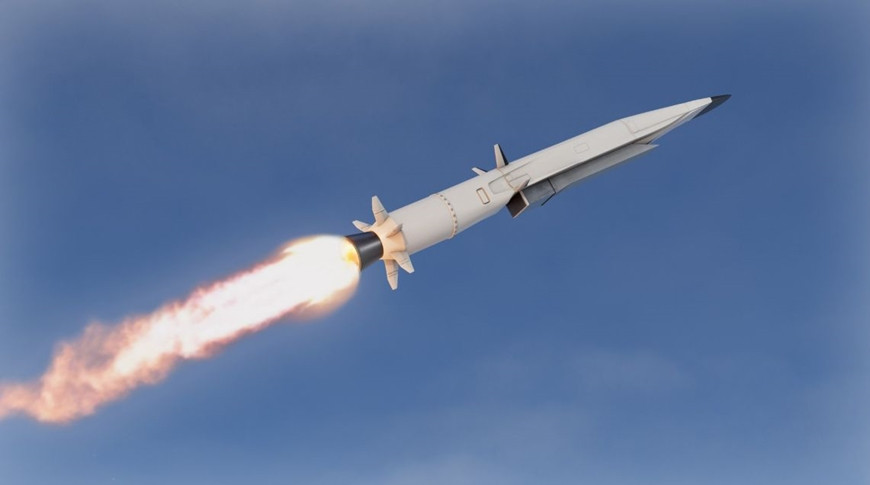
The military magazine Modern Warfare assesses that combining the advanced noise reduction technology of the Lada-class submarines with the Zircon hypersonic missile, which has a range of approximately 1,000 km, could pose a serious challenge to enemy warships within its range. According to this assessment, these diesel-electric submarines, which are cheaper than nuclear submarines, become the optimal tool for maritime blockade and anti-access/area denial strategies.
Russian sources describe the Zircon missile as having proven in combat to be a highly accurate and "uninterceptable" weapon, and when combined with the stealth capabilities of Lada-class submarines, it further enhances the deterrent effect on enemy naval forces.
Prospects for equipment in the Russian Navy
The Zircon missile development program has now been declared complete by Russia, providing the basis for the Russian Navy's decision to build more Lada-class submarines to fully utilize this weapon system.
During the flag-raising ceremony for the Lada-class submarine Velikiye Luki at the Admiralty Shipyard in St. Petersburg, the Commander of the Navy, Hero of the Russian Federation, Admiral Alexander Moiseyev, announced that Moscow will build two more new-generation diesel-electric submarines in 2026. He emphasized that these are the foundation of Russia's non-nuclear submarine fleet.
With its combination of sonar stealth capabilities, extended submersible duration thanks to VNEU, and the ability to carry long-range attack missiles such as Zircon, the Lada-class submarine is positioned as one of the pillars enhancing the Russian Navy's maritime combat capabilities in the non-nuclear submarine segment.


