
France's $12 billion nuclear-powered aircraft carrier PANG is the largest in Europe.
Analyzing the specifications, technology, and combat role of the next-generation nuclear-powered aircraft carrier PANG, expected to be completed in 2038 and become the largest warship in Europe.
According to NextGen Defense, France has begun construction of the next-generation nuclear-powered aircraft carrier, Porte-Avions Nouvelle Génération (PANG), which is expected to be completed and commissioned in 2038. The ship, costing approximately €10.25 billion ($12 billion), is designed to replace the Charles de Gaulle after more than two decades of service and will be the largest warship ever built in Europe.
PANG utilizes nuclear propulsion, is equipped with the EMALS electromagnetic aircraft launch system and directed energy weapons, and is capable of carrying at least 40 aircraft of various types. This is a central platform in France's modernization and digitalization of naval warfare.
Overview of the PANG aircraft carrier program
During a visit to French troops in the Strait of Hormuz region of Abu Dhabi, President Emmanuel Macron confirmed that the PANG program had officially entered the construction phase, marking a transition to a new generation of aircraft carriers for the French navy.
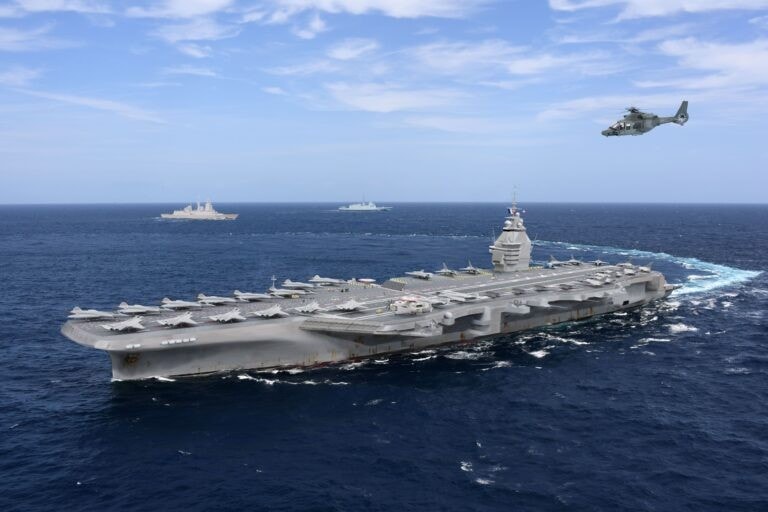
The total estimated cost of the program is approximately 10.25 billion euros (12 billion USD), with funding for the implementation phase already included in the 2025 plan, securing long-term project financing. The ship will replace the nuclear-powered aircraft carrier Charles de Gaulle, which has been the cornerstone of France's naval power projection capabilities for over 20 years.
PANG is being built at the Chantiers de l'Atlantique and Naval Group shipyards in Saint-Nazaire. The plan is to complete construction and commission it by 2038. When completed, it will be the largest warship ever built in Europe, showcasing the defense industry and military shipbuilding capabilities of France and Europe.
Key technical specifications and combat configuration
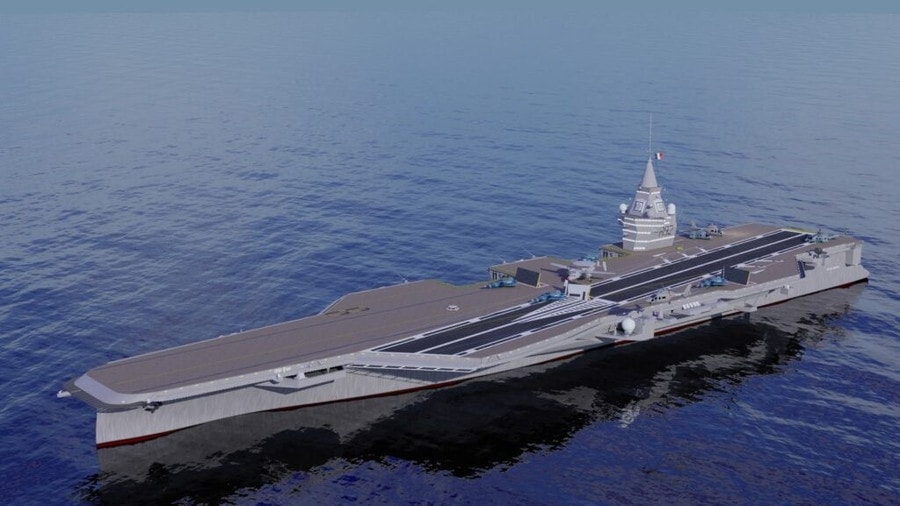
According to current information, the PANG is designed with superior dimensions and displacement compared to its predecessor, along with a modern propulsion system and advanced electronics and weaponry.
| Parameter | Value |
|---|---|
| Length | 310 meters |
| Flight deck width | Over 85 meters |
| Water channel width | 39 meters |
| Full load displacement | 78,000 tons |
| Maximum speed | 27 knots (50 km/h) |
PANG's propulsion system utilizes two K22 nuclear reactors, described as significantly more powerful than the K15 reactors on the aircraft carrier Charles de Gaulle. Nuclear propulsion allows for extended periods of operation at sea, providing the foundation for its ability to project power over long distances.
In terms of naval air support configuration, the ship is capable of carrying at least 40 aircraft, including:
- 36 fighter jets;
- 2–3 early warning aircraft;
- 5–6 helicopters;
- Approximately 10 lightweight drones.
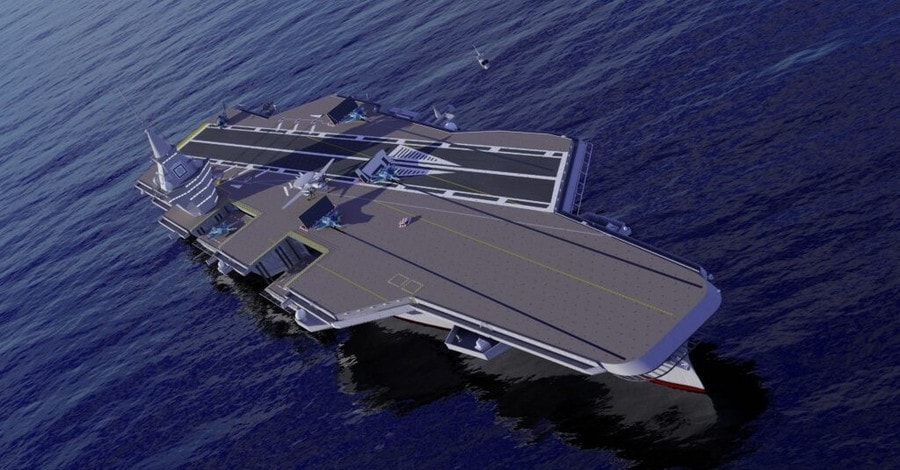
Notable armament on the flight deck includes 2 to 3 EMALS electromagnetic aircraft launch systems developed by General Atomics. The application of electromagnetic catapults allows for the deployment of various aircraft types on the same modern launch platform. In addition, PANG is also planned to be equipped with directed energy weapons, demonstrating a focus on applying new technologies to the defense and protection of the carrier strike group.
Aircraft carriers for the future: open technology and architecture.
The PANG program was designed from the outset to integrate and develop new technologies, ensuring adaptability to the demands of modern warfare. The ship is envisioned to possess a data-driven combat system, digitizing naval operations and enhancing the speed of decision-making in combat.
The structure and systems on the PANG are emphasized for their high scalability, allowing for the addition of new technologies in the future. This approach ensures that the ship not only meets current requirements but also maintains its long-term usability for decades, in the context of a rapidly changing maritime combat environment.
Strategic significance for the French and European navies.
PANG is seen as a strategic advance aimed at maintaining France's position in naval power projection capabilities. With its large size, nuclear propulsion, EMALS launch system, directed energy weapons, and the capacity to carry at least 40 aircraft, the ship has become a centerpiece of the French expeditionary navy.
According to the program's assessment, the commencement of the PANG project is not simply about replacing the Charles de Gaulle aircraft carrier, which has served for over two decades, but also about opening a new chapter in European naval history. The project demonstrates a determination to maintain a modern nuclear-powered aircraft carrier platform built entirely by Europe, thereby affirming the region's role in modern defense.
Once completed and operational, PANG is expected to become a symbol of French and European maritime power for many years to come, serving as the core of next-generation carrier strike groups with a high degree of digitalization and data integration.


