
NASA's Voyager 1 spacecraft is poised to reach a one-light-day distance from Earth in 2026.
By the end of 2026, Voyager 1 is expected to be one light-day (25.7 billion km) from Earth, marking a record-breaking milestone in humanity's exploration of interstellar space.
The Voyager 1 probe, the farthest-flying man-made object in history, is nearing a remarkable technological milestone. According to NASA's predictions, the distance between the spacecraft and Earth will reach "one light-day" by the end of 2026, equivalent to 16 billion miles (approximately 25.7 billion kilometers).
Voyager 1's journey through interstellar space.
Launched into space in 1977, Voyager 1 initially focused on studying the giant planets in our Solar System. After completing its primary scientific mission, the spacecraft passed through the heliosphere—the shield created by the solar wind—to enter the interstellar medium. Currently, the device maintains a speed of approximately 38,000 miles per hour (over 61,000 km/h) and is continuously moving away from the Sun.
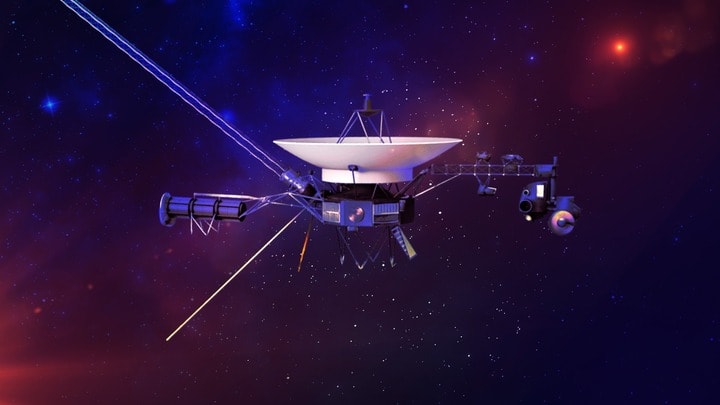
The challenge of controlling the controls at a record distance.
The concept of "light day" refers to the distance light can travel in 24 hours. When Voyager 1 reaches this distance, radio signals transmitted from the control center on Earth will take a full day to reach the spacecraft. Conversely, return data from Voyager 1 will also take another day to return, making each communication cycle a total of 48 hours.
This enormous distance presented significant technical challenges for NASA's engineering team. Every command sent to the device had to be calculated with absolute precision, as any error could not be corrected instantly due to the enormous signal delay.
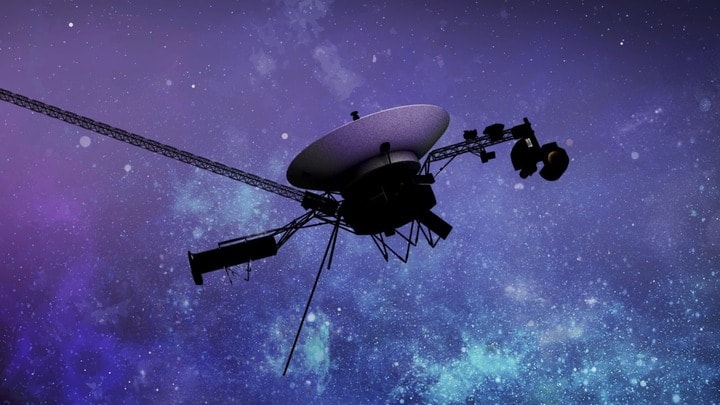
The power of computer technology in the 1970s
Notably, Voyager 1 is still operating on hardware developed in the 1970s, before the internet existed. The spacecraft's data transmission speeds are currently much slower than traditional dial-up connections on personal computers. However, the onboard automation system remains crucial, enabling the spacecraft to handle situations arising tens of billions of kilometers from Earth.
The upcoming milestone of one light-day not only demonstrates humanity's ability to reach further into space, but also affirms the incredible resilience of aerospace technology from the last century, as a device launched nearly 50 years ago continues to send back invaluable data from the edge of space.


