
Spain will win the 2026 World Cup.
Spain defeated Argentina 1-0 in the World Cup final thanks to a goal from Torres in the 106th minute to claim the championship, while Argentina finished as runners-up.
- 0'The match has started.
Tây Ban Nha tiếp đón Argentina. - 13'Spain controlled the game.
Phút 13', Tây Ban Nha đang nắm quyền kiểm soát với thời lượng cầm bóng 64% - 36%, đẩy Argentina lùi sâu chống đỡ. Dù mới có 1 - 0 pha dứt điểm, đội bóng áo đỏ vẫn tạo được sức ép tốt hơn trong thế trận chưa có bàn thắng. - 25'Spain controlled the game.
After 25 minutes,Spain đang kiểm soát bóng vượt trội với 65% - 35%, đẩy Argentina vào thế phòng ngự và chờ cơ hội phản công. Tuy nhiên, sức ép chưa đủ lớn khi số lần dứt điểm mới là 1 - 0, còn phạt góc nghiêng về Tây Ban Nha với 2 - 0. - 39'Spain controlled the game.
In the 39th minute, Spain dominated possession with63% - 37%and take the lead2 - 0Regarding corner kicks, it clearly showed the pressure on Argentina. However, that advantage did not translate into many opportunities, as finishing was the only real challenge.1 - 0. - 41'Lisandro Martínez received a yellow card.
In the 41st minute, Lisandro Martínez of Argentina received a yellow card after a foul. Argentina needed to be more cautious as the score remained 0-0 between Spain and Argentina. - 44'Otamendi came on before halftime.
In the 44th minute, Nicolás Otamendi came on as a substitute for Lisandro Martínez of Argentina, with the score still 0-0. Lisandro Martínez had just received a yellow card in the 41st minute, so this substitution came quite early before halftime. - 45'Argentina made a substitution before halftime.
In the 45th minute, Leandro Paredes came on as a substitute for Nicolás Iván Gonzalez of Argentina. The score remained Spain 0-0 Argentina. - 45'End of the first half
The first half ended with a score of 0-0. - 46'The second half has begun.
The second half has begun. - 51'Spain dominated at the start of the second half.
At the 51st minute, Spain was controlling the game with 62% possession and a superior shot-off lead of 4-0. Argentina had to defend deep, as evidenced by their three saves, while Spain had yet to make a similar save. - 52'Leandro Paredes received a yellow card.
In the 52nd minute, Leandro Paredes (Argentina) received a yellow card for his reaction. This was Argentina's second yellow card in the tense final match. - 58'Nahuel Molina came on as a substitute for Gonzalo Montiel.
In the 58th minute, Argentina brought on Nahuel Molina to replace Gonzalo Montiel. This was a notable substitution as the final was still goalless. - 62'Ferrán Torres came on, Spain increased their attacking power.
In the 62nd minute, Ferrán Torres came on as a substitute for Mikel Oyarzabal for Spain. The Spanish team was controlling the game, and Ferrán Torres's appearance could help the attack make a difference. - 62'Pedri comes on, Spain makes adjustments.
In the 62nd minute, Spain brought Pedri on to replace Fabián Ruiz. Pedri's appearance gave Spain more options in a game that was already somewhat more dominant. - 64'Spain dominated the game.
In the 64th minute, Spain was completely controlling the game with possession.62% - 38%and number of shots5 - 0Argentina primarily played defensively, as evidenced by their save statistics.0 - 3, while the score remains 0-0. - 70'Argentina made a substitution in the 70th minute.
In the 70th minute, Argentina brought Facundo Medina on to replace Cristian Romero. The score remained 0-0, with Argentina under immense pressure. - 70'Argentina makes a substitution, Giuliano Simeone Baldini comes on.
In the 70th minute, Giuliano Simeone Baldini came on as a substitute for Rodrigo De Paul for Argentina. With Spain dominating the game, this substitution could help Argentina refresh their playing style. - 75'Nico Williams came on in the 75th minute.
In the 75th minute, Nico Williams came on as a substitute for Alejandro Baena Rodríguez for Spain. Williams' appearance boosted Spain's attack, as they were already in a more dominant position. - 75'Spain made a substitution in the 75th minute.
In the 75th minute, Mikel Merino came on as a substitute for Daniel Olmo Carvajal for Spain. The Spanish team made the adjustment as they were clearly putting pressure on their opponents, but the final remained goalless. - 76'Spain dominated but failed to score.
By the 76th minute, Spain controlled the game with 62% - 38% possession and continuously pressed Argentina. Their dominance was further demonstrated by their 8-0 scoring record, while Argentina struggled to withstand the prolonged pressure. - 82'Enzo Fernández received a yellow card in the 82nd minute.
In the 82nd minute, Enzo Fernández received a yellow card for protesting the referee's decision. The final match remained goalless, with the score at 0-0. - 88'Spain dominated in the 88th minute.
88th minuteSpain completely dominated possession with 66% compared to 34% and 11-0 shots on goal. Argentina had to defend deep, as their opponents had 8-1 corner kicks and the Argentinian goalkeeper made 8 saves. - 90+2'Cristian Romero received a yellow card in the 90+2 minute.
In the 90+2 minute, Cristian Romero (Argentina) received a yellow card for protesting the referee's decision. This was Argentina's fourth yellow card in the final. - 91'Extra time
The match went into extra time. - 99'Spain made a substitution in the 99th minute.
In the 99th minute, Martín Zubimendi came on as a substitute for Rodrigo Hernandez Cascante of Spain. The World Cup final was still evenly matched with the score at 0-0. - 99'Eric García came on in the 99th minute.
In the 99th minute, Eric García came on as a substitute for Aymeric Laporte for Spain. With the score at 0-0 in the final, this substitution came at a particularly tense moment. - 100'Spain dominates, Argentina defends.
In the 100th minute, Spain completely dominated the game with 67% possession and 33% more shots on goal (16-0). Argentina focused almost entirely on defense, while Spain's pressure was further demonstrated by 9-1 corner kicks, but the score remained 0-0. - 102'Argentina made a substitution in the 102nd minute.
In the 102nd minute, Marcos Senesi came on to replace Julián Álvarez, marking a personnel change for Argentina. The final was still goalless, and every substitution at this point could make a difference. - 104'Lionel Sebastián Scaloni received a yellow card.
In the 104th minute, Lionel Sebastián Scaloni of Argentina received a yellow card for reacting to the referee's decision. The final match remained goalless. - 106'Ferrán Torres puts Spain ahead.
In the 106th minute, Ferrán Torres scored, opening the scoring for Spain against Argentina. The goal came after Spain dominated the game, constantly putting pressure on their opponents' goal. - 111'Mac Allister received a yellow card in the 111th minute.
In the 111th minute, Alexis Mac Allister (Argentina) received a yellow card after a foul. The card came in the final minutes of the final, when Argentina was trying to find an equalizer. - 112'Spain dominated in the 112th minute.
By the 112th minute, Spain still completely controlled the game with 67% possession compared to 33% and a superior number of shots on goal (20-0). Argentina was almost entirely on the defensive under constant pressure, as evidenced by their 9-1 corner kick deficit. - KTFinal score: Spain 1-0 Argentina
The match ended with a score of 1-0.
Updated at 05:04 on July 20, 2026


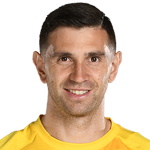



The World Cup final between Spain and Argentina will take place at 02:00 on July 20, 2026. Notably, both teams enter the match with a streak of 5 consecutive wins.
Both teams are in stable condition.
Spain are in impressive form recently, having won all five of their matches. Argentina also have a similar record, with five consecutive wins in their recent games. This balance means the final is unlikely to favor one side solely based on current form.
In a crucial match, a winning streak not only builds confidence but also demands composure. Neither Spain nor Argentina have much room for error, as a moment of lapse in concentration could directly impact their chances of winning.
The odds slightly favor Spain.
In their two most recent encounters, Spain won one match, while Argentina failed to win, and the two teams did not draw. This trend gives Spain a certain psychological advantage, but the gap is not large enough to create a clear difference before a final.
Argentina may view recent head-to-head results as motivation to change the balance of power, while Spain will want to maintain the initiative they showed in that victory. However, head-to-head statistics only reflect the overall trend and cannot replace the actual performance in the decisive 90 minutes.
The final match will be decided by the ability to control risk.
There is no information about the expected lineups, tactical formations, or absences for either team. Therefore, the key focus could be on how each side controls the tempo and chooses when to increase the pressure, rather than relying on a specific individual or system.
With both teams on a five-game winning streak, Spain and Argentina have reason to approach the game with confidence. However, the nature of a final match may lead both teams to prioritize a tight defensive approach in the early stages. Maintaining distance between lines, minimizing errors during transitions, and capitalizing on opportunities will be particularly important.
A neutral venue also eliminates the home advantage factor, placing the focus entirely on the technical quality and character of the two teams. Spain could benefit from their recent head-to-head record, while Argentina enters the match with a chance to prove that their current run of form is capable of making a difference.
Pre-match analysis
This is a difficult match-up, as both Spain and Argentina have won their last five matches and both have a chance to decide the outcome in a knockout final. Spain has a slight advantage from their last two encounters, but Argentina possesses a comparable level of form.
The match will most likely be decided by the team that controls the pressure better, is more patient in organizing attacks, and makes fewer mistakes at crucial moments. A balanced contest can be expected, where neither side easily imposes its dominance for an extended period.
*This article was created with the assistance of artificial intelligence (AI).


