
LRASM missile: A technological cornerstone in the U.S. naval warfare strategy.
The LRASM missile, possessing stealth capabilities and an intelligent guidance system, has just been confirmed for combat deployment to maintain the U.S. naval superiority.
The Long-Range Anti-Ship Missile (LRASM) is now a tool reflecting the technological superiority and maritime deterrence capabilities of the U.S. military. Developed from a research project by the Defense Advanced Research Projects Agency (DARPA), the LRASM has transformed from an experimental weapon into a mainstay in the modern naval and air forces.
Inheriting the foundation and development process
The LRASM project was launched in 2009 under the coordination of DARPA. To optimize costs and shorten research time, this weapon utilizes the platform of the AGM-158B JASSM-ER air-to-ground missile. During its development, LRASM has overcome many important technical milestones.
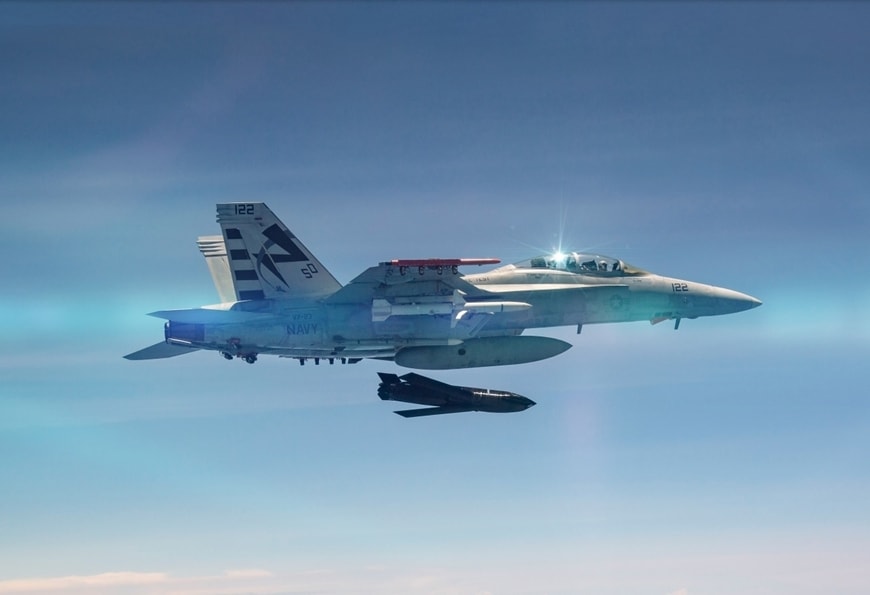
In 2013, the missile was first successfully test-fired from a B-1B Lancer bomber. By 2017, the US military successfully tested its group strike capability, allowing multiple missiles to coordinate and assign targets autonomously. The LRASM officially achieved initial operational capability on the B-1B in December 2018 and was integrated into the F/A-18E/F Super Hornet fighter jet a year later.
Technical specifications and firepower
Instead of focusing on supersonic speed, the LRASM is designed to penetrate enemy defenses through stealth and covert approach capabilities. This weapon boasts impressive specifications for long-range combat:
- Range:The standard variant has a range of over 200 nautical miles (approximately 370 km), while improved variants can achieve a range of up to 500 nautical miles (over 900 km).
- Warhead:Equipped with a high-explosive, armor-piercing warhead weighing approximately 1,000 pounds (454 kg).
- Target selection capability:Intelligent guidance systems allow missiles to prioritize attacks on critical targets such as ammunition depots or command centers to optimize destruction effectiveness.
Navigation systems and survivability
The biggest difference between LRASM and older missile systems like Harpoon is its semi-automatic guidance system, minimizing reliance on GPS. The missile uses a multi-mode sensor array combined with intelligent algorithms, allowing it to operate effectively in a high-intensity electronic warfare environment.
The passive sensors developed by BAE Systems, combined with a low-altitude, sea-skimming flight path, make the LRASM difficult for enemy radar to detect. The infrared imaging (IIR) sensor allows the missile to identify targets without emitting radar signals, minimizing the risk of early interception.
Multi-platform and real-world combat capabilities
Currently, LRASM has been integrated into the B-1B Lancer bomber and the F/A-18E/F Super Hornet fighter. In the future, this weapon will continue to be expanded to platforms such as the F-35B/C, P-8 Poseidon, and F-15. Notably, a variant launched from surface ships via the Mk41 vertical launch system is also being deployed, along with research into mobile land-based launchers.
From a combat standpoint, a Pentagon document dated May 22, 2025, indirectly confirmed that the LRASM was used in operations related to Israel. Analysts believe this missile may have been deployed to attack high-value Houthi targets in Yemen, such as coastal radar stations or weapons depots.
In preparation for large-scale combat scenarios, the US has signed a contract to produce next-generation sensors for the LRASM, extending until 2030. The AGM-158C-3 variant is currently the focus of development, with upgrades to secure data links and central network warfare capabilities.


