
Tesla Model S and the hidden door handle lawsuit in Wisconsin.
Tesla is being sued after a crash in Wisconsin that killed five people in a Model S; the lawsuit targets the hidden door handle design and the risk of fire after a collision.
Tesla is facing a lawsuit in Wisconsin related to an accident last November that killed five people in a Model S. The lawsuit alleges that the hidden door handle design and reliance on a low-voltage electrical system prevented occupants from escaping the vehicle during a fire following a collision. The incident has sparked debate about the safety of this design choice and the ability to escape in an emergency.
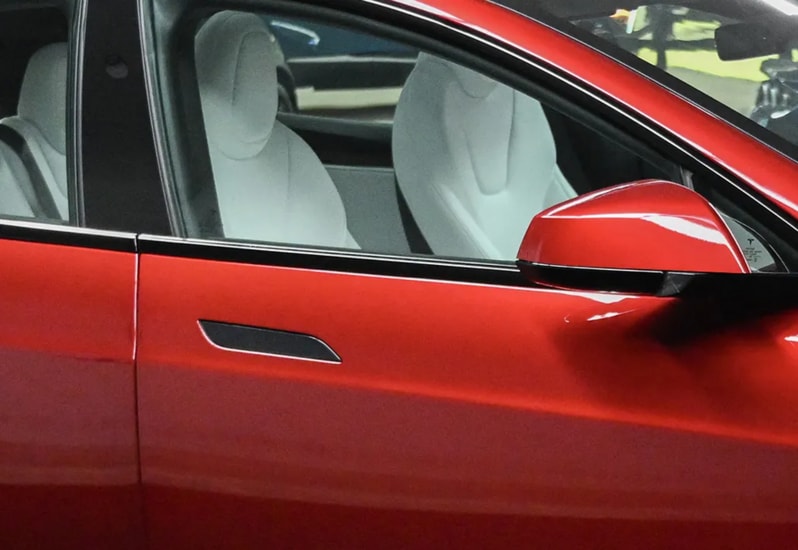
Hidden door handles: aesthetics versus emergency exit challenges.
The lawsuit, filed on October 31st in Wisconsin state court by the victims' children, alleges that the Tesla's hidden door handles locked the occupants inside after the crash, trapping them in a rapidly spreading fire. According to the complaint, Jeffrey Bauer, 54, and Michelle Bauer, 55, survived the initial impact but were unable to open the doors to escape.
Tesla uses a hidden door handle mechanism, operated by a low-voltage system to open/close and activate the latch. This feature creates a smooth body surface, reducing air resistance, but if the low-voltage power supply fails after a collision, the doors may not open. In that situation, they must be opened manually from the inside.
Although Tesla vehicles have mechanical door release mechanisms in the cabin, many owners and passengers are unaware of their location. According to the lawsuit, this poses a “highly foreseeable” risk in the panic of a crash or fire.
Vehicle electrical architecture: the bottleneck is the low voltage power supply.
According to the lawsuit, Tesla vehicles have two battery systems: a low-voltage system that powers the doors, windows, display, and auxiliary functions; and a high-voltage system for the powertrain. If the low-voltage system fails or stops working – which can happen after a collision – the power doors will no longer function, requiring manual operation from inside the vehicle.
The lawsuit argues that safe evacuation relies on electronic systems that are “prone to failure” precisely at the moment when evacuation is most critical: during collisions and fires. This is central to the debate regarding the link between electrical design, architecture, and post-collision safety.
Developments and findings at the Wisconsin crash site.
According to a report from the Dane County Sheriff's Office, road conditions, excessive speed, and impaired driving were contributing factors to the accident. A nearby homeowner called 911 reporting hearing screams coming from inside the vehicle. The report indicated that the group of bodies in the front seat suggested a possible struggle to escape.
In the lawsuit, the victim's family alleges Tesla's negligence in failing to adequately address the design flaws of the door handle and the risk of fire after a collision involving the lithium-ion battery pack. Tesla did not immediately respond to a request for comment.
Independent investigation and related cases
Tesla's door handles have recently come under scrutiny after Bloomberg News investigated a series of incidents in which victims were seriously injured or killed because they were unable to open the doors during power outages, particularly after accidents. The Wisconsin incident was one of several cases examined as part of this investigation.
Tesla is also facing a lawsuit related to the deaths of three college students who were allegedly trapped inside a burning Tesla vehicle in an accident last November in a San Francisco suburb.
In September, the U.S. National Highway Traffic Safety Administration (NHTSA) said it was investigating a possible defect in some Tesla vehicle doors, citing incidents where the exterior door handles stopped working, trapping children and others inside the vehicle.
Feedback on design and proposed solutions
Franz von Holzhausen, Tesla's chief design officer, told Bloomberg that the company is working on redesigning the door handles to make them easier for occupants to operate in "panic situations." However, no details or timeline for implementing these changes have been released.
Legal argument: post-collision protection standards
Lawyers representing the Bauer family argue that the manufacturer has a responsibility to provide “adequate crash protection”—including reasonable measures to mitigate injuries both during and after a collision. The lawsuit emphasizes: “Regardless of the cause of the accident, the manufacturer’s obligation includes designing the vehicle to allow for timely evacuation and rescue in the event of a fire.”
According to the plaintiffs, Tesla “disregarded these principles, instead producing vehicles that were highly flammable and prone to rapid fire spread upon impact — and escape relied on electronic systems that Tesla knew were prone to failure in the very conditions where escape was paramount.”
Practical usage perspective: identifying blind spots safely.
Information in the case file reveals two noteworthy points: reliance on low voltage to unlock the door and the level of user awareness of the mechanical release mechanism. When combined with time pressure in a fire situation, these factors can become obstacles to timely escape.
The arguments in the lawsuit raise questions about the trade-off between the aesthetics and aerodynamics of concealed door handles and the need for intuitive, simple operation in emergency situations. The NHTSA's investigation and legal proceedings will determine whether the current design meets post-collision safety expectations or requires adjustments.
Conclude
The Wisconsin lawsuit has brought Tesla's hidden door handles, particularly on the Model S involved in the incident, into the spotlight. The facts presented – from the low-voltage, electrically-powered operating mechanism and the little-known presence of a mechanical latch, to similar investigations and incidents – highlight the need for clarification regarding safe exit procedures. Tesla has yet to respond, while regulators and the court will continue to review the design and crash safety allegations.


