
Tesla Model Y Standard 2025: The Price and Profit Margin Challenge
Tesla added a Standard version to its Model Y lineup, lowering the price by $5,000–$5,500 to stimulate demand as tax incentives were withdrawn and costs increased. This option expands the customer base but stretches already strained automotive profit margins.
Tesla just experienced a record-breaking Q3 2025 with revenue of $28.1 billion, but profits fell short of expectations due to sharply rising costs and shrinking emissions credits. In this context, the company launched a Standard version of the Model Y (and Model 3), cutting back on many features to lower the price by $5,000 to $5,500 per vehicle. The Standard version thus became Tesla's response to stagnant demand as tax incentives were withdrawn and new taxes on imported components increased costs.
This article focuses on evaluating the Model Y Standard from a technical and product strategy perspective, based on data released by Tesla for Q3 2025.
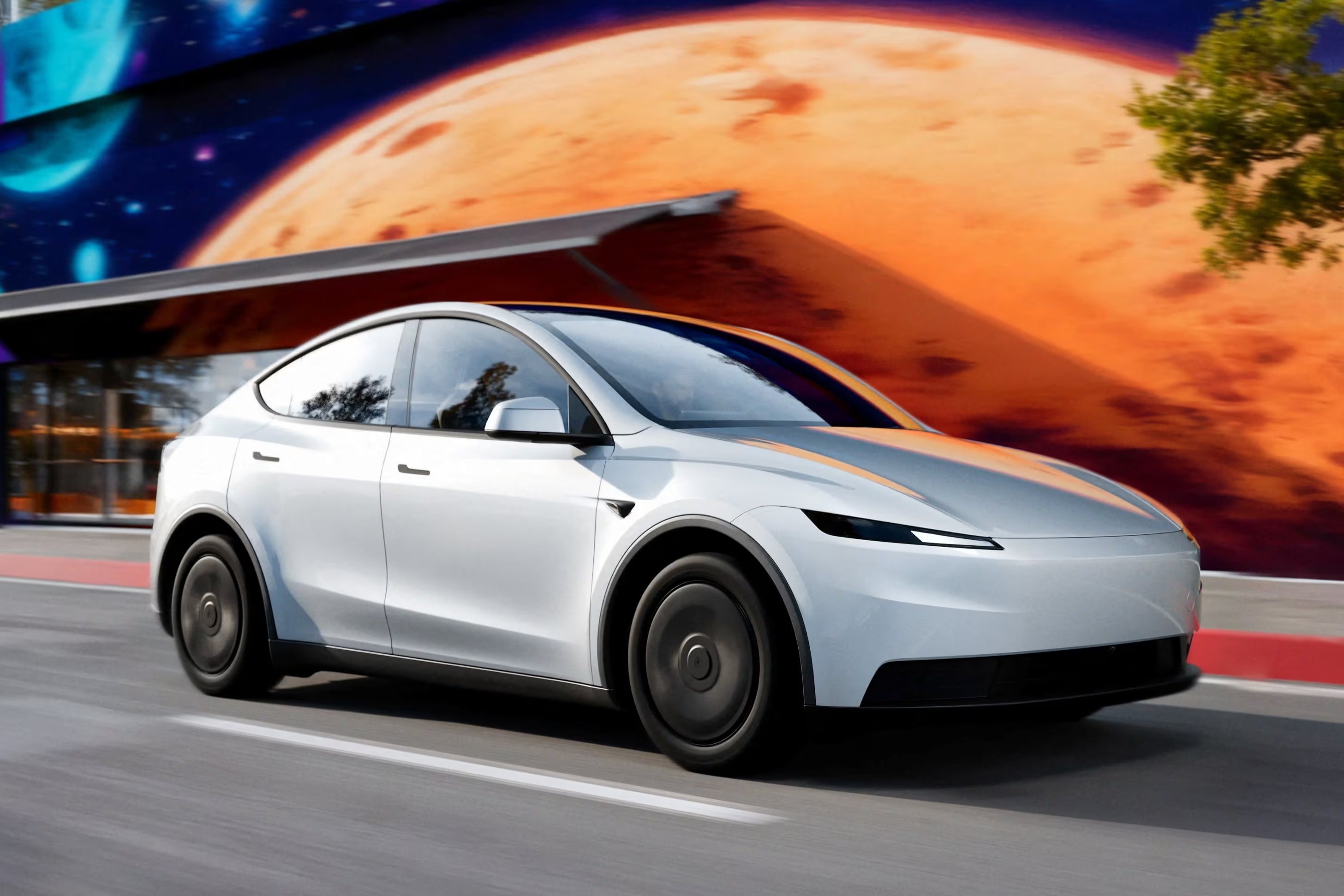
Minimalist design or reduced features
Tesla has not released details of the exterior changes to the Model Y Standard. The only confirmed information is that this version has "many features removed" to achieve a lower price. Thus, the main difference between the Model Y Standard and higher variants lies in the equipment configuration, rather than a new design language.
Based on the available data, buyers should wait for the specific configuration sheet for each market to determine which items will be omitted. Cutting features makes the price more accessible, but it may also affect the user experience depending on individual needs.
Cabin and user experience: detailed configuration table needed.
The current data source does not mention changes to materials, amenities, or entertainment systems on the Model Y Standard. A cautious inference is that the equipment will be more practical to optimize costs. Specific feature lists, from seats, audio, and connectivity to paid software packages, have not been disclosed by Tesla in this report.
Performance and driving feel: no specifications available yet.
Tesla did not release key technical specifications for the Model Y Standard, such as power, torque, battery capacity, range, or charging time, in its Q3 2025 financial report. With the goal of lowering the price, the Standard version may prioritize cost-performance balance, aiming for a more "sufficient" configuration compared to higher-end variants. However, the actual price difference will depend on the battery/motor configuration Tesla offers in each market.
Safety and driver assistance technology
Tesla is increasing its investment in self-driving software and AI-related projects. The company says it has tested a limited robotaxi service in Austin, Texas, and expects "fully autonomous" vehicles to operate safely without drivers in more areas this year, expanding to 8–10 cities. However, deployment depends on regulations and infrastructure conditions; levels of automation do not necessarily equate to "fully autonomous driving." With advanced driver assistance technologies like highway driving assistance, even at Level 3, drivers still need to be prepared to intervene when necessary. Tesla did not specify the exact list of safety and driver assistance technologies equipped on the Model Y Standard in this report.
Pricing and Positioning: Expanding Accessibility, Accepting Profit Margin Risk
The move to launch the Standard version of the Model Y with a price reduction of $5,000–$5,500 comes as tax incentives for electric vehicles are being removed, and input costs are rising due to new taxes on imported components. According to Chief Financial Officer Vaibhav Taneja, import taxes on components alone cost Tesla more than $400 million in the quarter.
Tesla's low-price strategy has helped it expand its price-sensitive customer base, but it has also put pressure on profit margins. In Q3 2025, the gross profit margin reached 18%, while the automotive segment's profit margin (excluding emissions credits) was 15.4%. Revenue from emissions credits decreased to $417 million, compared to $739 million in the same period of 2024 and $435 million in the previous quarter, reducing the previous profit buffer. Wall Street forecasts Tesla's sales in 2025 could decline by 8.5% due to the expiration of tax incentives, the familiarity of its current product line, and increased competition.
Conversely, Tesla maintains momentum in several areas: operating costs increased by 50% due to increased investment in AI, robotics, and self-driving software; plans for a significant increase in capital expenditure (CAPEX) in 2026 for Optimus, Semi, Megapack 3, and Cybercab robotaxi; and an 81% growth in the energy segment. These projects strengthen the long-term narrative, but in the short term, car sales and profit margins remain the pillars determining financial health – a factor that will directly impact the Model Y Standard.
Key contextual figures
| Item | Data |
|---|---|
| Model Y Standard on sale | 5,000–5,500 USD/vehicle |
| Revenue for Q3/2025 | $28.1 billion |
| Earnings per share | $0.50 (forecast $0.55) |
| Gross profit margin | 18% |
| Automotive segment profit margin | 15.4% (excluding emissions credits) |
| Emissions Credit | $417 million ($739 million in the same period of 2024) |
| Import tax on components | >400 million USD in the quarter |
| Operating expenses | A 50% increase compared to the same period last year. |
| Energy sector growth | +81% |
| 2025 Sales Forecast (Wall Street) | 8.5% discount |
Conclusion: Model Y Standard is a driver of demand, but clear configurations are needed.
The Model Y Standard is Tesla's quick response to rising costs and diminishing tax incentives. Lowering the price by $5,000–$5,500 per vehicle may help the company maintain production and market share, especially with price-sensitive customers. However, reduced input costs and emissions credits mean that already thin profit margins are unlikely to receive further support. From a consumer perspective, the decision to choose the Standard version should be made after seeing the specific configuration details to balance the price against the features that have been omitted.
Advantage
- Prices are more accessible thanks to a reduction of $5,000–$5,500.
- This helps maintain product range and demand in the context of reduced tax incentives.
- The strong investment in software and ecosystems could boost long-term value.
Limit
- Many features have been removed; detailed specifications have not yet been released.
- Profit margins in the automotive segment are under pressure (15.4% in Q3/2025).
- Short-term demand risk arises from an 8.5% decline in 2025 sales forecast.


