
The challenge of extinguishing electric vehicle fires: Why do they need 40 times more water than gasoline cars?
Lithium-ion batteries in electric vehicles can catch fire at 1,200 degrees Celsius and reignite after being extinguished, requiring tens of thousands of liters of water and specialized rescue techniques to control.
Extinguishing fires in electric vehicles (EVs) is far more complex and resource-intensive than extinguishing fires in traditional internal combustion engine vehicles. The core issue lies in thermal runaway, where lithium-ion battery cells malfunction, releasing toxic gases and triggering a chain reaction that sustains extremely high temperatures.
The complex ignition mechanism of lithium-ion batteries.
Even when there are no open flames, the battery cells inside the large battery pack can continue to accumulate heat. This chemical reaction not only prolongs the burning time but also puts the vehicle at risk of reigniting for hours, even days, after the fire has been extinguished due to residual energy.
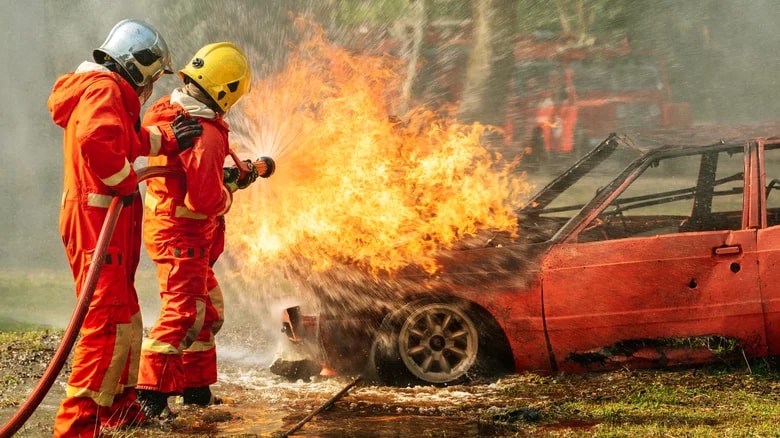
Notably, the temperature of an electric vehicle battery fire can reach up to 1,200 degrees Celsius. To cope with this, firefighters often have to use enormous amounts of water to directly cool the component.
Shocking figures on water consumption.
According to the International Fire and Rescue Association (CTIF), a Tesla fire in the US once required approximately 90,000 liters of water to completely extinguish. Authorities had to spray water at a rate of 2,200 liters per minute for over 40 minutes. This is about 40 times the amount of water needed to control a typical gasoline car fire.
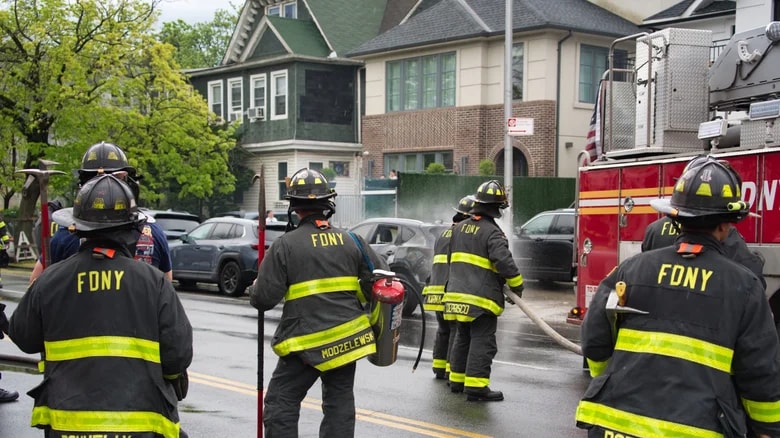
EV FireSafe rescue services estimate that the minimum amount of water needed to cool or submerge a battery pack in liquid typically exceeds 10,000 liters. However, accessing the battery pack is difficult because it is usually located under the vehicle floor, enclosed in a sealed, waterproof and shockproof enclosure.
New rescue techniques are being tested.
Besides using water, fire blankets are sometimes used to block oxygen. However, experts warn that this method can cause a buildup of toxic gases, leading to an explosion risk when oxygen comes into contact with the hot air mass again. EV FireSafe advises firefighters to be cautious with this tool because it is heavy and difficult to handle in emergency situations.
Experiments conducted by the U.S. National Fire Protection Association (NFPA) in 2025 indicated that raising or tilting the vehicle would allow the spray nozzles to more effectively access the battery compartment. In one test, tilting the vehicle allowed firefighters to extinguish a fire in 24 minutes using approximately 14,500 liters of water, a significant reduction compared to traditional spraying methods.
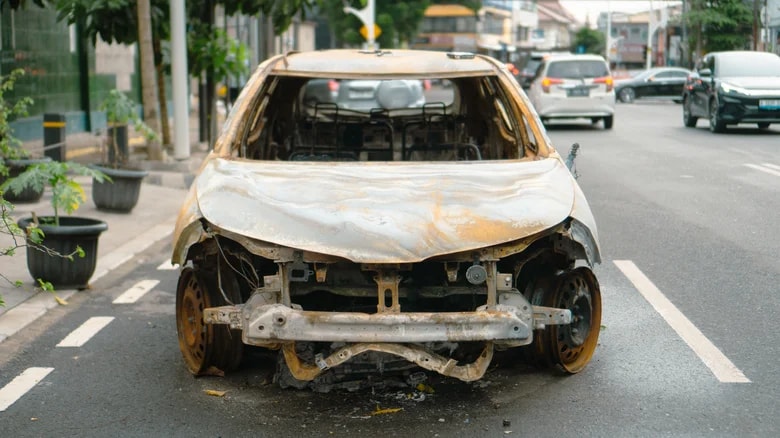
Electric vehicles have a lower fire rate than gasoline vehicles.
Although electric vehicle fires often attract significant media attention due to their complexity, the actual data shows that this type of vehicle is less prone to fires than gasoline-powered vehicles. A 2023 report from Sweden recorded an average of only 20 fires per year among 611,000 electric vehicles in circulation. Meanwhile, gasoline-powered vehicles recorded 3,400 fires out of 4.4 million vehicles during the same period.


