
Thailand has equipped its Sattahip naval base with the advanced LANZA 3D radar system for monitoring UAVs.
The Royal Thai Navy is deploying Spanish 3D long-range radar to optimize early warning capabilities and effectively counter low-flying targets and drones.
The Royal Thai Navy has decided to deploy the LANZA long-range 3D radar system developed by Indra (Spain) at the Sattahip naval base in Chonburi province. This move marks a significant upgrade in its coastal airspace surveillance capabilities, particularly in detecting targets with small radar cross-sections such as unmanned aerial vehicles (UAVs).
New monitoring network structure
The deployment contract includes not only radar equipment but also integrated command and control stations. Thailand is making a strong shift from a single-sensor model to a networked surveillance system. The new system located at Sattahip will expand control coverage across the entire Bangkok Bay area, enabling continuous tracking of low-flying targets and improving the response time of the naval forces.
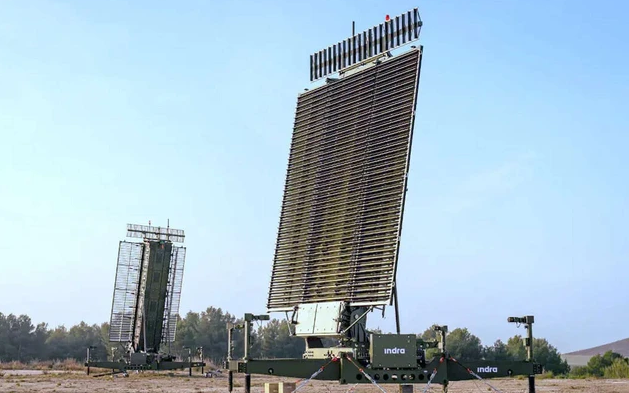
The LANZA series boasts superior technical specifications.
Although the specific variant has not been announced, the LANZA series radars have impressive technical specifications suitable for modern warfare:
| Characteristic | Detailed specifications |
|---|---|
| Detection range | Over 300 km (LRR variant can reach 470 km) |
| Scanning angle | 360 degrees (covers all directions) |
| Monitoring altitude | Up to over 30 km |
| Core technology | Active electronically scanned array (AESA) |
The system is equipped with advanced noise processing and electronic warfare countermeasures algorithms. This allows LANZA to operate effectively in complex noise environments in coastal areas. In particular, its modular structure and "soft" redundancy mechanism enable the system to maintain operation even if a component fails, ensuring continuity in combat readiness.
Strategic role in Bangkok Bay
Sattahip Base is Thailand's most important naval operations center, protecting shipping lanes and offshore energy infrastructure. The addition of long-range fixed radars overcomes the limitations of older systems such as the SCANTER 5202/2202 (which specializes in detecting surface targets) or the Sea Giraffe AMB radars on warships (which are limited by deployment location).
Joint operations and data sharing
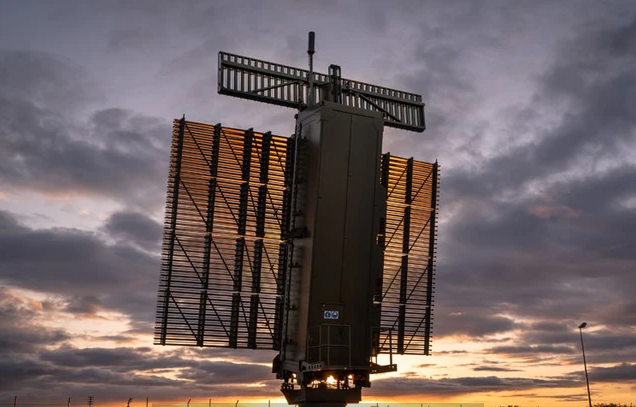
The selection of LANZA also aligns with the Royal Thai Air Force, which already operates the LANZA LRR variant along with the AirDef command system. This architectural similarity facilitates information sharing between the navy and air force, enhancing overall situational awareness across air, sea, and land environments. In the context of increasing non-traditional threats such as salient projectiles, Thailand is prioritizing strengthening its sensor infrastructure to ensure the effectiveness of its entire national defense structure.


