
Apple's smarthome ambitions: A strategic move with the iPhone Ultra and AI Smart Hub.
Alongside the foldable iPhone Ultra, Apple is preparing to enter the smart home era with its 7-inch Smart Hub control center, integrating personalized AI technology.
Alongside the main highlights – the iPhone 18 Pro, iPhone 18 Pro Max, and the first foldable iPhone Ultra expected to launch in September – Apple is preparing to unveil a completely new range of smart home devices. This move marks the start of an ambitious strategy to expand its smart home ecosystem that the American technology giant has been developing for some time.
Shifting strategy towards smart living spaces.
According to analysis by Bloomberg journalist Mark Gurman, Apple is very close to launching a product line specifically for the smart home. This is seen as a significant shift after years of focusing resources on mobile devices such as iPhones, Macs, and wearables.
Apple's new ecosystem is expected to include three core devices: a Smart Hub with an integrated display, an upgraded version of the HomePod mini speaker, and a next-generation Apple TV. The HomePod mini and Apple TV may appear sooner, while the Smart Hub is scheduled for release around October or early 2027.
Processor upgrades optimize Siri AI on HomePod mini and Apple TV.
For its two familiar product lines, the HomePod mini and the new generation Apple TV, Apple chose to retain the same exterior design language. Instead, the company focused on significantly upgrading the internal processors to fully support Siri AI features and the new artificial intelligence platform.
Although official pricing has not yet been announced, recent price adjustments for these two device lines in several markets suggest that the upgraded versions will likely have slightly higher prices than their predecessors.
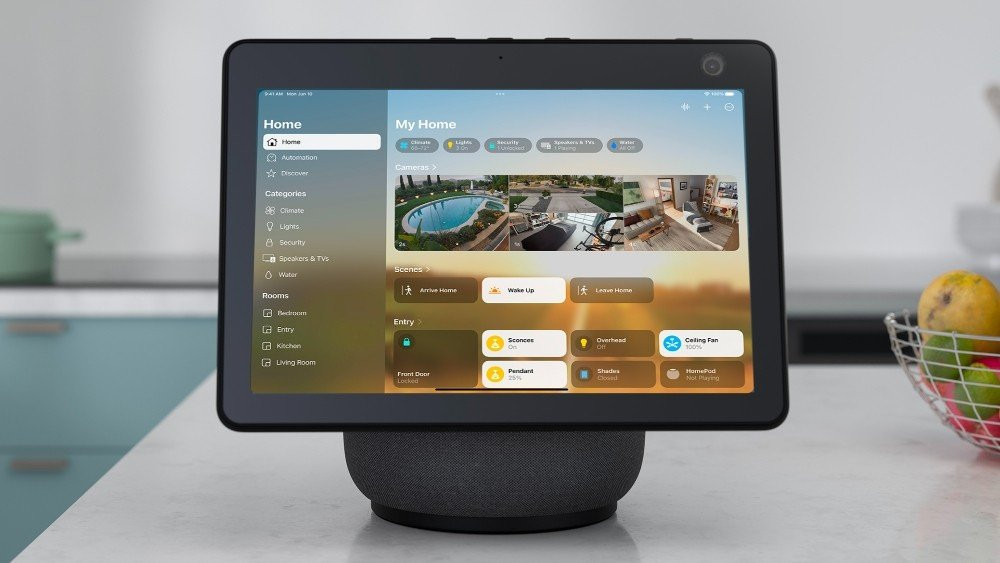
Smart Hub: Personalized dispatch center based on distance and facial recognition.
The most talked-about product in this upgrade is the Smart Hub—a device that acts as the "brain" coordinating the entire smart home ecosystem. The device features a square screen approximately 7 inches in size and runs on a new operating system that combines tvOS, the intuitive interface of watchOS, and iOS. Users can interact directly through an app grid, widgets, and customizable utilities.
In addition to managing door locks, speaker systems, home appliances, and security monitoring, the Smart Hub also integrates a FaceTime camera for video calls and acts as an intercom system between rooms in the house.
The most notable technological breakthrough on the Smart Hub lies in its facial recognition capabilities combined with proximity-based interaction. Thanks to this technology, the device can automatically recognize each family member to display personalized information, schedules, or notes. Simultaneously, the interface and font size on the screen will automatically adjust in real time based on the user's distance from or proximity to the screen.


