
Thanh Chuong strives to restore tea cultivation.
(Baonghean.vn) - The 2015 drought damaged nearly 1,000 hectares of tea plantations in Thanh Chuong district. Fearing a similar drought in 2016, many households have switched to growing cassava and acacia trees. The district People's Committee has also implemented various solutions to ensure the most sustainable tea development.
Mr. Tran Dinh Nhan's family, in Hamlet 8, Thanh An Commune, owns 3 hectares of tea plantations. Located on a high hill, irrigation is difficult, so in 2015, 1 hectare of tea plants that were ready for harvest withered and died. By purchasing seedlings and using some hectare he had grown himself the previous year, he managed to replant over 1 hectare of tea. For the remaining area, which lacked seedlings, Mr. Nhan planted 0.3 hectares of cassava, temporarily waiting for more seedlings so he could harvest the cassava and then replant tea.
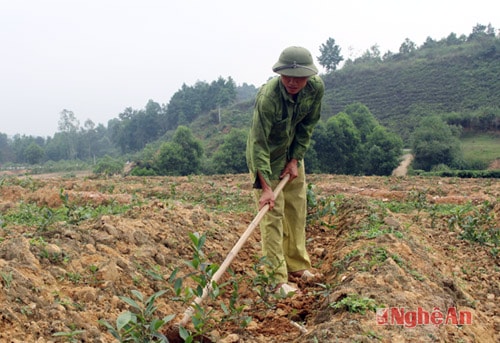 |
| Mr. Tran Dinh Nhan from Thanh An commune is replanting the tea plants that died. |
The severe drought of 2015 damaged 150 hectares out of a total of 500 hectares of tea plantations in Thanh An commune. Of these, 78 hectares suffered 30-70% damage, while the remaining area suffered 70-100% damage, resulting in total crop loss. According to Ms. Tran Thi Kim Ngan, head of the commune's Agriculture Committee: For the 78 hectares with 30-70% damage, farmers have largely managed to secure their own seedlings and replant. However, for the remaining 72 hectares with 70-100% damage, only about 40 hectares could be replanted.
Thanh Chuong currently has 4,399 hectares of tea plantations. At the end of 2015, the district directed and guided the people to cultivate 7.2 million tea seedlings to proactively plant new tea in 2016. By January 2016, the district had planted an additional 350 hectares of tea in Thanh Son, Thanh Duc, Thanh Lam, and other areas.
According to the 2016 plan, the district will continue to plant 300 hectares of tea in 14 tea-growing communes.
Mr. Le Dinh Thanh, Vice Chairman of the District People's Committee, said: "Currently, we are directing the tea-growing communes, enterprises, and teams in the area to focus on replanting the dead trees to ensure the density in tea gardens damaged by drought in March and April of this year."
The replanting process must ensure the same conditions as for new plantings, including digging holes and fertilizing, while also weeding, mounding the base of the plants, and mulching. For newly established tea plantations, when harvesting tea, the main focus should be on canopy formation, with yield being secondary. Only harvest the tea shoots that are taller than the canopy, not those below. Arrange for the planting of shade trees such as acacia, eucalyptus, and eucalyptus.
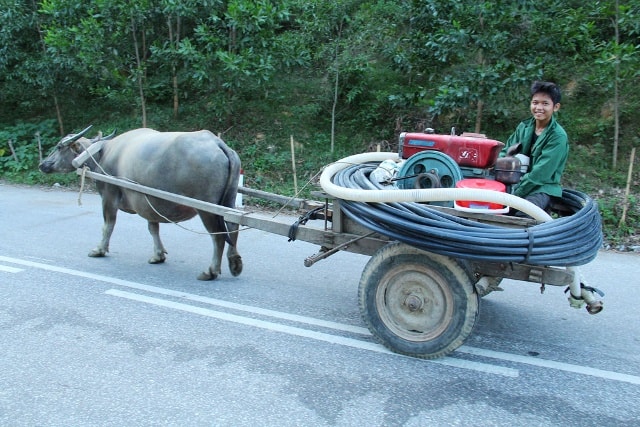 |
| Farmers in Thanh Chuong buy water pumps to irrigate their tea plantations. Photo: Thanh Quynh. |
In 2016, the drought will be even more severe. For commercial tea cultivation, farmers should refrain from machine harvesting the spring tea crop to allow the leaves and branches to recover, ensuring stable yields for the entire year. Simultaneously, they should implement drought mitigation measures for tea plants during the hot season. Specifically, in tea nurseries, focus should be placed on watering to combat drought and adjusting sunlight to encourage seedling germination. Furthermore, regular monitoring is crucial to promptly detect any pests or diseases affecting the tea plants.
Phu Huong


