
Ho Chi Minh City: From its historical name to its new mission.
Today, in this new era of development, the meaning of the name Ho Chi Minh City must be to create a modern urban model for Vietnam: a place where advanced institutions, innovation, smart governance, high quality of life, and greater contribution to the nation converge.
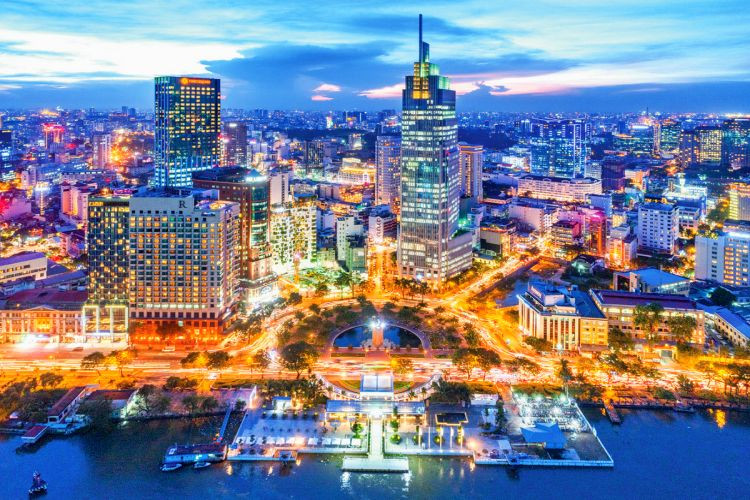
Fifty years ago, at the first session of the Sixth National Assembly of unified Vietnam, it was officially decided to name the city of Saigon-Gia Dinh as Ho Chi Minh City.
It was not merely an administrative decision about the name of a city. It was a political, historical, and spiritual event of special significance: the newly unified nation chose to name the largest city in the South after him – a dynamic, resilient, and compassionate land that had endured war with countless sacrifices, losses, and aspirations.
A name can mark a specific moment in time. But some names also reveal a mission. Ho Chi Minh City is one such name.
Half a century has passed. Ho Chi Minh City has become the country's largest economic center, a crucial trading hub, and a convergence point for powerful flows of labor, knowledge, capital, technology, culture, and creativity.
In 1976, the name Ho Chi Minh City symbolized national reunification, the end of the war, and the beginning of a new era for the Vietnamese nation: independence, unity, territorial integrity, and a shared commitment to building a new future.
In the early years of the Doi Moi (Renovation) period, that meaning was the spirit of daring to think, daring to act, daring to remove obstacles, daring to unleash productive forces, and daring to pave the way for a socialist-oriented market economy.
Today, in this new era of development, that meaning must be the creation of a modern urban model for Vietnam: a place where advanced institutions, innovation, smart governance, high quality of life, and greater contribution to the nation converge.
A name that embodies a history of unity.
Saigon-Gia Dinh holds a special place in modern Vietnamese history. It served as a gateway for trade, a major urban center, a melting pot of diverse cultures, social strata, and social energy. It also witnessed the tenacious and persistent struggles of the people of Southern Vietnam for independence and national reunification.
The National Assembly's decision to name Ho Chi Minh City after the country's reunification was therefore not only an expression of gratitude to the great President Ho Chi Minh. It was also an acknowledgment of the patriotic tradition, indomitable spirit, and immense contributions of the people of Saigon-Gia Dinh to the cause of national liberation and reunification.
The name Ho Chi Minh City thus embodies three layers of meaning: the memory of a great struggle; gratitude towards the beloved leader of the nation; and faith in the city's special role in the country's future.
A unified nation needs symbols of unity. A people who have just emerged from war need spiritual anchors to bước into peace. And a large, vibrant, and ambitious city like Saigon-Gia Dinh has been given a name that is both an honor and a responsibility.
From political symbol to development standard
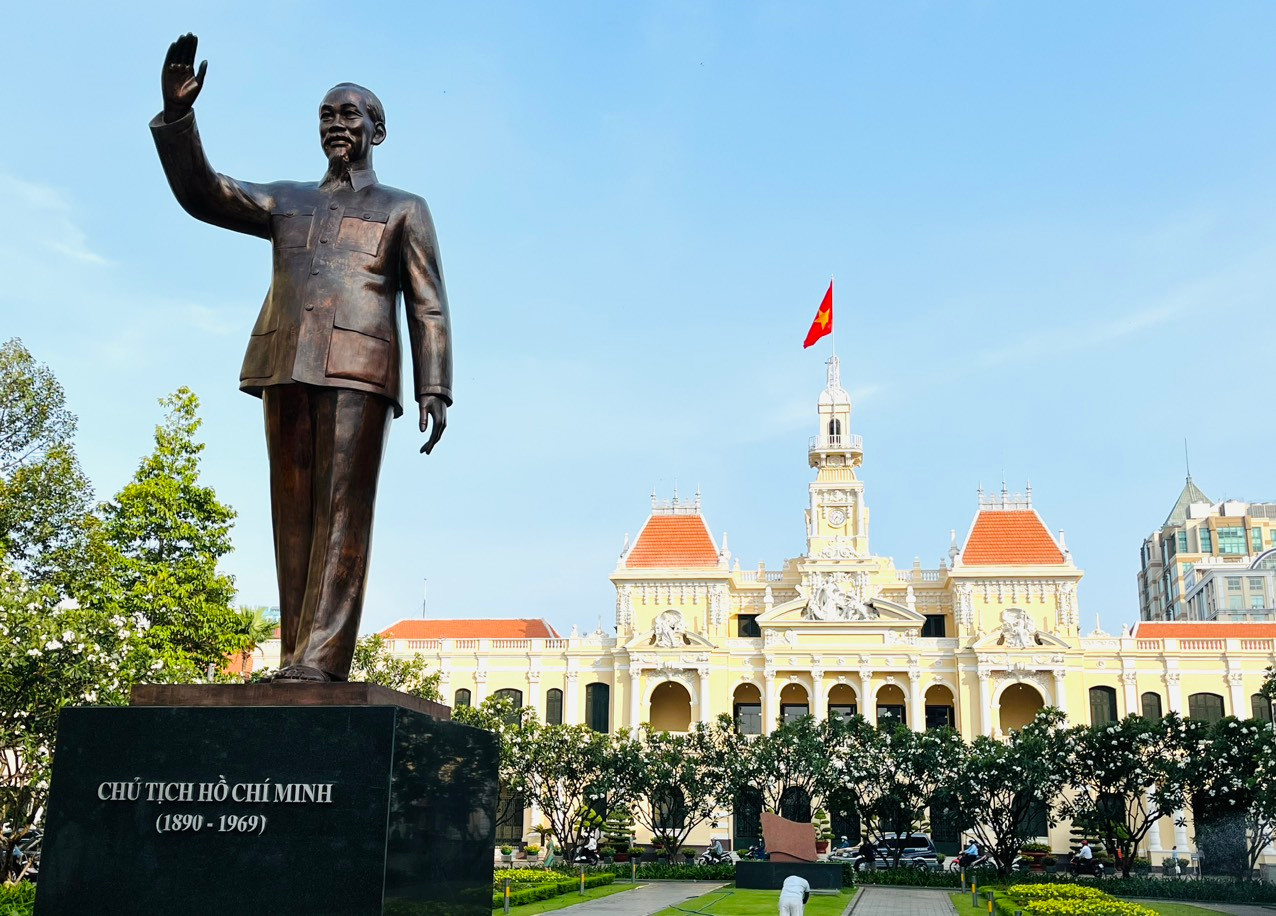
Bearing the name of President Ho Chi Minh is not just a source of pride; it is also a benchmark. Because President Ho Chi Minh is a symbol of national independence, of the aspiration for freedom, of the spirit of service to the people, of public service ethics, of a simple yet great lifestyle, and of a vision to integrate Vietnam into the progressive flow of humanity.
Therefore, for Ho Chi Minh City, the city's name must become a constant reminder: the city must lead; it must innovate; it must dare to think and act; it must know how to transform social energy into a driving force for development; and it must put the people at the center of all policies.
To be worthy of the name "People" is first and foremost demonstrated through actions of development: a more efficient governance, a more favorable business environment, a more livable city, a more humane society, a more people-oriented public administration, and a greater capacity to contribute to the nation. This is also a symbol of compassion and a locality that always values all resources contributing to the city's development, making it a place where investors seek out...
And Ho Chi Minh City cannot be complacent with its current role. It must constantly renew itself and, in today's era, be a symbol of the aspiration to unleash its potential for development.
Unleashing the potential for development means, first and foremost, unleashing the creativity of the people and businesses. It means giving every good idea the opportunity to become a product. It means creating an environment where every talent can contribute. It means allowing all social resources to flow freely instead of being held back by outdated procedures, barriers, and management thinking.
The new mission of the nation's leading engine.
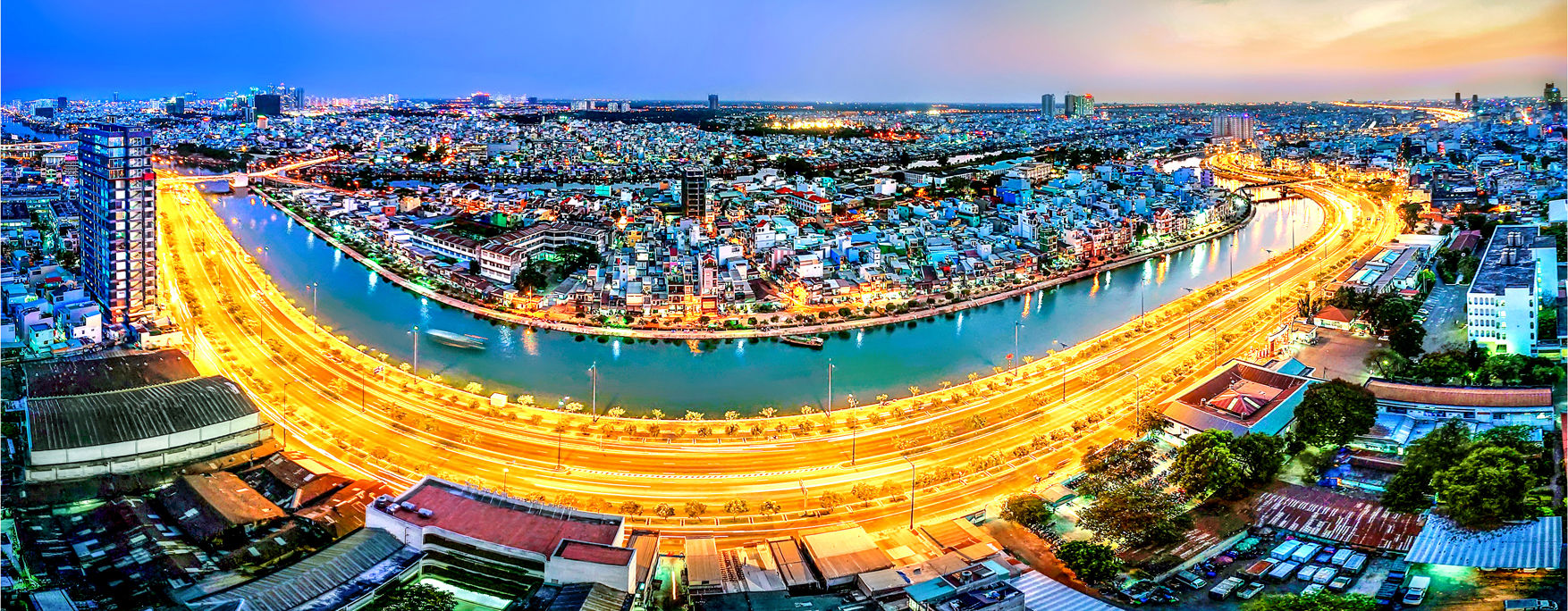
For many decades, Ho Chi Minh City has played the leading role in the national economy. In the context of new development, the city must create new growth drivers for the country.
That is the mission of a regional financial center; a center of innovation; a growth pole for the digital economy, green economy, and knowledge economy; a global city capable of connecting Vietnam with the world's value chains, technology chains, and knowledge chains.
In the new era, competition between nations is increasingly manifested in the competition between major cities. The nation with innovative cities, strong global connectivity, flexible institutions, and a high quality of life gains a strategic advantage. Ho Chi Minh City, therefore, is not just a large administrative unit. The city must be recognized as a national strategic asset.
To achieve this, Ho Chi Minh City needs sufficient institutional space to experiment with new models. A unique city cannot operate under conventional mechanisms. A national engine cannot be slowed down by outdated administrative barriers. A city of the scale, speed, and complexity of Ho Chi Minh City needs to be empowered to a level commensurate with its responsibilities.
Empowerment is not about loosening control. Empowerment is about making cities more proactive, more innovative, more responsive, and more accountable. Autonomy must go hand in hand with accountability. Experimental spaces must be accompanied by disciplined enforcement. Dynamism must be coupled with transparency. That is how institutions become a driving force for development.
A city for people
This means that growth must translate into a better quality of life. Infrastructure must serve the lives of the people. Traffic congestion must be reduced. Housing must be more accessible. The environment must be cleaner. Education, healthcare, culture, and social welfare must be improved. Migrant workers must be recognized as an integral part of the city's vitality. The poor, vulnerable, children, and the elderly must receive due attention and better protection in the development process.
A modern city is not just a place with skyscrapers, wide boulevards, and bustling financial districts. A modern city must also be a place where people feel safe, respected, have opportunities for advancement, and have faith in the future.
Ho Chi Minh's spirit in urban development is the spirit of putting the people first. All major policies ultimately lead to a simple question: What benefits will the people receive? How will their lives improve? How will their opportunities be broadened?
It is here that the identity of Ho Chi Minh City needs to be preserved and enhanced. It is the identity of an open, dynamic, tolerant, and compassionate city. A city that welcomes people from all over, giving them opportunities to build their lives, giving them a sense of belonging, and transforming that diversity into a driving force for development.
An open megacity in a competitive world.
Ho Chi Minh City possesses a very special quality: openness. The city is open to people, open to ideas, open to new things, and open to the world.
People come to the city not just to make a living. They come to find opportunities, to test themselves, to start over, to turn their dreams into reality. Rarely is the spirit of "daring to try" so naturally integrated into social life as in this city.
But in this new era, openness needs to be elevated to a competitive advantage. Openness to attract talent. Openness to embrace technology. Openness to connect with the world's financial, commercial, scientific, and innovation centers. Openness to learn from advanced urban governance models. Openness to become a place where Vietnam can confidently engage in dialogue with the world.
Along with openness, cities also need a new governance capacity. The larger the city, the smarter its governance must be. The larger the population, the more convenient public services must be. The more complex the development space, the more data must become the foundation of governance. A modern city cannot be managed solely by administrative orders, but must operate using data, standards, accountability, and citizen participation.
This is also a very practical way to deepen the meaning of the name Ho Chi Minh City today: building a governance system that is close to the people, understands the people, serves the people, and creates conditions for the people's development.
Each era offers a new answer to a grand title.
Ho Chi Minh City today is no longer simply facing the task of post-war recovery or leading the way in innovation as in previous decades. The city is facing a new mission: to become a modern growth pole, a center of innovation, an internationally integrated metropolis, and a model of development governance for Vietnam in the new era.
Ho Chi Minh City cannot simply be proud of its current position. The city must constantly ask itself: Have I contributed enough to the country? Have I paved the way strongly enough for innovation? Have I created enough opportunities for my people? Have I earned the trust of the entire nation? Have I kept my promises and commitments to the people and businesses?
In 1976, Ho Chi Minh City was the name of the joy of reunification. During the Doi Moi (Renovation) years, Ho Chi Minh City was the name of the pioneering spirit. Today, Ho Chi Minh City must be the name of a new aspiration for development: the aspiration for a modern, creative, compassionate, integrated, and leading megacity. And that is also the most profound reminder: Bearing the name of President Ho Chi Minh is an honor; living up to his name is a responsibility; elevating the city to new heights is the aspiration of today and a commitment to the future.


