
Igniting the thirst for knowledge in border regions:Part 3: Fulfilling a long-held wish
Over the years, with the attention of the Party, the State, and local authorities, the education of students in the mountainous communes of Nghe An province in general, and students in border communes in particular, has gradually improved... The path to knowledge for thousands of students in border areas will truly enter a new chapter when the policy of building multi-level schools in border areas is approved and officially implemented from this school year.

Reporters' Team /Present:Hong Toai•
07/03/2006
Over the years, with the attention of the Party, the State, and local authorities, the education of students in the mountainous communes of Nghe An province in general, and students in border communes in particular, has gradually improved... The path to knowledge for thousands of students in border areas will truly enter a new chapter when the policy of building multi-level schools in border areas is approved and officially implemented from this school year.

More than half a century ago, Mr. Nguyen Van Chau's family moved from Ngoc Son commune (formerly Do Luong district) to Cao Veu village (Anh Son commune) to start a new life. The area bordering Bolykhamxay province (Laos) was so desolate back then that it took a whole day to travel from the village to the commune center. Despite the hardships, Mr. and Mrs. Chau were determined to send their children to school in the central area. This was a bold and "timely" choice at a time when many families were still accustomed to the idea that simply having their children "know how to read and write was enough"... Thanks to that determination, all three of Mr. Chau's children have stable jobs. Two of them are teachers, and one runs a transportation service business.
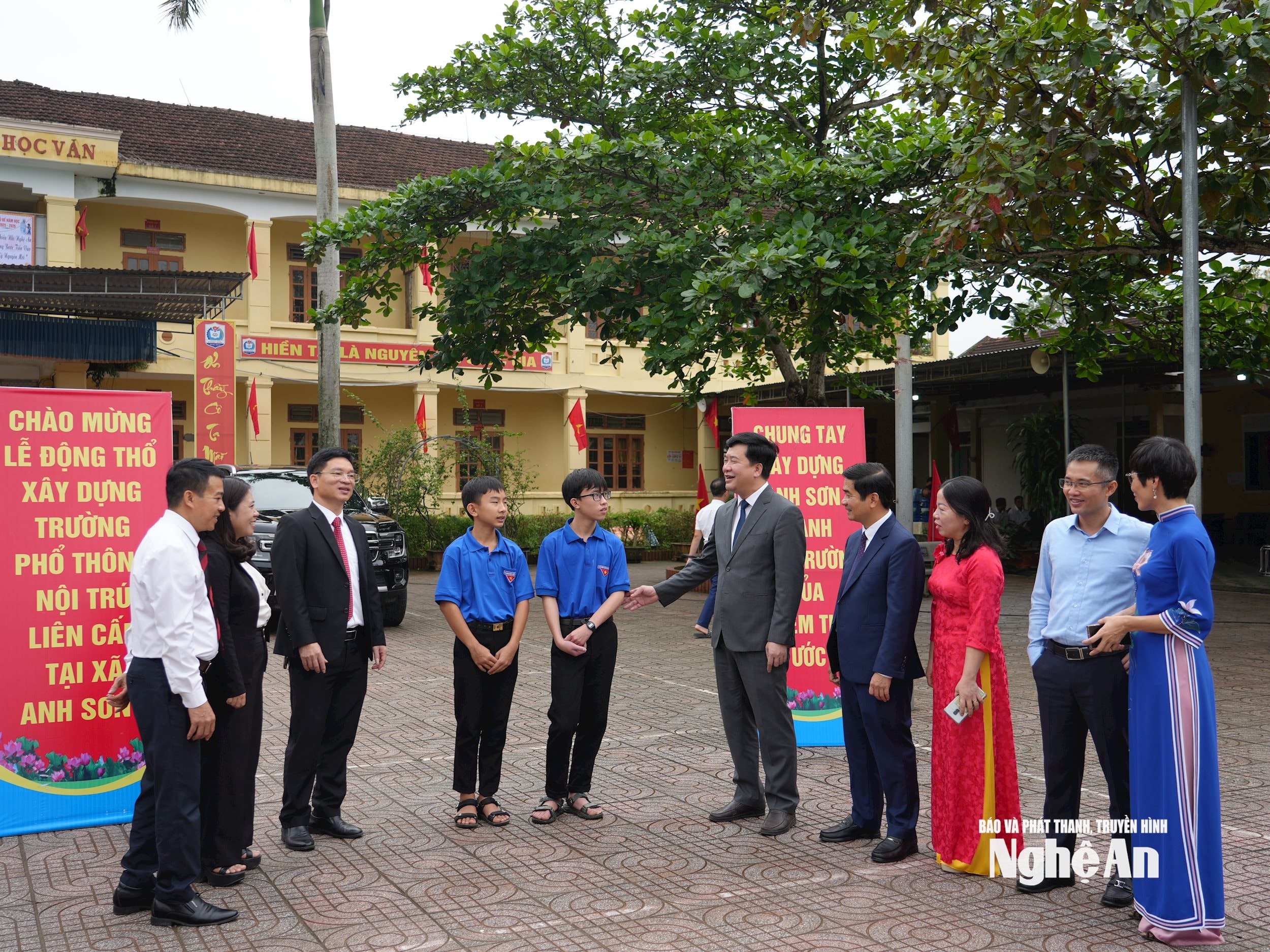
Speaking about the journey of raising his children to adulthood, Mr. Nguyen Van Chau shared: “From a young age, I only worked in agriculture and gardening, without much formal education. However, my friends back home, who are civil servants and teachers, advised me to invest in my children's education, so that they would have the knowledge to escape poverty and hardship. Following their wise and heartfelt advice, my wife and I worked hard to ensure our children received a full education, and we taught them to overcome difficulties and strive for success in their studies.”
As a role model for the village in developing household economics, raising children well, and teaching them good manners, Mr. Nguyen Van Chau has earned the trust of the people in Veu 1 village and was elected as the village head. Over the years, although Veu 1 village has undergone many changes, he remains deeply concerned about the fact that the children of Cao Veu still face disadvantages in their education.
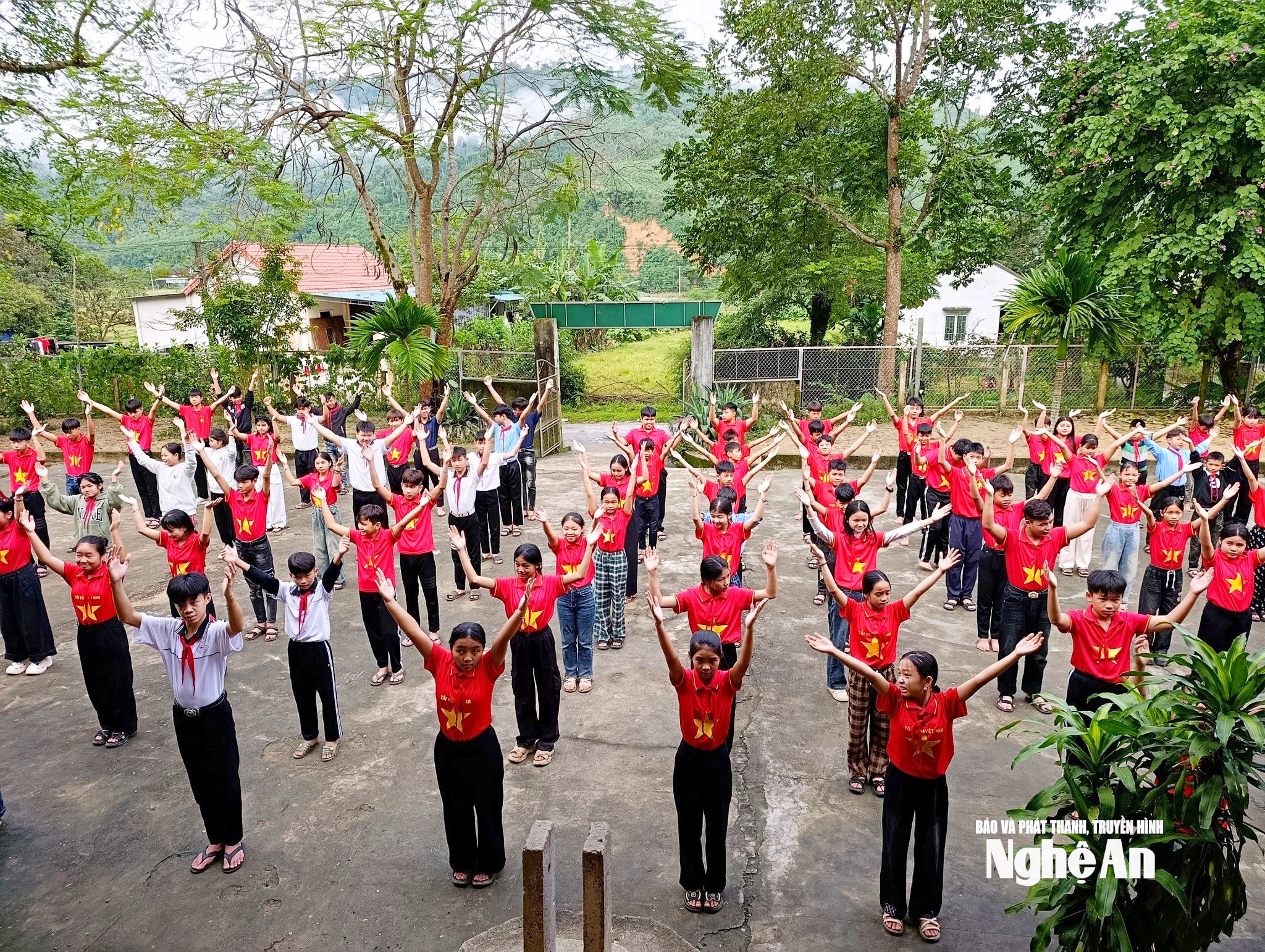
Mr. Chau said: "Cao Veu village has schools for all three levels: preschool, primary, and secondary, but the facilities and teaching and learning conditions at these schools are inadequate and cannot be compared to the main school in the commune center. Therefore, in the village, only well-off families send their children to the center to study. For example, my family has four grandchildren, and no one wants them to attend the outlying school. My youngest child rents a house in the Anh Son commune center so that he can live there while attending the central school."
When he learned that a combined primary and secondary boarding school would be built in his village, village head Nguyen Van Chau was overjoyed. He called it a "major initiative" and an opportunity to "change the future for the children of the village." Sharing his joy, Mr. Chau expressed: "In the near future, with the government building the school, the children of the village will have the opportunity to receive the most comprehensive education. For this project to be effective, parents must change their perceptions and understand that a child's growth is the result of care from the family, the school, and the entire community. I will go to each house to spread awareness about this extremely humane policy. I will share my family's story to encourage people to make efforts to ensure their children's education."
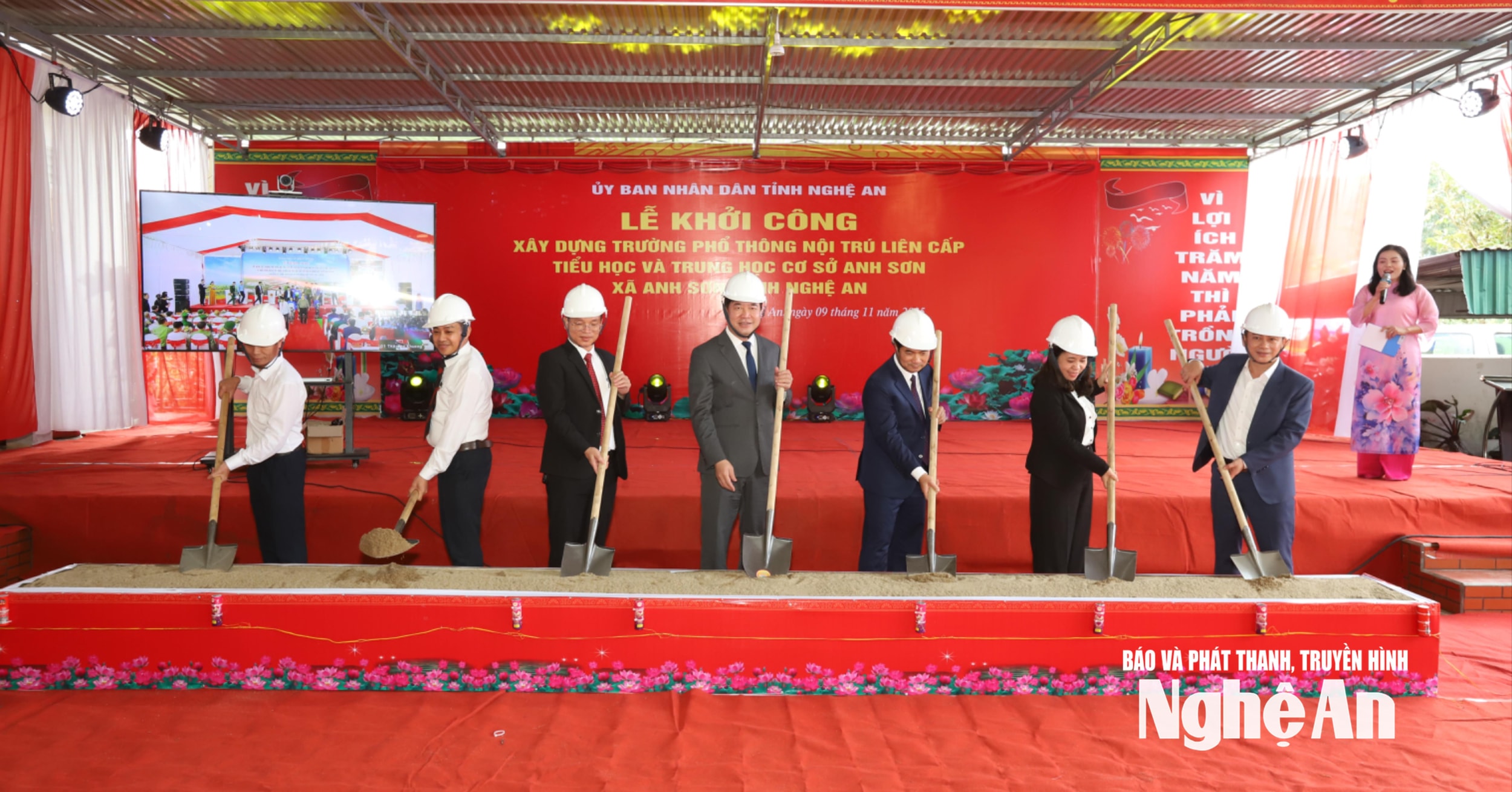
On July 18, 2025, the Politburo issued Conclusion Notice No. 81-TB/TW on the unified policy of investing in the construction of boarding schools for primary and lower secondary levels in 248 border communes, focusing on piloting the construction or renovation of 100 schools in 2025. This is a major decision with profound political, social, and humanitarian significance, demonstrating the special concern of the Party and State for the people, soldiers, and especially the students in the border regions of the Fatherland.
In Nghe An province, in accordance with the Politburo's conclusion, 21 new multi-level schools will be built throughout the province.
Specifically, this includes the combined primary and secondary schools for ethnic minorities located in the communes of Na Ngoi, Thong Thu, Nhon Mai, Mon Son, Keng Du, Son Lam, Nam Can, Tri Le, Muong Tip, Tam Quang, Hanh Lam, Bac Ly, My Ly, Na Loi, Tam Thai, Tien Phong, Muong Xen, Chau Khe, Que Phong, Anh Son, and Kim Bang.
Upon completion, the schools are expected to have 1,029 classes (including 549 primary school classes and 480 secondary school classes) with over 39,000 students and 1,736 teachers. It is anticipated that more than 30,000 students will be boarding students. The total investment for the 21 schools is over 5 trillion VND.
.png)
In Tam Hop commune, there are currently two secondary schools, but only Tam Hop Ethnic Boarding Secondary School is a boarding school. Meanwhile, Tam Thai Secondary School, where nearly 100% of the students are from ethnic minorities, many of whom live far away, faces difficulties in attending school due to the lack of boarding facilities.
Kha Hien Dieu, an 8th-grade student at Tam Thai Secondary School, lives in Khoi village, nearly 10 km from the school. Her father works far away, her mother is busy with her younger sibling, and her grandparents are elderly, so she has no one to take her to and from school. For over a year now, Dieu has been staying with an acquaintance near the school to avoid disrupting her studies. Every day, she attends school for half the day and helps sell groceries for the other half to help her landlord, as she doesn't have to pay rent.
Kha Hien Dieu shared that although it's more difficult than for her classmates, this is the only way she can still go to school. "I don't want to drop out of school, get married early, and have children like my sister. My goal is to pass the entrance exam to the provincial boarding high school for ethnic minorities," Dieu added.
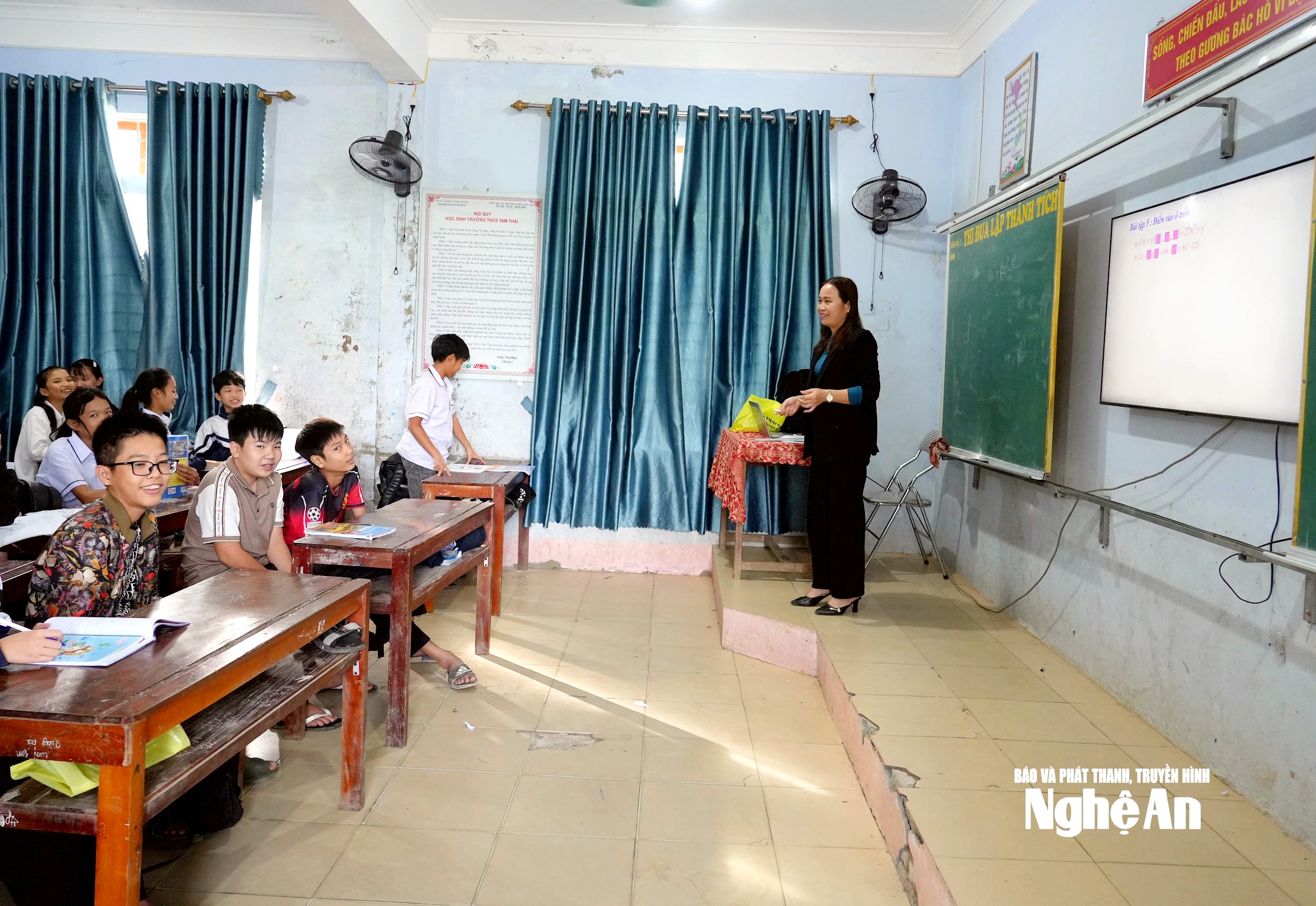
Students with circumstances like Kha Hien Diu's are not uncommon. Teacher Vo Anh Tuan, the principal of Tam Thai Secondary School, added: "Our school used to be among the lowest-performing schools in the former Tuong Duong district in terms of educational quality for many years. If the school had the resources to build a boarding school, students would have an easier time; they would attend school regularly, and wouldn't have to worry about food, clothing, accommodation, or transportation."
Despite these difficulties, upon entering the 2025-2026 school year, the teachers of Tam Thai Secondary School were overjoyed to receive information that the State would invest in building multi-level boarding schools in Tam Hop commune. The new school will not only improve teaching and learning conditions but also change the perception and views of the people regarding their children's education. At that time, the school will not only be a place to sow the seeds of knowledge, but also open the door of hope for the future of the entire village.
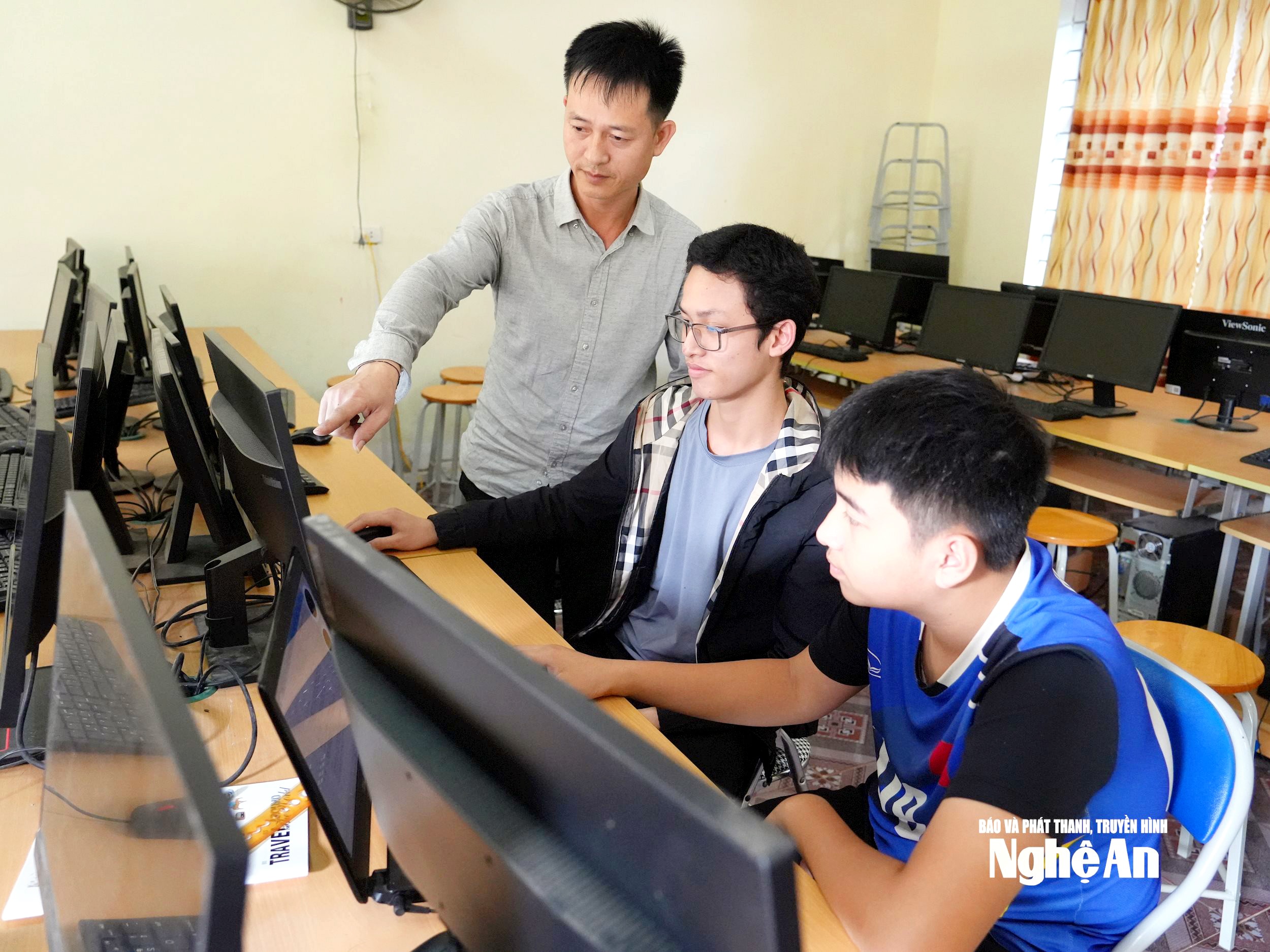
Mr. Vo Anh Tuan, Principal of Tam Thai Secondary School, expressed: "The construction of a boarding primary and secondary school will solve many existing shortcomings of schools in the commune."
Previously, Tam Thai commune was formed by merging Tam Hop commune and the former Tam Thai commune of Tuong Duong district. Currently, there are four primary and secondary schools in the commune with a total of over 1,300 students. Notably, the commune has two secondary schools, but they are very small, with only 7 or 8 classes each. This results in a low student population and a large teaching staff, with only one teacher per subject (such as Information Technology, English, Geography, and History). Therefore, opportunities for professional development and training are very limited. Regarding students, only those from the former Tam Hop commune currently benefit from boarding school programs. Meanwhile, many students from the former Tam Thai commune, who live far from school, do not receive these benefits, putting them at a significant disadvantage.
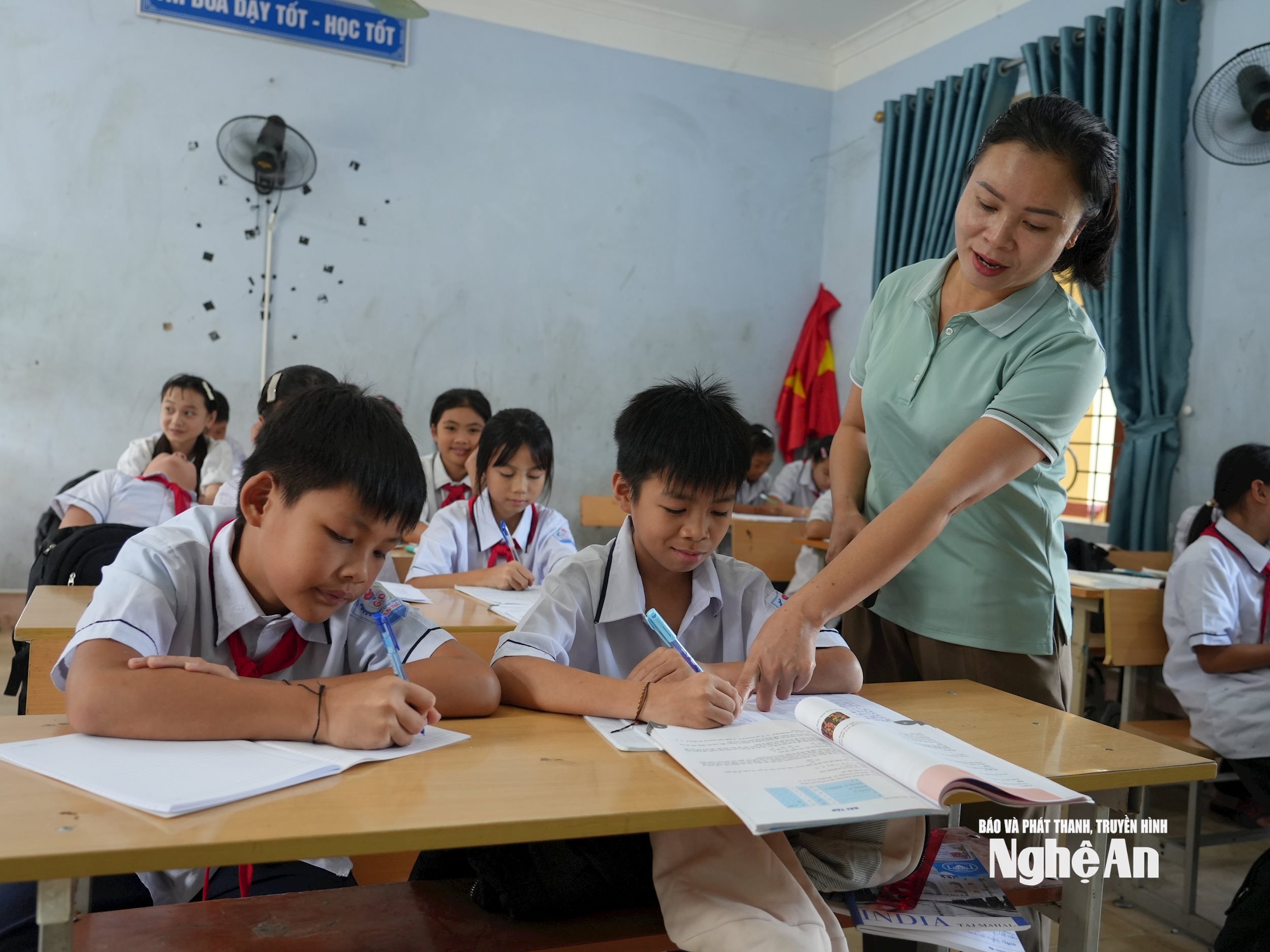
Teacher Vo Anh Tuan also shared his thoughts sincerely: "From four schools, our commune now only has one boarding school, so many principals and vice-principals will certainly no longer be in leadership roles. But I and the other principals are not worried about this at all. With the boarding school, we benefit a lot, namely improved student quality and guaranteed policies and benefits for the children. Here, most parents work far away, and the children live with their grandparents, so thanks to the boarding environment, parents will feel more at ease knowing that the school and teachers are there to support them."
Speaking about the boarding school model, Mr. Ho Duc Quang - Principal of Tri Le Ethnic Boarding Junior High School, Tri Le commune, also affirmed that this is the desire of many parents and students in the border region.
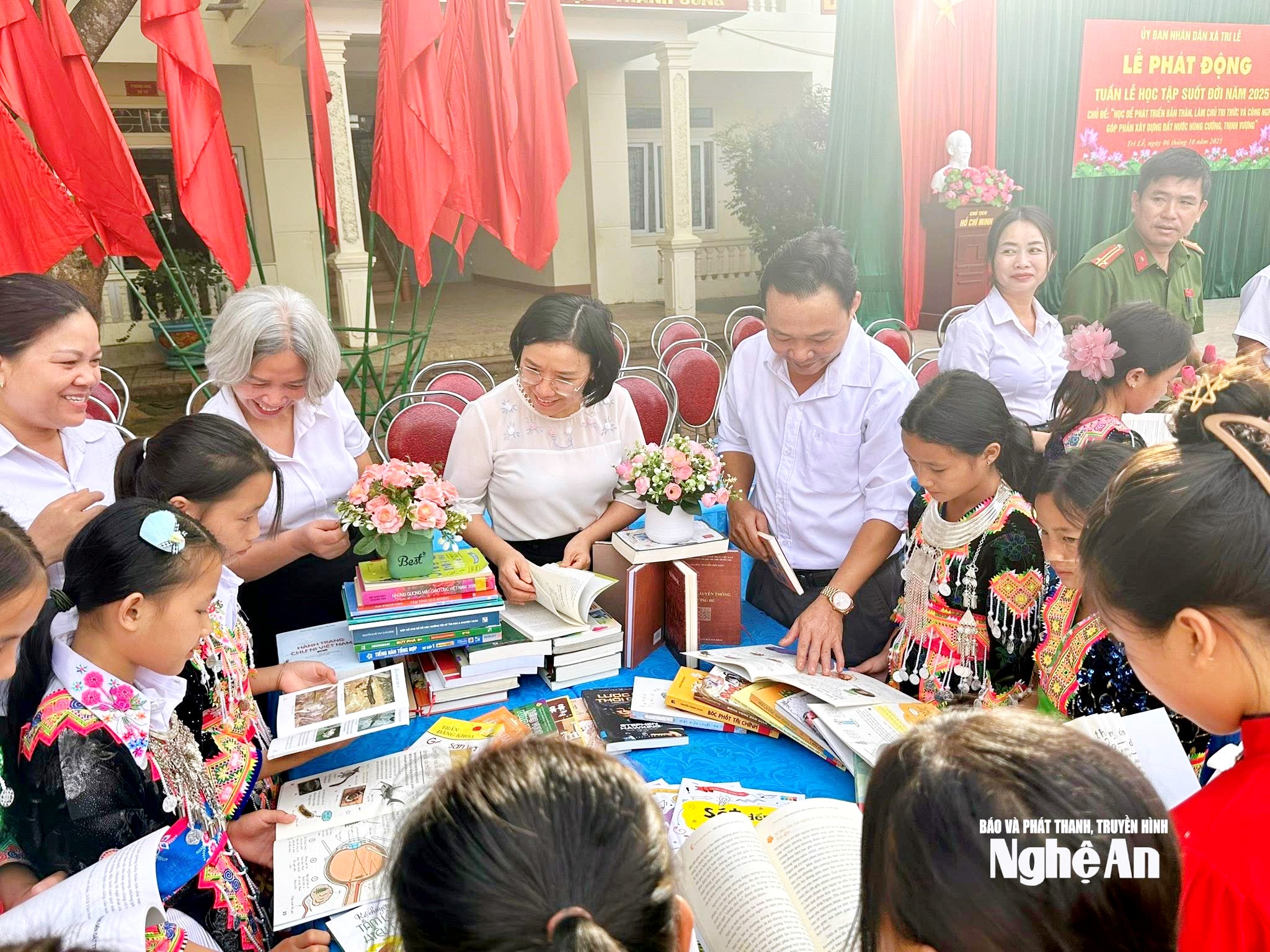
Teacher Ho Duc Quang said: "Our school has 903 students, but only 361 are boarding students, mainly Hmong and Khmu students from remote villages such as Pa Khom, Huoi Moi, and Muong Long. The demand for boarding school is always higher than the school's actual capacity. Compared to students in regular schools, students in boarding schools benefit from many support policies such as food and accommodation under Decree 66, tuition fee exemptions and reductions, and learning cost support under Decree 86, and support for enhanced learning programs under Resolution 17 of the Nghe An Provincial People's Council. Here, students study all day at school and receive additional tutoring from teachers at night, giving them many opportunities for development and enrichment. Many students have been admitted to the provincial boarding school for ethnic minorities and achieved excellent student status at various levels."
According to the Principal of Tri Le Ethnic Boarding Junior High School, after the merger, there are currently 5 schools in the commune with over 2000 students, most of whom live with their grandparents because their parents work far away. Therefore, when all the students in the commune are concentrated in one boarding school, they will have the opportunity for comprehensive development, giving parents peace of mind when sending their children to school, and the school will receive large-scale and synchronized investment.
The integrated boarding school model fundamentally addresses the problem of scattered students and fragmented school networks. Instead of maintaining numerous small schools with low student numbers, teacher shortages, and limited teaching facilities, concentrating students in a single integrated center (primary, secondary, and even high school) facilitates larger-scale, more synchronized, and professional teaching. This is a prerequisite for improving educational quality, reducing the need for combined classes, addressing subject teacher shortages, and minimizing student dropout rates.
Boarding schools address the challenge of accessing education for students in remote and disadvantaged areas, where the fragmented terrain makes daily commutes a major difficulty. When students live and eat together at the school, travel distances are shortened, and the risks of traffic accidents, floods, landslides, and cold weather are significantly reduced. More importantly, boarding ensures the continuity of learning, especially during the rainy season – a time when many students would miss school for extended periods if they were in semi-boarding schools or attending schools in remote locations.
---------o0o--------
(To be continued)


