
Lack of resources makes it difficult to control illegal sand and gravel mining on the Lam River.
Despite increased inspections and enforcement by various levels of government, illegal sand and gravel mining on the Lam River remains a complex issue, especially in border areas. In reality, the lack of specialized equipment and vehicles is hindering local authorities' inspection and monitoring efforts, posing a risk of recurring violations and resource depletion.
The violations have been ongoing, and residents have complained many times.
In the early morning of November 2, 2025, authorities in the two communes of Tam Dong and Dai Dong received reports from residents about several sand dredging vessels operating brazenly.illegal sand miningat night on the Lam River, at the border between the two localities.
Immediately after receiving the information, the authorities of the two communes promptly arrived at the scene, conducted inspections, and apprehended the vehicles that violated the regulations.
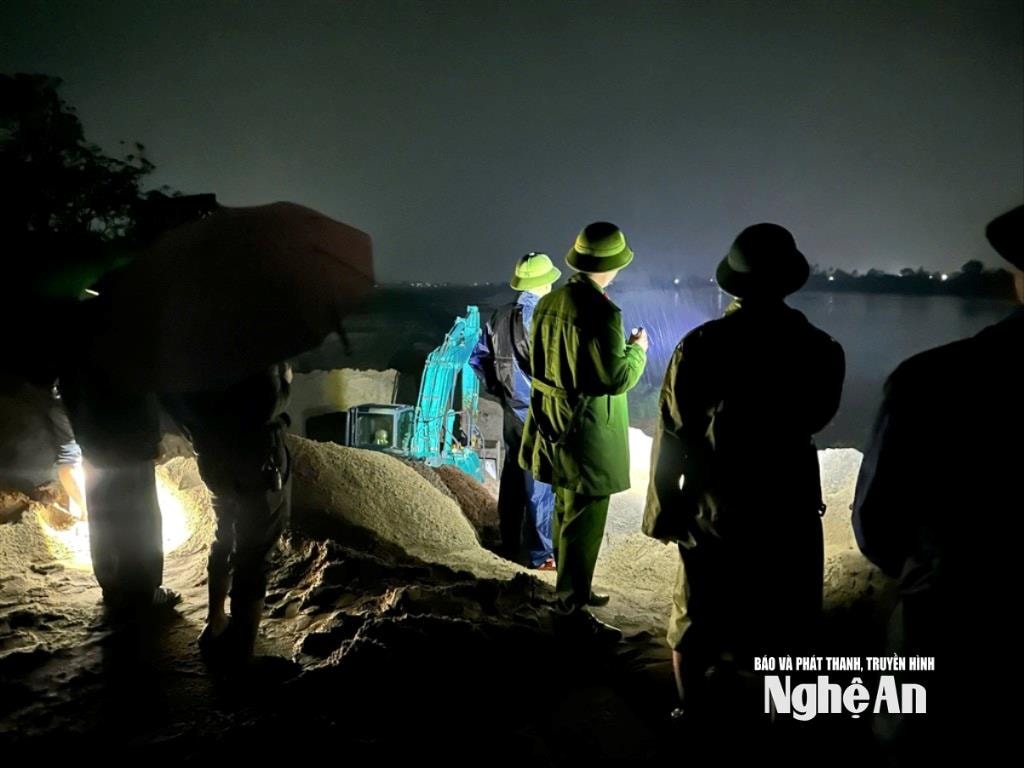
At the time of inspection, numerous sand dredging vessels were operating illegally on this river. Upon spotting the authorities, the offending vessels immediately started their engines and fled towards the sand wharf in Tam Dong commune. Thanks to proactive, decisive action and coordinated efforts between the forces, the authorities promptly apprehended two vessels suspected of illegal sand mining, handing them over to the relevant agencies for further investigation and processing according to regulations.
In reality, the Lam River has many licensed sand and gravel mines. Besides mining activities conducted within permitted areas and times, illegal mining, mining beyond designated boundaries, and activities outside of regulated hours still occur, with increasingly sophisticated and difficult-to-control methods, posing significant challenges to management.
Notably, the illegal and unregulated sand mining on the Lam River section bordering Tam Dong and Dai Dong communes is not a new problem but has been ongoing for many years. In early 2025, in the former Dong Van commune (now Dai Dong commune), residents of Tien Quanh and Dinh Son hamlets repeatedly complained and expressed their frustration about the sand mining activities of Thanh Chuong Sand, Gravel and Transportation Joint Stock Company – a company licensed by the Provincial People's Committee to mine sand in this area – due to serious riverbank erosion.
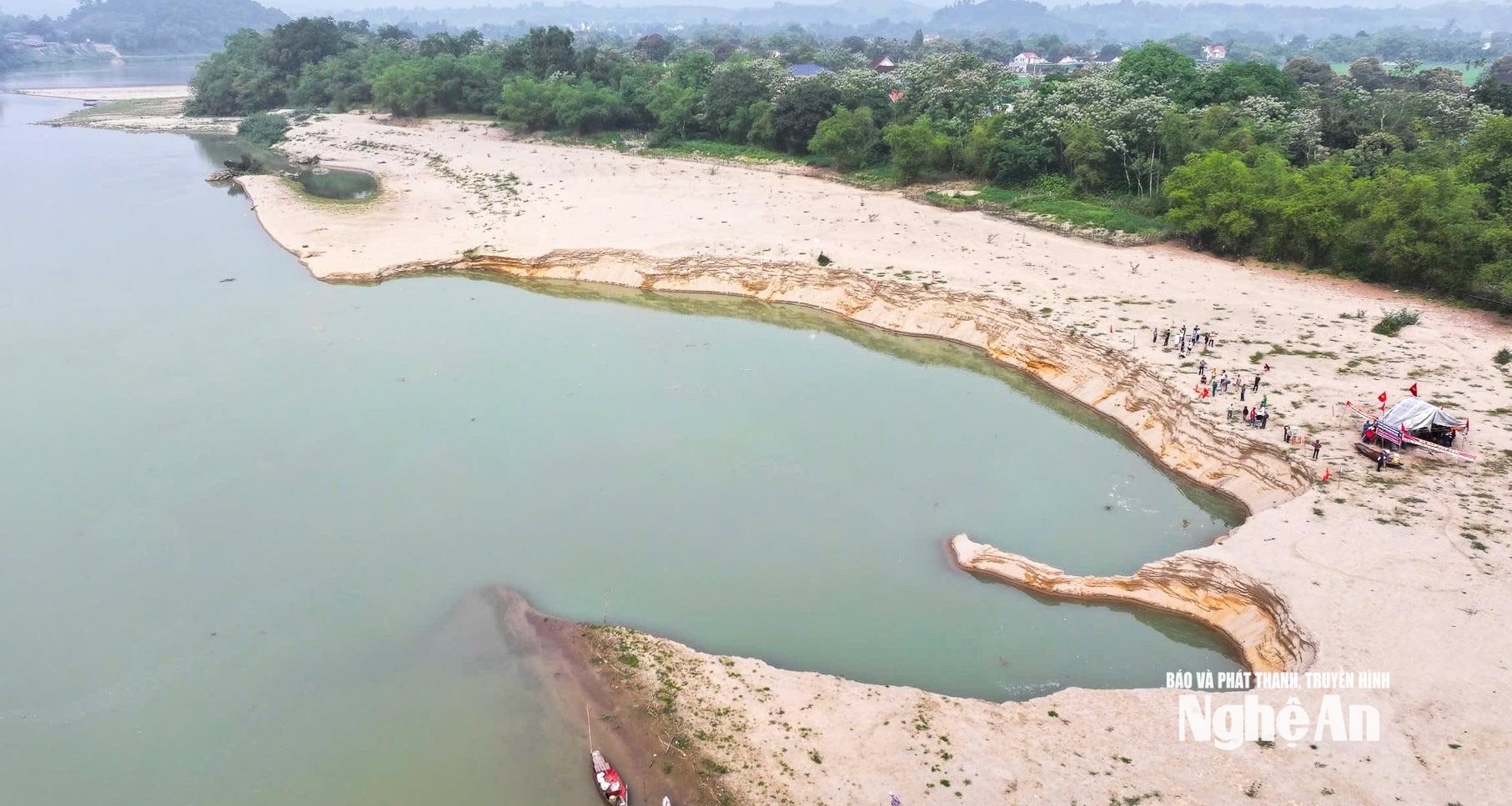
Locals are concerned that sand mining has been distorting the river's flow, causing riverbank erosion, washing away land, and threatening houses and agricultural land along the river. Following these concerns, authorities have conducted inspections to clarify issues related to the company's mining operations.
On May 21, 2025, the People's Committee of Thanh Chuong District (at that time) issued Decision No. 1938/QD-XPHC imposing an administrative fine of 249 million VND on Thanh Chuong Sand, Gravel and Transportation Joint Stock Company, and simultaneously suspending its mining operations for a period of 2 months.
According to the penalty decision, the enterprise committed several violations, including sand mining on the river not in accordance with the plan approved by the competent authority, causing riverbank erosion; improperly placing markers, resulting in the loss of markers for the mining area, and other violations related to mineral mining activities.
Despite specific measures being taken, the risk of illegal sand mining and exceeding permitted capacity on the Lam River remains ever-present. One of the reasons cited is the lack of specialized equipment and facilities for inspection and monitoring on the river by local authorities.
Lack of resources puts pressure on local authorities.
According to Mr. Nguyen Chi Thinh, Head of the Economic Department of the Van An Commune People's Committee, the Lam River flows through Van An commune for approximately 10km. Currently, there are 5 sand and gravel mining sites in the commune, 3 of which are operational. With such a large number of sites, the management pressure on the local government is immense, especially since mining activities take place on the river, making observation and control difficult using manual methods.
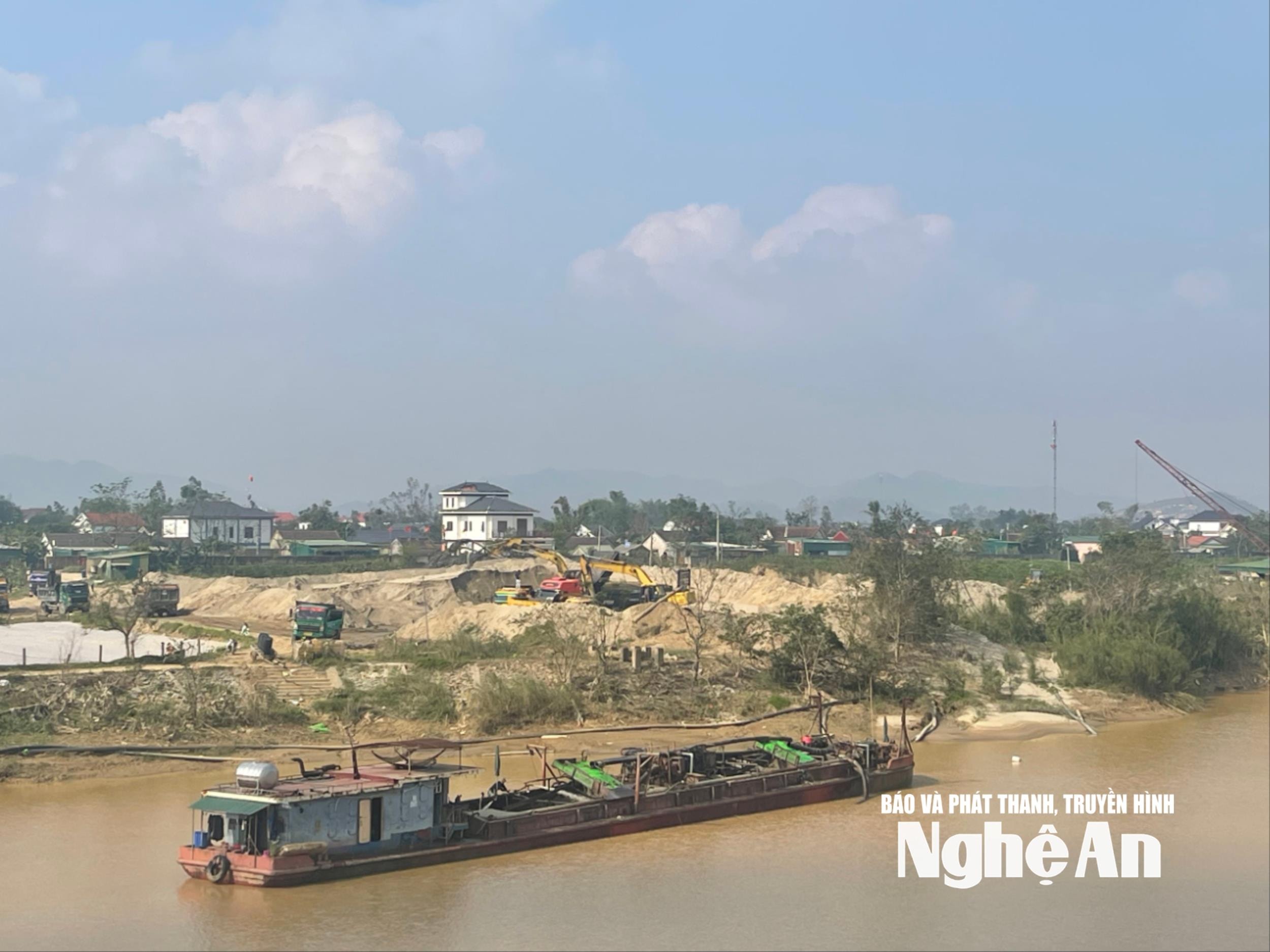
Mr. Thinh stated that over the years, the local authorities have repeatedly petitioned the competent levels to pay attention to and supplement the means and equipment for the inspection, monitoring, and protection of mineral resources, such as ships, boats, GPS devices, and other specialized equipment.
However, to date, the equipment provided has not met the actual requirements, making river patrol and control difficult. In many cases, authorities can only conduct inspections remotely or by land, while illegal sand and gravel mining activities often take place at night or during complex weather conditions.
This difficulty becomes even more apparent in the context of implementing a two-tiered local government model. According to the current decentralization, the task of managing mineral resources is assigned to the land administration official under the commune's economic department. However, the entire Van An commune currently has only one land administration official, who has to handle many different areas of work. With a large workload, a wide management area, and a lack of supporting equipment and facilities, monitoring and supervising sand and gravel mining activities on the Lam River therefore faces numerous obstacles.
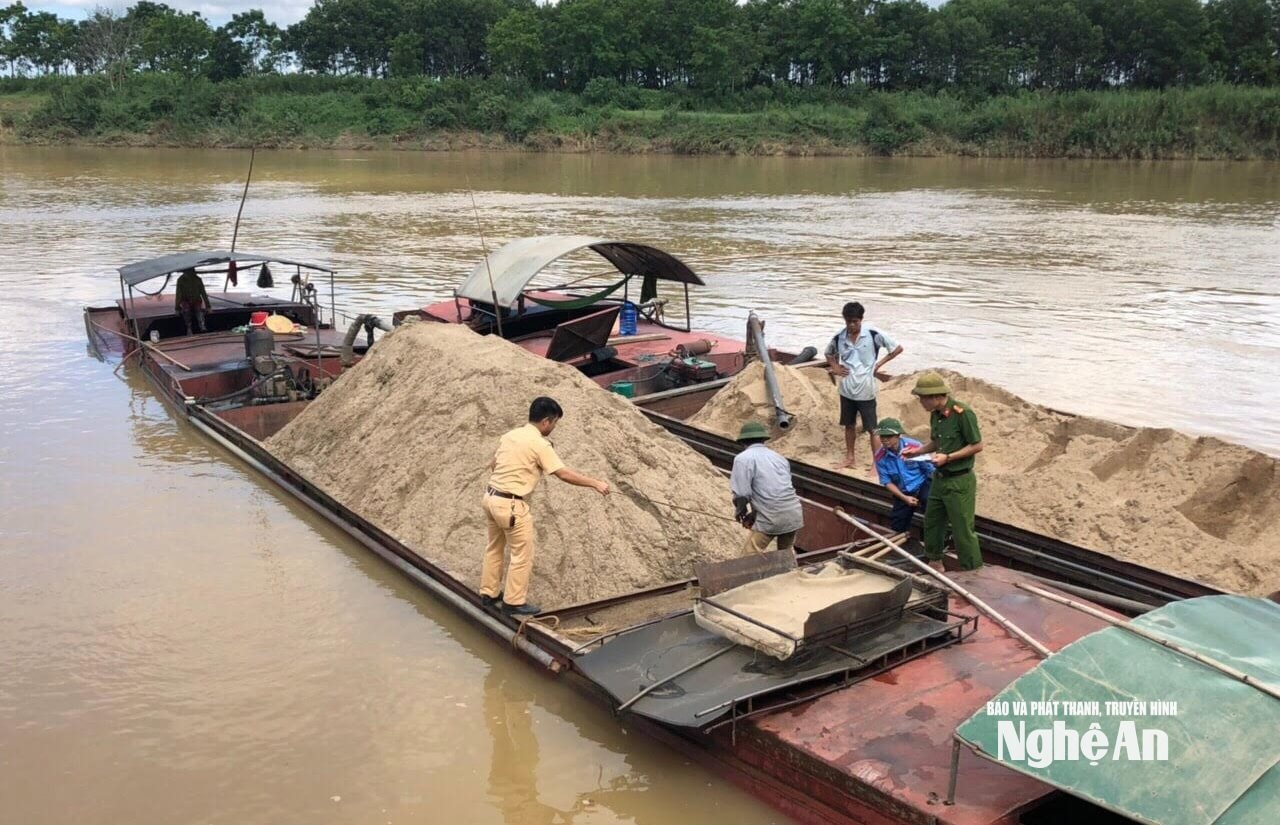
In Dai Dong commune, Mr. Tuong Dang Hao, Vice Chairman of the People's Committee, shared that the locality currently lacks the necessary equipment and facilities to inspect and monitor sand and gravel mining activities on the river. Meanwhile, deserted sections of the river bordering administrative boundaries still pose a risk of being exploited by individuals for illegal mining, putting significant pressure on local authorities in resource management.
In reality, the issue of illegal sand mining on the Lam River has been repeatedly reported by authorities and the media. However, due to a lack of specialized patrol boats and modern monitoring equipment, law enforcement agencies face difficulties in quickly accessing the scene, detecting, and promptly addressing violations. Controlling mining locations and comparing actual production with licensed figures is also challenging, creating loopholes that exploit offenders, leading to resource depletion and increased risk of riverbank erosion.
Based on this practical experience, along with increased inspection and handling of violations, the current requirement is to soon have specific mechanisms and policies to support the provision of equipment and facilities for local authorities, especially in areas with many sand and gravel mining operations on the river. This is considered an important solution to improve management efficiency, reduce violations, and protect resources on the Lam River.


