
Fast fashion - success and consequences.
(Baonghean) - With a value of US$1.2 trillion, the global fashion industry is a lucrative market for many companies and a matter of interest to everyone. Among its various forms of fashion, fast fashion, which has been around for quite some time, has now begun to appear in Vietnam, generating significant social interest.
Fast fashion
Fast fashion is a phenomenon in the fashion industry where production processes are carried out quickly to meet new market trends as quickly and cheaply as possible.
From a retailer's perspective, fast fashion is a step forward, constantly introducing new products and attracting customers to their stores. To ensure speed and affordability, these fashion brands often draw inspiration from fashion shows or celebrity outfits, combined with optimizing their supply chain to create trendy clothing at reasonable prices.
In recent years, fast fashion brands have experienced higher growth than traditional fashion brands. Some major brands include Zara, H&M, Topshop, Peacocks, and Primark, with Zara showing the most impressive growth.
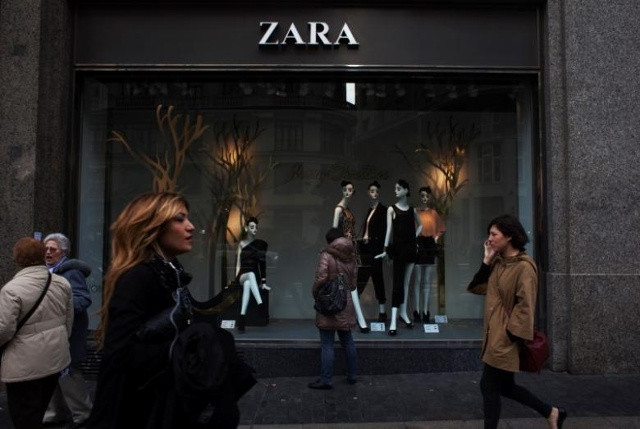 |
| A Zara store in Madrid. Photo: Reuters. |
Retail strategy
Zara's parent company is Inditex, the world's largest fashion retailer, headquartered in Spain and operating under various brands. In 2015, the company opened 330 stores in 56 markets worldwide, generating net profits of $3.17 billion. The company hopes to open an additional 400-460 stores in 2016. While Zara is rapidly expanding its business, other fashion retailers seem to be struggling to attract customers.
Even as a globally renowned brand, Zara must understand its local customers, and that is a key part of the fashion house's success. Beyond strategically locating stores in prime shopping areas, Zara adapts its retail policies to suit each region.
Furthermore, unlike other retailers who source fashion trends from third parties, Zara has established its own design team to predict fashion trends for the next 12 months. While other brands update their collections once a season, Zara adds new designs twice a week. This strategy encourages customers to return to the store more frequently and creates a sense of need for shoppers to own an item before it sells out.
Fast fashion brands produce most of their products in China or other Asian countries. This is not surprising when comparing labor costs in this region with those in Europe or the United States.
However, a characteristic of fast fashion is the need to capitalize on trends quickly. Does manufacturing in a distant country present a disadvantage in terms of time and management costs? To address this challenge, Inditex – the company that owns Zara – sources its supplies from its home country and neighboring countries like Portugal and Morocco, with products from these countries accounting for more than half of its supply. While local production may increase manufacturing costs, it minimizes the amount of merchandise that needs to be sold at discounted prices once a fashion trend ends.
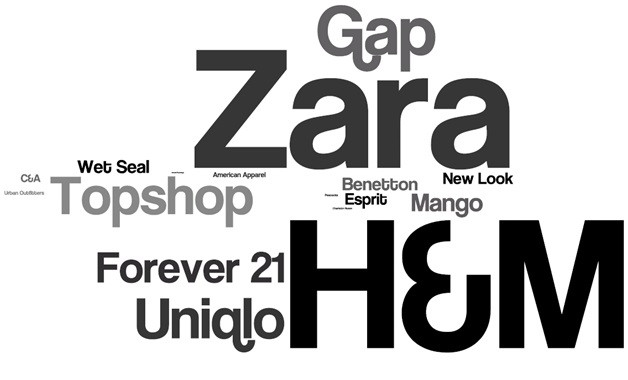 |
| Fast fashion brands are popular. (Image: Internet) |
The downsides
Despite generating enormous profits for manufacturers, the fast and cheap fashion industry presents numerous societal problems. First is the issue of design copyright. To obtain designs quickly, it's inevitable that fast fashion companies will plagiarize ideas. In 2015, Forever 21 was sued by H&M for copying their "Beach Please" design, and the brand has faced over 100 other copyright disputes in recent years.
This fashion trend also has a significant impact on the environment, as it encourages consumers to wear more clothes and replace them frequently. The constant release of new designs by fashion brands leads to massive clothing production. To produce such a large quantity of clothing, manufacturers consume enormous amounts of clean water; it is estimated that it takes 7,000 liters of water to produce one pair of jeans or 2,700 liters for one shirt.
In addition, cheap, "fast fashion" products often pose risks due to the use of low-quality materials. Furthermore, chemicals from discarded clothing can seep into groundwater, and materials like nylon and polyester, which are derived from petroleum, take hundreds of years to decompose.
Fast fashion brands often seek out industrial garment factories in Asian countries to reduce production costs. These factories are often associated with hazardous and cramped working environments, as well as scandals involving the use of children.
Phan Vu