
Online medical information: A dangerous and unpredictable source of harm!
(Baonghean) - Recently, the internet and social media have been flooded with information that contradicts the recommendations of the health sector, such as saying no to vaccination, refusing cancer treatment, and many other forms of word-of-mouth medical advice... causing serious consequences.
Unforeseen disaster
Ms. Nguyen Thi L, 60 years old, residing in Hung Phuc ward (Vinh City), was recently diagnosed with stage 3 acute chronic kidney failure by doctors at Nghe An Friendship General Hospital. The cause of the illness was determined to be: Ms. L suffered from arthritis and a herniated disc; she sought help from various sources, following word-of-mouth and online advertisements for "skilled healers"... After a long period of treatment with traditional medicine, Ms. L developed kidney failure and was admitted to the hospital with facial edema, swelling of the upper half of her body, and significant subcutaneous bleeding.
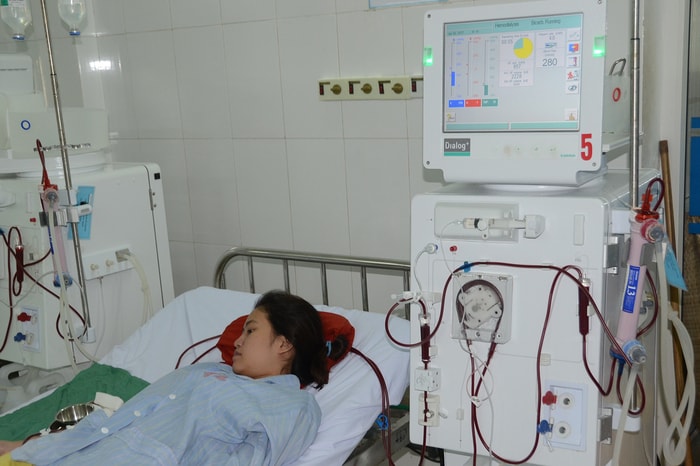 |
| Many people have to undergo dialysis at Nghe An Friendship General Hospital because they believed in remedies advertised on the Internet. Photo: Thanh Son |
Cases of poisoning from both traditional and Western medicines due to misinformation about treatment on the internet have reached alarming levels at Nghe An Friendship General Hospital. Preliminary statistics show that out of 130 people undergoing dialysis there, nearly 20 are "victims" of unverified and misleading medical information. Dr. Nguyen Thi Thuy Linh, a specialist in Nephrology, Urology, and Dialysis, stated: "Many people with stage 4 chronic kidney failure requiring dialysis do so because of the indiscriminate use of painkillers and anti-inflammatory drugs; as well as believing advertisements from traditional healers online and abusing traditional medicine. By the time they come here, it's often too late."
According to Traditional Medicine Practitioner Luong Cong Chinh, Vice President of the Vinh City Traditional Medicine Association: “Traditional medicine doesn't provide immediate pain relief; it takes time for the medicine to take effect. Unfortunately, many patients become suspicious when they see slow improvement, listen to word-of-mouth advice, and switch from one practitioner to another, leading to poisoning. It must also be said that many 'backyard healers' exploit patients' psychology by falsely advertising on the internet using unverified names and addresses to promote treatments using roots and leaves, ultimately damaging the body's organs.”
The dangers of unverified medical information found online are immense, as clearly demonstrated by patients seeking treatment at the Nghe An Provincial Dermatology Center. Ms. Nguyen Thi Hoa (from Hung Nguyen) brought her 6-year-old son to the center with numerous red, swollen, infected, and painful spots on his shoulders and back. Ms. Hoa shared: "Seeing my son in pain, I searched online and learned he had shingles (herpes zoster), so I tried 'Dr. Google's' remedies, applying fig leaves, bitter melon leaves, or mung beans... As a result, the disease didn't go away, it got worse, and he even suffered from reduced eyesight."
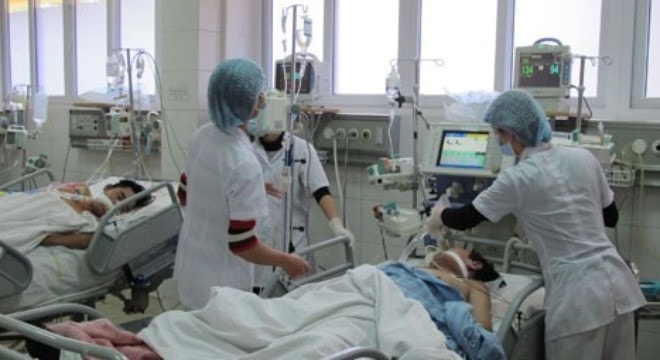 |
| Self-medication is one of the reasons for the increase in drug allergy cases. (Image: Internet) |
Dr. Huynh Phuc Son, Deputy Director of the Dermatology Center of Nghe An province, recounted: “Many women come here for treatment of contact dermatitis with secondary infections. When asked, they said their itching and redness were due to cosmetic allergies, and they shared advice on Facebook and Zalo, buying topical medications to apply. The result was that the allergy didn't go away, and the skin became irritated, inflamed, and led to secondary infections… When skin shows signs of damage (without a clear cause), patients shouldn't seek information online, listen to word-of-mouth, or buy medication to self-treat, as this can unfortunately worsen the condition. Because each patient has a different constitution, the treatment will vary.”
Information health
There's a lot of health information circulating online that's both funny and cringe-worthy, like this: A young housewife accidentally cut her hand. She bandaged it, but the bleeding continued. That evening, she ate two french fries, and coincidentally, the bleeding stopped. That night, she posted her story on social media, and it was widely shared, suddenly becoming a "valuable lesson" on healing.
Even more dangerous is the story of children with colds and fevers. Usually, after 7-8 days, the fever will subside and the child will recover. When they see a doctor for examination and treatment, the doctor's job is to control the fever and prevent dangerous complications. Some mothers don't take their children to the doctor but instead listen to information and self-treat. After 7-8 days, the child will recover on their own, and the mother considers this thanks to the "miracle cures" provided by "Dr. Google"... Or the story of many people still believing that when suffering from appendicitis, applying willow leaves to the side and drinking betel leaf juice will cure it. With this treatment method, the patient will surely be sent straight to... the funeral home when suffering from appendicitis!
False and unverified information poses a danger not only to individuals but also to the entire community. Dr. Nguyen Khanh Toan, a specialist in Oncology and Head of Internal Medicine Department I at Nghe An Oncology Hospital, stated: "There was a case where a woman recounted a story about a patient who had cancer and was sent home from the hospital. After returning home and drinking dandelion leaf tea, the patient gained weight, recovered, and returned to work after three months. This unverified piece of information, posted online, attracted widespread attention and sharing."
Even more dangerously, this information is being shared with cancer patients undergoing treatment at hospitals, causing them to panic and abandon conventional treatment. Information about medical examinations, treatment, and health maintenance is currently rampant on various websites, deliberately misleading and causing public confusion. Most recently, information about "prohibiting spinal anesthesia during cesarean sections" has appeared on social media forums, causing widespread alarm. However, in reality, the Ministry of Health affirms that spinal anesthesia is only not applied to cases of pregnant women with medical conditions; for the vast majority of normal mothers, this method is still used.
Dr. Hoang Thuong from the Center for Health Communication and Education in Nghe An province stated: The clearest evidence of the harmful effects of misinformation on the internet is the trend of saying no to vaccination. With improved living standards, many people search for health information and find cases of adverse reactions to vaccinations (due to individual allergies, anaphylactic shock, or underlying diseases), leading them to avoid vaccinating their children. Unvaccinated children live in healthy environments (many children are vaccinated), so they mistakenly believe that not vaccinating is harmless. In 2014, a measles outbreak returned, resulting in over 100 child deaths. At this time, people rushed to get their children vaccinated, creating a vaccine shortage. It is heartbreaking to see many diseases like measles, whooping cough, and encephalitis, which were thought to have disappeared, return to Vietnam.
| Mr. Ngo Huy Toan - Head of the Press and Online Information Inspection Department, Ministry of Information and Communications: “The inspection and handling of those who spread false, misleading, and harmful information (including health information) is regularly carried out by functional agencies. However, this work faces many difficulties due to the limited number of inspectors, the relatively free and difficult-to-control online environment, and the sophisticated countermeasures employed by malicious actors. Sadly, for a long time, those who have been misled by and followed false health information have included officials, civil servants, and highly educated individuals.” |
The improvement of health information is essential, but it requires a long process involving the refinement of the legal system and strict handling of violations (currently handled according to Government Decree 174/2013); secondly, building a culture of responsible behavior on the internet, where users are accountable to themselves and the community by sharing accurate and positive information to outweigh negative information.
Thanh Son
| RELATED NEWS |
|---|


