
Attracting investment to district-level areas: Advantages and disadvantages.
(Baonghean) - Attracting investment to mobilize resources for infrastructure upgrades and economic development is a priority for localities. In reality, localities that attract investment well experience socio-economic development, and vice versa. In Nghe An, while investment attraction at the provincial level has seen positive changes, many difficulties and limitations remain in the districts.
Unlocking advantages and attracting resources.
According to investors' assessments, compared to the previous period, Nghe An currently faces a great opportunity to attract investment. Meanwhile, the land area...industrial real estateLand lease prices in some industrial zones nationwide are currently peaking, ranging from 270 to 310 USD/m².2In Nghe An province, with the advantage of being the province with the largest natural area in the country and having an open investment attraction policy, land lease prices are competitive (from 43 - 65 USD/m²).2/year).
Since 2022, the Prime Minister has approved the adjustment of the planning.Southeast Economic ZoneThe area has increased from 22,000 hectares to 80,000 hectares, including 70,000 hectares of land and 10,000 hectares of water, of which 15,000 hectares are allocated for industrial parks, an increase of 671 hectares compared to the previous approval.
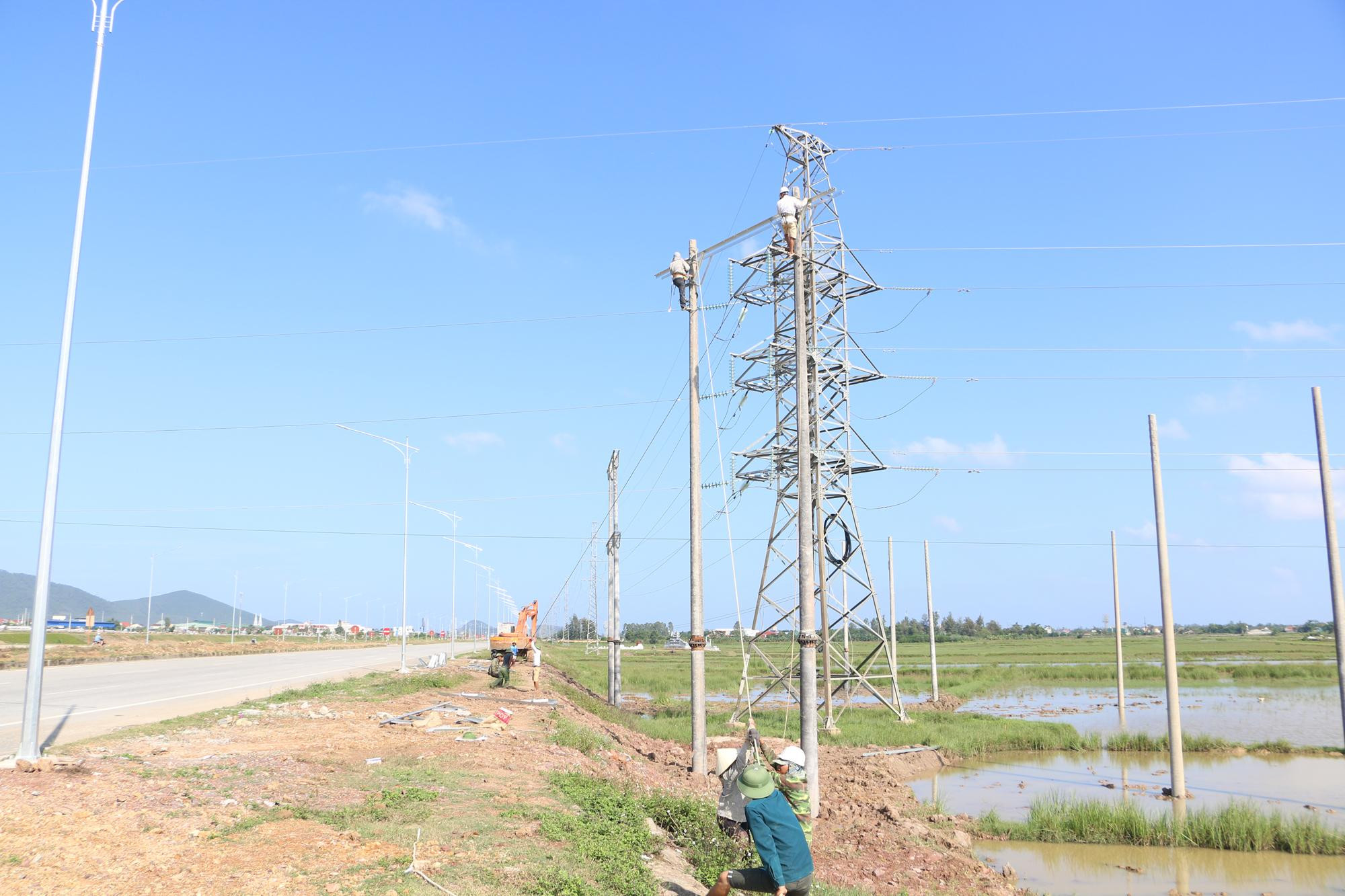 |
Construction and installation of the 110 KV power line to WHA Nghe An 1 Industrial Park in Nghi Thuan commune, Nghi Loc district. Photo: Nguyen Hai |
Subsequently, based on a reassessment of land lease policies and the removal of obstacles to attract investment, the Provincial People's Committee discussed and submitted to the Provincial People's Council a separate land price framework for the Southeast Economic Zone (EZ). Accordingly, land lease prices in Nghe An industrial parks from January 1, 2020 to December 31, 2024 will be reduced by 40-50% compared to the previous period.
RepresentWHA Industrial Zone Nghe AnOne of the major industrial park infrastructure investors in Nghe An assessed that with the new land lease prices, investors who invest and lease land in Nghe An during this period will have many advantages. For industrial park infrastructure investors, in addition to preferential tax exemptions and reductions as stipulated by the Government, the reduction in land lease prices by the province will help businesses reduce investment cost pressure and provide a basis for secondary businesses to lease land at better and more competitive prices.
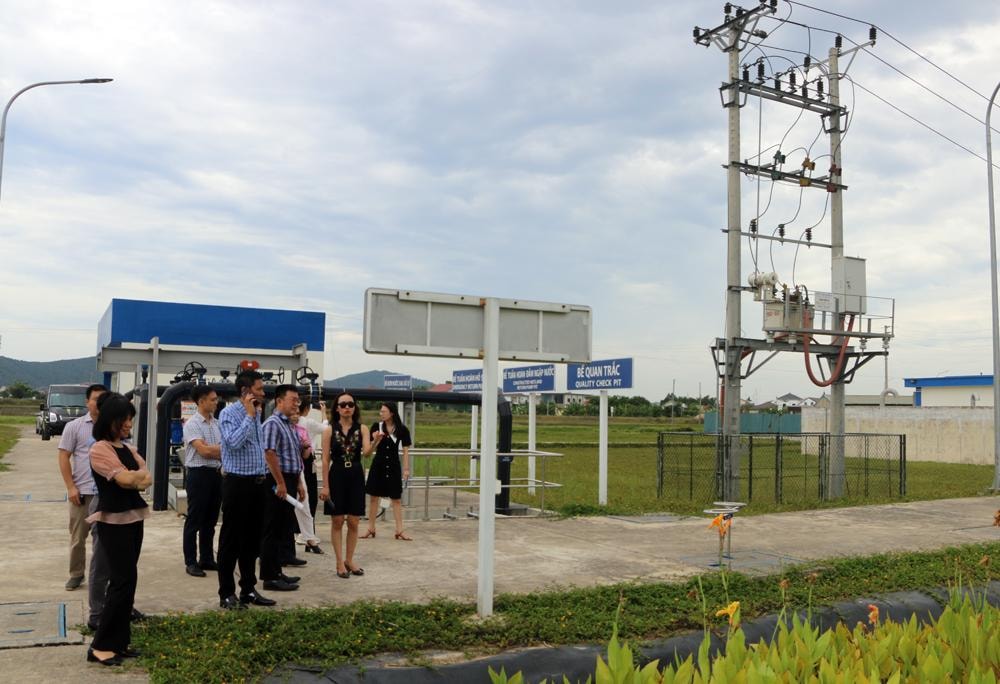 |
A group of investors, connected by the Nghe An Investment, Trade and Tourism Promotion Center, visited WHA Nghe An 1 Industrial Park to survey and learn about the investment environment. Photo: Nguyen Hai |
In parallel with expanding the Southeast Economic Zone, since 2021, based on the development of sectoral plans according to the Planning Law, the province has also reviewed and abolished the planning of some industrial clusters in districts that are no longer suitable, and added some new industrial clusters in the direction of expanding and increasing the area according to the Government's regulations. According to this plan, from 53 industrial clusters with a total area of 1,273 hectares in the districts, by 2030, Nghe An will have 59 clusters, and the vision until 2050 is 71 clusters.
Mr. Nguyen Van Hiep, Head of the Industry Department of the Nghe An Department of Industry and Trade, said: Compared to the new phase of replanning industrial clusters, the province is gradually solving the problem of land shortage to attract investment for industrial development in districts and towns. Based on the overall balance of land resources, other land areas will be planned to be converted for industrial cluster purposes, making investment implementation more convenient.
In order to attract investment, along with the province's efforts through the activities of the Provincial Investment, Trade and Tourism Promotion Center (NAPC), all districts, cities, and towns are striving to strengthen their links with the province to include their local investment projects and investment attraction targets on the province's investment attraction map.
To date, districts such as Do Luong, Dien Chau, Hoang Mai, Que Phong, etc., have worked and connected with NAPC to build a database on investment attraction down to the commune level. For their part, each locality, from Vinh City, Cua Lo town, Hoang Mai, or Thai Hoa, has investment attraction projects with unique characteristics specific to their area; meanwhile, districts like Nghi Loc, Do Luong, Dien Chau, Tan Ky, etc., are also building lists of investment attraction projects to exploit their advantages.
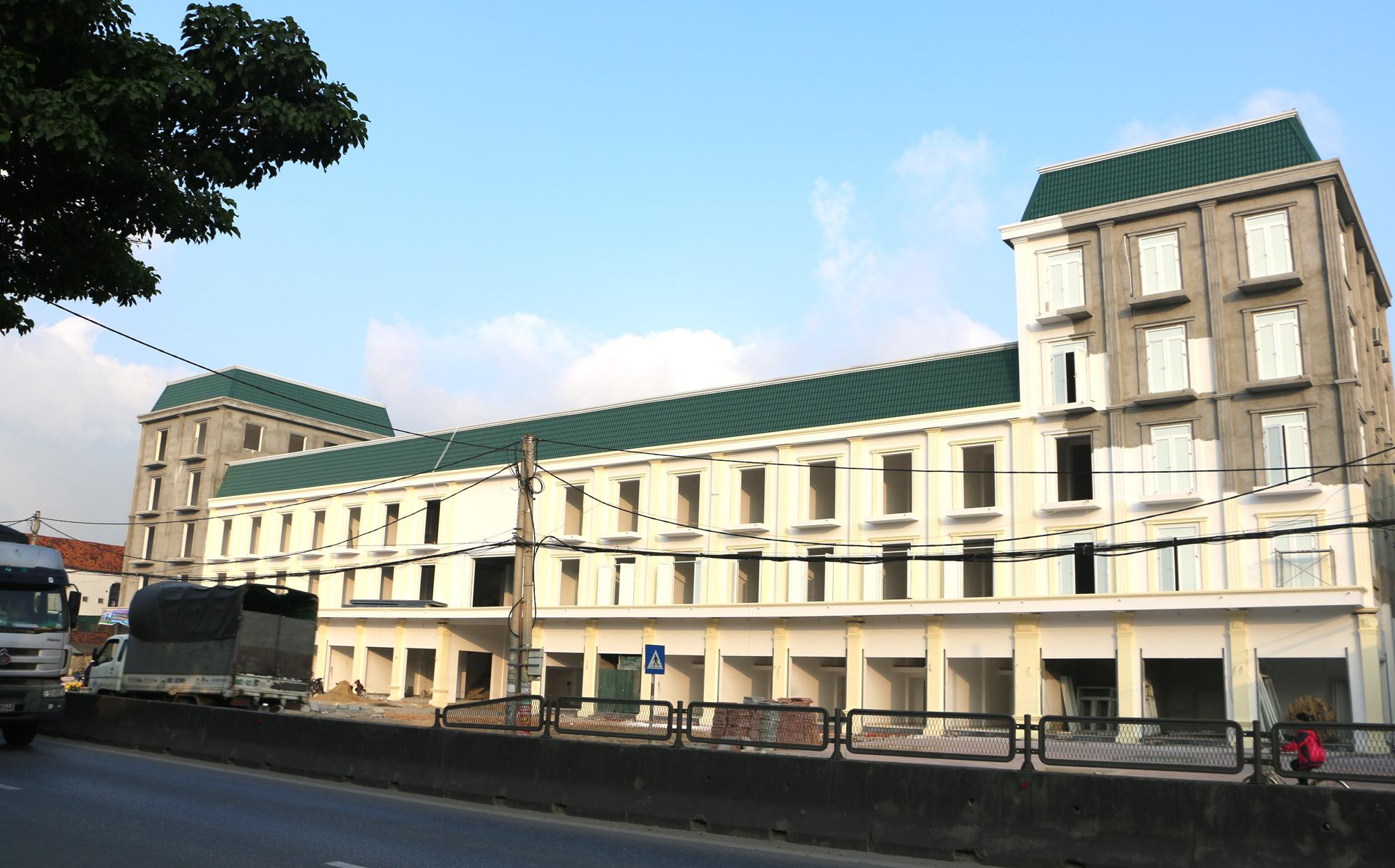 |
The Hoang Mai Town Commercial Center and Market is the result of the town's efforts to attract investment in the commercial sector, with maximum support from the Provincial People's Committee. Photo: Nguyen Hai |
Thanks to their proactive approach in creating land reserves to attract investment, several districts such as Dien Chau, Nghi Loc, Anh Son, Nghia Dan, and Yen Thanh have secured land for the construction of industrial clusters. Currently, these clusters are fully occupied, generating hundreds of billions of dong in revenue annually and creating jobs for 5,000 to 7,000 local workers.
Mr. Nguyen Van Hiep, Head of the Industry Department of the Department of Industry and Trade, added: From 2022 to the present, during the planning process according to the Planning Law until 2030 and the vision until 2050, in order to increase the proportion of industry, the districts have continued to propose adjustments to allocate land appropriately for industrial development. Accordingly, the area allocated for industrial production in the districts will double, instead of the current level of 1,800 to 2,000 hectares/59 clusters throughout the province. Through their suggestions and proposals, the districts also requested the approval of investment policies and land use conversion according to the specific mechanisms and regulations approved by the National Assembly, the Prime Minister, and the Provincial People's Council.
Removing the "bottleneck" in attracting investment at the district level.
For a long time, investors coming to Nghe An have been spreading the saying, "The province is open, the departments are restrictive, and the districts and communes have no authority," or "The top level lays out a red carpet, the bottom level lays out nails." At the district level, according to the provincial decentralization, although the district level can approve investment projects with a land use scale of less than 5,000 m², according to the provincial decentralization, although the district level can approve investment policies for projects with a land use scale of less than 5,000 m².2(0.49 ha), but due to regulations prohibiting district-level People's Councils from issuing separate policies, except for some areas with special mechanisms, districts are not allowed to support investors in land compensation and clearance, making it very difficult to attract investment.
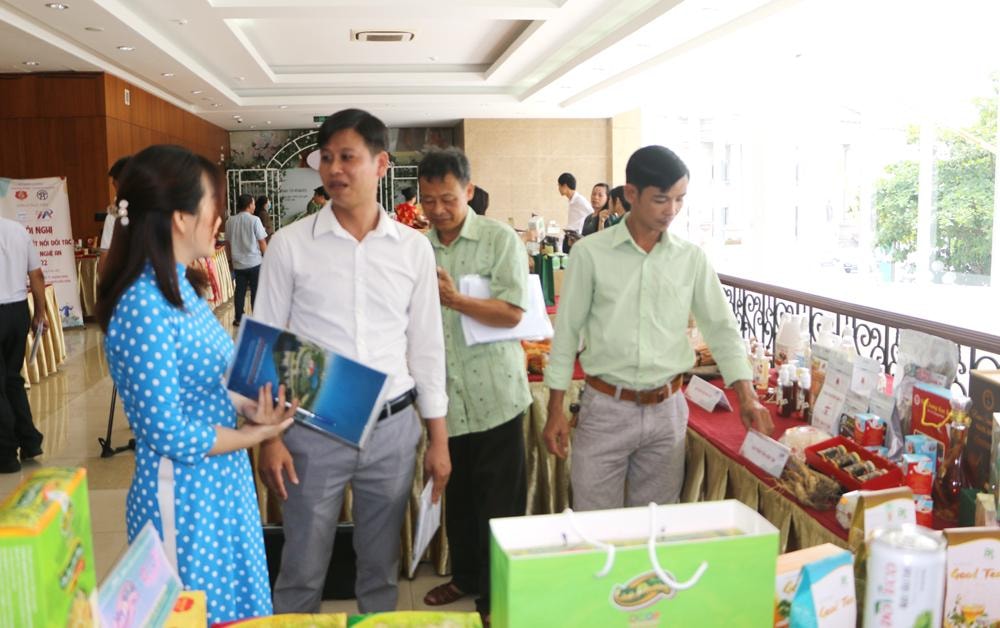 |
Delegates and partners exchange views on the sidelines of the Hanoi Investment, Trade, and Tourism Promotion Networking Workshop in Vinh City, Nghe An Province. Photo: Nguyen Hai |
At the Trade Promotion and Investment Connection Conference between Nghe An and Hanoi in the first half of June 2022, representatives from the Hanoi Investment, Trade and Tourism Promotion Center shared: Hanoi and Ho Chi Minh City are both major centers of the country, but they also face intense competition in attracting investment. Only certain industries dare to invest in Hanoi, while others, with large land requirements and high rental prices, cannot afford to invest in central areas and must seek opportunities in more remote regions. This presents an opportunity for localities in the North Central region like Nghe An.
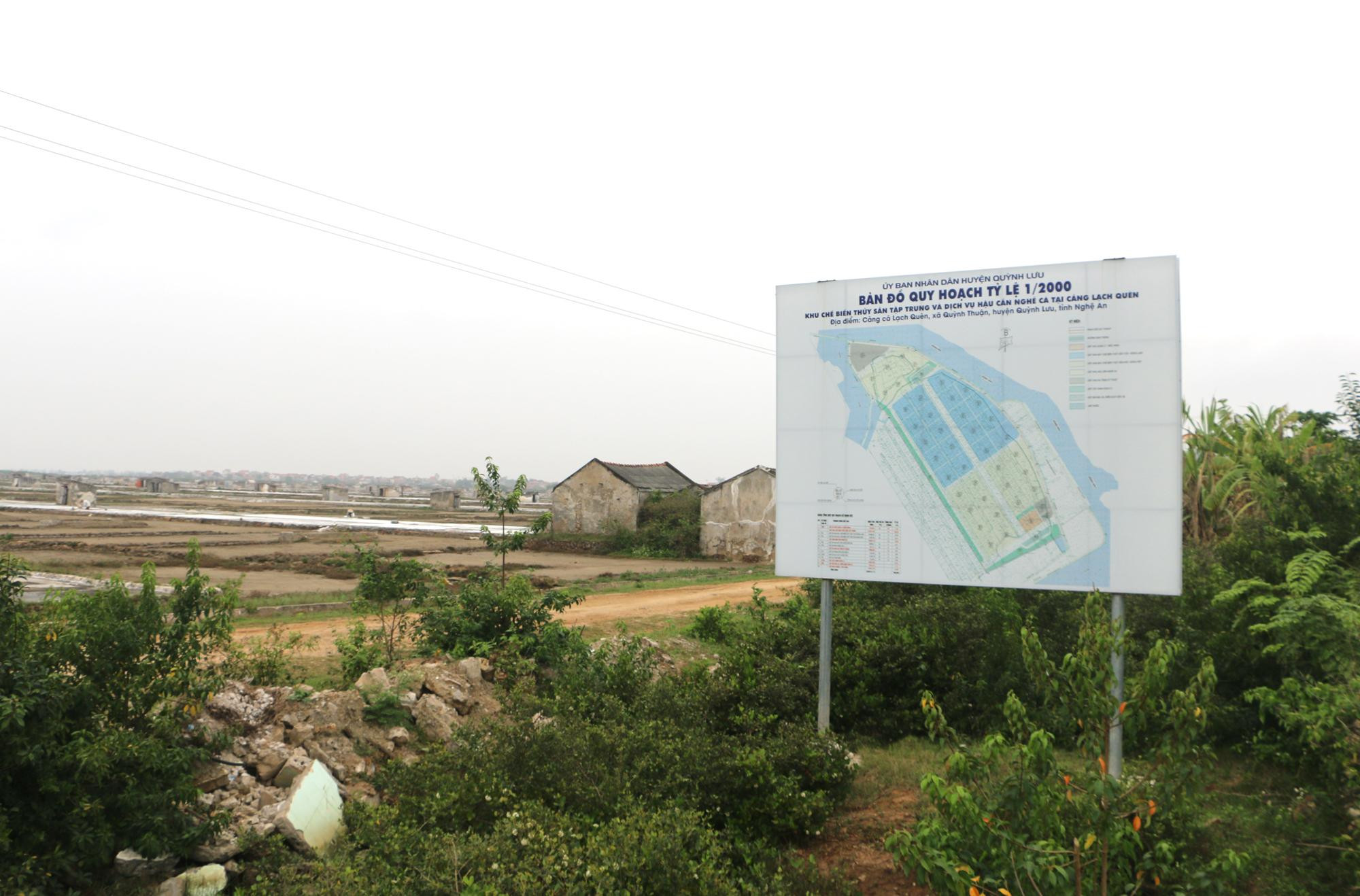 |
The planning for the Quỳnh Lưu district's fisheries logistics and service zone in Quỳnh Thuận commune has been made public. The district is proposing to expand this zone from 30 hectares to 70 hectares. (Photo: Nguyễn Hải) |
However, in the districts, due to their distance from development hubs and connecting infrastructure, logistics services from industrial parks and clusters to the province's seaports and airports are still inadequate and not synchronized, making it difficult to attract investors.
According to a survey conducted at the end of 2021 by the Southeast Economic Zone Management Board, Nghe An province needs resources ranging from 20 to 20 billion USD to invest in infrastructure connecting industrial parks to seaports, and similarly, industrial clusters to national and provincial highways.
40 trillion VND is allocated for investment in infrastructure upgrades. However, currently, in the context of tight public investment, the province's budget is not yet balanced between revenue and expenditure, making infrastructure upgrades extremely difficult.
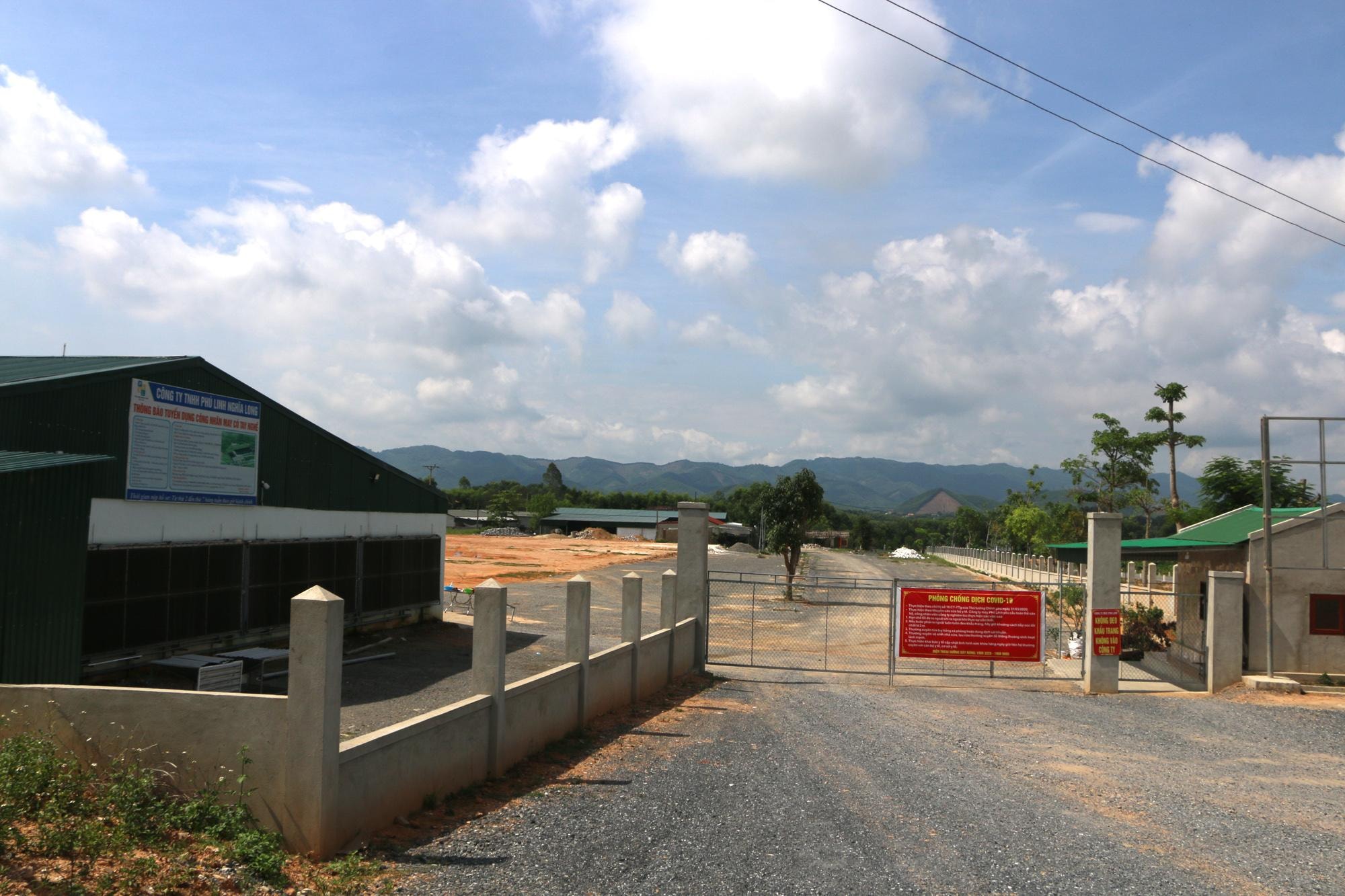 |
The road leading to a factory in the Nghia Long Industrial Cluster, Nghia Dan district. This industrial cluster has received basic investment and is close to the Ho Chi Minh Trail, giving it a significant advantage, and the district is proposing further expansion. Photo: Nguyen Hai |
Mr. Le Thanh Ha, Vice Chairman of the Quy Chau District People's Committee, said: Quy Chau is one of the mountainous districts, far from National Highway 1A, the Ho Chi Minh Trail, and especially the seaport, so building industrial clusters to attract agricultural and forestry processing projects is very difficult. Meanwhile, the infrastructure of the industrial clusters in Quynh Hoa and Quynh Chau (Quynh Luu) has been announced by the province and district 10 years ago, but only a few kilometers of roads have been invested in.
Similarly, in Nghi Loc, a representative from the district's investment project management board stated that, previously, along with land acquisition and site clearance for the Southeast Economic Zone, the district also planned to build three additional industrial clusters in Nghi Truong, Nghi Thach, and Nghi Lam to proactively attract businesses to invest. As a result, Nghi Loc has attracted dozens of medium-sized enterprises. Currently, Nghi Loc is one of the three districts with the highest growth rate and budget revenue in the province. However, due to the difficulties in site clearance, the district is currently focusing only on site clearance for the Southeast Economic Zone and plans to expand the area in existing clusters only.
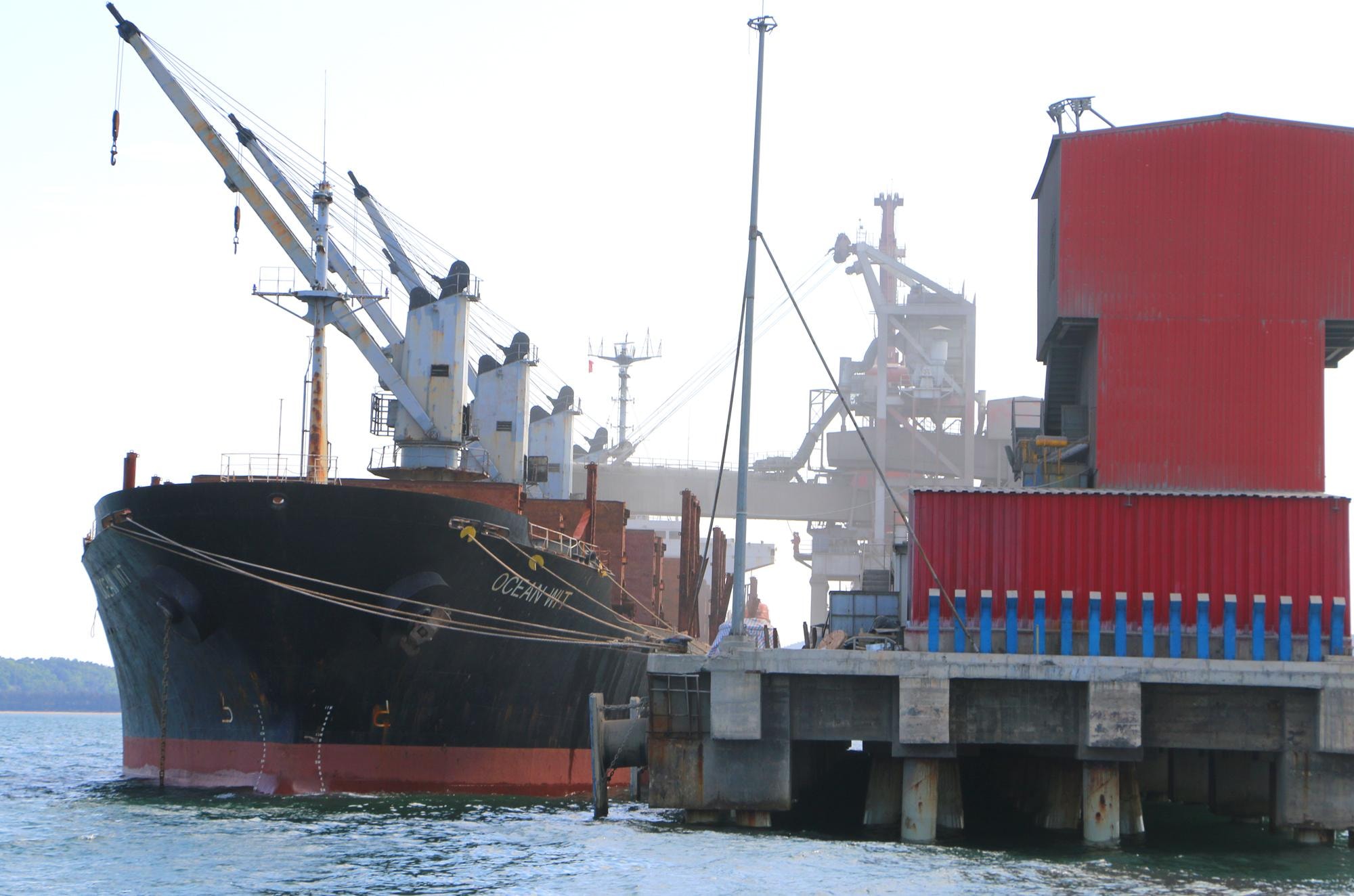 |
Industrial parks and clusters near Cua Lo port or along the national highway are highly regarded by investors for their attractiveness to investment. Photo: Nguyen Hai |
Mr. Pham Chi Dien, Director of the Investment and Construction Project Management Board of Hoang Mai Town, stated that the town's industrial development land is located within the Southeast Economic Zone, therefore all investment projects in the town must go through the Economic Zone Management Board. In the past, to develop socio-economic development, the town has announced projects seeking investment, but the occupancy rate remains limited.
To address the "bottleneck" in attracting investment, a representative from the Department of Industry and Trade stated: During the current provincial planning process, it is necessary to recalculate and allocate land commensurate with the goals of industrial and service development. Along with leveraging support resources under Resolution 22/2021 of the Provincial People's Council, localities need to accelerate administrative reforms in a substantive manner; effectively utilize revenue sources to allocate resources for infrastructure development and create clean land plots to attract businesses to invest.


