
Nghe An, the chayote capital, is in season.
These days, farmers in Quynh Mai ward – the "chayote capital" of Nghe An province – are entering the main harvest season. The chayote vines are lush green, laden with fruit, and the people are busy harvesting to supply the market. Chayote is not only having a good harvest but is also selling at a good price.
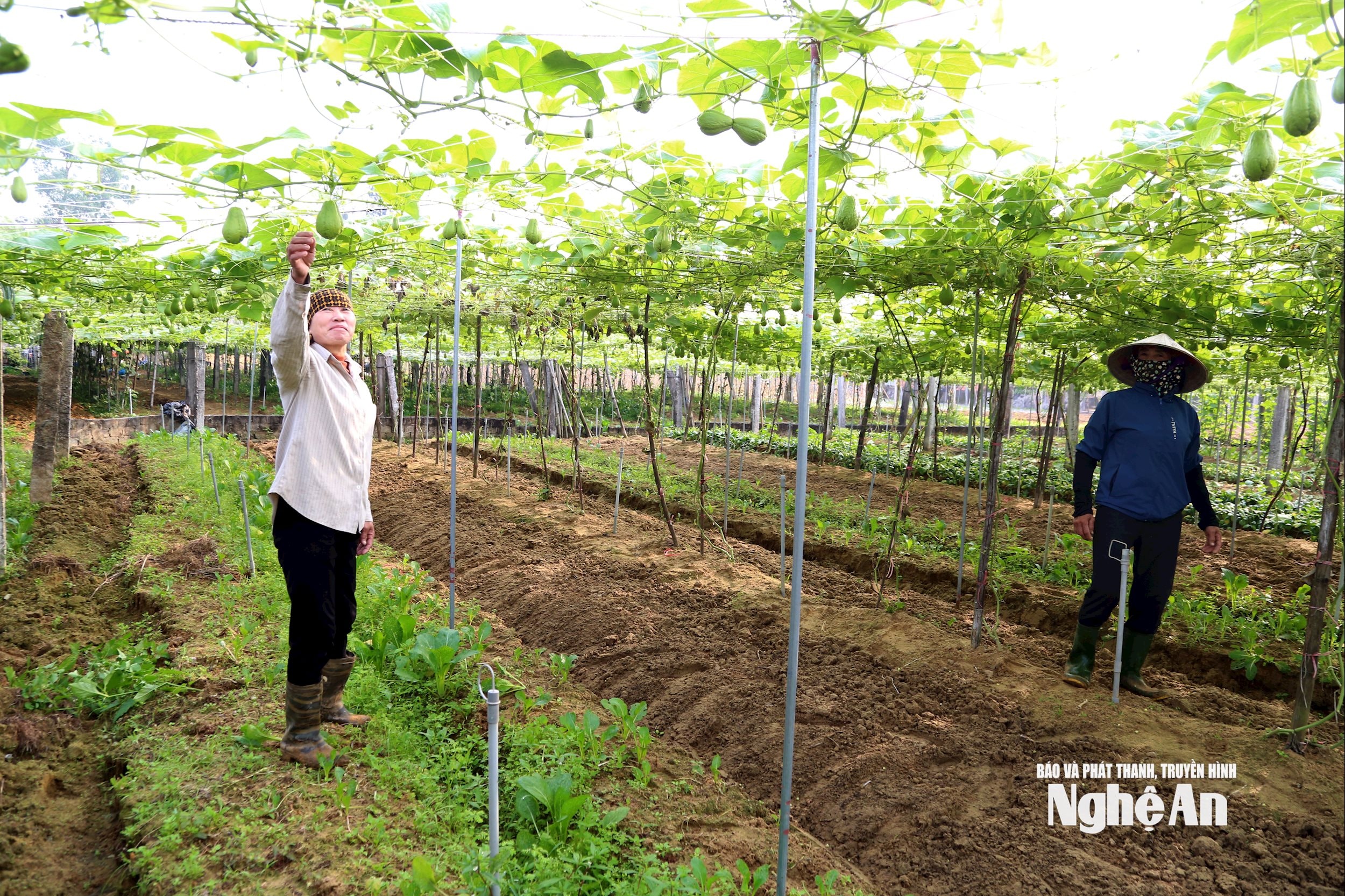
According to reports, chayote is currently in its peak harvest season, with the highest yield of the year. Locals say that, on average, each household can harvest hundreds of kilograms of fruit per day, depending on the size of the plot and the level of investment.
Ms. Nguyen Thi Thu, from Dai Dong hamlet, Quynh Mai ward, said that this year her family invested in planting 6 sao (approximately 0.6 hectares) of chayote. Thanks to applying a rational cultivation process, from soil preparation and balanced fertilization to building sturdy trellises, the chayote is growing well and has started to be harvested since mid-December. According to Ms. Thu, at the beginning of the season, traders bought it at 6,000 - 7,000 VND/kg; currently, the price has dropped to 3,000 - 4,000 VND/kg, but it is still profitable.
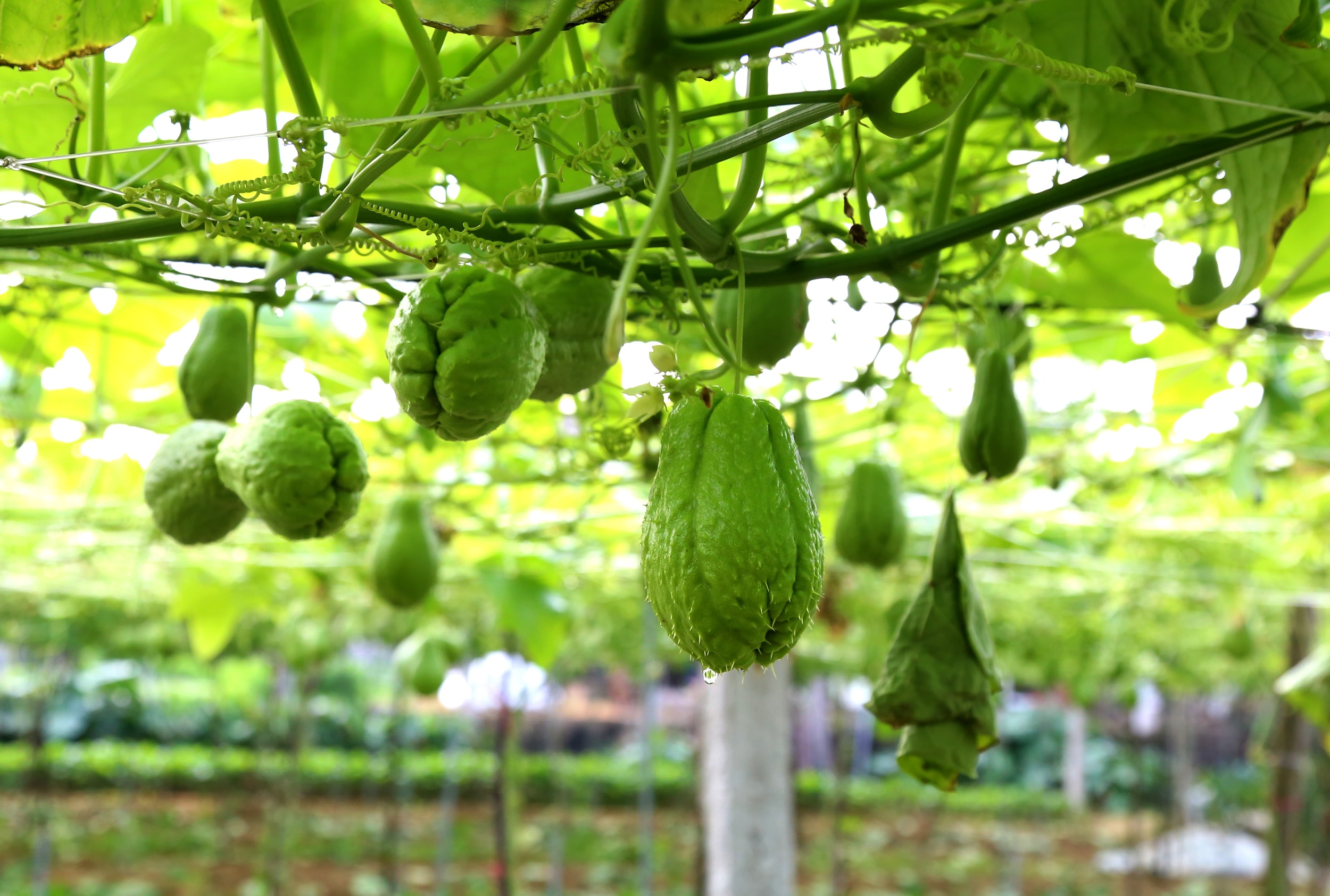
“Chayote is a prolific crop that grows quickly, so on average, my family harvests a crop every three days. Each crop yields about 3-4 quintals of fruit per sao (approximately 1000 square meters), bringing in millions of dong. To maintain stable productivity, after every 2-3 harvests, my family applies supplemental fertilizer and waters regularly, helping the plants continue to flower and bear fruit evenly, extending the harvesting period for 4-5 months. One sao of chayote yields about 7 tons of fruit per season,” shared Ms. Nguyen Thi Thu.
The chayote garden adjacent to Ms. Nguyen Thi Tinh's family, covering an area of 5 sao (approximately 0.5 hectares), is currently entering its peak harvesting season. According to Ms. Tinh, the initial investment cost for planting 1 sao of chayote, including seeds, fertilizer, and trellis construction, is around 20 million VND. In the initial stage, the family also intercropped with cabbage and chrysanthemum greens, thus providing a double source of income. In particular, the installation of a sprinkler irrigation system helps save water, reduce labor, and improve crop care efficiency.
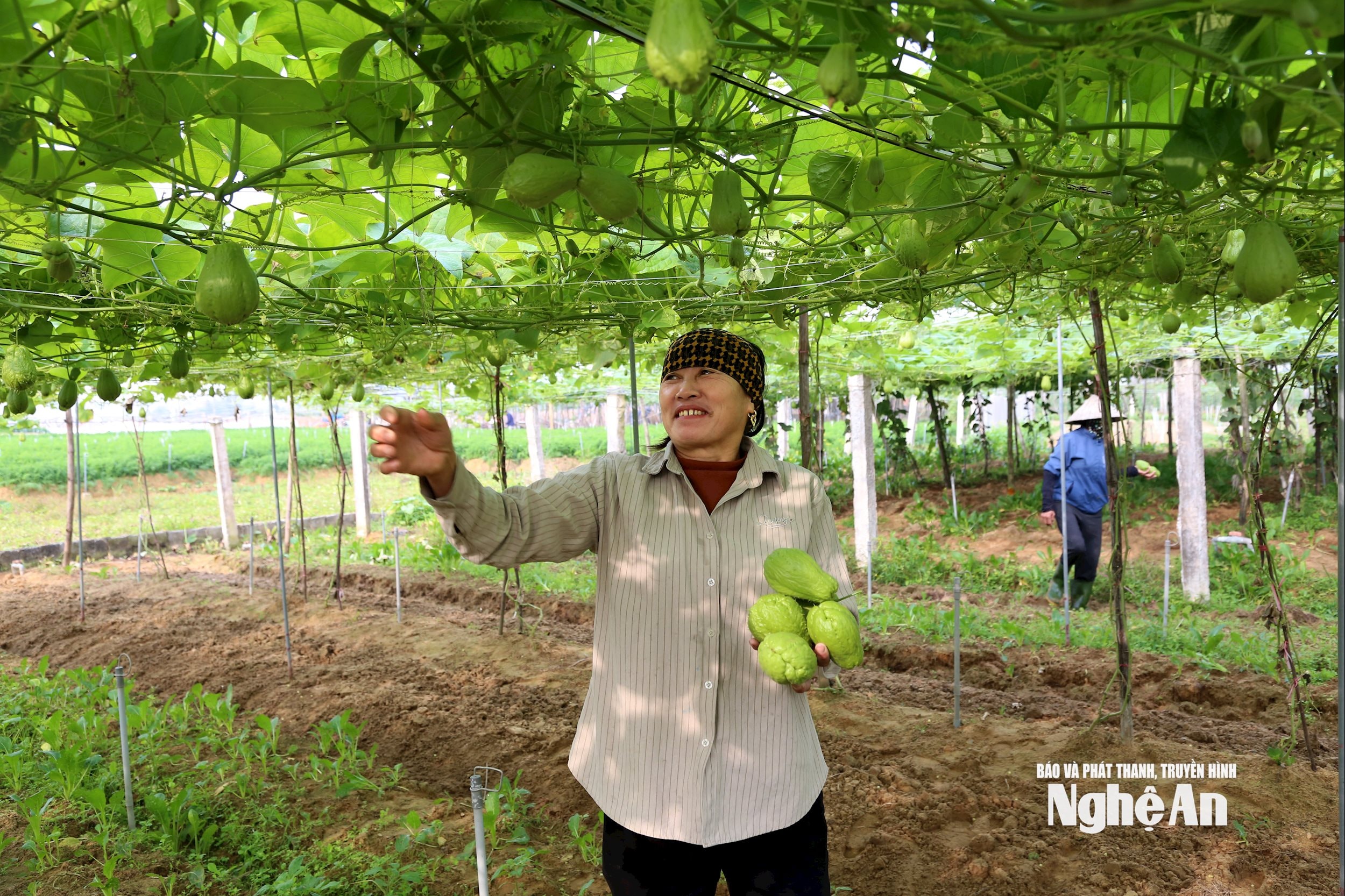
On the sandy soil fields of the coastal region, chayote plants are grown on high trellises, thriving and producing green, uniform, and attractive-looking fruit. From early morning, farmers rush to the fields to harvest the chayote, ensuring its freshness. As soon as it's harvested, it's sorted, neatly packed into plastic bags, and then gathered in the fields for timely supply to traders and the market. Farmers say that compared to other vegetables, chayote has the advantage of being easy to care for and less susceptible to pests and diseases.
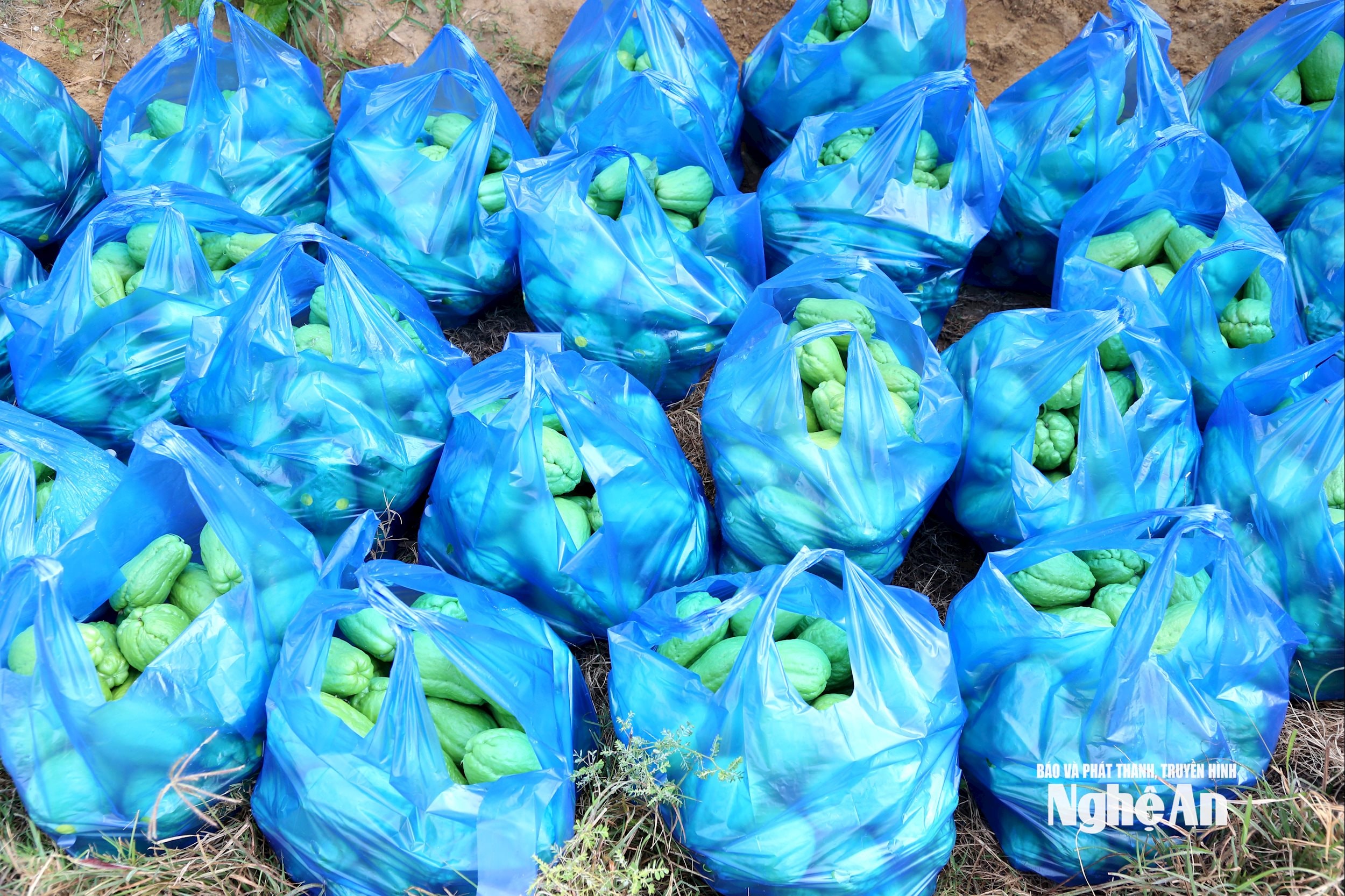
Besides serving the needs within the province, chayote from Nghe An is now widely consumed in major cities and provinces such as Hanoi, Hai Phong, Da Nang, and some southern provinces. Thanks to its advantages as a clean vegetable, easy to prepare, and in line with the green consumption trend, chayote is increasingly favored by consumers.
According to Mr. Ho Dang Tu, Deputy Head of the Economic, Infrastructure and Urban Planning Department of Quynh Mai Ward, this year the entire ward maintains approximately 180 hectares of chayote cultivation, mainly concentrated in fertile coastal areas. In recent years, to improve productivity and quality, people in Nghe An's "chayote capital" have increasingly focused on applying scientific and technological advancements to production. As a result, chayote from this area is increasingly appreciated by the market for its crispness, sweetness, and low fiber content, making it suitable for many dishes from boiling and stir-frying to soup.
From seed selection, soil preparation, trellis construction to care and pest control, everything is done systematically and according to proper procedures. Many households have boldly switched to using organic fertilizers, ensuring food safety and increasing the value of agricultural products.
.jpg)
"Chayote is an easy-to-care-for crop that produces abundant fruit and can be harvested continuously for many months. Thanks to this, the average yield reaches over 150 tons/ha. With current prices ranging from 3,000 to 4,000 VND/kg, if this price is maintained until the end of the season, each hectare will generate revenue of over 450 million VND. However, in previous years, chayote prices sometimes dropped to very low levels. Currently, there are two cooperatives in the ward participating in production linkages and product distribution across certain areas, contributing to stable output and increased income for chayote growers," said Mr. Ho Dang Tu.
Traders say that improved sales connections and increasingly better transportation infrastructure help reduce transportation costs and enhance economic efficiency for growers.


