
British Prime Minister Keir Starmer: To move forward or to step back?
British Prime Minister Sir Keir Starmer is facing the most daunting challenge of his political career. Amid calls for his resignation and a record drop in approval ratings, the question of "To move forward or backward?" is not just a matter of personal choice, but also a dilemma concerning the future of the Labour Party and the fate of the UK in a multi-layered storm: economic, social, and public trust.
The “tests”cruel
Born in London in 1962, Keir Starmer was not a politician from a traditional elite background. The son of a toolmaker and a nurse, he was the first in his family to attend university. He graduated with a law degree from the University of Leeds in 1985, followed by a civil law degree from St. Edmund Hall, Oxford. His name, Keir, was chosen after J. Keir Hardie—the Labour Party's first parliamentary leader—as if destined for a political career.

Before stepping into 10 Downing Street, Mr. Starmer had built an impressive legal record as the Director of Public Prosecutions (DPP). He was a staunch opponent of giant corporations like Shell and McDonald's in protecting workers, and was knighted for his contributions to criminal justice. He served as a Member of Parliament representing Holborn and St. Pancras from 2015 and subsequently became the leader of the Labour Party in 2020. His solid legal foundation and calm demeanor made him a beacon of hope for stability after years of moral vacuum and turmoil under previous Prime Ministers.
In July 2024, Starmer led the Labour Party to a landslide victory with 412 seats in Parliament, ending 14 years of Conservative rule. However, even in the glory of victory, the first cracks began to appear. Analysts called it an "incomplete victory" as voter turnout was record low and the party's actual vote share was only 33.7%. It was a victory based on resentment toward the opponent rather than absolute faith in the successor.
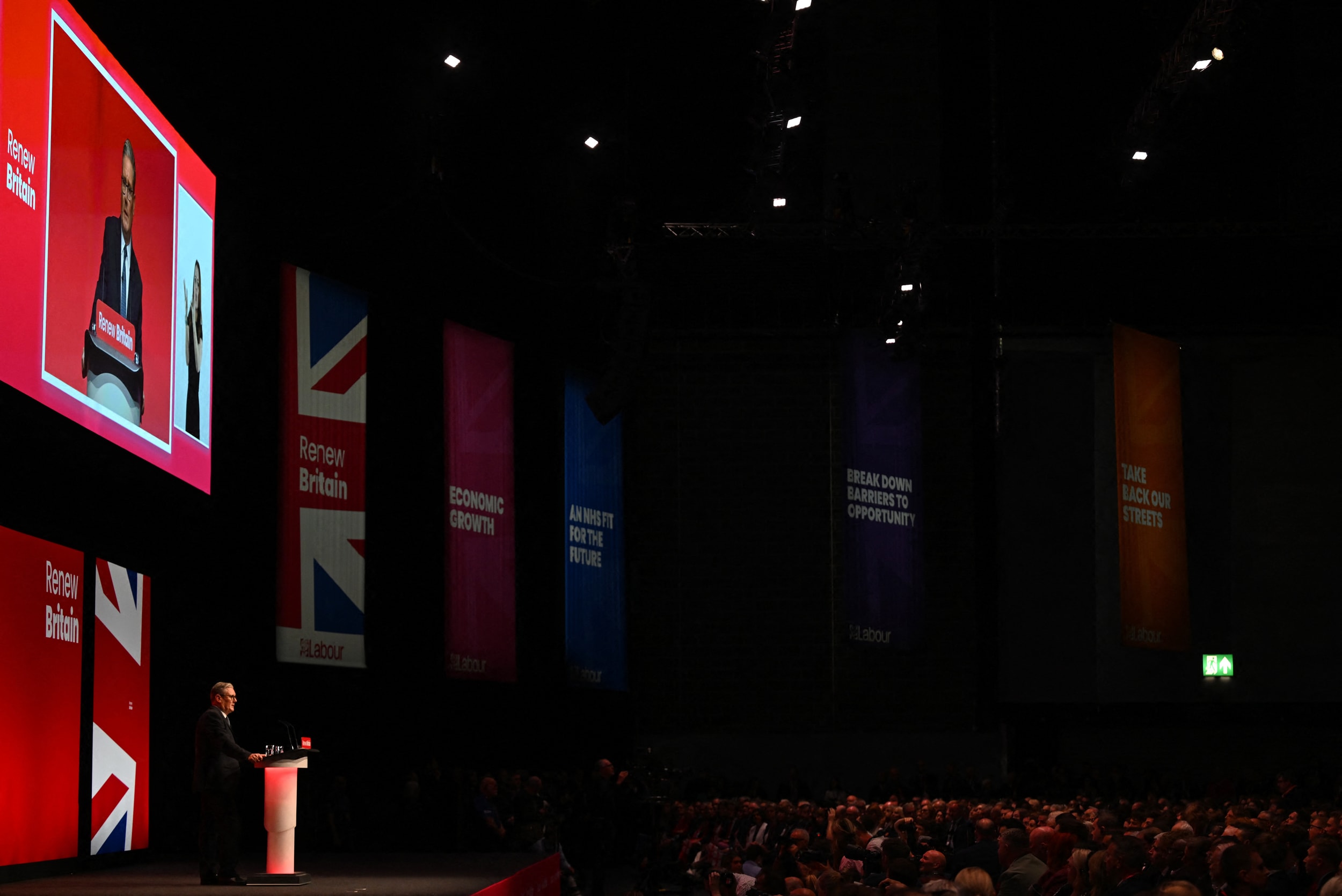
By May 2026, the political landscape had completely changed. The latest opinion polls showed Prime Minister Starmer had the lowest approval rating ever seen in modern British history. Around 70% of the public held a negative view, while only 19% held a positive one.
An internal "rebellion" erupted when Starmer proposed cutting disability benefits, facing opposition from within his own party. Prior to this, the specter of the past, stemming from the "Epstein dossier" and the appointment of Peter Mandelson as Ambassador to the U.S., had severely damaged his personal reputation.
The crisis culminated in a crushing defeat in the local elections on May 8, 2026. The Labour Party lost over 1,400 local council seats, losing control in traditional areas such as Wales. The strong rise of rivals, the anti-immigration Reform UK and the Green Party, revealed a deep polarization within British society and directly threatened the position of both traditional major parties.
The pressure isn't just coming from voters, but also from within the party's own "fortress." Currently, around 80 Labour MPs—almost one-fifth of the party's seats in the House of Commons—have publicly called for Starmer to resign or provide a roadmap for his departure. A wave of resignations by high-ranking government officials has begun. Close associates like Deputy Secretary Miatta Fahnbulleh were the first to leave, emphatically stating that the government lacked "vision, speed, and determination for reform." This was followed by Jess Phillips, head of the agency protecting women and children, and Alex Davies-Jones from the Justice Department, both citing a failure to see the changes the country expects. Even key cabinet members like Home Secretary Shabana Mahmood are reportedly discreetly suggesting the Prime Minister consider when to leave Downing Street.

"To move forward or to retreat?"
Faced with overwhelming pressure, Prime Minister Keir Starmer chose to confront the situation head-on rather than retreat. At a cabinet meeting on May 12, 2026, he affirmed: "The country expects us to continue to govern. That is what I am doing." He reiterated that he takes responsibility for the election defeat but stressed that the current priority is to focus on governing the country rather than getting bogged down in internal disputes.
Prime Minister Starmer's unwavering decision was based on three key pillars:
Statutory advantage: According to Labour Party regulations, a leadership change can only be triggered when at least 81 MPs (1/5 of the current number of MPs) support it. Although the number of opponents is close to this figure, there is currently no strong enough challenger to directly challenge his position.
A bolder agenda strategy: Prime Minister Starmer is trying to prove skeptics wrong by pushing for stronger political commitments. He has promised to put Britain back at the "heart of Europe," nationalize the steel industry, and lower the voting age to 16. This is an attempt to regain the trust of left-wing voters and young people.
Arguing about national stability: Prime Minister Starmer warned that his resignation at this time would plunge the country into "chaos" and negatively impact market sentiment, which was already beginning to falter with government bond yields rising sharply.
However, Prime Minister Keir Starmer's path forward is fraught with difficulties. Holding onto his seat while facing a 70% disapproval rating is the biggest disadvantage for the Labour Party in the future.
"To move forward or backward?" British Prime Minister Sir Keir Starmer has chosen to move forward. But can this continuation turn the tide? Can he prove "the skeptics wrong," as he declared, or will this be the beginning of an inevitable leadership change at 10 Downing Street? The answer will likely depend on how "stronger" his commitments are in the coming period.


