
Prime Minister: Nearly 700 trillion VND is expected to be invested in healthcare and education over the next 10 years.
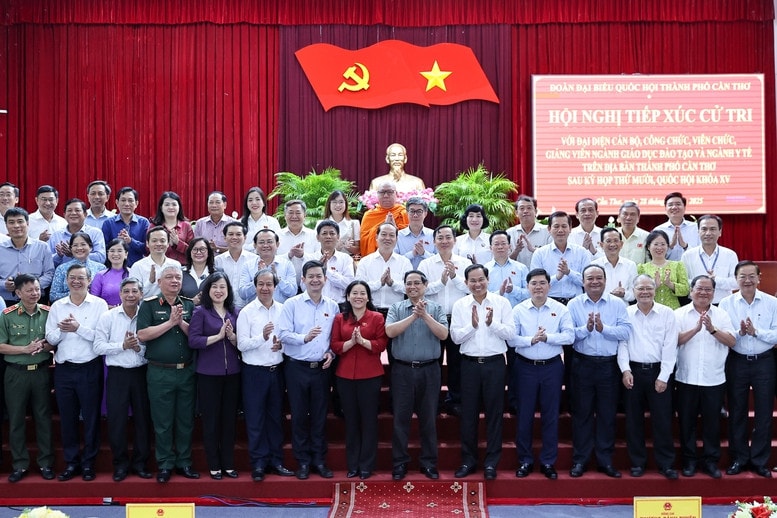
On the afternoon of December 28th, in Can Tho, Prime Minister Pham Minh Chinh and the delegation of National Assembly representatives from the city met with voters in Can Tho City.
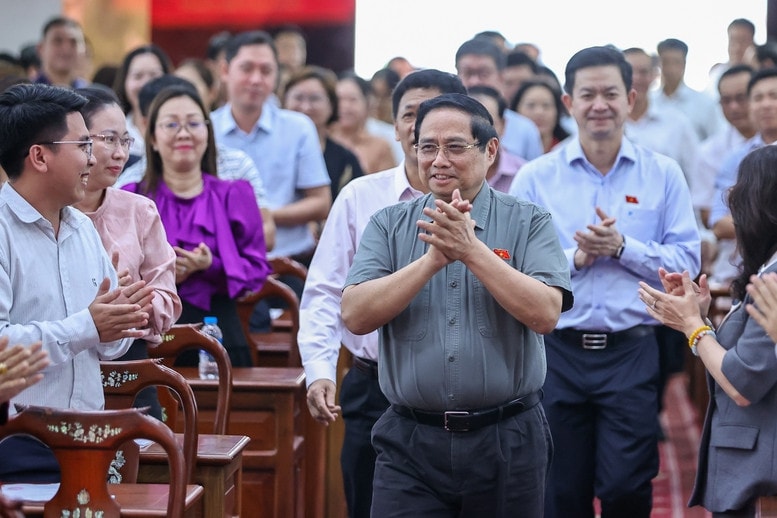
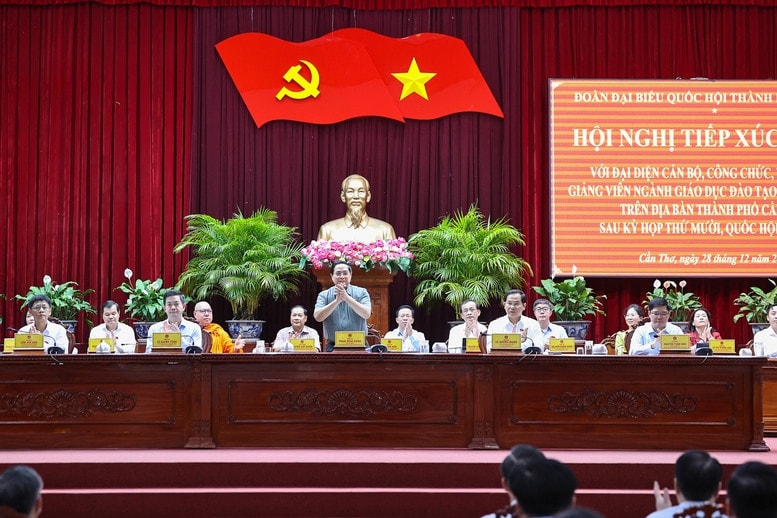
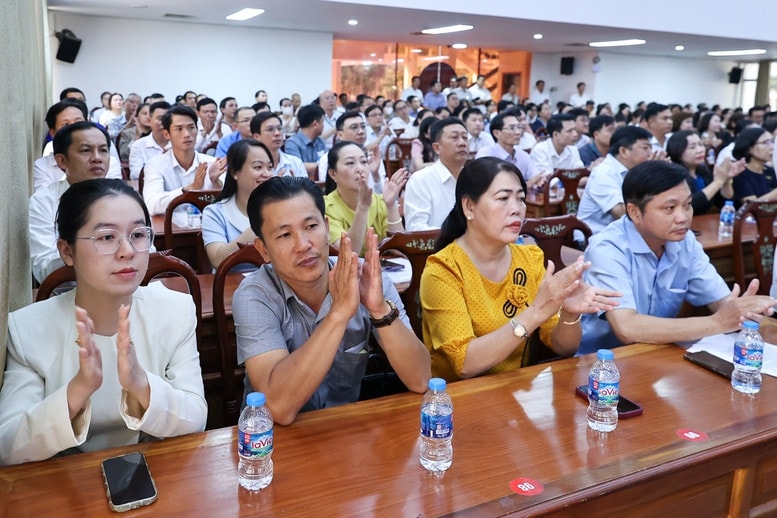
On the afternoon of December 28th, in Can Tho, Prime Minister Pham Minh Chinh, along with the city's National Assembly delegation, met with constituents representing officials, civil servants, and lecturers from the education and training and health sectors in the area following the 10th session of the 15th National Assembly.
Also attending were members of the Central Committee of the Party: Secretary General of the National Assembly, Head of the National Assembly Office Le Quang Manh; Secretary of the Can Tho City Party Committee, National Assembly delegate Le Quang Tung; Minister of Education and Training Nguyen Kim Son; Minister of Health Dao Hong Lan; leaders of central and Can Tho ministries and agencies, along with approximately 300 voters in the area.
At the conference, the Can Tho National Assembly delegation reported to the voters on the results of the 10th session of the 15th National Assembly and the delegation's activities during the session, especially the major and important policies and guidelines of the country that were discussed and approved by the National Assembly.
The National Assembly delegation also listened to, received, and recorded the opinions and suggestions of voters to compile and report them to the relevant authorities for resolution according to regulations, especially those related to the implementation of Resolution No. 71-NQ/TW of the Politburo on breakthroughs in education and training development and Resolution No. 72-NQ/TW of the Politburo on some breakthrough solutions to strengthen the protection, care, and improvement of people's health.
According to reports and opinions expressed at the conference, the 10th session was the final session of the 15th National Assembly and was of great importance, particularly in deciding many strategic issues for the next phase of the country and fundamentally resolving emerging practical problems, bottlenecks in the economy and institutions.
After 40 days of continuous, urgent, and serious work, with a scientific, innovative, and highly responsible spirit, the 10th session of the National Assembly concluded successfully, creating a flexible legal framework to promote the rapid and sustainable development of the country; at the same time, strengthening decentralization and empowering localities to take the initiative, helping to accelerate the implementation of important projects, effectively mobilizing social resources, and contributing to creating new momentum for the socio-economic development of the whole country in the era of national progress.
At this session, under the close leadership and guidance of the Politburo, the Government submitted a record number of documents, including 130 files, documents, and reports, and the National Assembly passed 51 laws and 8 resolutions, accounting for 30% of the total number of laws and resolutions for the entire term. These included many new and challenging issues, especially those related to specialized and specific draft laws and resolutions aimed at immediately addressing difficulties and obstacles such as land, planning, education, digital transformation, high technology, protection and improvement of people's health, population, new rural development, sustainable poverty reduction, and socio-economic development in the cities of Hanoi, Ho Chi Minh City, and Da Nang.
At the conference, voters expressed their joy at the significant, comprehensive, and very proud achievements of the country in 2025. During the meeting and through the compilation of feedback, voters in Can Tho raised proposals and recommendations related to the development of primary healthcare, preventive medicine, digital transformation in the healthcare sector; training and development of healthcare personnel for the Mekong Delta region; healthcare for the elderly and geriatrics; financial mechanisms, taxes, and operating conditions of healthcare facilities; improving the system of legal documents and coordination mechanisms between ministries and sectors; specific mechanisms for universities and investment in education and training development, especially higher education in the Mekong Delta region; policies and mechanisms for personnel in the education sector; and autonomy mechanisms for higher education institutions…
Building a healthy Vietnam where all citizens receive healthcare.
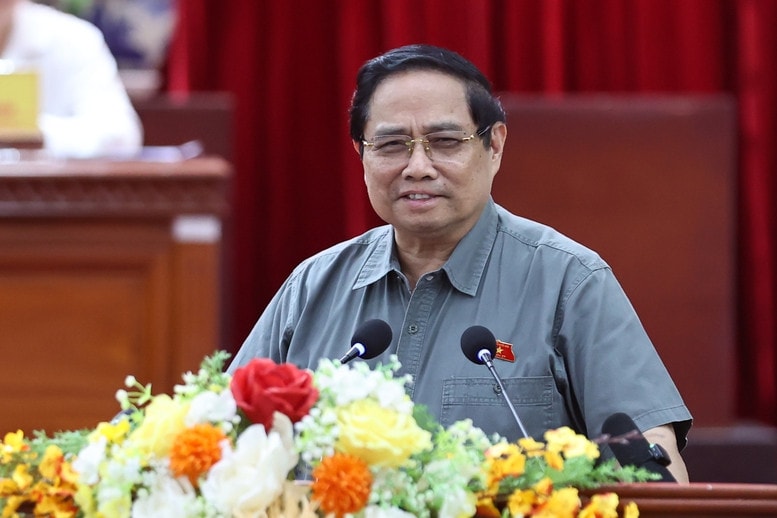
After the leaders of ministries and sectors gave their opinions, answered questions, and addressed suggestions from voters at the conference, Prime Minister Pham Minh Chinh, on behalf of General Secretary To Lam and the Party and State leaders, extended his respectful greetings and best wishes to the voters and delegates.
Providing further information on the 10th session of the 15th National Assembly, the Prime Minister stated that this was the session that enacted the most laws and resolutions ever, focusing on removing bottlenecks and unlocking resources for rapid and sustainable national development.
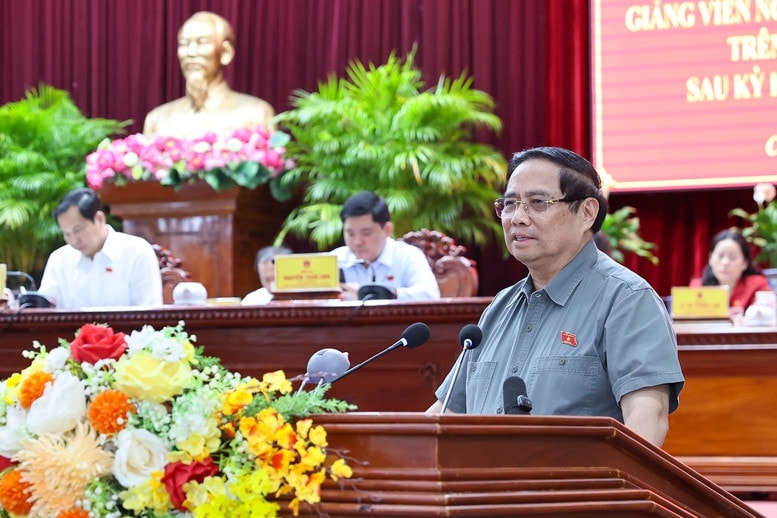
Sharing more about the content of this thematic meeting with voters, the Prime Minister emphasized that education and healthcare are two areas that concern everyone, every family, and everyone cares about and needs health and lifelong learning; the Party and the State also pay special attention to these two areas, with the spirit of putting the lives and health of the people above all else, taking people as the center, the subject, the goal, the driving force and the resource for development. On the other hand, the Mekong Delta also has two major bottlenecks related to strategic infrastructure, including healthcare and education infrastructure, and related to the development of high-quality human resources.
Emphasizing that the Party and State have no other goal than to firmly protect the independence and sovereignty of the country and to continuously strive to improve the material and spiritual lives of the people, the Prime Minister stated that to implement the resolutions of the Politburo, the Government has submitted to the National Assembly at its 10th session laws and resolutions to promptly institutionalize and organize their implementation.
Specifically, to concretize Resolution No. 72-NQ/TW on protecting, caring for, and improving the health of the people, the Government has submitted to the National Assembly for approval two laws and one resolution, including the Law on Population, the Law on Disease Prevention, and the Resolution on some breakthrough mechanisms and policies for the work of protecting, caring for, and improving the health of the people, aiming to build a healthy Vietnam where all citizens receive healthcare, live long, healthy, and happy lives, with the spirit of "prevention is better than cure".
The new Population Law marks a turning point in thinking about population development, with many practical economic incentives such as financial support for women who have two children before the age of 35, for people in low-birth-rate or disadvantaged areas; priority for purchasing or renting social housing for families with two children…
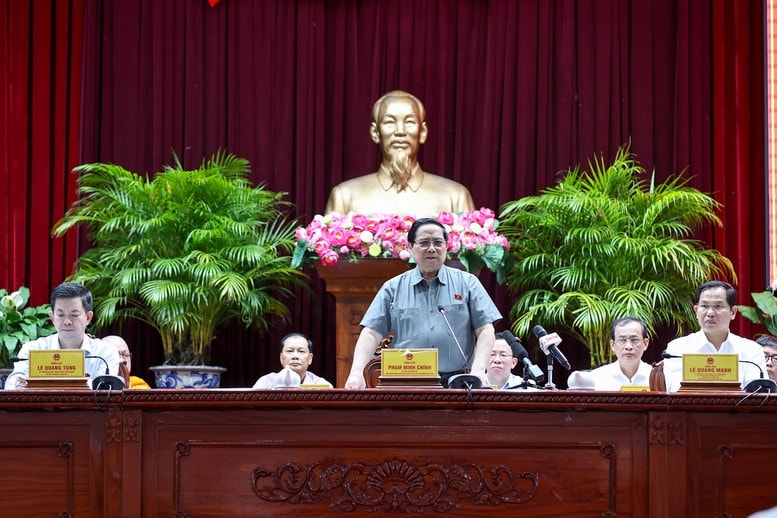
In particular, the Prime Minister stated that, based on the investment policy of the National Target Program on Health Care, Population and Development for the period 2026-2035 approved by the National Assembly at this session, the Government will direct the Ministry of Health to urgently complete the dossier to decide on the investment of the Program, which includes 5 projects with a total resource of approximately 90-100 trillion VND to achieve specific and practical goals such as: (1) Improving the capacity of the grassroots health network; (2) Improving the effectiveness of the disease prevention system; (3) Improving health; (4) Population development; (5) Improving the quality of social care for vulnerable people; (6) Strengthening health communication.
To implement the aforementioned policies and guidelines, Can Tho City has issued an implementation plan with 6 specific task groups and solutions based on the practical conditions of Can Tho City after the merger, achieving several positive results such as the doctor-to-population ratio reaching 14.83 (almost reaching the target of 15 doctors per 10,000 people) and the number of hospital beds per 10,000 people reaching 43.90 (exceeding the target of 34.5 hospital beds per 10,000 people); the health insurance coverage rate reaching 95% (meeting the set plan); 100% of medical facilities with hospital beds in the city have implemented electronic medical records…
The system of specialized hospitals, general hospitals, medical centers, and health stations in Can Tho continues to receive investment for construction and upgrading; the quality of human resources continues to improve; new and advanced techniques are being applied in examination, diagnosis, and treatment; the socialization of healthcare activities is becoming increasingly diverse, and private healthcare continues to develop, contributing to better meeting the healthcare needs of people in the area and region; and food safety is being effectively implemented.
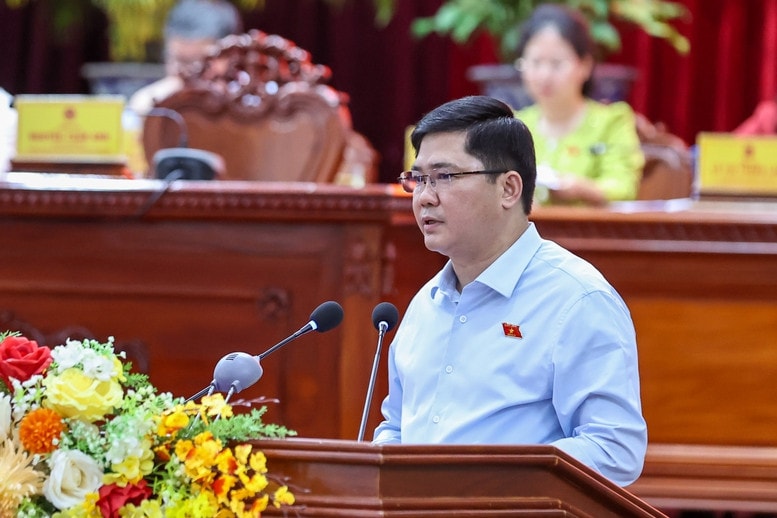
However, the Prime Minister noted that there are still some limitations in the implementation process, such as a shortage of medical personnel in some areas; inadequate remuneration and income; insufficient infrastructure and equipment; and policies to attract high-quality human resources…
On this occasion, the Prime Minister commended Can Tho City, ministries, and agencies for seriously implementing the Prime Minister's directives from more than two months ago (when the Prime Minister met with voters in Can Tho before the 10th session) regarding the procedures to expedite the completion of the investment project to build the new Can Tho Oncology Hospital by switching from ODA loan funding to public investment funding; and for completing the procedures to purchase two radiotherapy machines for the current Can Tho Oncology Hospital (expected to arrive in the first months of 2026).
At the same time, the Prime Minister directed that the Can Tho Cardiovascular Hospital and the Can Tho Obstetrics and Pediatrics Hospital should be urgently upgraded in 2026, and that any needs or shortages should be reported to the Prime Minister.
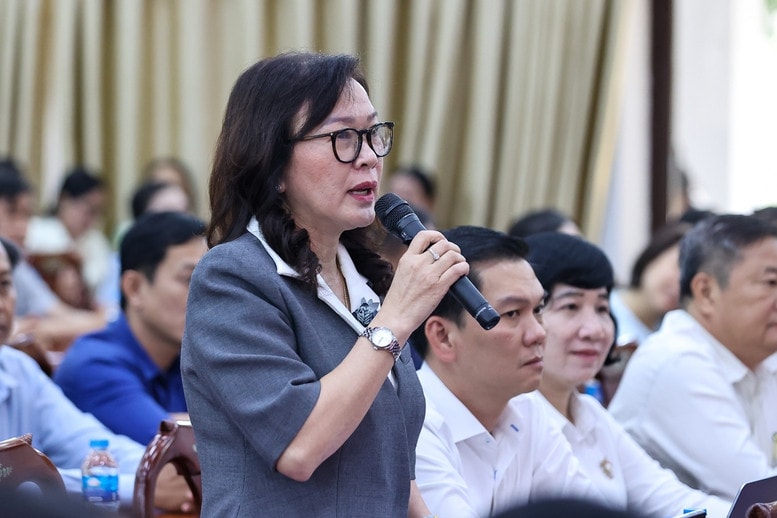
Creating breakthroughs in education and training development.
In the field of education and training, the Prime Minister stated that at the 10th Session, closely following the Politburo's guidelines in Resolution No. 71, the Government submitted and the National Assembly passed 3 laws and 1 resolution related to education: the Law amending and supplementing a number of articles of the Law on Education; the Law on Higher Education; the Law on Vocational Education; and the Resolution on some specific and outstanding mechanisms and policies to achieve breakthroughs in the development of education and training.
At the same time, the Government also submitted to the National Assembly for approval the investment policy of the National Target Program for modernization and improvement of the quality of education and training for the period 2026-2035 with a total resource of more than 580 trillion VND to implement 4 specific target groups for 4 target groups, including: (1) Preschool education, general education; (2) Vocational education; (3) Higher education; and (4) Teachers, education management staff and learners.
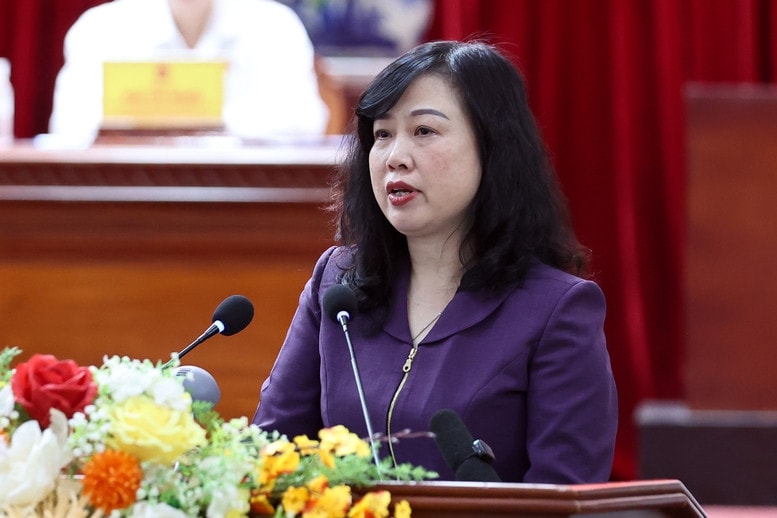
The main objective of this program is to invest in the comprehensive upgrading and modernization of facilities, teaching equipment, vocational training, laboratories, research and innovation centers, startup support centers, and digital transformation infrastructure at all levels of education and training institutions; simultaneously, to implement solutions for training and enhancing the professional competence, digital skills, foreign language proficiency, and modern pedagogical skills of the teaching staff; to strengthen the management and innovation capacity of education administrators; and to develop core competencies, digital skills, and well-rounded qualities for learners.
Based on the investment plan approved by the National Assembly, the Government will direct the Ministry of Education and Training to urgently finalize the dossier to make an investment decision and put the program into practice.
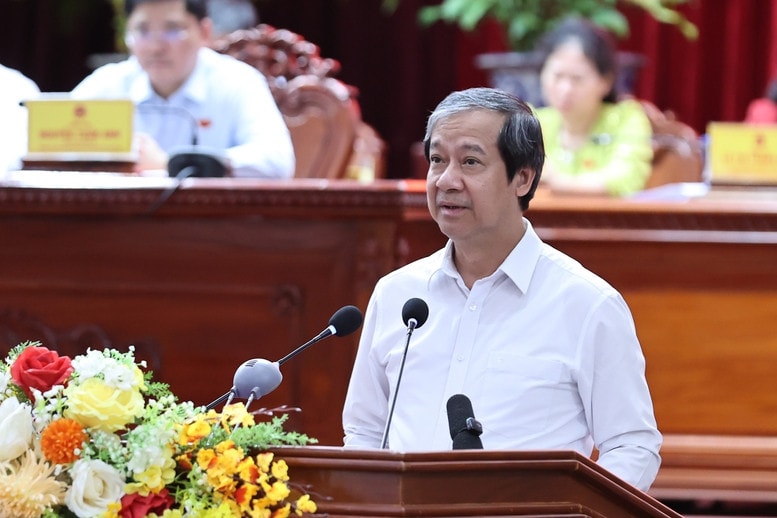
The Prime Minister stated that within the next six months, the Government must complete the issuance of decrees to organize the implementation of the aforementioned contents.
Regarding the results achieved in Can Tho,The city has achieved several positive results such as: The rate of students attending school at the appropriate age (95% of children entering kindergarten, 99.5% of primary school, 95% of lower secondary school, and 75% of lower secondary school graduates entering upper secondary school and vocational education - meeting the set plan); the rate of trained labor reached 73.67% (meeting the set plan); early childhood education continues to be strengthened, with 100% of facilities effectively implementing the "Child-Centered" program and thematic topics. The total number of schools meeting national standards with a remaining 5-year validity period is 743 out of 1,149 schools, reaching 64.66% (kindergarten: 78.70%; primary school: 59.05%; lower secondary school: 63.45%; upper secondary school: 46.15%). Vocational education has achieved positive results, enrolling and training 43,108 people at various levels; over 80% of graduates have found employment, with 70-75% of graduates finding jobs in their trained fields.
However, during the implementation process, there are still some limitations that need to be addressed, such as the fact that in some areas, commune-level officials do not yet meet the requirements in terms of experience and professional qualifications; the percentage of schools meeting national standards is still low and uneven across different educational levels; the merger of vocational education and continuing education centers is not yet timely in some places; there is still a shortage of teachers, the subject structure is not rational, especially at the preschool and primary school levels; and the financial autonomy mechanism is not yet implemented synchronously…
The Prime Minister requested Can Tho and other provinces in the Mekong Delta to reorganize their educational systems, including arranging kindergartens and primary and secondary schools according to a two-tiered government model, and reorganizing 17 universities to increase scale, reduce administrative units, and improve quality...
Removing bottlenecks and transforming institutions into a competitive advantage.
Clearly outlining six key tasks and solutions for the coming period to continue implementing the Party and State's guidelines and policies on health and education, the Prime Minister directed ministries, localities, including Can Tho City, to...Continue reviewing, developing, and improving institutions.Remove bottlenecks and transform institutions into national competitive advantages to attract domestic and foreign resources.
According to the Prime Minister, the entire political system, as well as the people, businesses, and voters, must participate in this to mobilize collective strength, because resources originate from mindset, motivation from innovation, and power from the people and businesses.
Monday,Strategic infrastructure investment for the education and healthcare sectors should meet the requirements and development goals, including the goal of rapid and sustainable development, without sacrificing progress, equity, and social welfare for the sake of mere growth; reducing input costs for healthcare and education services and increasing competitiveness so that people benefit.
Tuesday,The focus should be on training human resources in these two sectors to meet development requirements, not just at the university level or above, but comprehensively, through many stages and steps, caring for people throughout their lives, across all levels of education, in order to have a modern, equitable, and effective education and healthcare system.
Wednesday,Continue to build mechanisms and policies to attract human resources for the two sectors, such as salary policies, tax incentives, credit, housing, etc.; in terms of finance, promote public-private partnerships, use public investment to lead private investment, and strengthen the autonomy mechanism in a reasonable manner.
ThursdayContinue reviewing and managing the two sectors according to the two-tiered local government model, shifting from management to service; arranging appropriate infrastructure, personnel, and expertise, and implementing smart governance, focusing on digital transformation; voters will monitor this process.
Friday, promoting the application of digital transformation such as digital school records and electronic health records connected to VNeID to make things more convenient for people, reducing costs, time, and hassle…
On behalf of the Can Tho National Assembly delegation, the Prime Minister expressed his gratitude and extended his deepest thanks to the voters, local Party committees and authorities, and ministries and agencies, including the press, for their continuous support and assistance over the past five years in helping the National Assembly delegation successfully fulfill its nhiệm vụ. He also presented practical proposals and recommendations for the competent authorities to address, contributing to the development achievements of Can Tho and the entire country in recent years.


