
Prime Minister: Remove 'bottlenecks' to ensure healthy and sustainable real estate development.
The Prime Minister pointed out several key "bottlenecks" that need to be addressed, including the legal system related to the real estate market, which still has some provisions that do not meet practical needs and have not been supplemented or amended in a timely manner.
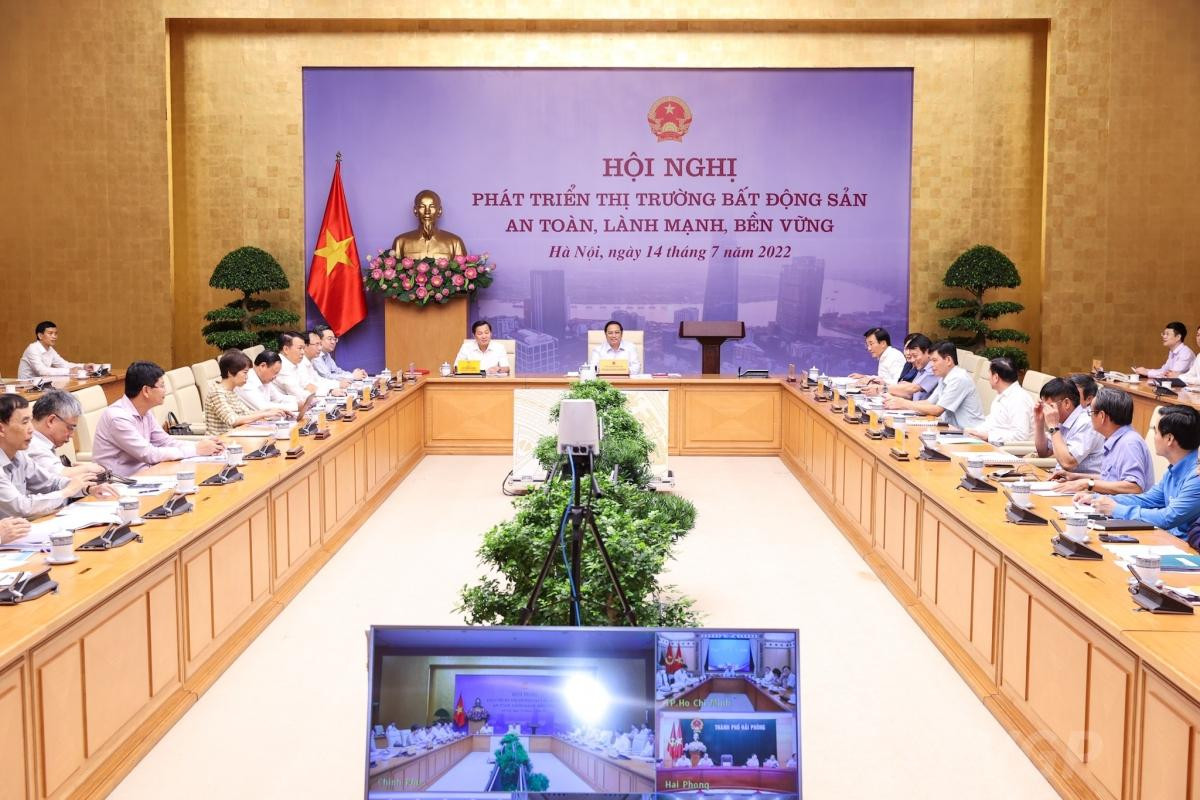 |
Prime Minister Pham Minh Chinh chaired the Conference on Developing a Safe, Healthy, and Sustainable Real Estate Market. |
On the afternoon of July 14th, at the Government Headquarters, Prime Minister Pham Minh Chinh chaired a conference on developing a safe, healthy, and sustainable real estate market. The conference was held online between the Government Headquarters and the People's Committees of five centrally-governed cities: Hanoi, Ho Chi Minh City, Da Nang, Hai Phong, and Can Tho.
Also attending the conference were Deputy Prime Minister Le Minh Khai; leaders of the Ministries and sectors: Construction, Finance, Natural Resources and Environment, State Bank of Vietnam; leaders of relevant ministries and sectors that are members of the Central Steering Committee on Housing Policy and Real Estate Market (Justice, Public Security, Planning and Investment, Transport, Agriculture and Rural Development, Culture, Sports and Tourism, Information and Communications, Vietnam General Confederation of Labor, Government Inspectorate); representatives of the Real Estate Association, experts in finance and real estate; and leaders of the cities: Hanoi, Ho Chi Minh City, Da Nang, Hai Phong, and Can Tho.
Reporting at the conference, Minister of Construction Nguyen Thanh Nghi stated that in recent years, the real estate market has made extremely important contributions to the entire economy; the direct and indirect contribution of the real estate sector through other fields accounts for approximately 4.5% of GDP. In 2021, the real estate market still faced many difficulties due to the impact of the pandemic, but it gradually overcame them, adapted, and flexibly shifted to maintain relative stability. At the beginning of 2022, the socio-economic situation had seen many positive changes, helping most sectors, fields, and localities to recover and grow again.
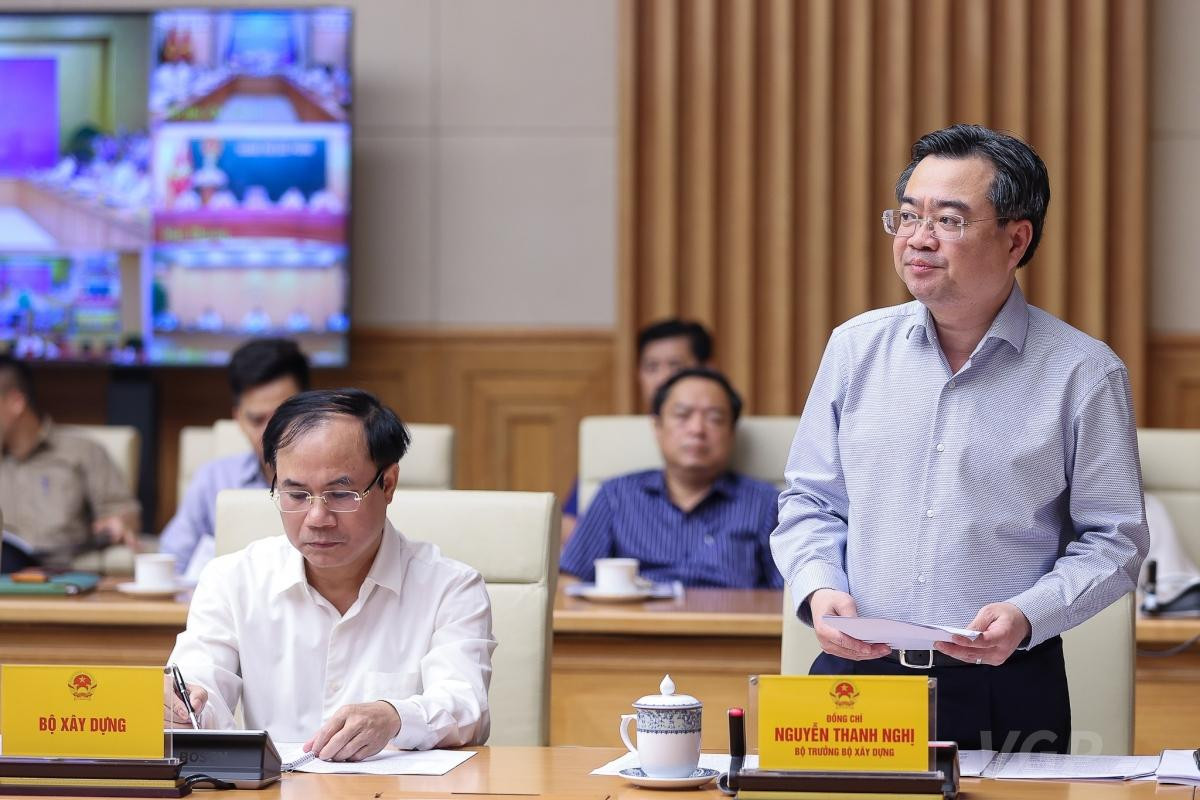 |
Minister of Construction Nguyen Thanh Nghi presented a report at the conference. |
The Minister of Construction also stated that the current legal system related to investment, construction, and real estate business still has some shortcomings that need to be studied and amended. Housing prices are rising significantly compared to people's incomes. Furthermore, real estate exchanges are formed and operate spontaneously and unstably; there are instances of real estate exchanges colluding to hoard goods, inflate prices, and create artificial price surges, disrupting the market; real estate brokerage services are not well controlled; real estate transactions lack transparency; the control of investment capital flows into the real estate sector is not strict enough and still poses risks; land use right auctions still have some shortcomings and limitations; and there are still some issues with the splitting of land use rights and "land subdivision and sale"...
At the conference, delegates focused on discussing, evaluating, and forecasting the Vietnamese real estate market; proposing directions and solutions regarding product structure and supply to ensure safe, healthy, and sustainable development of the real estate market; macroeconomic policies and the impact of land law on the real estate market; and proposing the development and improvement of legal institutions related to the real estate sector and law enforcement.
Speaking at the conference, Prime Minister Pham Minh Chinh stated that in recent times, the global political and economic situation has been complex, unstable, and unpredictable, impacting the Vietnamese economy. In this context, we have maintained our independence, sovereignty, and territorial integrity; ensured political stability and social order; guaranteed security and safety for the people; promoted foreign relations; achieved relatively high growth compared to other countries in the region and the world; controlled inflation; maintained macroeconomic stability; and ensured major balances.
The Prime Minister affirmed that the active efforts of all levels, sectors, localities, and the business community in implementing the Central Resolution, the Government's regulations, and the Government's directives, policies, and solutions regarding the real estate market have contributed to many positive changes in the socio-economic situation, the gradual recovery and growth of the real estate market, and its positive contribution to socio-economic development, ensuring social security and macroeconomic stability.
Overall, our country has never had the foundation, potential, position, and prestige it has today. The real estate market has contributed to this overall achievement. Therefore, it can be affirmed that our real estate market development policies are fundamentally correct; however, as a developing country, certain shortcomings and limitations have arisen.
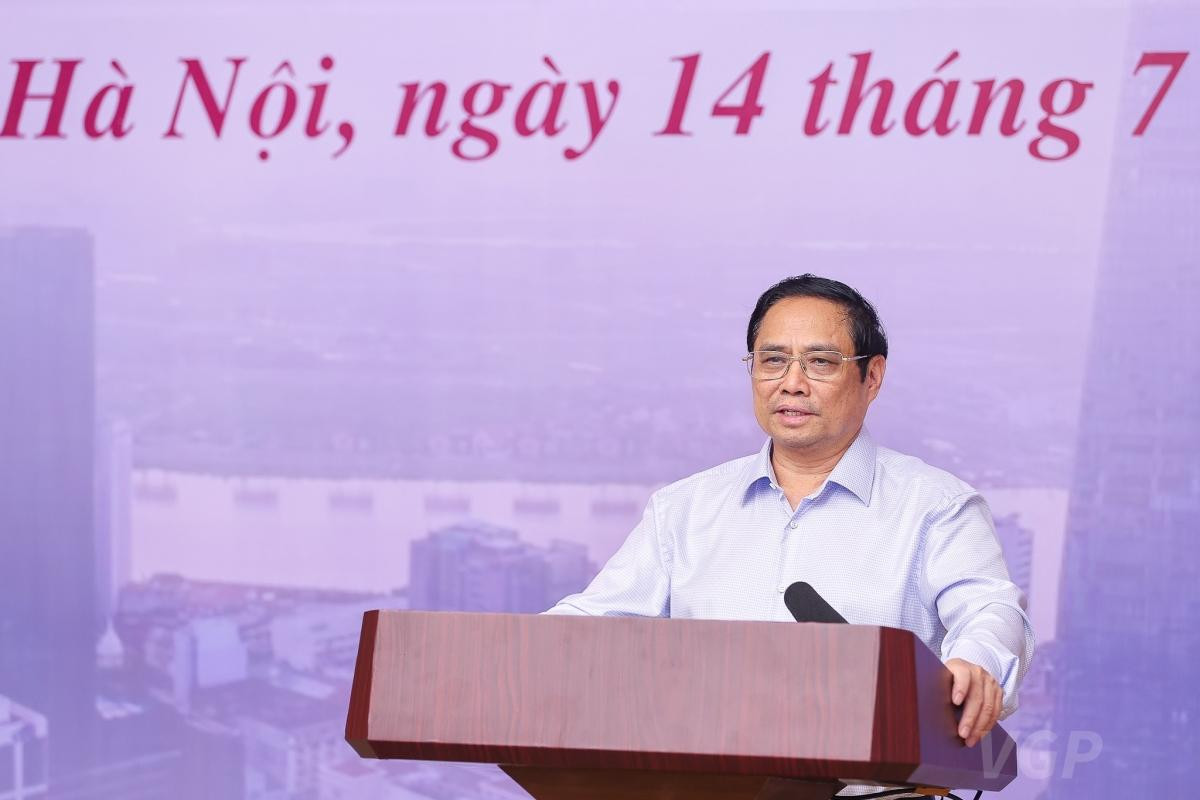 |
Prime Minister Pham Minh Chinh delivered a speech at the conference. |
The Prime Minister also frankly pointed out the existing shortcomings, limitations, and inadequacies of the market, as well as some important "bottlenecks" that need to be addressed to ensure the safe, healthy, and sustainable development of the real estate market ecosystem.
The Prime Minister requested that ministries, sectors, and localities focus on directing and effectively implementing tasks and solutions to overcome the aforementioned shortcomings and inadequacies, and continue to promote the stable and healthy development of the real estate market in the coming period.
First and foremost, focus on implementing synchronously the tasks and solutions outlined in Government Resolution No. 11/NQ-CP on the Program for Economic and Social Recovery and Development; creating more jobs in various sectors, localities, and regions, because more jobs attract people to live and work, thus developing the real estate market. In particular, it is essential to maintain macroeconomic stability, control inflation, and ensure major balances to create conditions for the development of a safe, healthy, and sustainable real estate ecosystem.
The head of government requested that ministries, sectors, and localities closely monitor the development of the real estate market, balance supply and demand, and create a harmonious and healthy environment, prioritizing segments for social welfare. He emphasized respecting market principles while maintaining state management to prevent corruption and market manipulation. He also called for a review of legal regulations to address both immediate and long-term issues, promoting decentralization and delegation of power, and researching and piloting new mechanisms and policies to resolve obstacles and create new impetus for the real estate market. Furthermore, he stressed the need to promote the development of strategic infrastructure to create new development spaces and new drivers for the real estate market, and to develop appropriate, safe, effective, and interconnected policies between the capital market and the real estate market.
The Prime Minister requested strengthening inspection and supervision work to detect violations early in order to protect the market and assets; avoiding the criminalization of economic relations so that they develop according to market laws, but strictly controlling and handling violations to protect individuals and units that act in accordance with the law, harmonizing the interests of the State, the people, and businesses; not legitimizing violations, but studying appropriate and effective policy mechanisms to resolve them.
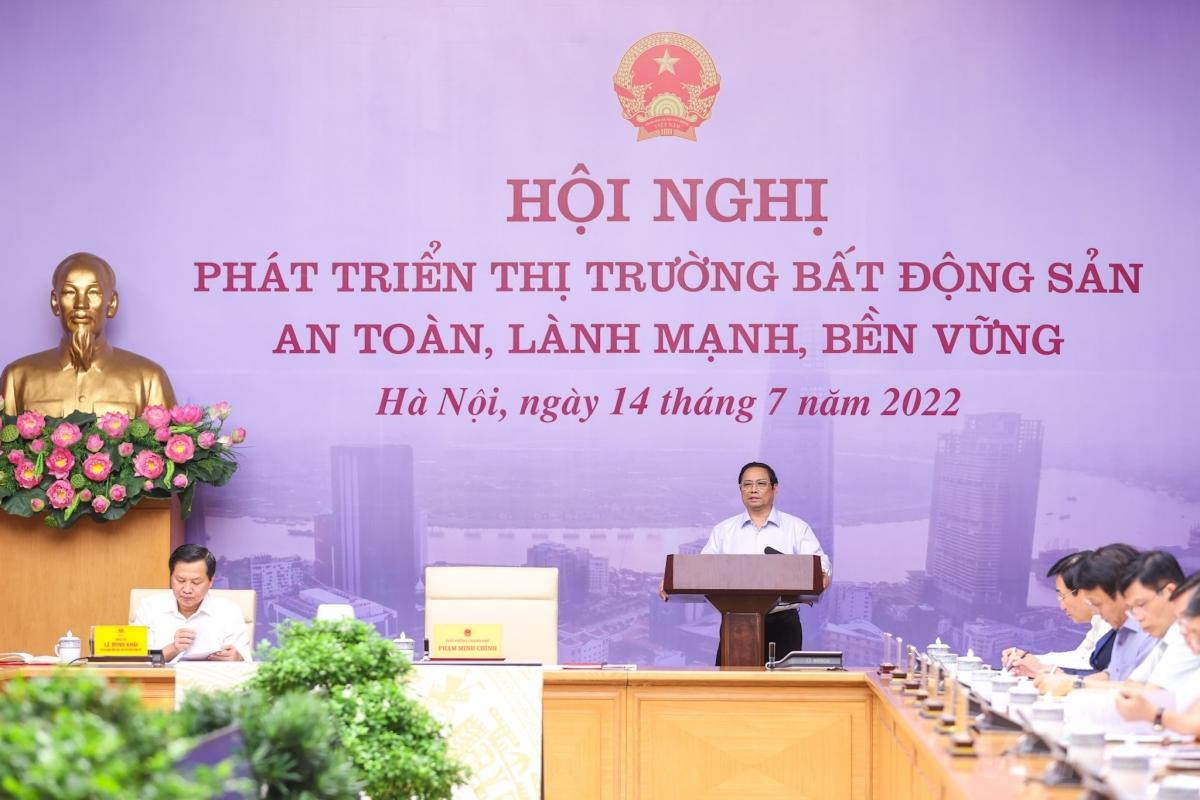 |
The Prime Minister pointed out several key "bottlenecks" that need to be addressed. |
Prime Minister Pham Minh Chinh assigned Deputy Prime Minister Le Minh Khai to preside over and direct the development of a safe, healthy, and efficient real estate market ecosystem; and requested ministries and agencies to coordinate closely to remove difficulties for businesses and people related to the real estate market.
Accordingly, the Prime Minister instructed the Ministry of Construction to urgently research and finalize the legal system related to the real estate sector, ensuring consistency, resolving difficulties and obstacles, and creating conditions for the stable and healthy development of the real estate market. Specifically, it is proposed that the National Assembly consider and approve the amended Housing Law and the amended Real Estate Business Law to create a legal framework for real estate business activities and enhance the effectiveness of real estate market management.
The Ministry of Construction, in coordination with relevant ministries and agencies, will establish a working group to direct, guide, and urge localities to implement Government Resolution No. 11/NQ-CP on the Program for Economic and Social Recovery and Development, specifically regarding policies supporting the development of social housing, housing for industrial park workers, and the renovation and reconstruction of old apartment buildings. It will also research and provide guidance to resolve legal and procedural difficulties and obstacles related to the projects. Furthermore, it will closely monitor the situation and developments of the real estate market; quarterly reports will be submitted to the Prime Minister on the real estate business situation and market nationwide, and proposals will be made for solutions to ensure the stable and healthy development of the real estate market.
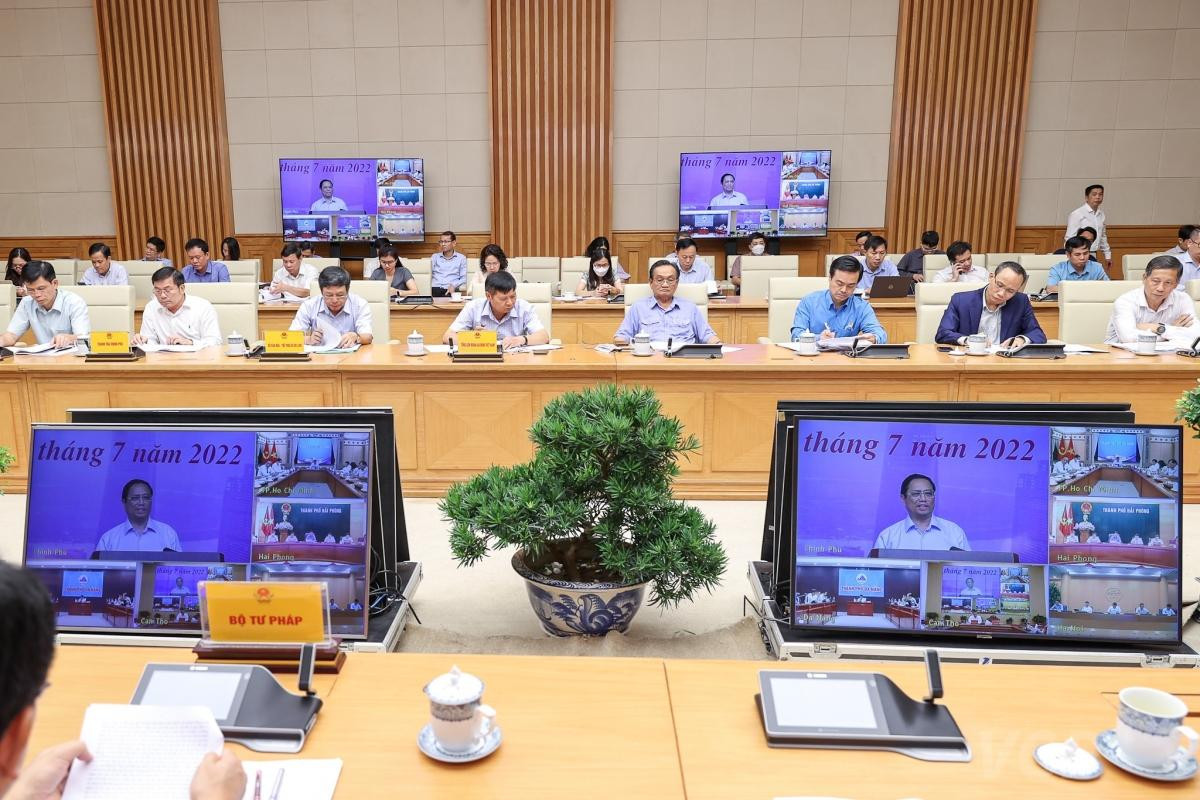 |
The scene at the meeting. |
The Head of Government has instructed the Ministry of Finance to study amendments to Government Decree 153/2020/ND-CP dated December 31, 2022, on the offering and trading of corporate bonds in the domestic market and the offering of corporate bonds to the international market. The Ministry will control the capital raising activities of real estate businesses on the stock market to prevent speculation, manipulation, and price inflation. It will also inspect and monitor compliance with the law on the issuance and use of capital obtained from bond issuance, especially private placements by real estate businesses, credit institutions related to real estate businesses, businesses with large issuance volumes and high interest rates, businesses with business losses, and businesses issuing bonds without collateral.
The Ministry of Finance directs and guides the implementation of bond issuance and capital raising activities of real estate businesses on the stock market in accordance with the law; creating conditions and not hindering businesses from raising capital to support recovery and development. At the same time, it researches and proposes regulations on taxation of real estate use and real estate transactions to limit the practice of buying and selling multiple times, and to curb speculation and hoarding of real estate.
Prime Minister Pham Minh Chinh instructed the State Bank of Vietnam to monitor, control, and restructure credit to the real estate sector to ensure its proper use and avoid risks to the market. He directed and guided credit institutions to continue lending to the real estate sector in accordance with legal regulations, lending to real estate projects with full legal validity; prioritizing lending to commercial housing projects, social housing for low-income earners, and housing for workers that have been licensed and are under construction to create supply for the market.
The Prime Minister requests the Ministry of Natural Resources and Environment to coordinate with the Ministry of Finance and the Ministry of Justice to research, review, and amend current legal regulations related to land use rights auctions (laws on auctions, land laws, and tax management laws) to ensure consistency and suitability with the actual situation. Inspections, audits, and guidance, along with coordination with localities, are to detect, prevent, and strictly handle violations in land use rights auction activities to ensure compliance with the law.
The Ministry of Planning and Investment directs, urges, and guides localities to resolve difficulties and obstacles in investment procedures and approve investment policies for housing and real estate projects to support and increase supply to the market. It also monitors and promotes the attraction of foreign investment into the real estate business sector.
The Prime Minister instructed the Ministry of Public Security to take the lead and closely coordinate with the Ministry of Finance, the State Bank of Vietnam, and other relevant agencies to strengthen the monitoring of the macroeconomic situation; strictly handle the activities of real estate exchanges and real estate brokerage activities that violate the law, and acts of disseminating inaccurate information that negatively impact the financial, credit, and real estate markets.
The Ministry of Information and Communications directs news agencies and media outlets to strengthen the provision of timely, official, and accurate information on the real estate market, stock market, and bond market; and to strictly handle acts of disseminating inaccurate information that negatively impact the financial, credit, and real estate markets.
The Prime Minister requested that localities urgently finalize land use plans, construction plans, and housing development programs and plans; review land funds, lists of projects calling for investment, organize land allocation, auction land use rights, and tender projects to select investors to promote development and increase the supply of real estate and housing to serve consumption.
This includes reviewing and compiling a list of housing and real estate projects that are being prepared for investment or are being implemented in the area; specifically assessing the reasons and causes of difficulties and obstacles for each project, especially those that have received investment approval but have not yet been implemented or are experiencing delays in implementation. Based on this, focus on resolving legal and procedural difficulties and obstacles in the preparation of investment for housing projects to increase supply to the market.
The Prime Minister also requested localities to implement Government Resolution No. 11/NQ-CP on the Program for Economic and Social Recovery and Development, including compiling a list of projects, reviewing land funds, completing legal procedures, and selecting investors to implement social housing projects, housing for industrial park workers, and renovating and rebuilding old apartment buildings in their areas.
The Prime Minister has instructed the Government Office to coordinate with the Ministry of Construction and other relevant ministries and agencies to finalize and submit to the Prime Minister for promulgation a Directive on solutions for developing a safe, healthy, and sustainable real estate market.


