
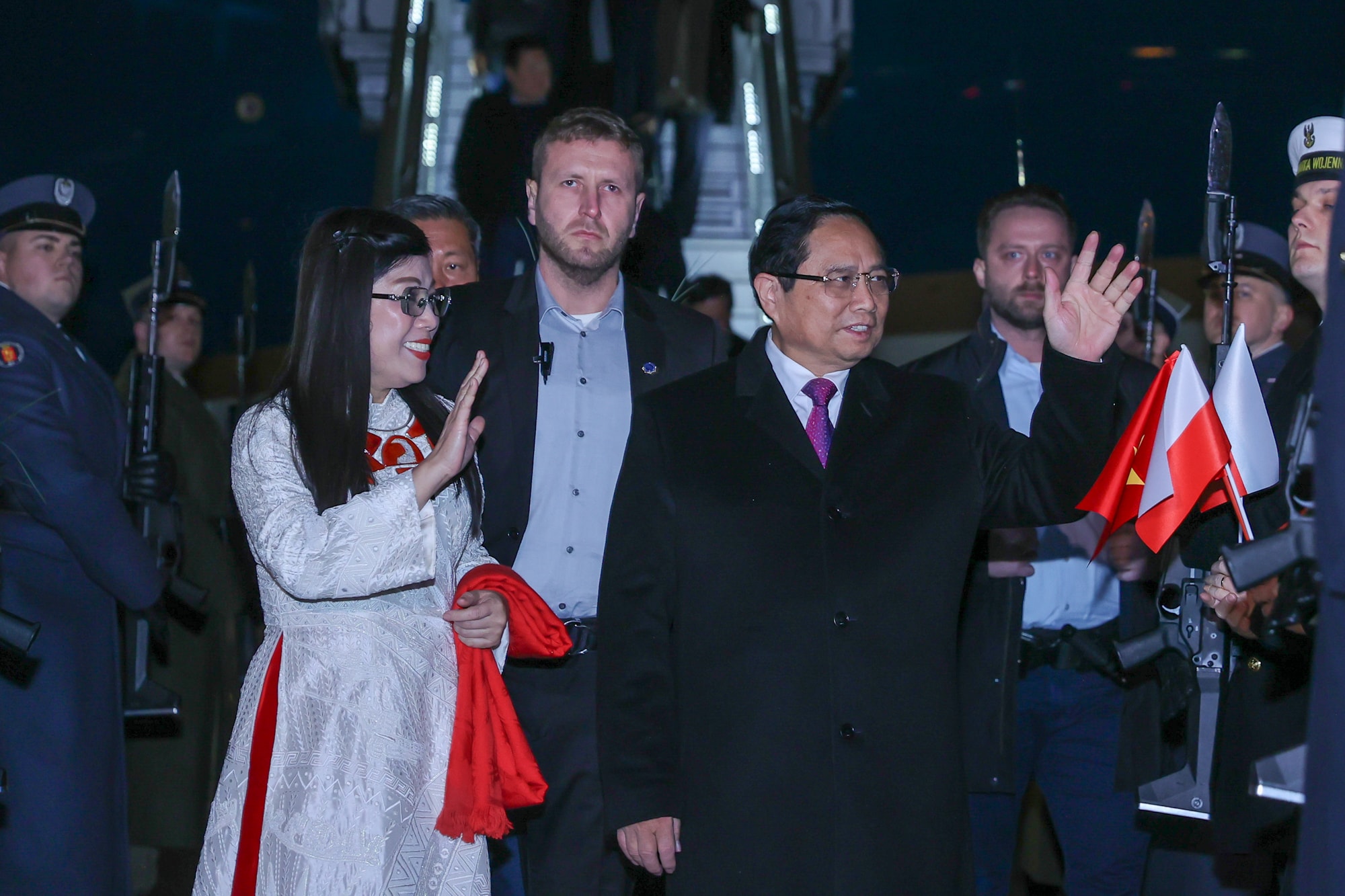
Prime Minister Pham Minh Chinh arrives in Warsaw, the capital of Poland, beginning his visit to the country.
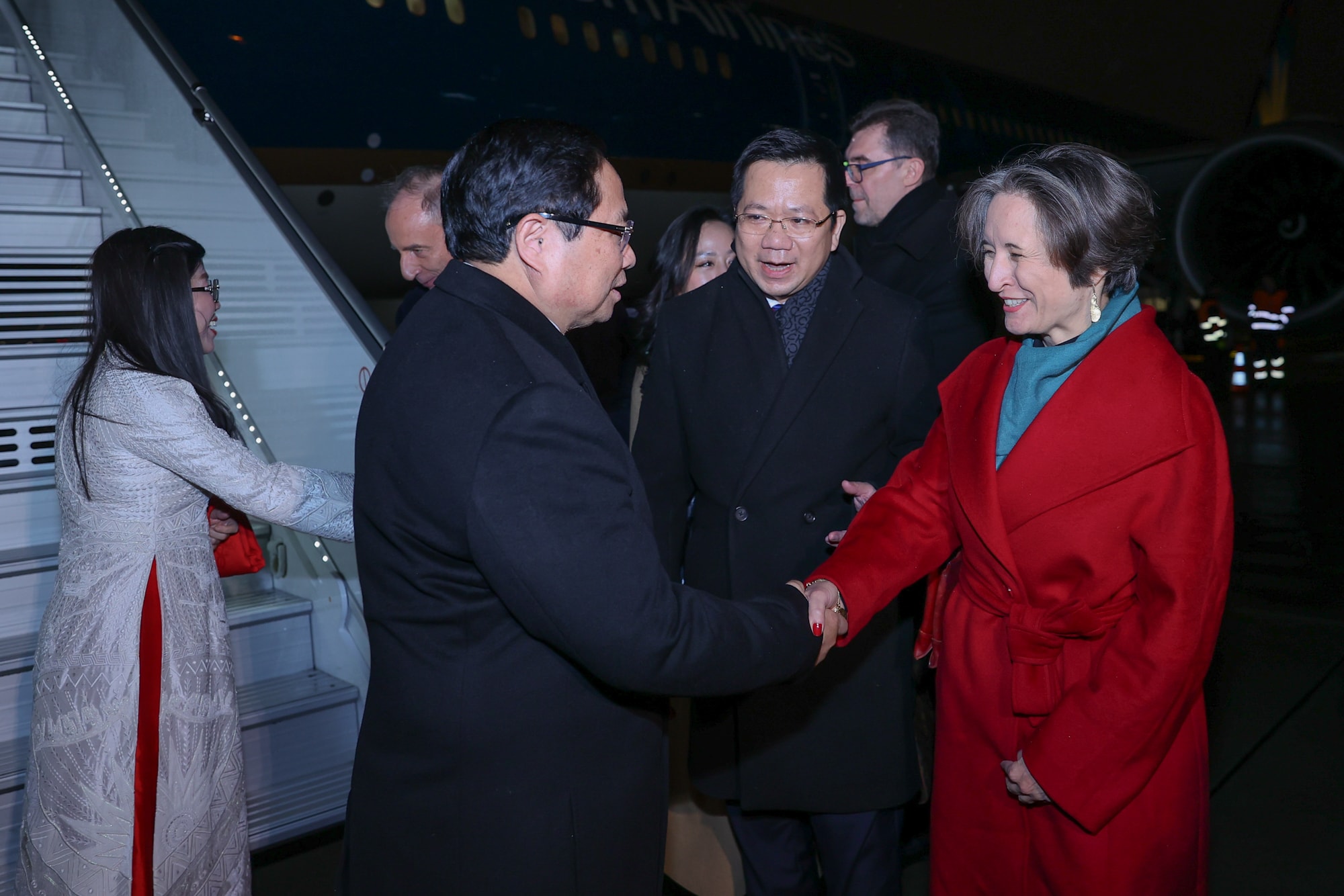
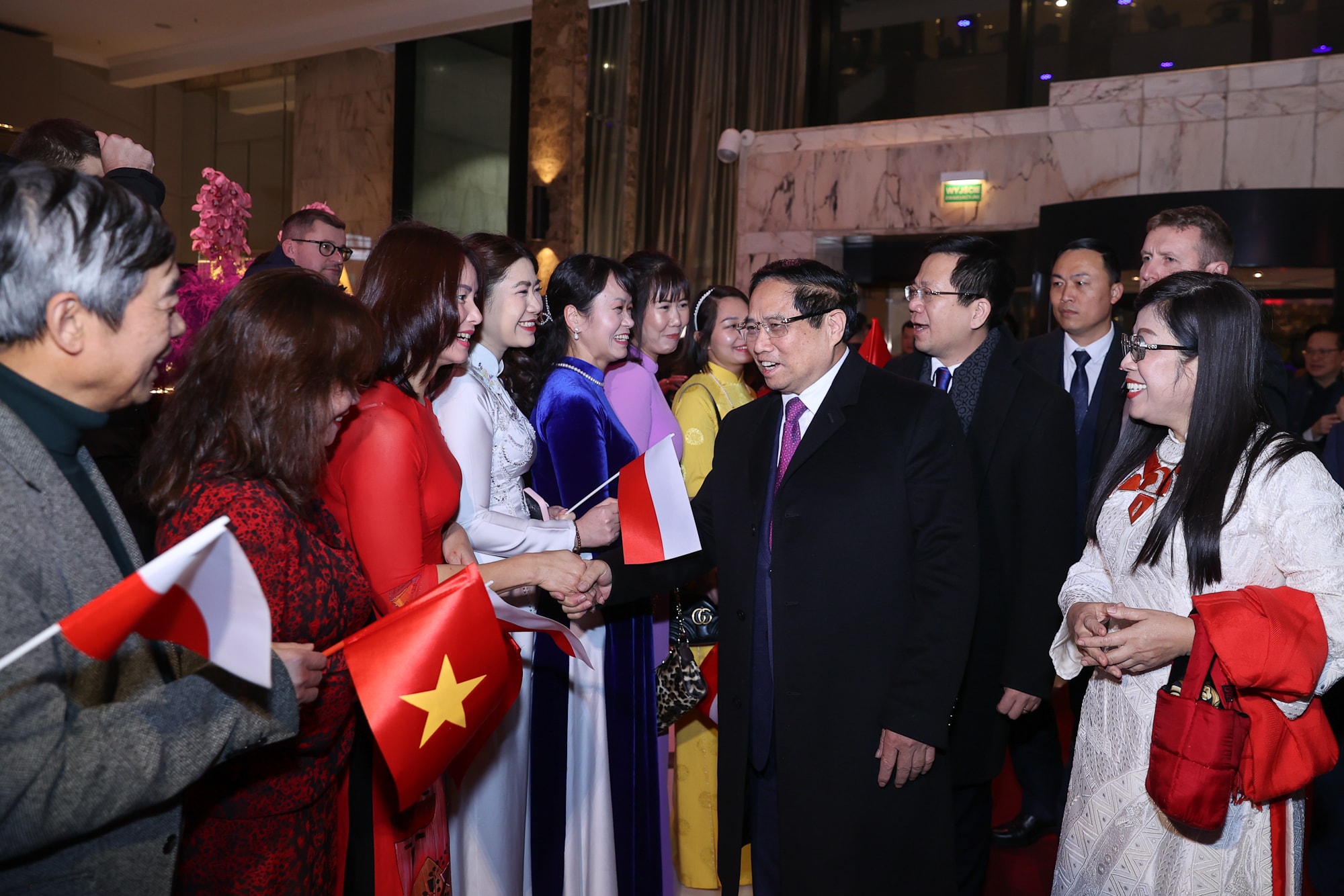
On the night of January 15th local time (early morning of January 16th Hanoi time), Prime Minister Pham Minh Chinh, along with his wife Le Thi Bich Tran and the Vietnamese delegation, arrived at Frédéric Chopin Airport in Warsaw, the capital of Poland, beginning their official visit to the Republic of Poland from January 15-18, at the invitation of Polish Prime Minister Donald Tusk.
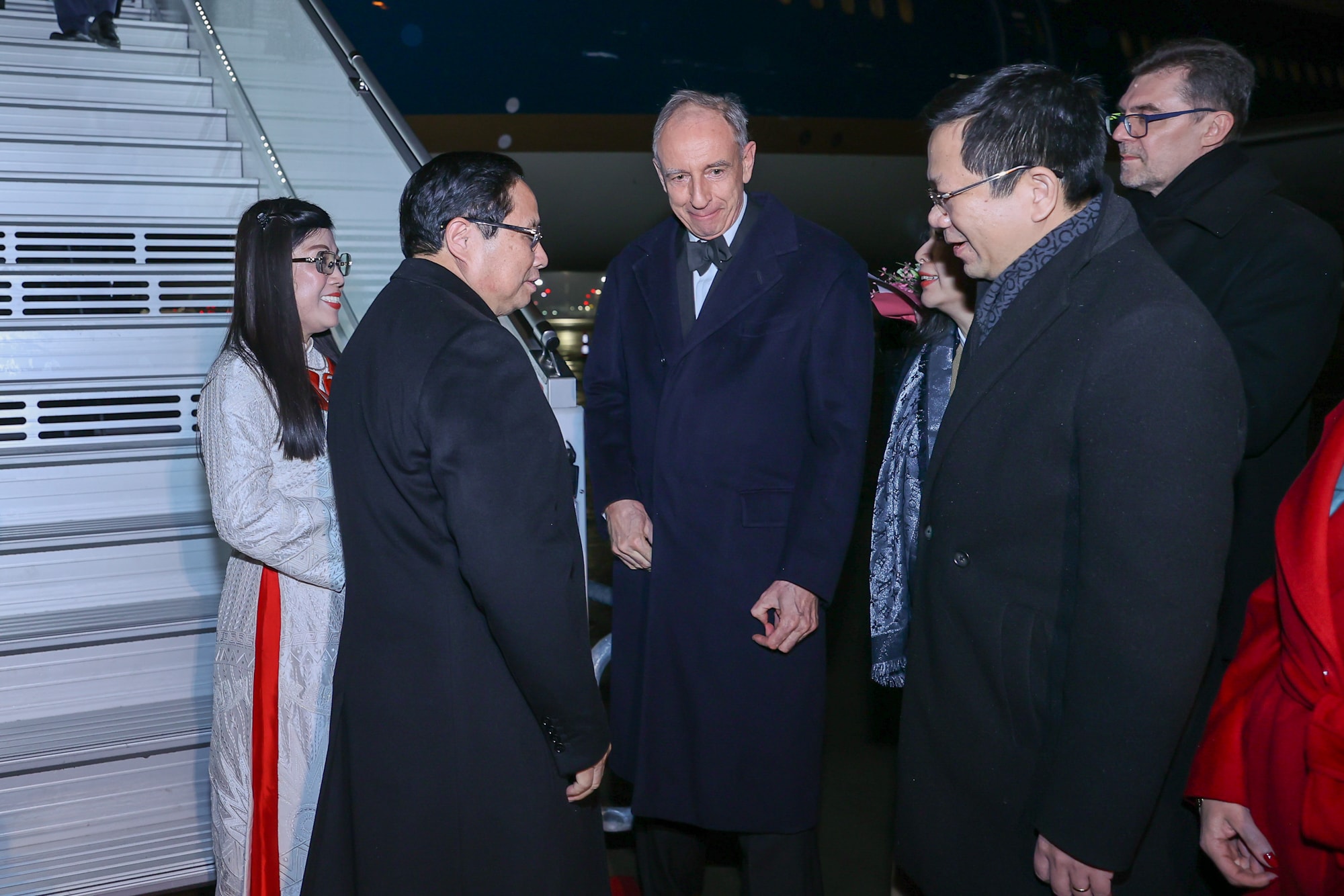
Welcoming Prime Minister Pham Minh Chinh, his wife, and the Vietnamese delegation at the airport, on the Polish side were State Secretary of the Ministry of Foreign Affairs Wladyslaw Teofil Bartoszewsky, the Polish Ambassador to Vietnam, the Director of the Protocol Department, and the Director of the Asia-Pacific Department of the Polish Ministry of Foreign Affairs; on the Vietnamese side were the Vietnamese Ambassador to Poland Ha Hoang Hai, staff of the Embassy, and representatives of the Vietnamese community in Poland.
This is the first official visit of a Vietnamese Prime Minister to Poland in 15 years. The visit takes place amidst the flourishing traditional friendship and multifaceted cooperation between Vietnam and Poland, as the two countries look forward to celebrating the 75th anniversary of the establishment of diplomatic relations.
During this working visit, Prime Minister Pham Minh Chinh is expected to hold talks and meetings with high-ranking Polish leaders; visit several leading educational and research institutions in the country; attend the Vietnam-Poland Business Forum; and meet with leading Polish economic corporations.
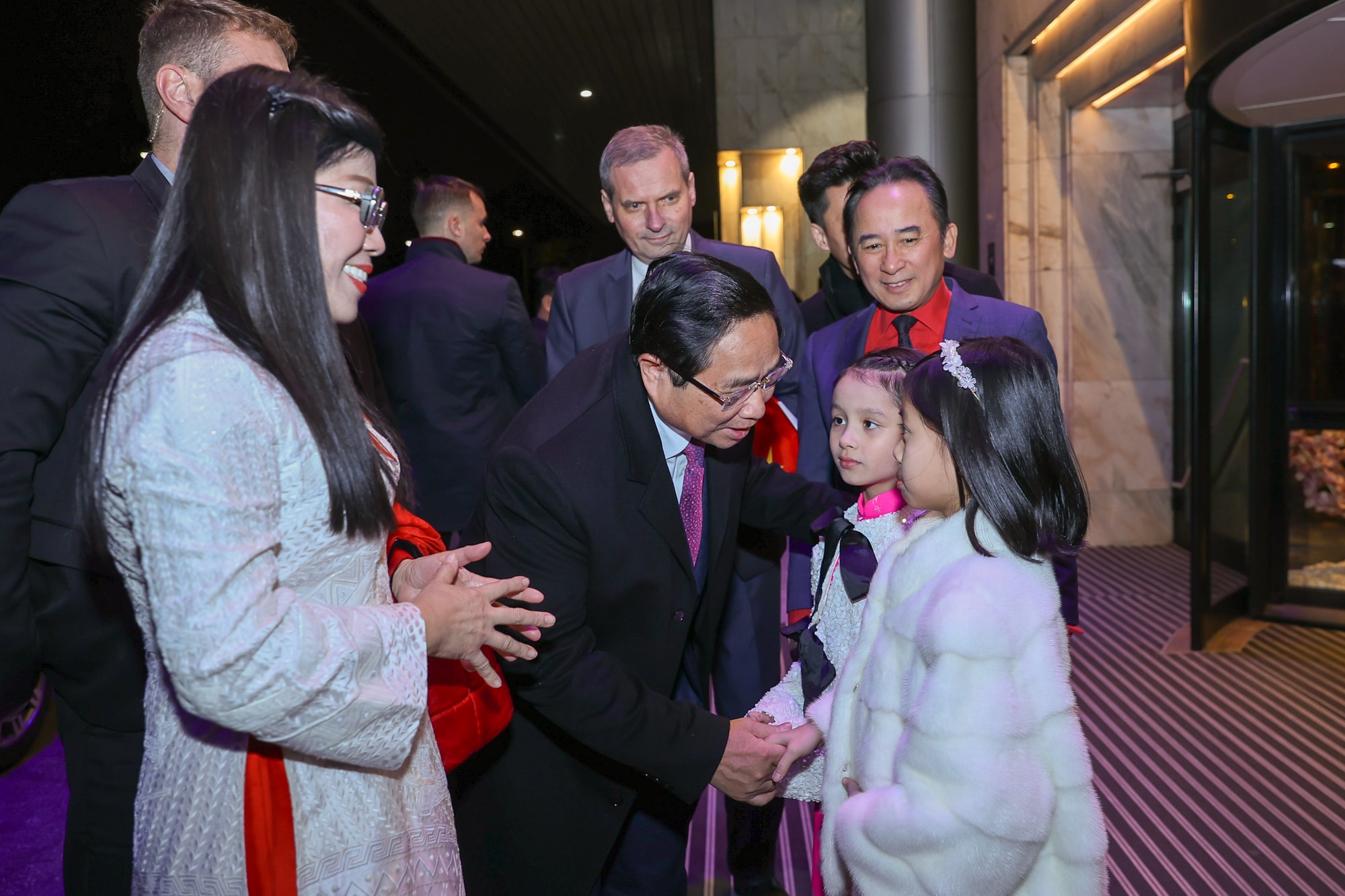
In particular, Prime Minister Pham Minh Chinh will meet with officials and staff of the Embassy, representatives of the Vietnamese community in Poland; attend the Spring Homeland Program 2025 and extend New Year greetings to Vietnamese expatriates in Poland...
Prime Minister Pham Minh Chinh's visit to Poland aims to create a breakthrough and elevate relations between the two countries, thereby strengthening and deepening ties with the Central and Eastern European region.
The two sides will discuss and propose solutions to strengthen cooperation in key areas such as political-diplomatic relations, defense-security, economy-trade-investment, education-training, culture-sports-tourism, local cooperation, people-to-people exchanges, agriculture, environment, health, information and communication technology, justice, development cooperation, and labor cooperation between the two countries.


